
Table of Contents
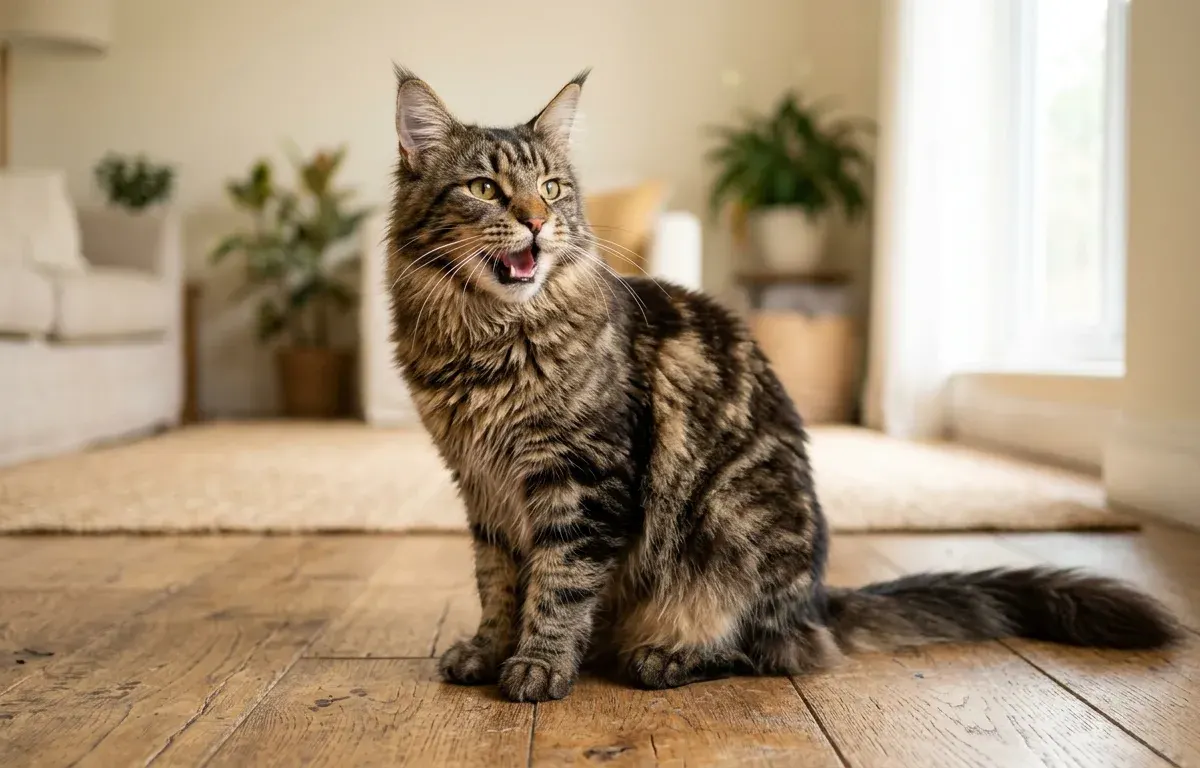
Yes, Maine Coons are known for being vocal, communicative cats, but they rarely produce loud, demanding meows. Instead, they use a soft, melodic vocabulary of high-pitched chirps, trills, and gentle squeaks to greet their owners, express excitement, and initiate conversational dialogue. Their talkative nature reflects their highly social temperament and close attachment to human families.
- Maine Coons communicate primarily through high-pitched chirps, musical trills, and soft squeaks rather than loud meows.
- Trills originate from maternal feline communication and function as friendly social greetings in adult cats.
- Their vocal frequency is moderate to high, but their volume is gentle, polite, and non-intrusive compared to breeds like Siamese.
- Sudden vocal changes, nighttime yowling, or hoarseness can signal underlying medical issues like hyperthyroidism or hypertension requiring veterinary care.
- Positive reinforcement, predictable daily routines, and mental enrichment help manage excessive vocal demands effectively.
Maine Coon Vocalizations: Chirps, Trills, and Soft Meows
The vocal profile of the Maine Coon is one of the most distinctive characteristics of the breed. Prospective owners often expect a massive cat to possess a deep, booming vocalization. In reality, the acoustic output of a Maine Coon is delicate, melodic, and varied. Rather than relying on standard full-throated meows, these cats employ a nuanced acoustic vocabulary to express their emotional state and intent.
| Sound Type | Acoustic Profile | Common Trigger and Meaning |
|---|---|---|
| Chirp | Short, staccato, upward pitch | Greeting, excitement, spotting prey |
| Trill | Rolling, closed-mouth vibrato | Affection, requesting companionship |
| Squeak or Murmur | Soft, high-pitched vocal puff | Gentle acknowledgment, mild curiosity |
| Full Meow | Infrequent, breathy tone | Urgent hunger, closed door obstruction |
| Chatter | Rapid rhythmic jaw vibration | Visual fixation on birds or insects |
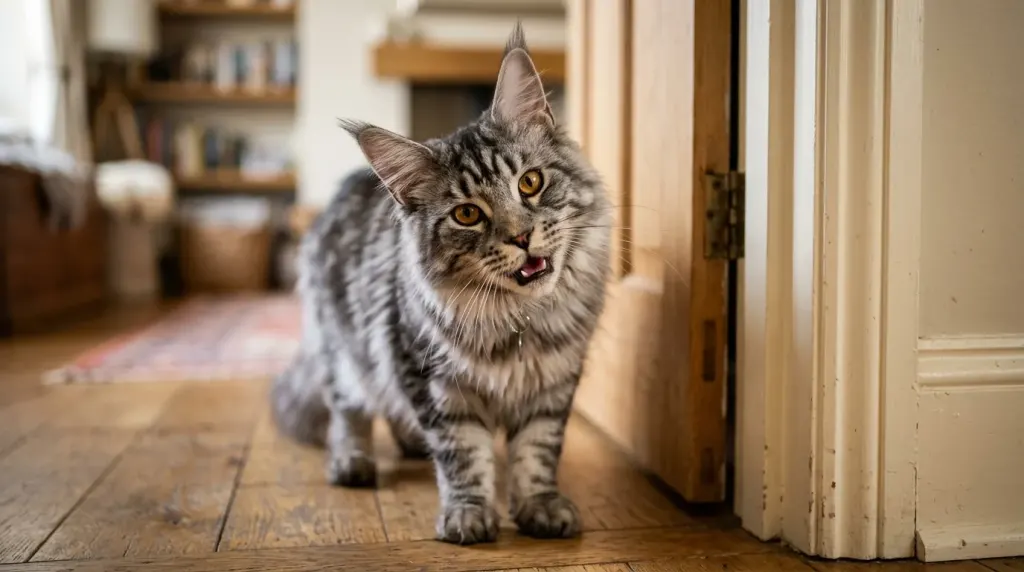
The most frequent sound you will hear from a Maine Coon is the trill. A trill is a musical, rolling sound produced with a closed mouth as air passes across the vocal folds. In feline ethology, mother cats use trills to call their kittens and direct their movement. Adult Maine Coons retain this juvenile communicative habit into adulthood, directing it toward their human companions as a friendly greeting. Much like pet owners researching hypoallergenic Ragdoll cat coats to understand breed-specific grooming demands, cat lovers study Maine Coon trills to interpret daily feline moods.
Chirps represent another cornerstone of Maine Coon communication. These short, bird-like sounds often rise in pitch at the end, sounding almost like an inquisitive question. Maine Coons frequently chirp when they spot a bird through a window, when an owner walks into a room, or during moments of high excitement during interactive play. This high level of playful engagement mirrors the energy seen in active Pug dog play styles, where lively body language accompanies expressive social sounds.
When a Maine Coon does emit a traditional meow, it is typically soft, breathy, and surprisingly quiet given the large physical size of Maine Coons. Many owners describe the sound as a tiny kitten squeak coming from an eighteen-pound cat. This acoustic contrast is a hallmark trait used by enthusiasts when evaluating the identifying physical traits of a Maine Coon.
Why Do Maine Coons Talk So Much? Key Drivers of Feline Communication
Maine Coons do not vocalize aimlessly; their vocal output is deeply tied to their social nature and desire for companionship. Because they form close attachments to their human families, they treat vocalizing as a two-way conversational dialogue.
- Social greetings: A Maine Coon will rarely let an owner enter the house or walk into a room without an audible trill or chirp.
- Following and companionship: Often referred to as the gentle giants of the cat world, they frequently shadow their owners from kitchen to home office, offering soft murmurs with each change of location.
- Routine cues and requests: Mealtimes, treat dispensing, and morning wake-up routines are commonly accompanied by chirps and light paw taps.
- Environmental curiosity: When exploring a newly opened cupboard, an unfamiliar delivery box, or a closed door, a Maine Coon will vocalize to express interest or request access.
Their chatty nature is directly connected to why Maine Coons are friendly and why Maine Coons make good family pets. They view humans as central members of their social group. Just as households enjoy the outgoing disposition of friendly Pug dogs, families appreciate how communicative cats bridge the gap between people and pets. In multi-pet homes, understanding why Pugs make gentle family dogs helps owners build harmonious routines alongside talkative, highly social feline companions.
Unlike solitary or aloof breeds, a Maine Coon actively solicits engagement through sound, making eye contact and waiting for a human vocal response before answering with another trill. They adjust their volume based on how closely their human companion interacts with them, creating a truly reciprocal dynamic.
Maine Coon vs Other Cat Breeds: Vocal Comparison and Temperament
To understand where the Maine Coon stands on the feline vocal spectrum, it helps to compare them with other popular domestic breeds. Cat breeds range from nearly silent to intensely talkative, with noticeable differences in volume, tone, and persistence.
| Breed | Vocal Frequency | Acoustic Volume and Tone | Primary Vocal Types | Demanding vs Conversational |
|---|---|---|---|---|
| Maine Coon | Moderate to High | Soft, high-pitched, melodic | Trills, chirps, squeaks, murmurs | Highly conversational, polite |
| Siamese | Very High | Loud, raspy, low-to-mid pitch | Deep meows, demanding yowls | Highly demanding, persistent |
| Ragdoll | Low to Moderate | Very quiet, sweet, breathy | Soft meows, quiet purrs | Gentle, placid, non-intrusive |
| Persian | Low | Extremely quiet, muted tone | Short, rare meows | Independent, quiet observer |
| Bengal | High | Loud, raspy, assertive tone | Chirps, gravelly meows, yowls | High-energy, demanding |
As shown in the comparison, the Siamese cat represents the most vocal extreme in the cat fancy. A Siamese will demand attention with loud, persistent, megaphone-like cries that can be heard across an entire household. In contrast, a Maine Coon is equally communicative but far less intrusive. Their vocalizations are gentle invitations rather than urgent demands.
When compared to quiet longhaired breeds, friendly Ragdoll cats are also known for their gentle temperament, but Ragdolls tend to be more physically placid and less vocal overall. Prospective pet parents balancing feline personalities often research how much Ragdoll cats cost alongside Maine Coons to choose between a quiet lap cat and a chirpy companion. The Maine Coon strikes a balance between active interaction and acoustic moderation, combining an affectionate and cuddly nature with cheerful vocal expression.
When Vocalization Signals a Problem: Behavioral vs Medical Causes
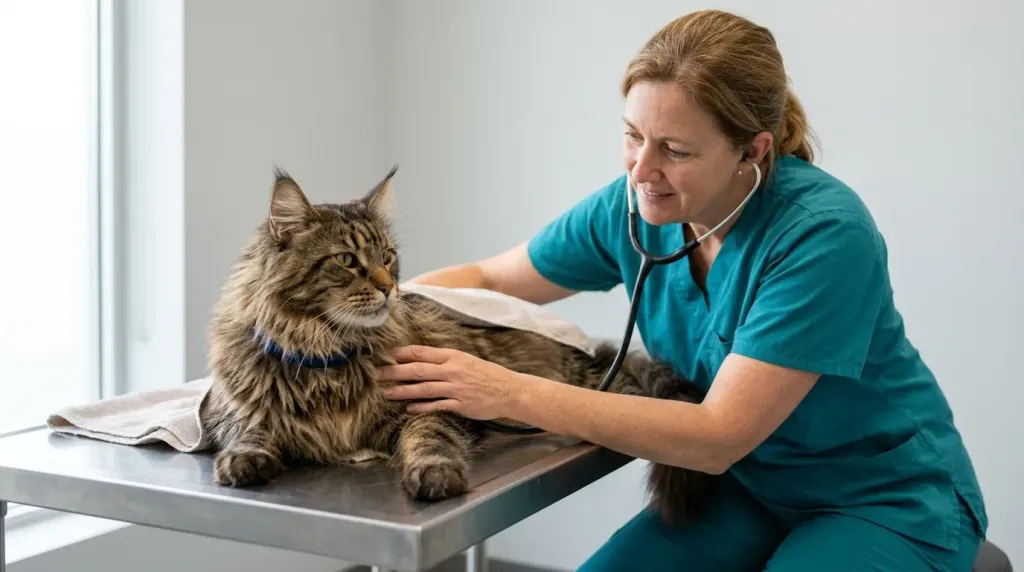
While a talkative Maine Coon is usually just expressing a normal personality trait, changes in vocal patterns can serve as vital clinical diagnostic indicators. A cat that suddenly shifts from a quiet disposition to constant crying, or a chatty cat that develops a hoarse, distressed yowl, requires thorough evaluation.
| Vocal Change / Pattern | Potential Underlying Condition | Accompanying Clinical Signs | Recommended Diagnostic Action |
|---|---|---|---|
| Sudden night-time yowling and pacing | Feline Cognitive Dysfunction or Hypertension | Disorientation, staring at walls, disrupted sleep | Veterinary physical exam with blood pressure check |
| Constant loud crying with weight loss | Feline Hyperthyroidism | Ravenous appetite, increased thirst, hyperactivity | Complete blood count, serum biochemistry, and total T4 test |
| Crying or vocalizing inside the litter box | Lower Urinary Tract Disease or Constipation | Straining, frequent posturing, blood in urine | Immediate veterinary emergency evaluation |
| Weak, hoarse, or absent meow | Upper Respiratory Infection or Laryngeal Irritation | Nasal discharge, sneezing, swallowing difficulty | Veterinary examination of upper airways and throat |
| Restless vocalizing after household changes | Environmental Stress or Separation Anxiety | Over-grooming, hiding, reduced playfulness | Environmental enrichment and structured daily routines |
Senior felines are particularly vulnerable to medical conditions that manifest as vocal distress. Just as caring for senior Pug dogs involves watching for cognitive shifts, aging Maine Coons require close observation for nighttime confusion. Similarly, sudden vocal insecurity can resemble the distress seen in why French Bulldogs can be so clingy, highlighting the need to distinguish emotional attachment from physical discomfort. Sudden changes in vocal pitch, volume, or frequency in an adult or senior Maine Coon should always be treated as a clinical diagnostic signal rather than a simple behavioral quirk. Ruling out metabolic disorders, systemic hypertension, and sensory decline through standard blood chemistry and blood pressure evaluations ensures that discomfort or progressive illnesses are identified early.
Monitoring changes in communication habits throughout the Maine Coon lifespan is a fundamental aspect of proactive pet ownership. Regular wellness visits and baseline blood panels covered in standard cat wellness guides allow owners to distinguish between endearing breed traits and treatable medical conditions.
Managing and Responding to a Vocal Maine Coon in the Home
Living with a communicative cat is rewarding, but managing vocalizations requires consistent communication and healthy daily habits. Because Maine Coons are intelligent, they quickly learn which vocal behaviors yield results from their human owners.
- Avoid rewarding demanding cries: If your cat meows persistently while you prepare their meal, wait for a momentary pause in vocalization before placing the bowl on the floor. This teaches the cat that calm behavior, rather than noise, produces food.
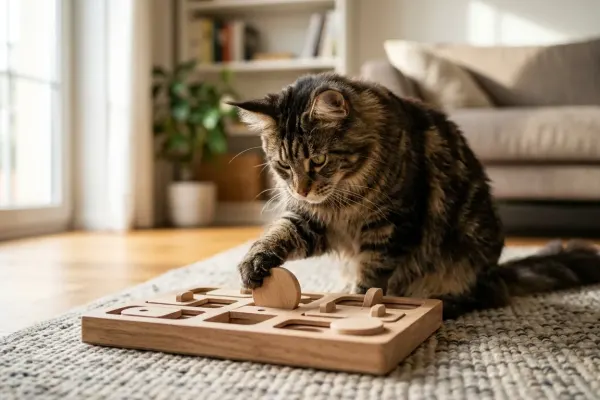
- Provide structured mental enrichment: Boredom is a primary driver of repetitive vocalization. Incorporate puzzle feeders, scratching posts, and window perches into their living space to keep their active minds occupied.
- Maintain predictable routines: Maine Coons thrive on consistency. Maintaining set times for feeding, grooming, and interactive play minimizes anxiety-driven vocalizing.
- Engage in positive conversational play: Respond to friendly trills and chirps with calm verbal praise or gentle stroking. This reinforces positive social bonding without encouraging disruptive midnight crying.
For owners living in shared spaces, these training techniques parallel the strategies used when keeping Pugs living as quiet apartment dogs. In diverse pet households, learning how French Bulldogs as family companions interact with vocal felines fosters a calm home environment. In addition, multi-pet families assessing animal dynamics often research whether a Maine Coon can kill a dog to establish safe boundaries and supervised introductions. Educational pet resources and academic portals, including the Michigan Technological University digital publication guidelines, highlight that structured informational references allow pet owners to make sound, evidence-based management decisions.
Establishing a consistent caring for a Maine Coon routine ensures that your cat feels secure and understood. Feeding a high-protein diet tailored to what Maine Coons eat helps maintain balanced energy levels throughout the day, preventing evening restlessness. Reviewing the comprehensive Maine Coon breed profile will provide additional insights into matching your home environment to the behavioral needs of this unique feline breed.
Frequently Asked Questions About Maine Coon Vocalizations
Why does my Maine Coon chirp like a bird instead of meowing?
Maine Coons naturally use chirps and trills as their primary mode of social expression. In feline behavior, these high-pitched sounds originate from maternal communication and predatory excitement. When directed at human owners, chirping serves as a friendly, non-threatening greeting and an invitation for interaction.
Are male Maine Coons more vocal than females?
Both male and female Maine Coons are communicative, but individual vocal frequency depends more on personality, neuter status, and socialization than on sex alone. Unaltered males and females will vocalize loudly during mating cycles, but among spayed and neutered household pets, both sexes display similar levels of chirping and trilling.
Can you train a Maine Coon to be quieter?
You cannot eliminate a Maine Coon’s natural instinct to chirp and trill, nor should you attempt to suppress their friendly communication. However, you can curb demanding or disruptive meowing by ignoring vocal demands for food, establishing consistent daily schedules, and increasing daily exercise and mental stimulation through interactive toys.
Why do Maine Coons make a trilling sound when walking into a room?
A trill upon entering a room functions as a polite feline announcement. Your Maine Coon is acknowledging your presence, signaling friendly intent, and asking for visual or vocal acknowledgment from you.
At what age do Maine Coon kittens start vocalizing?
Maine Coon kittens begin making soft squeaks and nursing purrs shortly after birth during nursing. As individual kittens grow and engage in interactive play, their distinctive chirping and trilling vocalizations develop naturally alongside their expanding social awareness.
Leave a Reply