
Table of Contents
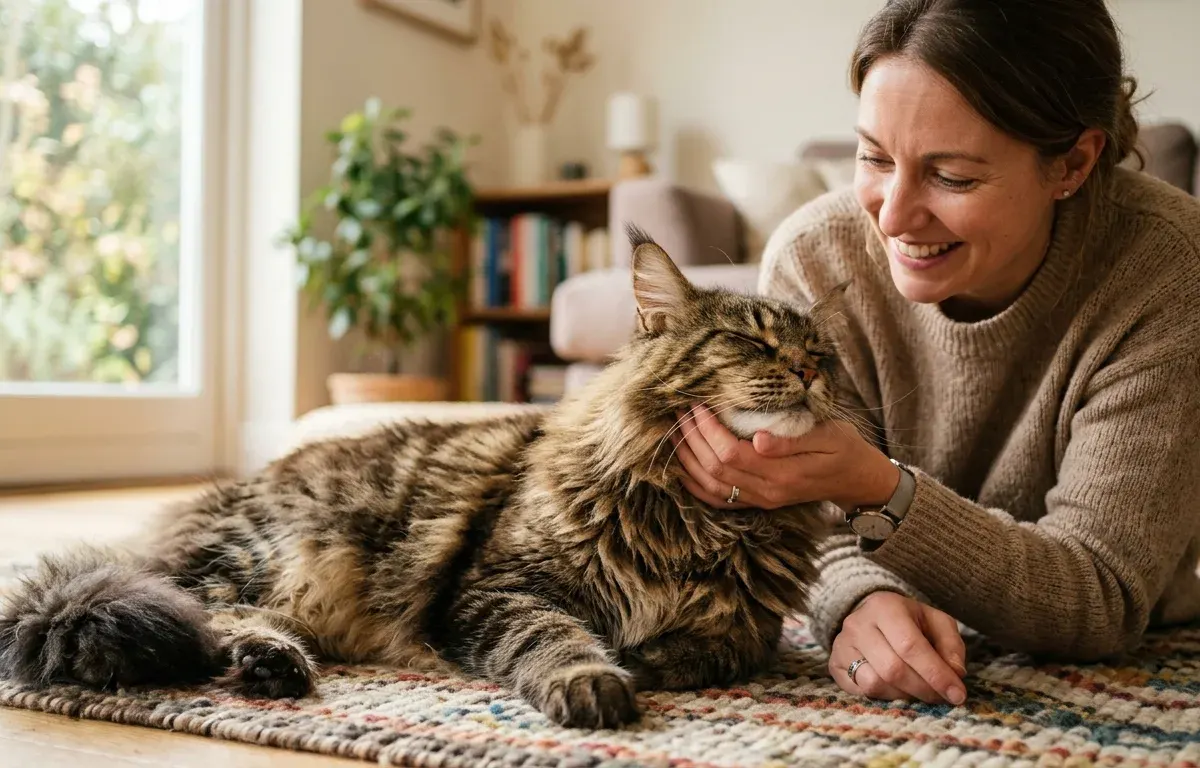
Yes, if you are asking are Maine Coons friendly, these cats are widely celebrated as one of the most sociable, gentle, and affectionate breeds in the feline world. Often called the "gentle giants" of the cat fancy, they thrive in family environments and naturally get along well with children, dogs, and other cats.
- Maine Coons possess a balanced, dog-like personality, frequently following owners room to room and playing fetch without being overly demanding.
- While deeply affectionate, they are often "couch companions" rather than restrictive lap cats due to their large physical build and warm double coat.
- Official breed registries including the Cat Fanciers' Association (CFA) and The International Cat Association (TICA) emphasize their placid and friendly nature.
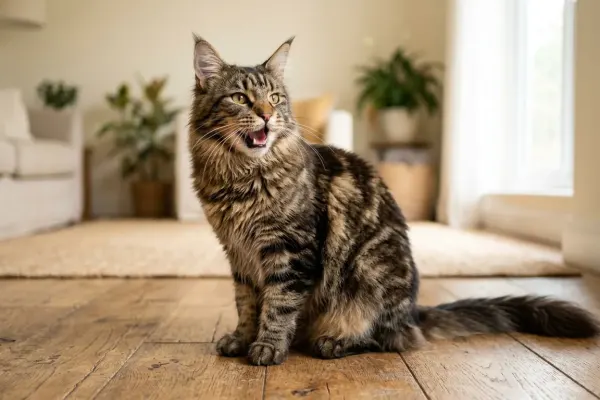
- They communicate through soft chirps and trills rather than loud meows, and many have an unusual fascination with water.
Are Maine Coons Friendly? The “Gentle Giant” Personality Explained
Maine Coons are exceptionally friendly felines defined by an amiable, patient, and people-oriented temperament that earns them their iconic “gentle giant” reputation. Unlike aloof or solitary cat breeds that view human interaction with cautious detachment, Maine Coons actively seek companionship. They greet returning family members at the front door, lounge in the middle of active living spaces, and observe household tasks with curious interest.
This friendly disposition is deeply rooted in the breed’s working heritage. Originating in Maine as rugged barn and ship cats, they worked alongside humans for generations to protect grain stores and livestock feed from rodents. This functional partnership favored cats with steady nerves, high social tolerance, and an affinity for human presence. The official Cat Fanciers’ Association breed standard highlights this heritage, describing the Maine Coon as a breed of sweet disposition, exceptional intelligence, and an easygoing nature that integrates effortlessly into busy modern homes.
While individual temperaments vary based on genetics and early kitten handling, the baseline sociability of a well-bred Maine Coon compares favorably to other affectionate domestic breeds.
| Temperament Dimension | Maine Coon Characteristic | Typical Domestic Cat Comparison |
|---|---|---|
| Sociability & Greetings | Greets owners at the door; stays in high-traffic family rooms | Variable; often retreats during loud arrivals |
| Vocal Expression | Soft chirps, trills, and gentle squeaks | Standard sharp meows and yowls |
| Physical Tolerance | High tolerance for gentle handling and noise | Moderate to low; quick to establish physical boundaries |
| Playfulness Duration | Retains active, kitten-like play until 4 to 5 years old | Tends to settle into sedentary habits after 1 to 2 years |
| Stranger Acceptance | Generally confident and inquisitive with guests | Often hides until visitors depart |
Prospective pet parents comparing docile pedigree breeds often note that while Ragdoll cats are friendly in a placid, lap-oriented way, Maine Coons deliver an active, curious companionship that stays engaged with the entire room. Their calm confidence mirrors the social adaptability seen in canine households where Pugs are good family dogs, creating a peaceful home where neither pet feels threatened.
Why Maine Coons Are Called the “Dogs of the Cat World”
Maine Coons earn the frequent nickname “the dogs of the cat world” because their daily interaction style mirrors typical canine companion behaviors. Rather than remaining perched in elevated isolation, a Maine Coon chooses to participate directly in everyday household routines.
Behavioral characteristics that reflect this canine-like nature include:
- The Companion Follower Tendency: Maine Coons routinely shadow their owners from kitchen to home office, settling comfortably a few feet away without demanding continuous petting.
- Toy Retrieval and Fetching: Many Maine Coons naturally learn to retrieve thrown crinkle balls, mice toys, or springs, carrying them back in their mouths to prompt another throw.
- Harness and Leash Adaptability: Due to their confident mindset, Maine Coons accept harness training more readily than most domestic cats, allowing owners to take them on controlled outdoor walks.
- Vocal Greeting Behaviors: They vocalize enthusiastically upon your return home, offering soft trills as if checking in after an absence.
- Responsiveness to Voice Cues: They frequently recognize their names, come when called, and can learn basic positive-reinforcement cues like “sit” or “high five.”
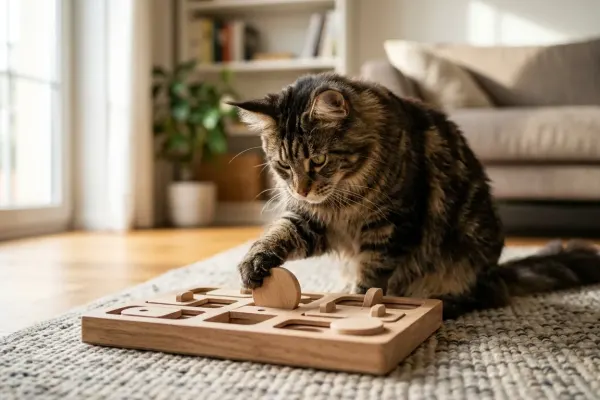
Small companion dogs often exhibit intense physical attachment, reflecting why French Bulldogs are so clingy during daily routines, whereas a Maine Coon offers calm companionship by simply resting a few feet away. Just as engaged owners discover that French Bulldogs are smart problem-solvers during reward-based training, Maine Coon owners quickly find that their cats master food puzzles and door-opening techniques through keen observation.
Are Maine Coons Good with Kids, Dogs, and Other Pets?
Yes, Maine Coons are outstanding multi-pet and family companions, consistently ranking among the safest and most reliable cat breeds for households with children and dogs. Their calm demeanor and substantial physical frame make them far less skittish than smaller, nervous felines.
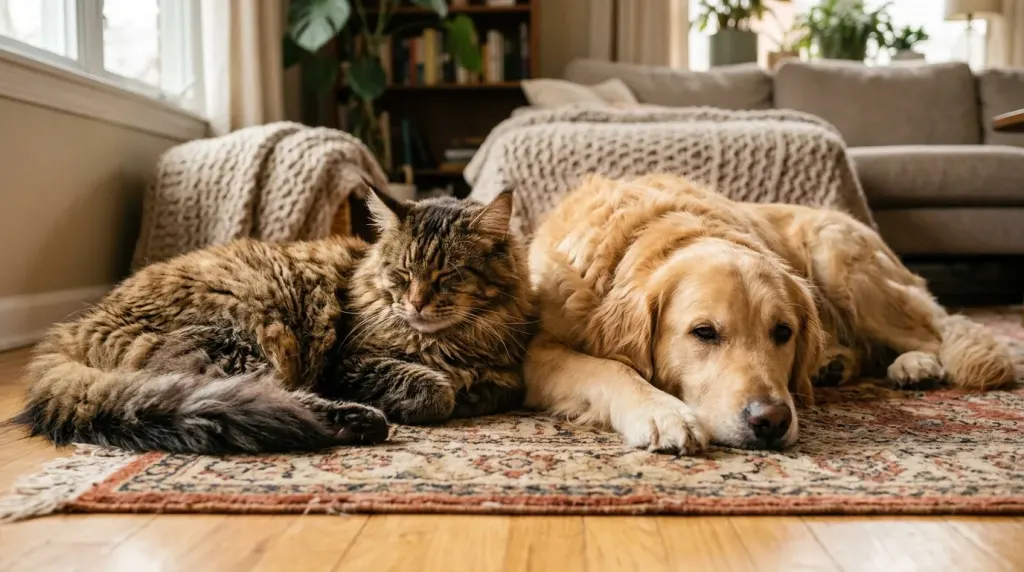
When interacting with children, Maine Coons show remarkable patience. A toddler’s sudden movements or loud vocalizations rarely trigger panic in a confident Maine Coon. When play becomes too chaotic, their typical response is to quietly walk away to an elevated perch rather than hiss or swat. Nevertheless, young children must always be taught how to respect feline body language and avoid pulling tufted tails or ears.
Their relationship with household dogs is equally harmonious. Because an adult male Maine Coon can weigh up to 18 to 25 pounds, they do not trigger the predatory chase reflex that tiny, darting kittens often provoke in canines. In multi-pet homes where Pugs are friendly dogs that welcome newcomers, Maine Coons establish peaceful routines within days, often sharing sunbeams and resting areas without territorial friction. This unflappable poise complements multi-animal environments where French Bulldogs are good pets that enjoy sociable feline companions.
| Family Member or Pet | Compatibility Score | Typical Interaction Dynamic | Essential Management Strategy |
|---|---|---|---|
| Toddlers & Young Children | High | Tolerant and gentle; prefers observing play | Supervise handling; provide high cat trees for resting |
| Older Children | Exceptional | Enthusiastic playmate for interactive wand games | Involve kids in daily brushing and feeding routines |
| Pet Dogs | High | Confident and playful; mutual head-bunting | Introduce slowly behind baby gates; maintain separate food bowls |
| Other Domestic Cats | High | Non-territorial and social; forms grooming bonds | Use gradual scent swapping and separate litter boxes |
| Small Rodents & Birds | Low (Supervision Required) | High predatory focus due to natural mousing instincts | Keep small pets securely caged in separate rooms |
The only notable exception to their open friendliness involves small prey animals. Because Maine Coons were bred specifically for pest control, pet hamsters, guinea pigs, mice, and small birds trigger strong hunting reflexes and must always be kept safely separated.
The Maine Coon Affection Style: Lap Cat vs. Shadow Companion
A common misconception among prospective adopters is expecting a Maine Coon to sit tightly on a human lap for hours. While some individuals do enjoy lap time, the dominant affection style of the breed is that of a “shadow companion.”
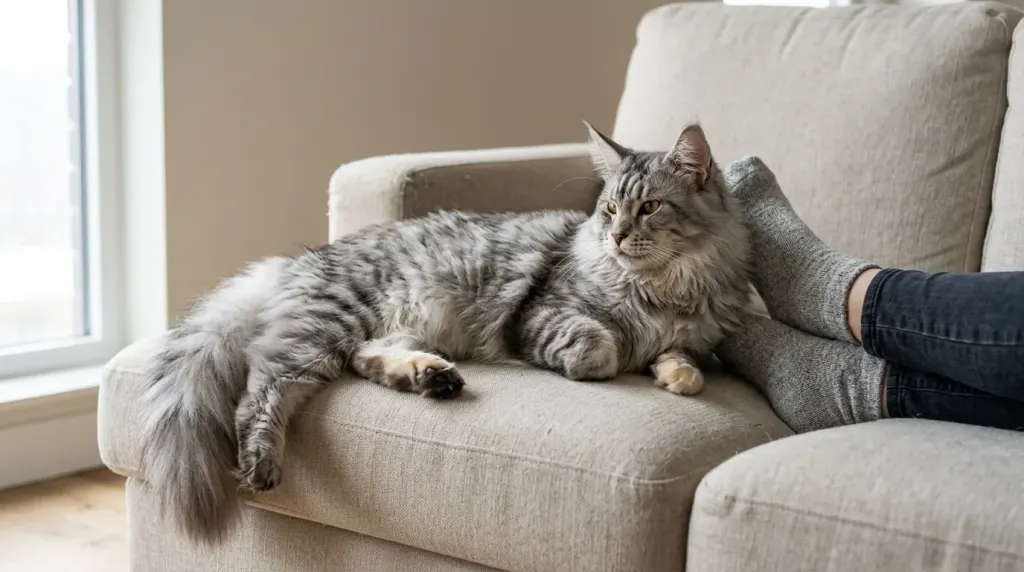
This preference is largely driven by physical comfort:
- Thermal Regulation: Maine Coons possess a dense, water-repellent double coat designed to survive harsh New England winters. Sitting directly on human legs generates excessive body heat, causing the cat to overheat quickly.
- Physical Frame: Balancing a long, 15 to 25 pound body on a human lap can be awkward for both the cat and the owner. Most Maine Coons prefer stretching their long torsos out across a cool sofa cushion, footstool, or hardwood floor right beside you.
Affection from a Maine Coon is expressed through steady proximity rather than clinging restraint. They show deep love by pressing their foreheads against your chin (bunting), rolling over to expose their soft bellies in a gesture of trust, and maintaining gentle eye contact with slow blinks. While smaller companions like Pugs are dedicated lap dogs that crave direct body contact for hours, a Maine Coon is happiest sharing space alongside you as an equal partner. Furthermore, in households seeking emotional comfort, while Pugs are good therapy dogs celebrated for continuous tactile contact, Maine Coons fulfill an emotional support role through grounding, quiet presence and peaceful co-relaxation. Expecting a Maine Coon to remain curled tightly on your lap for hours misinterprets their natural thermal comfort preferences. Their loyalty is expressed through continuous physical proximity, quiet companionship, and shared space rather than physical confinement.
Unique Maine Coon Behavioral Quirks: Chirps, Trills, and Water Play
Beyond basic friendliness, the Maine Coon exhibits charming behavioral quirks that set them apart from virtually all other domestic cat breeds.
The Chirp and Trill Vocalization
Maine Coons rarely emit the sharp, demanding meows common to standard domestic cats. Instead, they converse in a distinct vocabulary of high-pitched trills, chirps, and soft coos. These sounds resemble birds or small mammals and are used to greet owners, express excitement during play, or ask for dinner. This soft voice creates a comical, endearing contrast with their massive, muscular appearance.
The Water Obsession
Many Maine Coons have an intense fascination with fresh water. Stemming from their waterproof coat adaptation, they frequently:
- Dip their front paws into water dishes and lick moisture from their pads.
- Splash water out of the bowl onto the floor before drinking.
- Sit on the edge of bathtubs or sinks to swat at dripping faucets.
- Follow owners into the bathroom to watch running shower water.
To prevent daily kitchen floor puddles, experienced owners recommend heavy ceramic fountains or non-skid silicone mats under drinking bowls.
Slow Maturity and Extended Playfulness
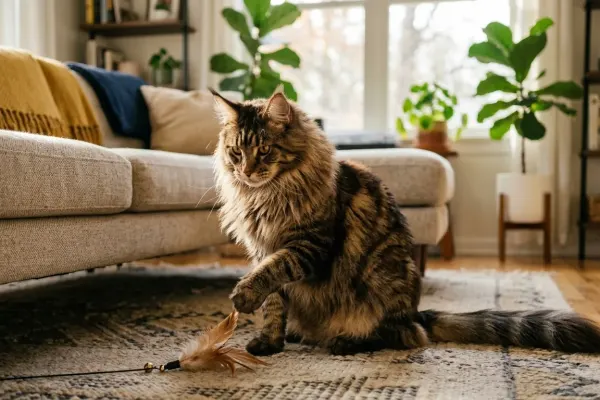
Most domestic cats reach full physical maturity within their first year, but Maine Coons develop at a much slower pace, often taking several years to fill out their large muscular frame. This gradual growth cycle means they retain playful, energetic kitten curiosity well past early adulthood. Even a 20-pound mature adult cat will enthusiastically chase feather wands, somersault through cardboard boxes, and invent new games. This enduring curiosity mirrors how Pugs are active dogs during short bursts of playtime, maintaining a joyful, puppy-like spirit well into their adult years.
Proprietary Breed Evaluation: Is a Maine Coon the Right Match for Your Lifestyle?
Evaluating whether a Maine Coon fits your household requires balancing their engaging personality against their daily care demands.
| Lifestyle Factor | Ideal Match for Maine Coon | Requires Careful Consideration |
|---|---|---|
| Household Activity Level | Active families, multi-pet homes, lively environments | Solitary homes wanting complete silence |
| Time Spent at Home | Work-from-home owners or homes with other pets | Owners away for 12+ consecutive hours daily |
| Grooming Commitment | Willing to brush long coats 2 to 3 times weekly | Owners seeking low-maintenance grooming |
| Space & Equipment | Homes with space for sturdy XL trees and jumbo litter boxes | Tiny studio apartments with minimal floor area |
| Allergy Sensitivity | Standard cat-tolerant households | Severe cat allergy sufferers needing low-dander breeds |
Families managing mild dander sensitivities should note that just as neither longhaired breed nor Ragdoll cats are hypoallergenic, Maine Coons produce standard Fel d 1 protein levels and shed noticeable fur during seasonal transitions. Furthermore, while compact breeds like Pugs are good apartment dogs suited for cozy floor plans, a 20-pound Maine Coon requires adequate room for heavy cat trees, expansive scratching posts, and giant litter pans.
What Causes a Maine Coon to Become Shy or Unfriendly? (And How to Fix It)
Unprovoked aggression or extreme fearfulness is not typical of Maine Coon genetics. When an individual cat displays antisocial behavior, it is almost always triggered by environmental stress, lack of socialization, or medical distress. Similar to how rarely French Bulldogs are aggressive dogs without underlying pain or fear, a reactive Maine Coon is almost always responding to an acute stressor rather than innate malice.
Primary Triggers for Antisocial Behavior
- Insufficient Early Socialization: Kittens that miss gentle handling and positive exposure to varied household sights and sounds during early formative development may grow up skittish and distrustful of strangers.
- Lack of Vertical Territory: A large cat without tall, sturdy cat trees feels vulnerable in busy rooms and may hide under beds or behind furniture.
- Undiagnosed Pain or Medical Discomfort: Feline hip dysplasia, spinal arthritis, or painful dental resorption can make even the gentlest cat growl or swat when touched.
- Sudden Environmental Disruptions: Moving houses, introducing a new pet too quickly, or ongoing construction noise can temporarily overwhelm their confident nature.
Step-by-Step Rehabilitation Plan
If your Maine Coon has become fearful or withdrawn, apply this structured approach:
- Step 1: Create a Safe Basecamp Room. Provide a quiet bedroom equipped with food, water, a large litter box, scratching posts, and cozy hiding spots where the cat can decompress.
- Step 2: Practice Calm, Low-Pressure Proximity. Spend quiet periods sitting on the floor reading or working without attempting direct eye contact or forced petting. Let the cat approach at its own pace.
- Step 3: Introduce Interactive Wand Play. Engage the cat’s natural hunting drive with feather wands. Successfully catching prey builds feline confidence faster than verbal coaxing.
- Step 4: Use Positive Food Reinforcement. Offer high-value treats (such as freeze-dried chicken or lickable purées) exclusively during gentle human interaction.
Note: Sudden shifts in temperament from friendly to withdrawn or reactive often indicate underlying physical discomfort. A veterinary checkup should always be the first step when an established pet begins hiding or resisting gentle touch.
Frequently Asked Questions About Maine Coon Friendliness
Are Maine Coons friendly with other cats?
Yes, Maine Coons generally get along very well with other cats due to their laid-back, non-territorial nature. When introduced gradually using scent swapping and separate initial feeding areas, they readily form peaceful coexisting bonds and grooming partnerships with existing family felines.
Are Maine Coons good for first-time cat owners?
Yes, Maine Coons make fantastic companions for first-time owners because their forgiving, docile temperament easily accommodates minor handling mistakes. Novice owners only need to prepare for their regular grooming needs and provide adequately sized scratching trees and litter boxes.
Are male or female Maine Coons friendlier?
Both male and female Maine Coons are exceptionally affectionate. However, many breeders and long-time owners observe subtle differences: males tend to be more overtly social, clownish, and eager to insert themselves into activities, whereas females can be slightly more independent and discerning with their attention.
Can a Maine Coon be left alone during the day?
Maine Coons can handle a standard 8-hour workday alone if provided with interactive puzzle toys, sturdy scratching posts, and window viewing perches. However, because they are deeply social creatures, leaving them isolated for 10 to 12 or more hours daily on a regular basis can lead to loneliness, behavioral depression, and destructive boredom.
Leave a Reply