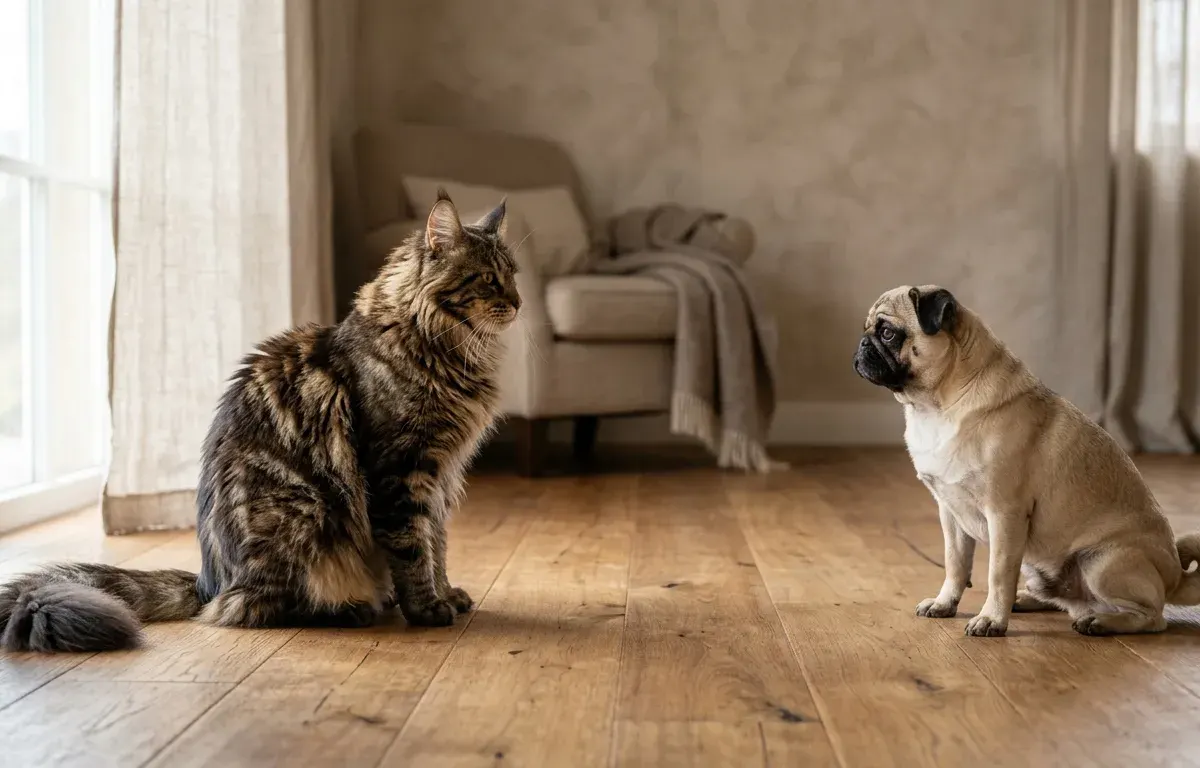
Can a Maine Coon kill a dog? Realistically, no. A Maine Coon cat cannot kill a healthy medium or large dog, and fatal confrontations with small dogs are extraordinarily rare. While an adult male Maine Coon can reach 15 to 25 pounds with muscular strength, sharp claws, and formidable canine teeth, domestic cats act defensively rather than predatorily toward canines. The primary physical hazard occurs when a cornered cat defends itself against an unsupervised toy puppy, or when deep puncture wounds develop secondary bacterial infections such as Pasteurella multocida.
- Fatal trauma from a Maine Coon to a dog is exceptionally rare, with realistic risk confined to fragile toy puppies or extreme cornered fights.
- Maine Coons weigh 10 to 25 pounds, giving them substantial defensive leverage when an escape route is blocked.
- Feline aggression stems from fear, territorial defense, or resource protection rather than inherent predatory drive toward dogs.
- Deep puncture wounds that inoculate bacterial pathogens pose the primary medical risk after cross-species conflicts.
- Environmental enrichment, elevated perches, and gradual introductions eliminate virtually all cross-species aggression risks.
Real-World Conflict Risks: Can a Maine Coon Kill a Dog?
Assessing whether a Maine Coon can kill a dog requires separating physical capability from instinctive feline behavior. Maine Coons are among the largest domesticated cat breeds in the world. Mature males regularly weigh between 15 and 25 pounds and can measure up to 40 inches from nose to tail tip. In comparison, typical domestic cats average between 8 and 10 pounds. Despite their impressive physical presence, thick bone structure, and powerful musculature, Maine Coons possess a calm disposition and do not view dogs as prey.
In domestic households, a Maine Coon cannot kill an adult medium or large canine, such as a Golden Retriever, German Shepherd, or Boxer. In physical confrontations with medium or large dogs, the canine holds overwhelming advantages in body mass, bite force, and predatory drive. However, a dangerous physical mismatch can occur with fragile toy puppies or miniature breeds weighing under 4 pounds, such as newborn Chihuahuas or young Yorkshire Terriers. If a 20-pound Maine Coon is trapped in a corner, startled violently, or defending a litter of kittens, its sharp claws and teeth can cause severe trauma to the eyes, skull, or throat of a tiny puppy.
Even with small adult canines, fatalities during an initial altercation are practically nonexistent. The primary life-threatening danger following a dog-cat fight is not mechanical crushing, but deep puncture trauma that introduces virulent bacteria into soft tissue.
Common Conflict Triggers Between Cats and Dogs
Household fights between cats and dogs do not occur without clear environmental triggers. Understanding these triggers helps pet owners prevent dangerous encounters:
- Cornered Escape Paths: Cats always choose flight over fight when given an open route. When a boisterous canine corners a cat in a dead-end hallway, under a low bed, or behind a closed door, the cat switches to defensive combat, striking at the dog’s face to create an opening to flee.
- Resource Guarding: Clashing over food bowls, high-value chew toys, prime resting spots, or litter boxes frequently sparks sudden aggression if one animal invades another’s private perimeter.
- Maternal Defense: A female Maine Coon with a litter of young kittens displays intense protective aggression toward any approaching animal, regardless of the dog’s size.
- Chaotic Household Chases: Energetic dogs that chase running cats can trigger a sudden defensive stand. Managing canine exercise habits, such as respecting French Bulldog running limits during high-energy play, prevents overstimulated dogs from chasing household cats into defensive corners.
- Physical Exhaustion and Panic: Animals in compromised physical states react defensively much faster. Monitoring environmental stamina, such as understanding swimming fatigue risks in Pugs, illustrates how managing physical stress prevents reactive aggression across all companion pets.
Critical Escalation Signs Requiring Immediate Separation
Pet owners must recognize when normal posturing shifts into a hazardous fight. Immediate intervention is necessary upon observing:
- Facial Latching: The cat wraps its front limbs around the dog’s head while delivering rapid bites and rear-leg kicks.
- Locked Jaw Pressure: Either animal clamps onto the other and refuses to release its bite grip.
- Continuous Screaming: High-pitched vocal distress combined with frantic rolling on the floor.
- Visible Corneal Injury: Squinting, bleeding, or cloudiness in the dog’s eye following a swipe.
Never place bare hands between fighting pets. Separate combatants using a heavy blanket, a sturdy sofa cushion, or a loud acoustic distraction like clapping before isolating them in separate rooms.
Size Disparities and Physical Vulnerabilities Across Small Dog Breeds
The physical outcome of any cross-species conflict depends heavily on relative mass, bone density, and anatomical vulnerability. An adult Maine Coon cat outmatches many toy dog breeds in both weight and agility. While a 70-pound Labrador faces minimal physical danger from a cat, a 4-pound toy puppy is exceptionally vulnerable to defensive strikes.

| Canine Size Category | Typical Weight Range | Risk Level from Large Maine Coon | Primary Vulnerability Points |
|---|---|---|---|
| Toy Puppy (under 12 weeks) | 1 to 4 lbs | High | Skull punctures, neck trauma, corneal lacerations |
| Toy Adult (Chihuahua, Yorkie) | 4 to 8 lbs | Moderate | Eye scratches, facial puncture wounds, infection |
| Small Dog (Pug, Frenchie) | 14 to 28 lbs | Low | Superficial facial scrapes, localized bite abscesses |
| Medium to Large Dog | 30 to 80+ lbs | Extremely Low | Minor nasal scratches from defensive feline swats |
Anatomical Fragility in Brachycephalic and Toy Breeds
Toy and short-muzzled dog breeds face distinct physical vulnerabilities during disputes with large cats. Breeds with prominent, shallow eye sockets lack deep bony orbital protection. A single feline swipe can cause corneal ulceration or globe rupture.
Furthermore, small dogs experience higher physiological stress when exposed to chaotic household environments. Recognizing breed-specific physical limitations, such as water safety challenges for French Bulldogs, reinforces the need to shield vulnerable companion pets from stressful situations. Similarly, managing travel anxiety, such as managing airline travel stress in French Bulldogs, shows that keeping pets calm prevents sudden reactive snapping that could trigger a cat’s defensive instincts.
The True Medical Threat: Feline Bite Pathology
The most serious danger in any cat-dog altercation is microbiological rather than orthopedic. Domestic felines harbor high concentrations of pathogenic oral bacteria, predominantly Pasteurella multocida, Staphylococcus, and Streptococcus species.
Feline canine teeth function like hypodermic needles. They create narrow, deep puncture wounds that push bacteria into subcutaneous tissues, tendon sheaths, or joint capsules. When the skin closes quickly over the puncture, it creates an anaerobic environment where bacteria multiply rapidly. Without prompt veterinary wound irrigation and targeted antibiotic treatment, a minor puncture bite can develop into severe cellulitis, deep tissue necrosis, or systemic sepsis within 24 to 48 hours.
Are Maine Coon Cats Dangerous? Behavioral Triggers and Warning Signals
In normal home environments, Maine Coons are not dangerous animals. Breed registries and feline behaviorists consistently describe the Maine Coon as a gentle, affectionate, and socially stable companion. They are celebrated for their playful demeanor, patience with household members, and peaceful coexistence with other animals.
However, like any carnivore equipped with claws and sharp teeth, a Maine Coon can inflict meaningful soft tissue damage if provoked, terrified, or suffering from chronic physical distress. Feline aggression is almost exclusively defensive or stress-induced. Understanding Maine Coon aggression triggers helps owners distinguish rare fear-based defensive strikes from typical docile breed temperament. Responsible breeding programs select specifically for calm, gentle dispositions, making unprovoked territorial aggression extraordinarily rare.
Feline Postural Language and Pre-Attack Cues
Cats communicate rising discomfort through distinct body language long before striking. Recognizing these subtle warning signs allows owners to de-escalate situations before physical contact occurs:
- Flattened Airplane Ears: Ears rotated backward and pinned flat against the skull indicate fear and readiness to defend.
- Piloerection (Puffed Fur): Fur standing upright along the spine and tail makes the cat appear larger to deter threats.
- Direct Unblinking Stare: Rigid visual lock paired with dilated pupils signals intense arousal and defensive preparation.
- Low-Frequency Growling and Hissing: Vocal warnings establishing an urgent boundary demand for physical space.
- Rhythmic Tail Thumping: Rapid, jerky side-to-side tail movements reflecting mounting irritation.
- Crouched Body Position: A tightly tucked posture with paws under the chest, ready to spring or deliver defensive swats.
Contextual Factors That Heighten Reactivity
Even a mild-mannered cat can react aggressively under specific situational pressures:
- Abrupt Startle Reflexes: Sudden loud noises, falling objects, or being stepped on while sleeping can provoke an immediate reflex swat.
- Redirected Feline Aggression: A cat observing an unfamiliar outdoor animal through a window becomes highly agitated. If a housemate dog walks past at that moment, the cat may attack the dog because it cannot reach the outdoor intruder.
- Pain-Related Defensiveness: Undetected medical conditions, such as feline osteoarthritis, hip dysplasia, or dental disease, make cats touch-sensitive and reactive.
- Pushy Canine Behavior: Canines lacking basic boundary manners can corner cats unintentionally. Establishing steady impulse control through obedience training prevents overzealous dogs from invading a cat’s private resting areas and provoking defensive swatting.
Are Maine Coon Cats Mean? Distinguishing Stress and Pain from Malice
Attributing malice or spite to a cat misinterprets feline psychology. Animals do not act out of revenge or cruelty. When a Maine Coon hisses, swats, or hides, these behaviors represent coping mechanisms for environmental stress, territorial insecurity, or physical discomfort.

The official breed standard for the Maine Coon emphasizes an outgoing, people-friendly personality. Responsible breeders intentionally select against aggressive temperaments. When an individual Maine Coon displays reactive behavior, the underlying cause is nearly always medical or environmental rather than an innate character flaw.
Common Misinterpretations of Feline Behavior
Owners frequently confuse normal feline behavioral boundaries with bad temperament:
- Petting-Induced Overstimulation: A cat may enjoy gentle petting for several minutes until neurological sensory thresholds are reached. When sensory overload occurs, the cat delivers a sudden swat to signal that contact must stop. Owners often view this as unpredictable malice, whereas the cat is simply expressing tactile fatigue.
- Territorial Disruption: Rearranging furniture, moving to a new house, or bringing home unfamiliar pet odors can cause acute insecurity, prompting territorial swatting.
- Orthopedic Discomfort: Because Maine Coons are large, heavy cats, they have higher rates of hip dysplasia and joint arthritis in their senior years. A cat experiencing joint pain will defend itself vigorously if touched roughly.
Evaluating canine behavioral stability, such as evaluating therapy dog suitability in Pugs, illustrates how steady temperament across all household pets creates a calm atmosphere where cats feel secure.
Behavioral Diagnostics: Tracking Triggers at Home
When addressing sudden irritability or aggression in a Maine Coon, keeping a structured one-week behavioral log provides essential clarity:
- Incident Timestamp and Room Location: Note exactly where and when the reaction occurred.
- Preceding Stimulus: Identify what happened immediately before the reaction, such as a vacuum cleaner running, a dog approaching a food bowl, or a child reaching out.
- Physical Posture: Record the cat’s ear angle, pupil dilation, and tail movement prior to the incident.
- Duration of Agitation: Track how many minutes the cat required to return to a relaxed state.
Analyzing these patterns reveals whether the behavior stems from resource competition, startle triggers, or underlying medical pain. For instance, managing household resources, such as understanding dietary guidelines and safe human foods for French Bulldogs, ensures that feeding times do not become high-stress zones where dogs and cats compete for food.
Can a Maine Coon Kill a Human? Infection Risks and Statutory Classifications
A Maine Coon cat cannot kill a human being through direct physical attack. Domestic felines lack the body mass, jaw dimensions, and crushing bite force required to inflict fatal mechanical injuries on adult humans or older children. Medical literature and public health records contain zero documented cases of a domestic Maine Coon killing a person through direct predation or physical assault.
Under statutory legal frameworks, such as standard regulatory provisions in the Vimawa Legal Document Database, domestic companion animals like the Maine Coon are categorized distinctly from dangerous exotic wildlife, reflecting their safe coexistence in human households.
However, the absence of fatal physical trauma does not make cat bites harmless. Large cats can deliver painful lacerations and deep puncture wounds that carry significant infectious risks requiring prompt medical treatment.
Infectious Complications from Feline Punctures
The primary medical hazard associated with feline bites and scratches in humans is bacterial inoculation:
- Pasteurella multocida Cellulitis: Up to 90% of domestic felines carry Pasteurella in their saliva. A puncture wound deposits these bacteria beneath the skin, causing severe pain, swelling, and redness within 12 to 24 hours. Without oral antibiotics, the infection can progress to tenosynovitis or permanent joint stiffness.
- Cat Scratch Disease (Bartonella henselae): Transmitted through flea feces under a cat’s claws, this bacterial infection causes swollen lymph nodes, fever, and persistent fatigue.
- High-Risk Medical Conditions: Individuals with compromised immune systems, diabetes, or chronic liver disease face heightened risks of systemic bacteremia from untreated animal scratches.
Practical First Aid Protocol for Bites and Scratches
If a human or canine family member sustains a cat bite or scratch:
- Immediate Irrigation: Wash the wound thoroughly under warm running water with antibacterial soap for at least 5 minutes to flush out saliva and bacteria.
- Antiseptic Application: Apply an over-the-counter povidone-iodine or chlorhexidine antiseptic solution.
- Medical Evaluation: Seek medical care promptly for any puncture wound on the hands, wrists, or near joints, as these areas have thin subcutaneous tissue and high susceptibility to deep tendon sheath infections.
Using positive reward systems, such as feeding cooked chicken treats to French Bulldogs and offering safe apple slices for French Bulldogs, helps maintain relaxed interactions during multi-pet training routines.
Safe Multi-Pet Integration and Behavioral Management Strategies
Creating a safe, peaceful home for both cats and dogs requires proactive environmental design and structured socialization protocols. Cats and dogs can become affectionate companions when their individual biological needs are respected.
Environmental Architecture: Creating Safe Zones
Spatial separation is the foundation of multi-pet harmony:
- Vertical Escape Routes: Install sturdy wall-mounted cat shelves, sturdy cat trees, and high window perches at least 4 to 5 feet off the floor. Elevated positions allow cats to observe canines without feeling cornered.
- Canine-Free Sanctuaries: Use sturdy baby gates with pet doors or adjustable door straps to create safe rooms where the cat can access food, water, and litter boxes without canine interference.
- Separated Feeding Stations: Always feed cats on elevated countertops or behind closed doors to prevent dogs from resource-guarding or stealing feline food.
- Secure Litter Box Placement: Place litter boxes in open, low-traffic areas with multiple exit routes so a dog cannot trap a cat while it uses the box.
Step-by-Step Multi-Pet Introduction Protocol
When introducing a Maine Coon to a dog, follow a gradual, scent-based integration process:
- Scent Swapping (Days 1 to 3): Keep the pets in separate rooms with no visual contact. Rub a towel over the cat and place it in the dog’s sleeping area, and place a dog-scented blanket near the cat’s feeding station.
- Visual Contact Through Barriers (Days 4 to 7): Allow the pets to view each other through a secure baby gate or glass door while offering high-value food rewards on both sides.
- Leashed Floor Sessions (Weeks 2 to 3): Bring the dog into the shared living area on a short leash while allowing the cat freedom to explore or retreat to high perches.
- Unconstrained Supervised Cohabitation: Once both animals display relaxed, neutral body language during leashed sessions, allow supervised free roaming.
Using rewarding training aids, such as using peanut butter rewards for French Bulldogs during calm sits or offering serving cooked salmon to French Bulldogs as high-value rewards, reinforces positive associations with the cat’s presence.
Frequently Asked Questions About Maine Coon Safety and Behavior
Can a Maine Coon defend itself against a large dog?
A Maine Coon can intimidate or deter an inquisitive large dog by arching its back, puffing its coat, hissing loudly, and delivering sharp defensive swats to the dog’s sensitive nose. However, against an aggressive, predatory canine attack, a cat cannot win a prolonged fight and must rely on vertical escape perches to reach safety.
Are Maine Coons naturally aggressive toward other household pets?
No, Maine Coons are naturally docile, companionable, and tolerant animals. Aggressive outbursts only develop when a cat is physically cornered, experiencing chronic joint pain, defending young kittens, or improperly introduced without vertical safe zones.
How do you prevent a Maine Coon from injuring a toy puppy?
Prevent conflicts by supervising all interactions, keeping the puppy on a light house lead, providing high cat perches, and maintaining separate feeding areas. Never allow an energetic puppy to corner, chase, or harass a resting cat.
What should you do immediately if a cat bite punctures your skin?
Wash the puncture thoroughly under running warm water with soap for at least five minutes, apply a topical antiseptic, and consult a medical doctor promptly. Because cat punctures seal bacteria deeply into tissues, preventive antibiotics are often necessary to prevent serious infections.
Leave a Reply