
Table of Contents
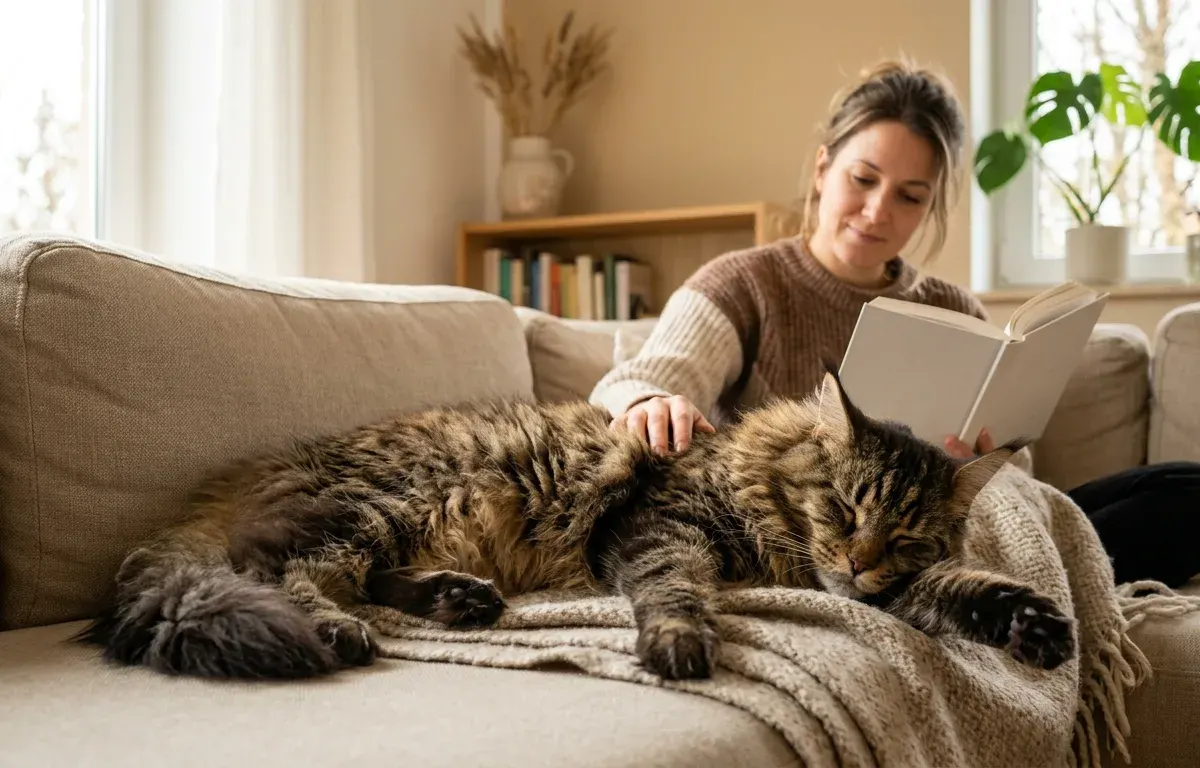
Maine Coons are exceptionally cuddly and affectionate companions, though their cuddling style is usually companionable rather than demanding. Most Maine Coons prefer lounging closely beside you on the sofa, resting their head against your arm, or following you from room to room instead of sitting directly on your lap. Their dense double coat and substantial 11 to 25 pound body frame make direct lap sitting warm and cramped, leading them to favor side-by-side cuddling.
- Maine Coons express deep affection through side cuddling, following owners, and resting in close proximity.
- Dense insulating fur and large body size often make lap sitting uncomfortably warm for long periods.
- The breed uses soft chirps, musical trills, slow blinks, and head bunting as primary affection signals.
- Respecting physical space and using gentle daily grooming builds strong, lasting companion trust.
Are Maine Coons Cuddly by Nature?
Many prospective owners want to know: are maine coons cuddly? In every meaningful sense, these gentle giants are among the most affectionate, people-oriented cats in the world. Maine Coons possess a sociable, loyal, and steady temperament. They enjoy participating in daily family life, often positioning themselves within touching distance of their favorite people.
Unlike breeds that demand constant lap confinement, a Maine Coon often prefers being near you rather than on top of you. They will jump onto the sofa to lean their body against your hip, curl up at the foot of your bed, or stretch out across your desk while you work. This relaxed style of affection provides wonderful companionship without feeling intrusive.
Why Some Maine Coons Prefer Side Cuddling Over Lap Sitting
A common misconception is that a cat that avoids your lap lacks affection. In reality, physical factors heavily influence whether a Maine Coon curls up directly on your knees:
- Heat Retention: Maine Coons developed in cold northeastern climates with a thick, water-resistant double coat. A human lap acts as a concentrated heat source, which quickly causes an adult cat with dense underfur to overheat. Those exploring the hypoallergenic qualities of Ragdoll cats often note similar coat density considerations across large longhair breeds.
- Body Dimensions: Adult males average 15 to 25 pounds, with overall lengths reaching 30 to 40 inches. Finding a balanced, comfortable posture on a standard lap is difficult for such a large frame. Prospective owners comparing feline companionship with lap dog tendencies in Pugs may initially anticipate lap sitting, but large cats naturally prefer side lounging.
- Movement Freedom: Due to their active intelligence, these cats like being able to stand up and investigate changes in the room without feeling physically restricted.
According to digital communications guidance from Michigan State University DX Studio, organizing user inquiries by specific intent helps clarify whether a pet’s behavioral pattern reflects affectionate bonding or environmental needs. Maine Coon affection is defined by steady companionship rather than physical confinement. While some owners expect a cat that stays pinned to their knees, feline behavior observations confirm that these cats express devotion through close physical proximity, shared room space, and interactive greetings.
How Maine Coons Show Affection and Attachment
Maine Coons possess a rich vocabulary of physical and vocal affection signals. Understanding these behaviors helps owners recognize how deeply bonded their cat truly is.
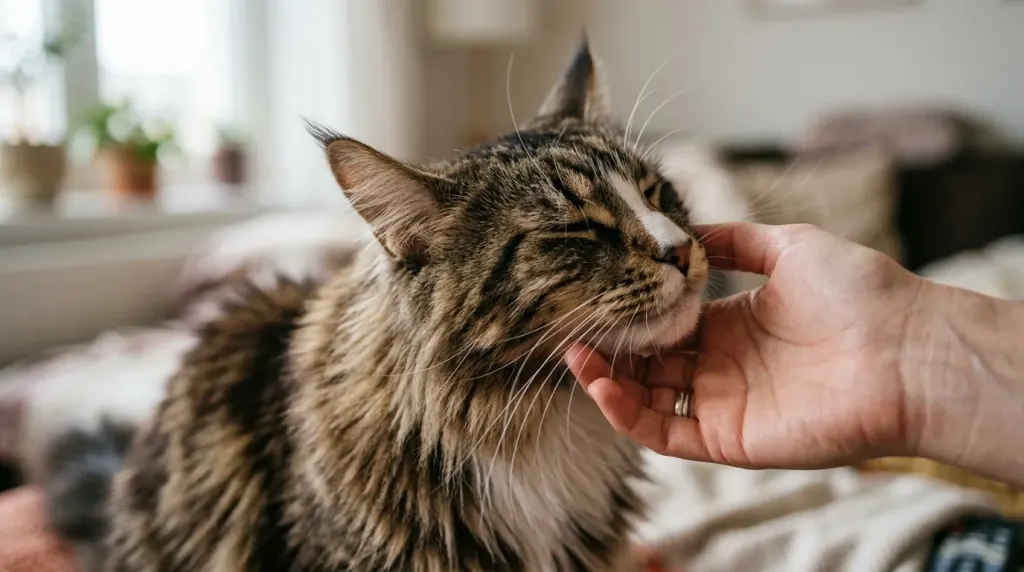
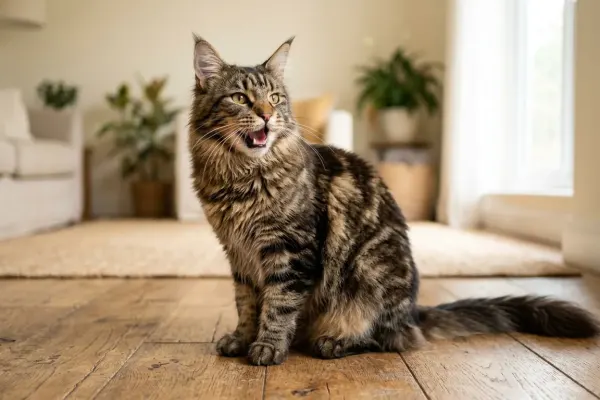
- Chirping and Trilling: Instead of loud, demanding meows, Maine Coons produce soft, bird-like trills and chirps. They use these musical sounds to greet you when you walk through the door or to invite gentle head scratches.
- Head Bunting and Cheek Rubbing: By rubbing their cheeks and forehead against your hands, feet, or furniture, Maine Coons deposit facial pheromones that mark you as part of their trusted family territory.
- The Canine Shadow Effect: Much like the friendly behavior seen in Pug dogs or the clinginess common in French Bulldogs, a devoted Maine Coon will shadow you from room to room to observe your daily routine.
- Slow Blinking: Making soft eye contact followed by slow, languid blinks is the feline equivalent of an affectionate smile, indicating total comfort and safety.
- Elevated Tail Greeting: When your cat approaches with a high, upright tail that quivers slightly at the tip, it is demonstrating excitement and friendly social engagement.
Subtle Signs of Maine Coon Affection
In addition to vocal greetings, Maine Coons use subtle body positioning to display trust. A cat that rolls onto its side to display its belly is showing profound comfort in your presence, though this is a gesture of trust rather than an automatic request for vigorous belly rubs. They also enjoy gentle head resting, placing their chin directly on your foot or forearm while you relax together.
Are Maine Coons Affectionate Compared to Other Popular Breeds?
Potential adopters frequently compare the affection levels of Maine Coons with other popular family pets. While every individual cat has a unique personality, general breed tendencies offer helpful expectations.
| Trait | Maine Coon | Ragdoll | Standard Domestic Shorthair |
|---|---|---|---|
| Primary Cuddle Style | Side-by-side lounge, leg leaning | Limp lap sitting, arms cradling | Variable by individual |
| Vocal Warmth | High (musical chirps and trills) | Low to moderate (soft meows) | Moderate (standard meows) |
| Adult Size Factor | Large (11 to 25 pounds) | Medium-large (10 to 20 pounds) | Medium (8 to 12 pounds) |
| Social Independence | Balanced companion | Highly dependent shadow | Moderate to high |
| Family Compatibility | Excellent with kids and dogs | Excellent with calm households | Variable |
While the friendly temperament of Ragdoll cats is famous for collapsing limp in an owner’s arms, Maine Coons offer a more interactive, playful style of devotion. Those researching Ragdoll cat adoption costs will find that Maine Coons require similar dedicated care, yet provide a distinctly sturdy and self-assured household presence. Research principles from the Iowa State University CALS/LAS Web Team informational research emphasize categorizing audience questions to address specific caretaking concerns directly.
Note: Forcing physical restraint or confining a large Maine Coon to your lap against its will can create frustration and erode trust. Allowing the cat to choose its resting position beside you preserves its confidence and strengthens social bonding.
How to Encourage a Maine Coon to Cuddle and Bond
If your Maine Coon is somewhat reserved, you can foster a more tactile, cuddly relationship through gentle daily habits:
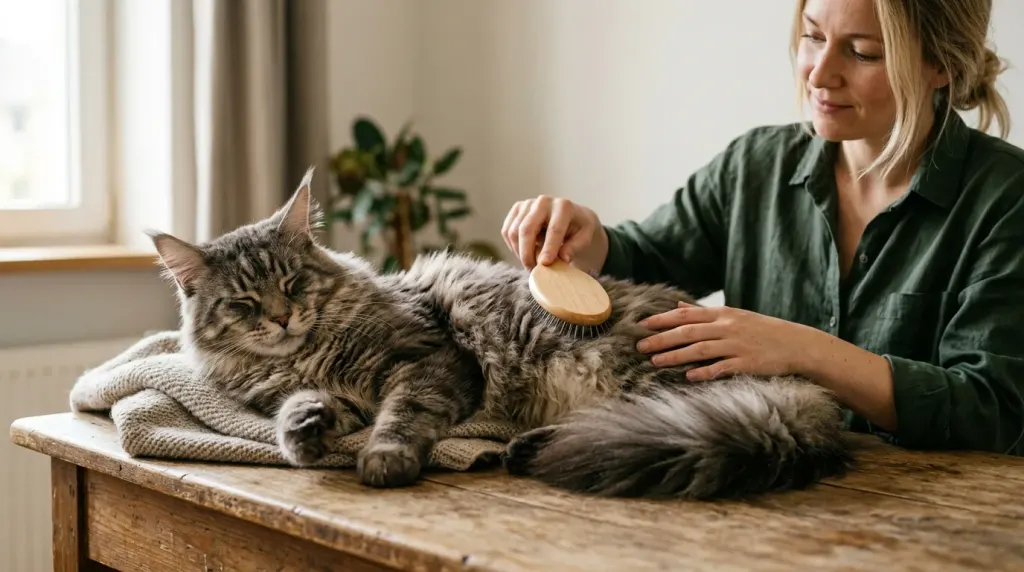
- Establish Predictable Grooming Sessions: Because their semi-longhair coat requires regular maintenance, brush your cat with a gentle slicker brush while offering soothing verbal praise and small treats. This turns routine care into a relaxing bonding ritual.
- Create Comfortable Side-Nesting Spots: Place a soft plush blanket or an ergonomic bolster bed immediately next to your seating area on the couch. This gives your cat a designated, cool spot to cuddle beside you.
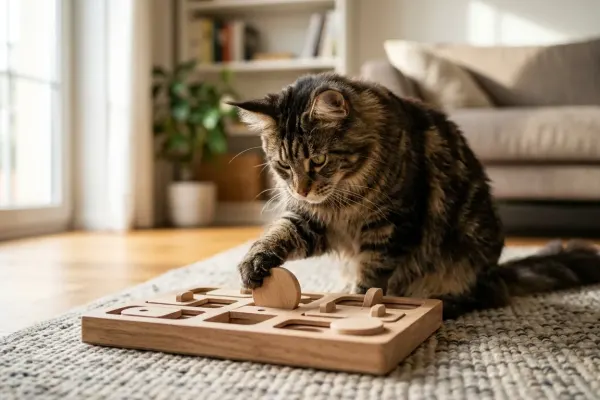
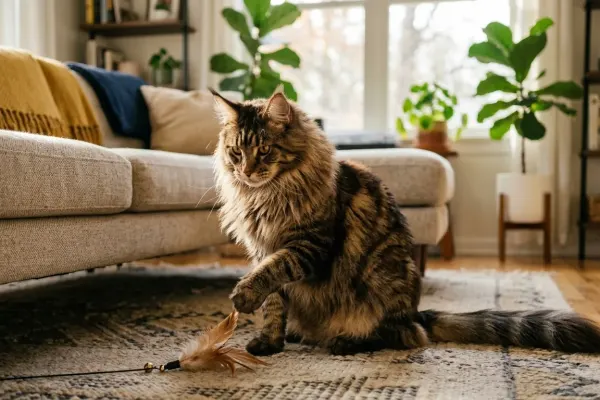
- Engage in Daily Interactive Play: Wand toys, feather teasers, and puzzle feeders burn off youthful energy and build positive associations with human interaction.
- Respect Natural Boundaries: Never trap or hold a Maine Coon that shows signs of wanting to leave. Cats that know their boundaries are respected will voluntarily seek out physical contact much more often.
For multi-pet households raising French Bulldogs as friendly family companions alongside feline friends, providing structured routines and dedicated perches ensures both pets feel secure. Much like setting up calm rest areas for the calm apartment living habits of Pugs, giving your Maine Coon dedicated lounging spaces close to the family helps nurture relaxed cuddling habits.
Frequently Asked Questions about Maine Coon Affection
Do Maine Coons like to be held and carried?
Most Maine Coons tolerate brief handling, but many dislike being carried for long periods due to their length and heavy body weight. When picking up a Maine Coon, always support both their chest and hindquarters with two hands so they feel secure and balanced.
Are male or female Maine Coons more affectionate?
Both male and female Maine Coons are affectionate and loyal. Males are often described by breeders as more outgoing, clownish, and eager for immediate attention, whereas females can be slightly more independent and choose specific moments throughout the day to seek out close cuddles.
Why does my Maine Coon follow me everywhere but avoid sitting on my lap?
Following you from room to room is one of the strongest indicators of Maine Coon affection. Avoiding your lap is usually a practical response to body heat and physical comfort rather than a lack of love. Your cat feels secure and content simply sharing the same room and resting near your feet.
Can an aloof Maine Coon become more cuddly with age?
Yes, many Maine Coons become noticeably more tactile and affectionate as they mature. Because the breed takes between three and five years to reach full social and physical maturity, adolescent cats often prioritize exploration and energetic play before settling into calm, affectionate daily cuddling routines.
Leave a Reply