Skip to content
Breed Directory & News

Dog Breeds

Expert-written dog breed profiles covering temperament, adult size, lifespan, grooming demands and the health problems each breed is prone to.

Latest Dog Breeds

How Many Golden Retriever Puppies in a Litter? Average Sizes and Factors

When determining how many Golden Retriever puppies in a litter are typical, the breed standard average is 8 puppies, with a normal range spanning between 4 and 12 puppies. First-time mothers generally deliver smaller litters (often 4 to 6 puppies), whereas mature, experienced dams in their prime adult breeding years tend to produce the largest litters. Key factors influencing litter size include maternal age, parity, body condition, genetic lineage, and breeding methodology.

November 25, 2026 By ShowDogsWest Editor

How Long a Golden Retriever Can Live: Lifespan, Senior Milestones, and Longevity Science

How long a Golden Retriever can live typically averages ten to twelve years, according to breed health data from the American Kennel Club (AKC). While historical surveys reported averages closer to fifteen to seventeen years in the 1970s, modern epidemiological studies indicate that cancer and large-breed joint conditions are major factors influencing longevity today. With proactive veterinary screenings, optimal weight management, and tailored senior care starting around age seven, many Golden Retrievers live active lives well past twelve years.

November 24, 2026 By ShowDogsWest Editor

Why Do Golden Retrievers Burp So Much? Causes and Practical Fixes

When pet parents ask why do Golden Retrievers burp so much, the primary reason is aerophagia (swallowing excess air) caused by enthusiastic eating, fast gulping of food or water, and their deep-chested anatomy. In most cases, an occasional post-meal burp is a harmless physiological release. However, if burping is sudden, foul-smelling, persistent, or accompanied by vomiting, restlessness, or abdominal swelling, it can indicate acid reflux, food intolerances, or serious gastrointestinal distress requiring veterinary attention.

November 21, 2026 By ShowDogsWest Editor

Do Golden Retrievers Need Their Glands Expressed? What Vets Recommend

Do Golden Retrievers need their glands expressed? Most healthy Golden Retrievers do not. As a large breed with naturally bulky, firm stools, Golden Retrievers empty their anal sacs automatically every time they pass a normal bowel movement. Routine manual expression by groomers on healthy dogs is unnecessary and can cause chronic tissue inflammation, duct scarring, or loss of natural muscular tone. Manual expression should only be performed when a dog displays clinical signs of impaction, such as floor scooting, rear licking, or a strong fishy odor, and is best evaluated by a veterinarian.

November 20, 2026 By ShowDogsWest Editor

Why Do Golden Retrievers Like Socks? Causes, Instincts, and Safety Guide

Golden Retrievers like socks primarily due to their natural retrieving instincts ("soft mouth" drive) and the comforting concentration of their owner's scent on worn foot fabric. Socks feel soft, lightweight, and rewarding to hold, often serving as a self-soothing item or a playful way to initiate attention. However, while carrying socks is harmless mouthing, chewing or swallowing socks poses severe gastrointestinal obstruction risks requiring immediate management and trade-up training.

November 18, 2026 By ShowDogsWest Editor

Are Male or Female Golden Retrievers Better? Complete Guide

To answer are male or female Golden Retrievers better, neither sex is objectively superior; both share the trademark friendly, gentle, and trainable disposition of the breed. Males are larger (65 to 75 lbs) and often retain an energetic, openly affectionate playfulness longer into adulthood. Females are slightly more compact (55 to 65 lbs), reach emotional maturity earlier in development, and tend to show affection on independent terms. Your decision should center on physical size preferences, household dynamic, and individual puppy temperament.

November 16, 2026 By ShowDogsWest Editor

Why Does My Golden Retriever Grunt? Normal Sounds vs. Health Warnings

If you find yourself asking why does my Golden Retriever grunt, the cause is most often benign contentment, such as deep relaxation, full-body stretching, and affectionate attention-seeking. However, persistent grunting during physical transitions often signals joint stiffness or osteoarthritis. If grunting presents as a harsh, raspy noise during inhalation, it warrants prompt veterinary evaluation for upper airway conditions such as laryngeal paralysis.

November 15, 2026 By ShowDogsWest Editor

Should I Get a Golden Retriever? Complete Breed & Lifestyle Guide

Getting a Golden Retriever is an excellent decision if you can commit at least 60 to 90 minutes of active daily exercise, provide consistent companionship, and manage moderate to heavy year-round shedding. Known for their friendly, loyal, and highly trainable nature, Golden Retrievers thrive in active households, but they require substantial time, grooming upkeep, and a dedicated budget for lifelong health care.

November 14, 2026 By ShowDogsWest Editor

How Do Golden Retrievers Act? Temperament, Habits, and Daily Behavior

In daily life, how do Golden Retrievers act? They behave as enthusiastic, affectionate, and deeply social companions who thrive on human interaction, mental challenges, and vigorous daily exercise. Bred originally as Scottish waterfowl gundogs, they combine an eager-to-please working attitude with a gentle, patient disposition toward children and strangers. They often exhibit puppy-like exuberance until three or four years of age, carry objects softly in their mouths, and seek close physical contact through leaning and cuddling.

November 13, 2026 By ShowDogsWest Editor

Do Golden Retrievers Like Chickens? Temperament, Risks, and Training Guide

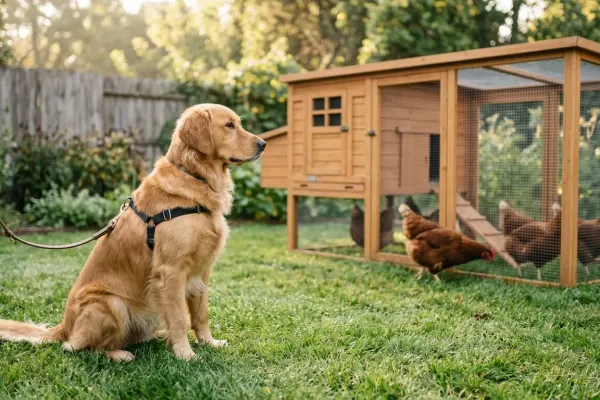
Golden Retrievers do not inherently view chickens as companion animals; instead, their gundog breeding often sparks an intense curiosity or chase instinct when birds flutter. While Golden Retrievers can learn to coexist peacefully with backyard flocks through consistent desensitization and obedience training, they should never be left unsupervised around free-ranging chickens without proven impulse control and secure physical fencing.

November 11, 2026 By ShowDogsWest Editor