
Table of Contents
Many prospective owners wonder: are Ragdoll cats friendly? The answer is a resounding yes. Ragdoll cats are exceptionally friendly, calm, and people-oriented feline companions. Bred specifically for a gentle and docile nature, Ragdolls naturally seek human companionship, greet family members at the door, and often collapse comfortably into a relaxed state when held. Their patient temperament makes them well suited for households with children and other pets.
- Ragdolls possess a calm, puppy-like temperament and actively seek out human interaction.
- They express affection through physical closeness, soft vocalization, head bunting, and lap cuddling.
- Most Ragdolls settle into their full lap-cat behavior as they mature between 3 and 4 years of age.
- They exhibit high social intelligence, excelling at reading human emotions and learning daily house routines.
Are Ragdoll Cats Friendly Toward People and Other Pets?
Ragdoll cats are renowned across the feline world for their unusually gentle and social personality. Unlike breeds that maintain a distant or aloof posture, Ragdolls thrive on daily human contact. They frequently follow their owners from room to room, sit nearby during quiet activities, and greet visitors at the front door with curiosity rather than fear.
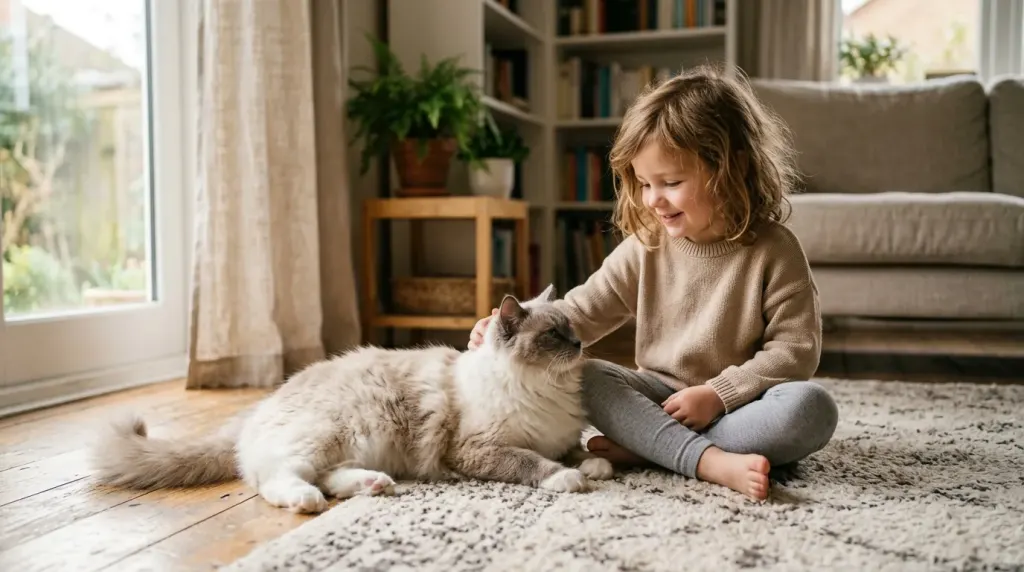
Breeders and breed registries highlight this docile nature as a defining characteristic. Selective breeding since the 1960s has reinforced traits that reduce territorial aggression and flightiness. As a result, Ragdolls adapt readily to busy households, multi-pet environments, and frequent domestic activity.
When introduced properly, Ragdolls interact peaceably with other household pets. Their low prey drive and non-confrontational mindset allow them to coexist smoothly with dogs and other cats. If you are comparing pet temperaments across different species, reviewing whether Pugs are friendly family dogs provides helpful context on how sociable companion animals integrate into family life. To verify pedigree standards or physical traits when adopting, learning how to identify a purebred Ragdoll cat ensures your cat comes from established breeding lines.
Are Ragdoll Cats Good With Children?
Ragdolls are widely considered one of the best cat breeds for families with children. Their calm demeanor means they rarely react with sharp claws or sudden defensive movement when handled. Children appreciate the breed’s tolerant nature and willingness to participate in gentle play.
However, adult supervision remains essential. Because Ragdolls often yield rather than retreat when handled awkwardly, parents must teach children how to support a cat’s body properly during handling. According to the Cat Fanciers’ Association (CFA), Ragdolls are noted for being loving without being demanding, maintaining a gentle and calm disposition in diverse family settings.
Note: Early socialization plays a significant role in developing confidence. Young kittens exposed to varied sights and sounds develop into steady adult companions.
If family members have sensitive allergies, evaluating whether Ragdoll cats are hypoallergenic helps clarify coat characteristics and dander management before bringing a kitten home.
Are Ragdoll Cats Affectionate?
Ragdoll cats express deep affection for their human families through consistent, quiet companionship. Historical records from the breed’s establishment by Ann Baker in California during the 1960s, documented in the Wikipedia entry on Ragdoll origin, document how early breeding selected for extreme docility and human attachment.
Rather than demanding constant noise or high-energy antics, Ragdolls show devotion through proximity. They prefer staying in the same room as their owners, resting on adjacent chairs, or reclining near work desks.
Prospective owners considering adoption should evaluate the real cost of Ragdoll cat ownership alongside temperament traits to ensure long-term care stability.
How Do Ragdoll Cats Show Affection?
Ragdolls communicate their bond through several distinct behavioral cues:
- Head Bunting and Facial Rubbing: Marking owners with scent glands around their cheeks to establish familiarity.
- Soft Chirping and Purring: Using quiet vocalizations to acknowledge human presence when approached.
- Following Behavior: Walking alongside family members throughout the home in a dog-like manner.
- Relaxed Body Posture: Falling limp or collapsing muscles comfortably when cradled in human arms.
Are Ragdoll Cats Cuddly and Good Lap Cats?
Most Ragdoll cats are dedicated lap cats that welcome extended cuddling sessions. Their semi-longhair coat and relaxed muscle tone make holding them a soothing experience for owners. When lifted, many Ragdolls display the signature limp relaxation reflex from which the breed takes its name.
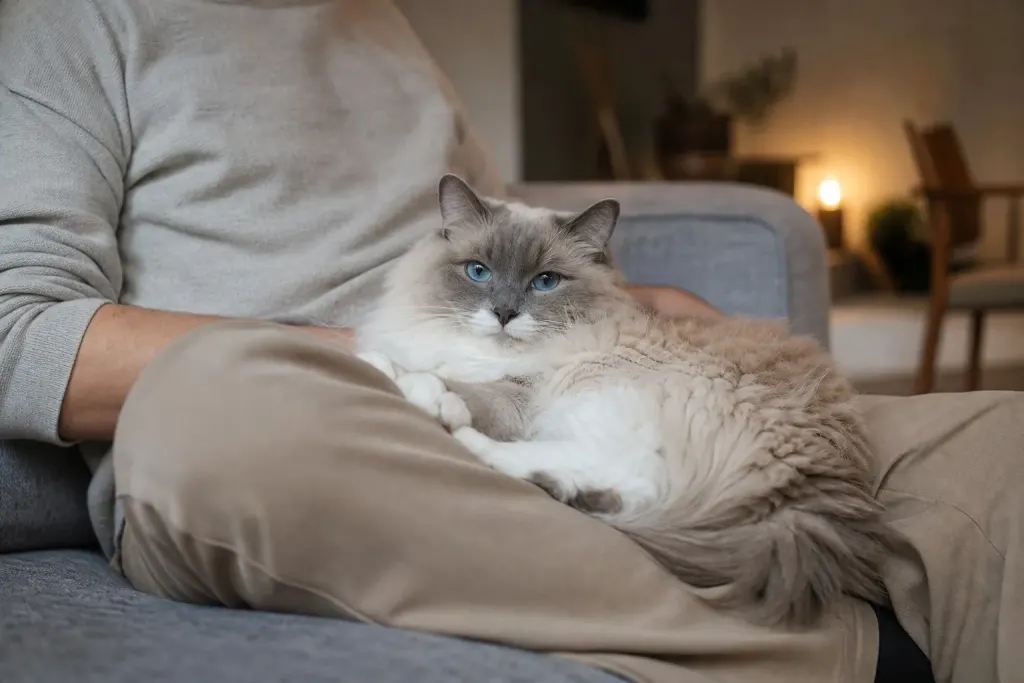
Understanding daily Ragdoll cat care requirements ensures that owners maintain a stable environment, which allows these cats to express their cuddly nature fully.
Do Ragdolls Become Cuddlier With Age?
Kittens and young Ragdolls spend their first two years exploring their environment with energetic curiosity. While affectionate from an early age, their full lap-cat tendencies typically blossom as they mature.
Because Ragdolls are a large, slow-maturing breed, they reach physical and behavioral maturity between 3 and 4 years of age. As their energy levels level off, adult Ragdolls spend significantly more time seeking out laps and quiet physical contact.
Are Ragdoll Cats Smart?
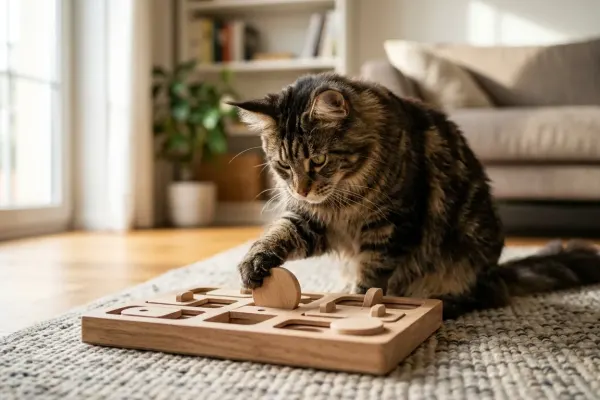
Ragdoll cats possess high social intelligence, even if they do not display the intense, restless puzzle-solving drive seen in some athletic breeds. They excel at understanding human body language, recognizing individual voices, and adjusting their behavior to family routines.
Ragdolls learn house rules quickly through positive reinforcement. Many owners successfully train Ragdolls to come when called, play fetch with soft toys, or walk comfortably on a harness.
How Does Ragdoll Intelligence Compare to Other Cat Breeds?
While active breeds like the Bengal or Abyssinian focus cognitive energy on mechanical problem solving and spatial exploration, Ragdolls direct their cognitive abilities toward interpersonal communication.
When comparing cognitive styles across different household pets, analyzing the French Bulldog intelligence ranking shows how companion breeds prioritize social cooperation over independent task execution.
Do Ragdoll cats get along with dogs?
Yes, Ragdoll cats generally get along very well with dogs. Their placid nature and lack of defensive aggression prevent tense standoffs, provided dogs are properly trained and introduced gradually.
Are male or female Ragdolls friendlier?
Both male and female Ragdolls are exceptionally friendly. Male Ragdolls are often described as slightly more demanding of physical attention and lap time, while females tend to be equally affectionate but slightly more independent during daily routines.
Leave a Reply