
Table of Contents
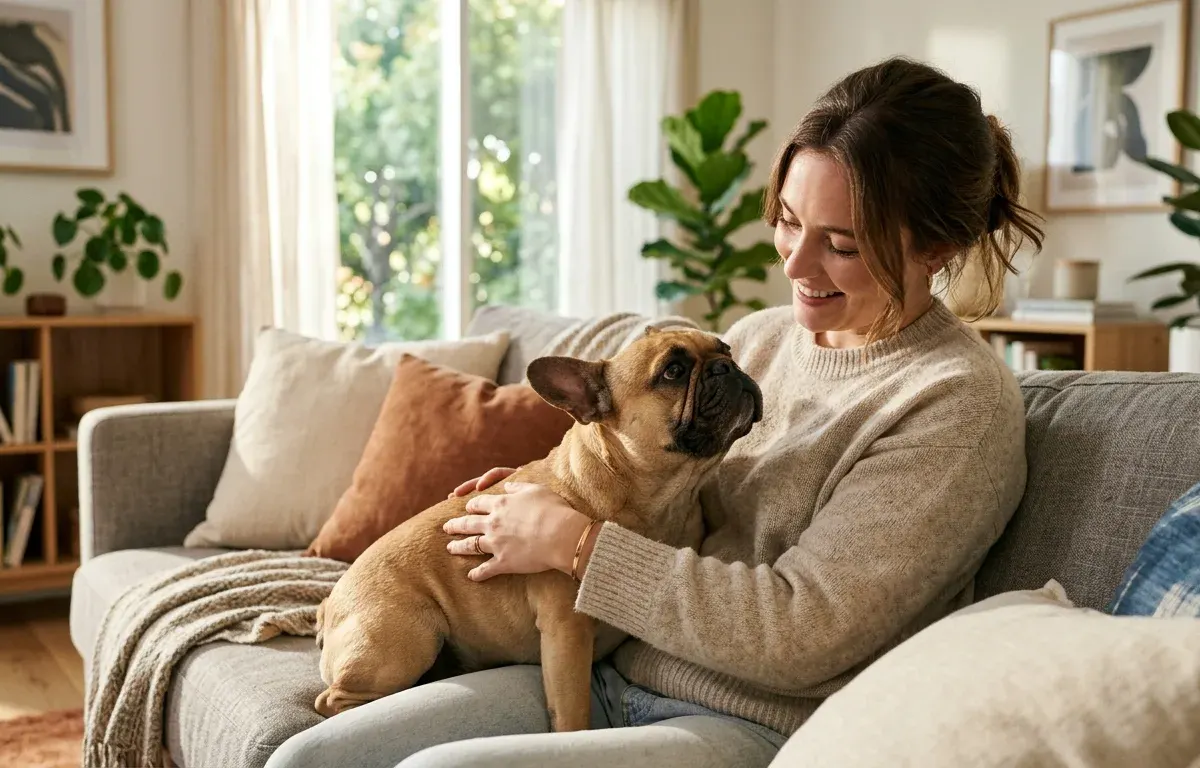
The main reason why are French Bulldogs so clingy is that they were selectively bred for centuries exclusively as human companion lap dogs. Their attachment is reinforced by mutual oxytocin hormone surges during physical contact and their dependence on owners for thermal and physical comfort. While regular shadowing is normal, sudden spikes in clinginess often indicate physical pain, sensory loss, or separation anxiety.
- Selective breeding created strong companion instincts without working drives.
- Mutual eye contact and touch trigger positive oxytocin bonding loops.
- Healthy velcro dogs stay calm alone; separation anxiety triggers panic.
- Sudden clinginess often stems from pain, IVDD, or sensory decline.
- Daily routines, crate safe zones, and enrichment foster healthy independence.
Primary Reasons French Bulldogs Develop Clingy Behavior
French Bulldogs have earned a reputation as quintessential velcro dogs. Unlike working or sporting breeds selected for independent task execution across large fields, the Frenchie was designed around constant human proximity. Understanding their intense attachment requires examining their selective heritage, neurochemistry, and environmental reinforcement.
Companion Heritage and Selective Breeding
The intense desire of French Bulldogs to shadow their owners traces directly to 19th-century selective breeding. English lace workers in Nottingham miniaturized the standard bulldog to create small lap companions that sat on workers’ laps to provide warmth. When the Industrial Revolution shifted lace manufacturing to Normandy, these miniature bulldogs accompanied their owners to France, where Parisian society continued refining them as domestic companion pets.
Because breeders selected specifically for sociability, low working drive, and affectionate dispositions, modern Frenchies lack the independent instincts found in terriers or hounds. Their primary evolutionary role has always been domestic companionship. Understanding the original purpose of French Bulldogs explains why seeking constant physical contact is their default behavioral baseline rather than an abnormal quirk.
The Oxytocin and Neurochemical Bonding Loop
The bond between a French Bulldog and its human companion is reinforced by biological feedback. Research published in Science by Nagasawa et al. (2015) demonstrated that mutual gaze and tactile contact between dogs and owners activate an oxytocin positive feedback loop similar to the attachment mechanism between human parents and infants.
When a Frenchie rests its chin on your knee or makes direct eye contact, both the dog and the handler experience elevated oxytocin levels. This neurochemical release lowers baseline stress and creates an internal reward system. Because French Bulldogs possess expressive facial anatomy and short muzzles that facilitate human-style eye contact, they initiate and sustain these hormonal exchanges frequently throughout the day.
Physical Dependency and Temperature Sensitivity
Brachycephalic anatomy creates physical vulnerabilities that encourage French Bulldogs to seek human reassurance. With compressed airways and compact muscular frames, Frenchies struggle with thermoregulation in both hot and cold environments.
During cooler weather, their short single coats lead them to seek body heat from humans on sofas and beds. In warmer conditions or during physical exertion, respiratory fatigue causes them to seek calm resting spots directly beside their handlers. Maintaining safe exercise limits for French Bulldogs keeps activity levels within comfortable boundaries so physical fatigue does not turn into needy exhaustion.
| Attachment Driver | Biological or Historical Mechanism | Daily Behavioral Expression |
|---|---|---|
| Companion Breed Heritage | Selection for low prey drive and lap-warming utility | Following owners between rooms, resting at feet |
| Oxytocin Feedback Loop | Mutual gaze elevating hormonal reward pathways | Sustained eye contact, leaning against legs |
| Brachycephalic Anatomy | Vulnerability to temperature and respiratory fatigue | Seeking body warmth, resting against owners after exertion |
| Social Reinforcement | Human praise, petting, and food treats | Begging for physical contact and lap access |
Normal Attachment vs. Canine Separation Anxiety
Many owners struggle to determine whether their Frenchie is simply an affectionate companion or suffering from clinical separation anxiety. Distinguishing between healthy velcro behavior and psychological distress is vital for maintaining your dog’s emotional health.
Identifying Healthy Velcro Dog Behavior
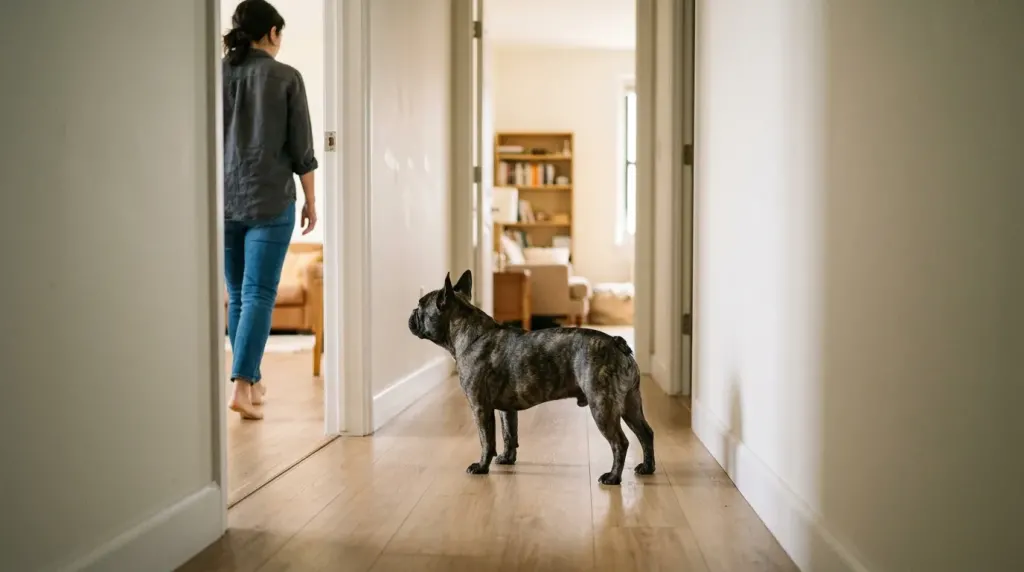
A healthy velcro French Bulldog enjoys companionship but maintains emotional stability when separated. Typical signs of normal attachment include:
- Moving from room to room to lie within sight of family members.
- Sleeping soundly on a nearby dog bed while humans work or relax.
- Greeting owners with enthusiasm upon arrival and settling down within 5 to 10 minutes.
- Resting comfortably alone for 4 to 6 hours when provided with a predictable routine.
Because healthy adult dogs spend large portions of the day resting, normal French Bulldog sleep patterns often include long naps near your desk that reflect contentment rather than lethargy.
Warning Signs of Separation-Related Distress
Clinical separation anxiety is a panic disorder. The dog experiences severe autonomic distress when isolated from its primary attachment figure. According to clinical veterinary behavior research on separation-related disorders documented in PMC4338184, true separation distress manifests through specific distress markers within 15 to 30 minutes of owner departure:
- Persistent whining, high-pitched barking, or howling that continues unabated.
- Destructive digging, scratching, or chewing directed at exit points such as doors and window frames.
- Inappropriate urination or defecation despite established potty training for French Bulldogs.
- Excessive drooling, dilated pupils, heavy panting, and refusal to eat high-value treats while alone.
Separation anxiety is not spiteful disobedience or a training failure. It is an involuntary panic state that requires systematic desensitization and environmental structure rather than scolding.
When Sudden Clinginess Signals Medical Discomfort or Pain
When a normally independent or moderately affectionate French Bulldog suddenly becomes intensely needy, owners must evaluate physical health before assuming behavioral regression. Dogs instinctively seek proximity and protection from trusted handlers when experiencing vulnerability, pain, or sensory impairment.

As documented in clinical veterinary behavioral research by Mills et al. (2020) in PMC7071134, sudden comfort-seeking and clinginess are recognized behavioral responses to physical pain, spinal discomfort, and internal illness in companion dogs. When an animal experiences physical vulnerability, staying in close contact with handlers provides emotional security, and effective analgesic treatment or medical care often resolves the acute clinginess without behavioral intervention.
Physical Health Triggers and Spinal Conditions
Because of their chondrodysplastic dwarf build, French Bulldogs face elevated risks for orthopedic and spinal conditions. Physical discomfort often manifests as reluctance to leave the owner’s side, trembling, or sudden avoidance of stairs.
Common physical causes of sudden clinginess include:
- Intervertebral Disc Disease (IVDD): Spinal disc compression causes acute back or neck pain, leading dogs to seek close contact for reassurance. Recognizing early signs of IVDD in French Bulldogs allows for rapid intervention before neurological damage progresses.
- Gastrointestinal Distress: Nausea, abdominal cramping, or acid reflux causes dogs to pace restlessly and lean heavily against owners.
- Musculoskeletal Pain or Tremors: Recognizing when French Bulldog shaking from pain or stress occurs alongside clinginess helps pinpoint acute discomfort.
- Ear Canal Infections: Otitis externa causes chronic pain and equilibrium changes, making dogs disoriented and reluctant to leave their handler’s side.
| Medical Trigger | Accompanying Clinical Signs | Immediate Owner Action |
|---|---|---|
| Spinal or Neck Pain (IVDD) | Reluctance to jump, arched back, muscle spasms | Restrict movement to crate, schedule veterinary exam |
| Gastrointestinal Upset | Lip licking, audible gut sounds, vomiting, food refusal | Withhold heavy treats, provide clean water, monitor 12 hours |
| Sensory Decline (Senior) | Bumping into furniture, startle responses, night pacing | Keep household layout stable, consult vet for cognitive evaluation |
| Ear Infection (Otitis) | Head shaking, ear scratching, odor, head tilt | Have veterinarian perform otoscopic exam and cytology |
Note: Any sudden change in clinginess accompanied by vocalization during touch, posture changes, or appetite loss requires prompt veterinary evaluation.
Practical Strategies to Build Independence in a Clingy Frenchie
Managing excessive clinginess does not mean weakening the emotional bond with your dog. It involves teaching your Frenchie that being alone is safe, predictable, and rewarding.
Establishing Structured Daily Routines and Safe Zones
Dogs thrive on consistency. When meal times, walks, and rest periods occur at predictable intervals, baseline anxiety decreases significantly.
- Designate a Dedicated Quiet Zone: Set up a comfortable crate or orthopedic dog bed in a low-traffic corner. Make this area inviting with chew toys and a worn shirt carrying your scent.
- Implement Structured Alone Sessions: Practice sending your dog to its designated spot while you remain in the room, rewarding calm settling with quiet praise.
- Build Household Routine Foundations: Reinforcing predictable daily feeding, exercise, and rest schedules establishes clear expectations that reduce separation confusion.
Positive Reinforcement and Mental Enrichment
Physical exercise alone is rarely enough to calm an over-attached Frenchie. Mental stimulation tires a dog’s cognitive faculties and builds self-reliance.
- Food-Dispensing Puzzles: Provide interactive puzzle toys or frozen lick mats loaded with canned dog food or small amounts of dog-safe peanut butter treats for French Bulldogs during departures. Licking releases endorphins that promote calm behavior.
- Reward Voluntary Independence: When your Frenchie chooses to lie on a rug across the room instead of on your lap, quietly deliver a treat without enthusiastic petting.
- Desensitize Departure Triggers: Pick up your keys, put on your coat, or touch the door handle multiple times throughout the day without actually leaving. This breaks the predictive association between these cues and your absence.
- Consistent Foundational Commands: Structured obedience lessons focused on training a French Bulldog teach crucial self-control commands like “place” and “stay”.
Frequently Asked Questions About French Bulldog Clinginess
Can French Bulldogs Be Left Home Alone?
Healthy adult French Bulldogs can safely stay home alone for 4 to 6 hours once acclimated to a consistent daily routine. Young puppies require bathroom breaks every 2 to 3 hours. For full working days exceeding 6 hours, arrange for a mid-day dog walker or family check-in to provide necessary potty breaks and mental stimulation.
Why Did My French Bulldog Suddenly Become Clingy?
A sudden increase in clinginess usually stems from physical pain, recent household stress, or sensory loss. Spinal disc compression, dental disease, gastrointestinal pain, or changes in vision frequently cause dogs to seek constant human contact for comfort. Schedule a veterinary examination if clinginess develops abruptly alongside lethargy or posture changes.
Are Male French Bulldogs More Clingy Than Females?
Both male and female French Bulldogs exhibit strong velcro behaviors due to breed-wide companion genetics. Some owners and trainers observe that intact males can show slightly higher baseline dependency, but individual temperament, socialization history, and daily household routines influence attachment far more than biological sex.

Leave a Reply