
Table of Contents
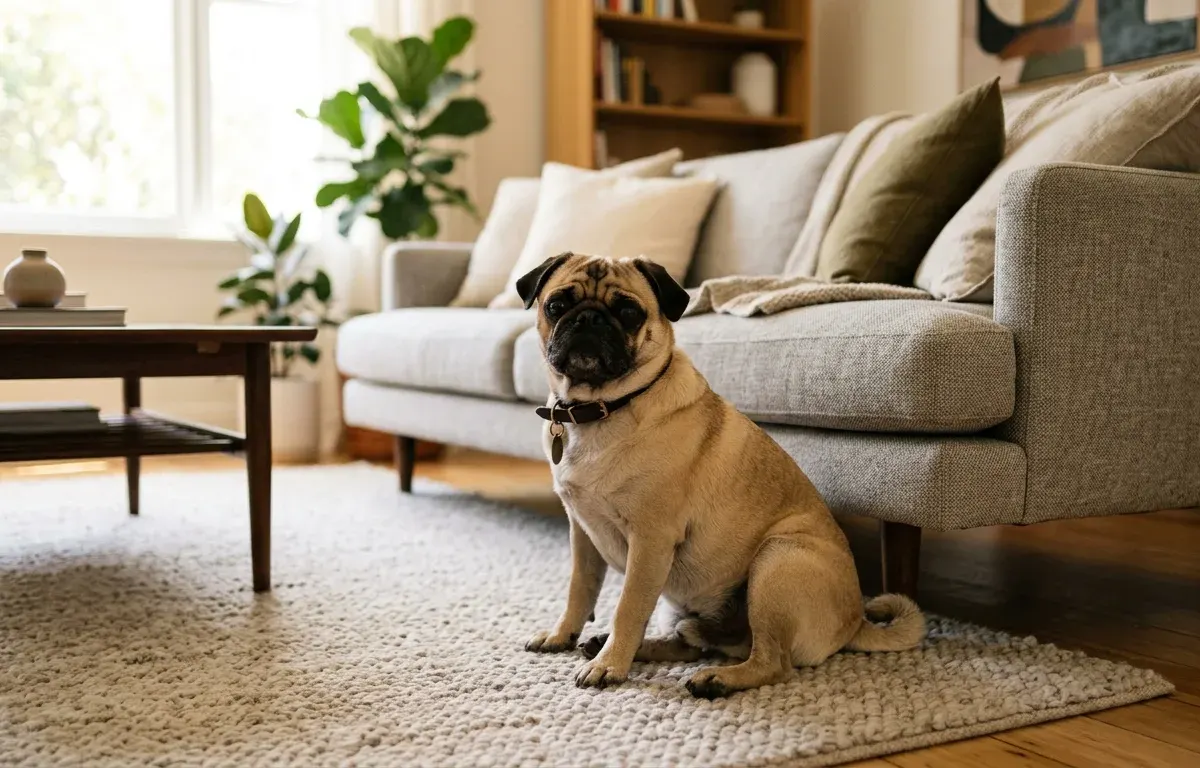
When asking are pugs active dogs, the short answer is that pugs are low-to-moderate energy companion dogs rather than high-stamina working animals. An adult pug thrives on 20 to 30 minutes of light daily exercise divided into two gentle walks, paired with short interactive play sessions indoors. Their compact build and flat facial structure naturally limit endurance, making them calm household pets that spend 12 to 14 hours a day resting.
- Pugs possess moderate energy levels with occasional short bursts of playfulness rather than sustained athletic stamina.
- Adult dogs need 20 to 30 minutes of total daily walking, ideally split into morning and evening outings.
- Brachycephalic anatomy makes pugs vulnerable to heat stress when outdoor temperatures exceed 75°F (24°C).
- Sudden sprints called zoomies (FRAPs) last 1 to 5 minutes and are a healthy way to release stored energy.
- Gentle indoor games, puzzle toys, and consistent routines satisfy their physical and mental needs safely.
Pug Energy Profile: What “Active” Means for a Pug
When evaluating whether pugs are active dogs, it helps to understand their historical purpose and physical structure. Pugs belong to the Toy Group, developed over centuries in ancient China and Europe as devoted lap companions rather than hunting, herding, or sporting dogs. According to the American Kennel Club breed standard, pugs are even-tempered, charming, and affectionate animals that prioritize human companionship over rigorous athletic tasks.
Dr. Jerry Klein, Chief Veterinary Officer at the American Kennel Club, notes that pugs rank among the less demanding breeds regarding physical exercise requirements, flourishing when given predictable daily routines and gentle movement. Compared to working breeds that demand two or more hours of intense running, pugs are not high energy dogs designed for heavy endurance. Their baseline heart rate and oxygen consumption elevate rapidly during exertion because of their shortened nasal passages.
Many prospective owners wonder why pugs are calm dogs in the house for most of the day. Their calm nature stems from balanced breeding that emphasizes social warmth and low reactivity. While they enjoy family activities and greeting guests, their physical build favors quiet lounging. Understanding these classic lap dog tendencies in pugs helps owners create an environment suited to their natural comfort and temperament.
Age Effects on Pug Energy
Energy output in pugs changes across different life stages:
- Puppy stage: Young puppies exhibit frequent, lively play bouts followed by deep sleep. Energy arrives in brief, spirited bursts as they explore their environment and learn household routines.
- Young adult stage: Activity levels stabilize at a steady, moderate pace once physical growth completes. Young adults remain curious and engage readily in daily walks and indoor play.
- Mature adult stage: Adult pugs settle into predictable daily rhythms, comfortably alternating between short outings, gentle play, and extended rest.
- Senior years: Physical stamina declines gradually as joints age. Older pugs prefer slow strolls and softer surfaces, spending more time resting throughout the day.
Owners can monitor physical changes closely as their pets mature to understand how pugs transition into senior age and adjust exercise duration accordingly.
Signs a Pug Is Overactive or Underactive
Because pugs aim to please their humans, they may continue walking even when fatigued. Watch for these behavioral indicators:
- Signs of overexertion: Loud wheezing, excessive panting with a widened tongue, lagging behind on the leash, reluctance to continue walking, or reddish gums.
- Signs of healthy energy: Alert upright ears, bright eyes, a gently curled tail, and curious sniffing during walks.
- Signs of underactivity or boredom: Excessive paw licking, destructive chewing on furniture, restless pacing, or rapid weight gain from unspent calories.
A pug’s activity level reflects physical capacity rather than a lack of enthusiasm. Controlled movement preserves long-term joint health and respiratory comfort without causing physical exhaustion.
How Much Exercise Does a Pug Need?
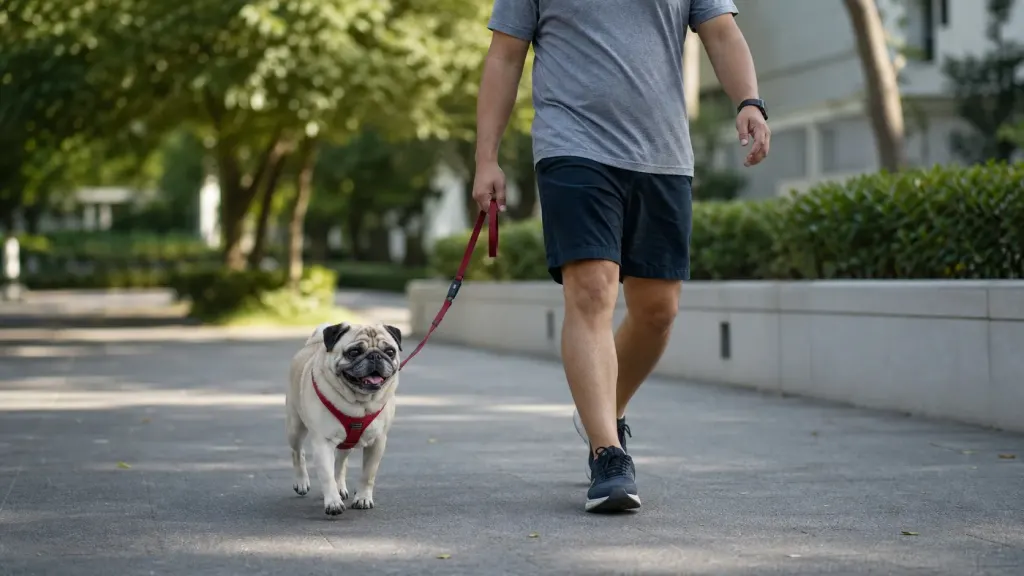
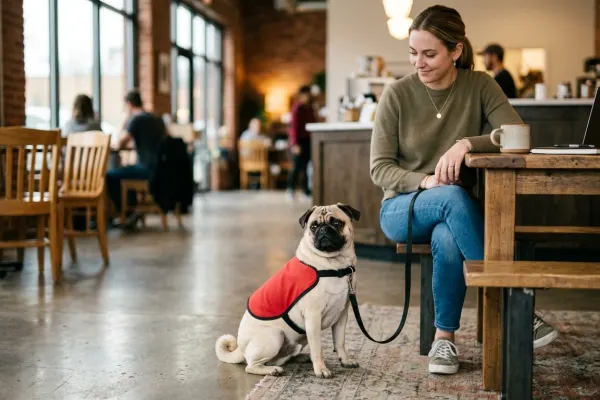
According to the PDSA pet care guide, an adult pug needs between 20 and 30 minutes of moderate exercise daily. Dividing this time into two 10 to 15 minute outings prevents airway strain while offering adequate bathroom breaks and sensory stimulation.
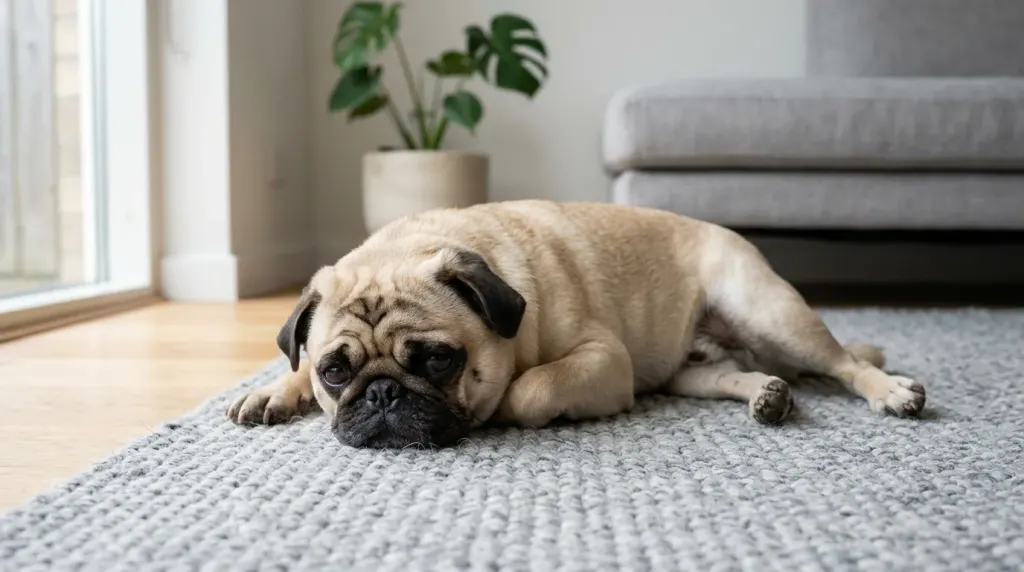
The table below outlines recommended activity schedules based on life stage:
| Life Stage | Daily Walking Target | Recommended Play Format | Main Safety Focus |
|---|---|---|---|
| Puppy (under 12 months) | 15 minutes total (split into 5-minute sessions) | Gentle indoor fetch with soft plush toys | Avoid stair jumping and hard running |
| Adult (1 to 7 years) | 20 to 30 minutes total (two 15-minute walks) | Light fetch, scent work, short garden strolls | Use a padded chest harness; avoid midday heat |
| Senior (7+ years) | 10 to 20 minutes total (slow pace) | Snuffle mats, gentle indoor searching games | Monitor joint stiffness and pavement temperature |
Pugs adapt well to small living spaces when their modest activity needs are met. Reviewing pug exercise needs in apartment settings shows that compact homes offer plenty of room for daily indoor enrichment. Establishing a structured schedule following daily pug care guidelines ensures proper exercise, wrinkle cleaning, and weight management throughout the year.
Exercise Ideas for Different Settings
Owners can keep their dogs physically fit and mentally stimulated through low-impact activities:
- Neighborhood sniffing walks: Allow the dog to pause and explore scents along a quiet sidewalk. Sniffing provides mental stimulation equivalent to physical exertion without respiratory strain.
- Soft toy indoor fetch: Toss lightweight plush toys across a carpeted hallway for 5 minutes.
- Food puzzle mats and treat dispensers: Scent-based snuffle mats encourage problem-solving and slow down eating.
- Basic obedience practice: Five-minute training sessions reinforcing commands like sit, stay, and come build focus and bond strength.
Weather-Adjusted Routines
Because of brachycephalic airway syndrome, flat-faced breeds cannot cool inhaled air efficiently. When ambient temperatures rise above 75°F (24°C) or relative humidity exceeds 60%, outdoor exercise should be restricted to early morning or late evening hours. During hot summer afternoons, replace outdoor walks with air-conditioned indoor games. In winter, short walks in dry conditions protect sensitive paws from cold pavement.
Note: Always use a Y-shaped chest harness rather than a neck collar. Collars place direct pressure on the trachea, increasing the risk of airway collapse during walks.
How to Tell If a Pug Is Calm or High Energy
While the breed baseline is gentle, individual dogs vary along an energy spectrum. A calm pug enjoys sitting beside family members, observing household routines, and greeting visitors with quiet tail wags. In contrast, a more energetic individual may seek out toys frequently, initiate play invitations, or experience sudden running spells. During puppyhood, when youthful exuberance takes over, new owners sometimes ask if pugs are hyper dogs as they dart rapidly across rugs.
During high-spirited play bouts, pugs frequently exhibit Frenetic Random Activity Periods, commonly called zoomies. During a zoomie episode, the dog tucks its tail, lowers its rear, and sprints in rapid circles for 1 to 3 minutes before flopping down to rest. This behavior is a natural release of excitement. In young or excitable dogs, intense bursts can occasionally lead to excited urination in playful pugs, which usually diminishes with maturity and calm handling.
A well-socialized pug is a playful dog that thrives on human affection, making the breed popular for multi-pet households. Exploring friendly pug temperament confirms that their affectionate nature supports harmonious living with families and other pets when daily activity needs are met.
Common Myths About Pug Energy Levels
Several misconceptions surround pug activity, learning capacity, and daily behavior:
- Myth 1: Pugs are lazy dogs that never want to move.
- Reality: When asking whether a pug is a lazy dog, the answer is that pugs are playful dogs that enjoy daily activities. Their frequent resting periods allow their compact airways to recover and prevent overheating.
- Myth 2: Pugs cannot participate in any training or cognitive games.
- Reality: Pugs can learn tricks, basic obedience, and low-impact agility exercises in climate-controlled spaces. Providing structured mental stimulation for smart pugs satisfies their cognitive drive safely without causing airway fatigue.
- Myth 3: A hyperactive pug needs longer distance running to calm down.
- Reality: Increasing running distance risks heat exhaustion in flat-faced dogs. Hyperactivity is better resolved through 10 minutes of scent work. Understanding healthy play arousal also helps owners differentiate normal exuberance from rare reactivity and aggression in pugs.
- Myth 4: Finding that pugs are sleeping dogs for most of the day indicates illness.
- Reality: Adult pugs naturally sleep 12 to 14 hours per 24-hour cycle. Healthy sleep supports immune function and metabolic balance.
Frequently Asked Questions About Pug Energy Levels
Are pugs high energy dogs?
When evaluating whether a pug is a high energy dog, official breed standards confirm they are low-to-moderate energy dogs. They have modest physical stamina and require 20 to 30 minutes of gentle walking per day rather than vigorous running.
Are pugs considered lazy dogs?
Pugs are often perceived as lazy because they sleep 12 to 14 hours daily and take frequent rest breaks. However, this resting pattern is a physical adaptation to manage their compact airways, not a lack of interest in play.
Do pugs sleep a lot during the day?
Yes, healthy adult pugs sleep between 12 and 14 hours every day, while growing puppies and senior dogs often sleep up to 18 hours. Daytime naps between activity sessions are completely normal.
How much exercise do pugs need daily?
Most adult pugs need 20 to 30 minutes of total daily exercise, best divided into two short 15-minute walks in cool weather alongside brief indoor play sessions.
Leave a Reply