
Table of Contents
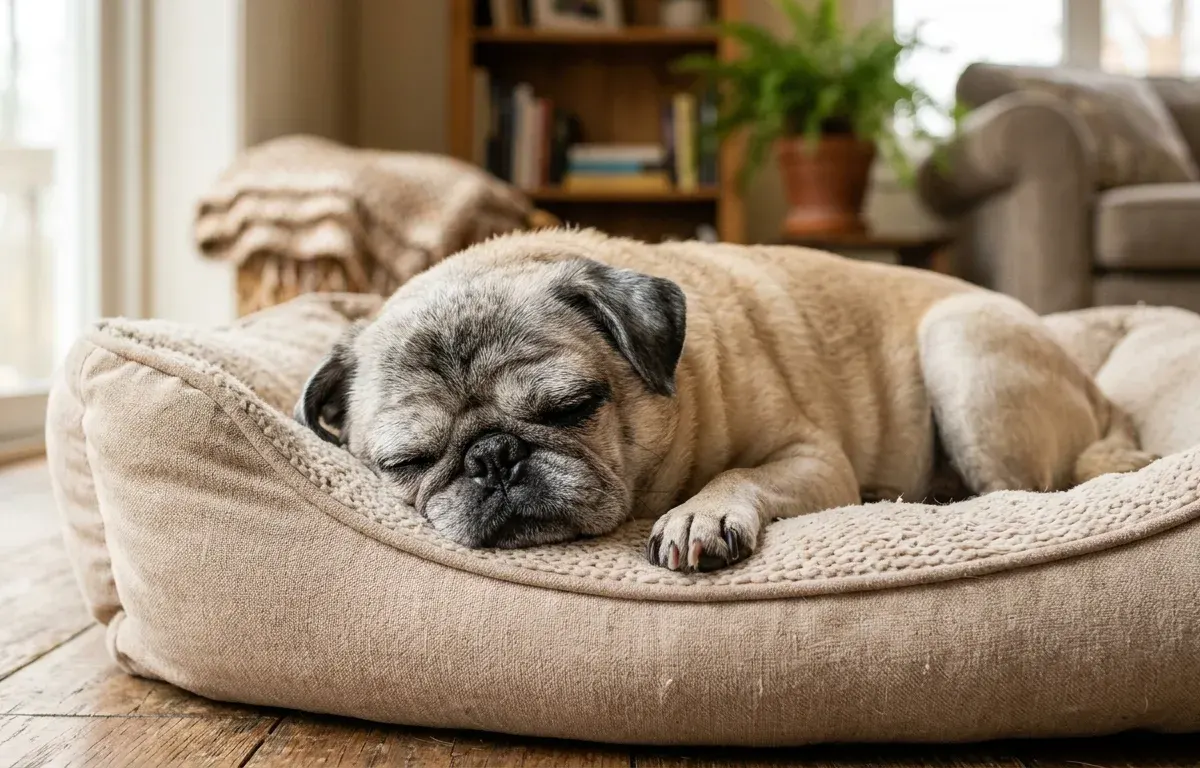
When are Pugs considered senior dogs? Most owners should begin treating a Pug as a senior around age 8, with age 7 a sensible point to start the conversation. The American Animal Hospital Association defines a senior dog as one entering the last 25% of its estimated lifespan, meaning health history matters alongside the calendar.
- Senior care planning usually starts around age 8 for Pugs.
- Aging is individualized; a single birthday does not predict clinical condition.
- Observable changes in mobility and behavior prompt veterinary assessment, not just "old age."
When a Pug becomes a senior dog
Owners often wonder exactly when do Pugs become senior dogs. Veterinary guidance defines a senior dog based on its expected lifespan rather than a universal age. According to the American Animal Hospital Association (AAHA), a dog is considered a senior when it enters the last 25% of its estimated lifespan. The American Veterinary Medical Association (AVMA) places small and toy breeds under 20 pounds in the senior category at 8 to 11 years. Because Pugs have an average life expectancy of 12 to 15 years, a practical benchmark is around 8 years old, with proactive screening discussions starting around age 7.
Online sources often suggest different ages, ranging from 6 to 11 years. These variations occur because they use different lifespan assumptions and rounding. The AAHA and AVMA anchor the senior stage to the individual dog. When a Pug begins slowing down, it is not automatically just old age. New physical or behavioral changes deserve a proper assessment, as they often signal treatable conditions.
Once a Pug reaches the senior stage, its daily needs differ from ordinary adult upkeep. For example, maintaining a daily Pug care routine involves adjusting grooming and monitoring habits. It is also important to keep Pug exercise needs matched to the individual dog, ensuring they stay active without overexertion.
Why senior age is not one fixed birthday
“Senior” is a care-planning category, not a clinical diagnosis. The AVMA and AAHA stress there is no universal senior age for dogs because breed and lifespan vary significantly. Rather than relying entirely on a number, a veterinarian weighs mobility, body and muscle condition, behavior, vision, and hearing. One healthy eight-year-old Pug can differ significantly from another depending on genetics, diet, and prior care.
| Calendar Age vs. Health Status | What It Means |
|---|---|
| Chronological Age | The exact number of years since birth; useful as a baseline. |
| Biological Age | The actual physical and physiological condition of the dog. |
| Veterinary Assessment | Evaluates body condition, mobility, and organ function. |
Puppy, adult, mature adult, and senior Pug stages
If you are wondering when does a Pug puppy become a full-grown dog, a Pug is a puppy until rapid growth ends, typically around 9 to 12 months. It is considered a young adult until physical and social maturity completes by 3 to 4 years. The mature adult stage lasts through mid-life until the final quarter of the dog’s expected lifespan. This means senior status arrives years after a Pug is already an adult.
During the puppy stage, the focus is on socialization, training, and preventive care. The young adult phase solidifies their adult size and established routine. Mature adults require ongoing maintenance of fitness, weight, and dental care. Senior planning begins roughly around age 8 and is highly individualized by the veterinarian.
The transition through these stages influences how the dog fits into the household. Their family-friendly traits often remain consistent, but their energy patterns evolve. Their lifelong companion habits and lap-dog temperament usually deepen as they enter the mature and senior phases.
Does adult size mean fully mature?
Adult size is only one marker of maturity. Social and emotional maturity completes later than physical growth. Senior-care planning depends on later-life health trends, not on whether the Pug has stopped growing. The key point is that adulthood begins years before senior status, and a fully grown young Pug still has a long mature phase before entering its senior years.
How to tell how old a Pug is
If you want to figure out how to tell how old a dog is, especially a rescue Pug, a veterinarian estimates their age by combining observations of the teeth, eyes, coat, muscle condition, movement, and history. No single physical clue gives a precise birthday. For example, cloudiness in the eyes from lenticular sclerosis often begins around age 7, but it is not a reliable clock on its own.
Teeth can show tartar, wear, missing teeth, or gum disease, but these signs are skewed by previous dental care and diet. When looking at the eyes, a veterinarian will distinguish age-related lens haze from a cataract diagnosis. Gray hairs on the coat and face are supportive clues, but never a definitive timer. Muscle loss or stiffness can reflect disease, injury, or fitness levels, rather than age alone. To build an accurate profile, owners should request prior veterinary notes, microchip data, vaccine history, and adoption paperwork.
While checking the dog’s overall health, remember that examining Pug ear anatomy is part of a full head-to-tail check, not an age indicator.
| Physical Clue | What It Can Suggest | Why It Is Imperfect |
|---|---|---|
| Teeth | Wear and tartar accumulation over time. | Heavily influenced by diet and dental care. |
| Eyes | Cloudiness (lenticular sclerosis) often starts around 7. | Can be confused with cataracts; varies by dog. |
| Coat/Face | Graying fur around the muzzle. | Genetics cause some dogs to gray much earlier. |
| Body/Gait | Stiffness or muscle loss. | May indicate injury or disease, not just age. |
Which observations need a veterinarian?
Owners can gather useful observations and records, but the age estimate and any abnormality belong to a veterinarian. Dental wear, cloudy-looking eyes, stiffness, or weight changes are influenced by disease and care history. None of them proves an exact age on its own.
- Track at home: Sleep patterns, appetite, visible graying, and general activity levels.
- Ask the vet: Eye cloudiness, joint stiffness, sudden weight changes, and severe dental issues.
Signs an older Pug needs senior-focused care
Reduced mobility, altered activity or behavior, appetite or thirst shifts, and new indoor accidents are worth logging and discussing with a veterinarian. They can signal treatable conditions rather than mere aging. The AAHA recommends keeping a detailed history covering eating, drinking, movement, elimination, vision, and hearing.
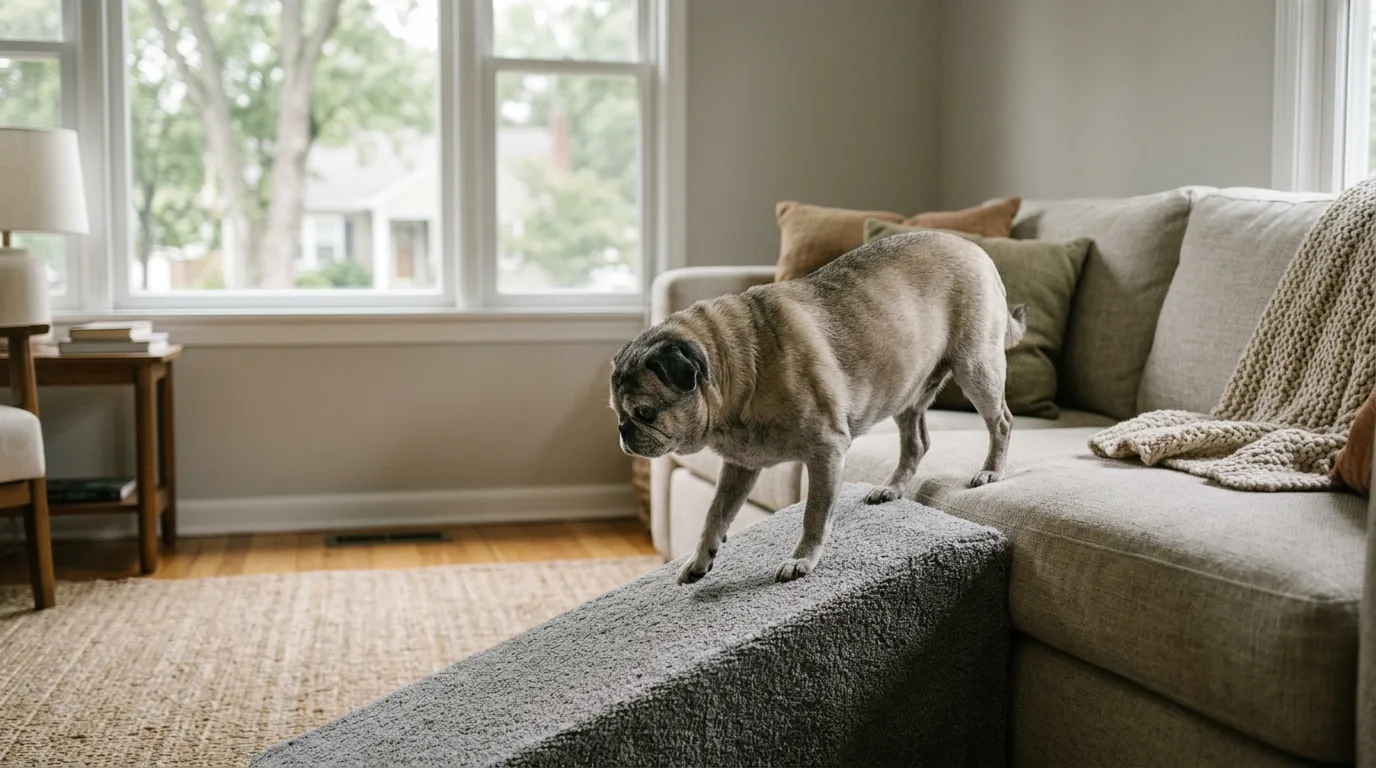
Mobility issues such as stiffness, an altered gait, difficulty rising, or a reluctance to use stairs require attention. Cognitive and behavioral changes might include disorientation, sleep-cycle disruptions, altered interaction, new anxiety, or indoor accidents. Record the dog’s body weight and visible muscle changes rather than guessing. Because Pugs are a brachycephalic breed, treat any breathing or heat tolerance changes as a reason to contact the veterinarian.
If you notice changes in behavior, it is helpful to distinguish between a medical issue and their longstanding friendly temperament.
- Record changes: Track when symptoms started and how often they occur.
- Do not self-diagnose: Bring your logs to the veterinarian instead of attempting home treatments.
Mobility changes are not simply “old age”
Stiffness, lameness, reduced willingness to exercise, difficulty rising, and trouble with stairs or jumping are recognized osteoarthritis signs and warrant veterinary assessment. According to the Cornell Riney Canine Health Center, osteoarthritis can develop at any age, not only in seniors. These changes should be checked rather than assumed to be normal aging.
Note: This guide helps you notice patterns but cannot diagnose pain or arthritis. Consult a veterinarian before changing your Pug’s exercise routine, diet, supplements, or medication.
Before an appointment, note when the stiffness is worst and which specific movements the dog avoids.
Behavioral changes also deserve assessment
New disorientation, nighttime wandering, altered interaction, accidents after prior house-training, or anxiety should be discussed with a veterinarian. Cornell notes these symptoms can accompany cognitive dysfunction syndrome, but a diagnosis requires ruling out pain, systemic illness, and vision or hearing loss. The DISHAA guide (Disorientation, Interactions, Sleep-wake cycle, House-soiling, Activity, Anxiety) helps owners track these specific changes.
Building a senior-health plan for your Pug
Start with more frequent, tailored veterinary reviews. The AVMA and veterinary clinics recommend wellness visits at least twice yearly for seniors, often including bloodwork, so problems are caught early. The exact plan depends on the individual dog’s health and the veterinarian’s judgment.
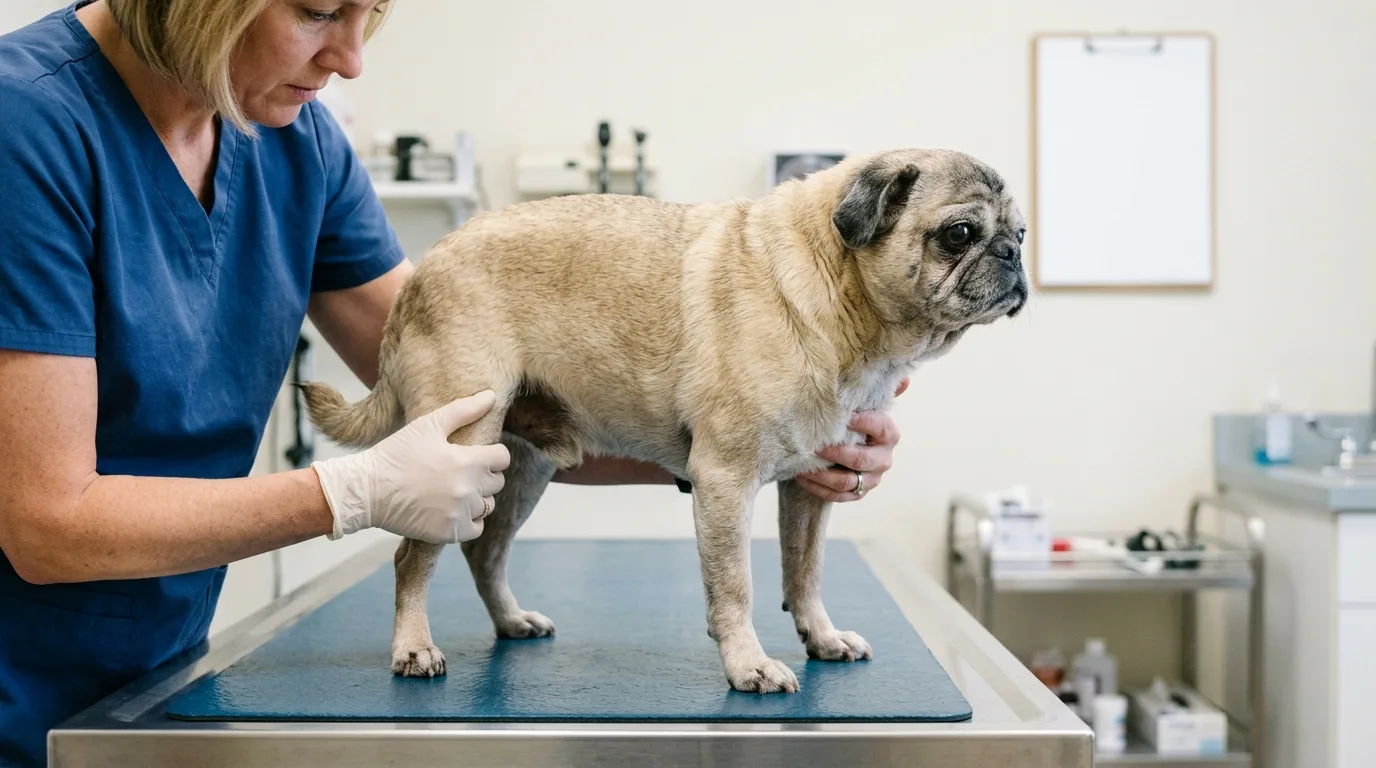
Bring a simple log detailing appetite, thirst, stool and urination patterns, sleep, activity, breathing concerns, and weight. Short videos of unusual movement are incredibly helpful. Ask the veterinarian for a body and muscle condition assessment, an oral exam, a mobility and pain evaluation, and a review of all medications and supplements. Discuss testing based on history and findings, not as a one-size-fits-all package. Make supportive home changes, such as non-slip rugs, ramps, and orthopedic bedding, while still seeking a diagnosis for new symptoms.
Maintaining a consistent daily care routine alongside these veterinary checks is the best way to support your dog.
- Ask your veterinarian: “Is my Pug’s body condition score ideal?”
- Ask your veterinarian: “Should we run baseline bloodwork this year?”
- Ask your veterinarian: “Are these supplements still appropriate for their current health?”
Should you switch to “senior” food at a set age?
No automatic switch is warranted by a birthday alone. Diet should reflect the individual Pug’s body condition, activity level, and any medical issues such as arthritis or excess weight. A veterinarian can advise whether a diet change actually helps, rather than defaulting to a bag with a “senior” label.
When to contact a veterinarian promptly
Seek prompt veterinary care for trouble breathing, blue or pale gums, collapse, sudden hind-limb weakness, inability to stand, marked pain, repeated vomiting, refusal of food or water, or sudden neurologic change. This is triage guidance, not a diagnosis.
Gradual aging never explains sudden or severe changes. Because Pugs are brachycephalic, open-mouth breathing at rest, blue or pale gums, or breathing that will not settle after rest need urgent assessment. Sudden hind-limb weakness warrants a same-day visit given the risk of Intervertebral Disc Disease (IVDD) in the breed.
Frequently asked questions
Is a 10-year-old Pug a senior dog?
Yes. A 10-year-old Pug fits both the practical Pug senior benchmark and the AVMA’s 8 to 11-year range for small and toy breeds. However, individual function and health still shape the exact care plan.
Can a Pug be senior at age 7?
A seven-year-old Pug may not meet every broad range, but it is an appropriate time to begin a proactive senior-care and screening discussion. This is especially true if mobility, weight, breathing tolerance, or a chronic condition has changed. Senior status is individualized, not fixed to one birthday.
Can gray fur or worn teeth reveal my Pug’s exact age?
No. They are clues a veterinarian combines with a full exam and records. Teeth and eyes vary widely because health history, dental care, and disease all change how they look.
Does “senior” mean my Pug is geriatric or near the end of life?
No. “Senior” is a life stage that guides preventive care and monitoring. It does not predict remaining lifespan or mean normal activity and enjoyment should stop.

Leave a Reply