
Table of Contents
Maine Coons make excellent pets for households seeking an affectionate, sociable, and highly interactive companion. Known as the gentle giants of the cat world, they combine a calm demeanor with playful, dog-like loyalty, adapting smoothly to homes with children, dogs, and other cats. However, their large adult size (12 to 25+ lbs for males) and dense semi-longhair coat require dedicated weekly grooming, adequate living space, and attention to breed-specific genetic health screenings.
- Maine Coons possess a friendly, dog-like personality, frequently greeting family members and participating in daily household routines.
- Males mature to 12-25+ lbs and females to 8-14 lbs, taking 3 to 5 years to reach full physical maturity.
- Coat care requires brushing 2 to 3 times weekly to remove dead undercoat and prevent matting.
- They thrive in multi-pet homes and get along well with respectful children and dog companions.
- Primary health priorities include screening for Hypertrophic Cardiomyopathy (HCM), hip dysplasia, and genetic testing for SMA and PKDef.
Are Maine Coons Good Pets? Overview of the Gentle Giant
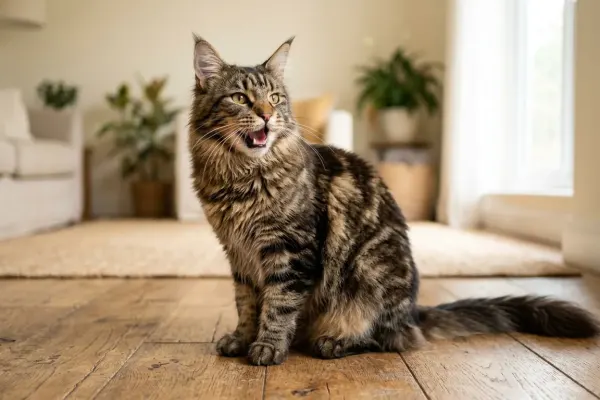
The Maine Coon stands out as one of the oldest natural breeds in North America, originally developed as a rugged working mouser in the harsh winters of New England. According to the official Cat Fanciers’ Association (CFA) breed standard, these cats are characterized by a sturdy, muscular rectangular body, large tufted ears, and a long, flowing tail.
In modern companion animal households, the popularity of Maine Coons rivals that of beloved canines such as popular French Bulldogs, primarily because these felines offer an unusually engaging social presence. Unlike solitary or aloof feline stereotypes, Maine Coons actively seek human companionship without demanding constant physical lap-holding. They communicate through soft trills, chirps, and head-butts rather than loud meowing, making them polite and pleasant housemates.
Their playful nature remains vibrant across their lifespan. While energetic canine companions like active Pugs display brief bursts of running, Maine Coons maintain an athletic, exploratory curiosity well past kittenhood. Males routinely reach 12 to 25 pounds, while females generally range between 8 and 14 pounds. Because their growth cycle is gradual, reaching full physical frame and coat fullness between 3 and 5 years of age, their youthful curiosity lasts longer than in standard domestic cats.
| Physical & Behavioral Trait | Maine Coon Standard | Household Impact |
|---|---|---|
| Adult Male Weight | 12 to 25+ lbs (5.4 to 11.3+ kg) | Requires extra-large litter boxes, heavy-duty scratching posts, and sturdy cat trees |
| Adult Female Weight | 8 to 14 lbs (3.6 to 6.4 kg) | Slightly more compact, but still larger than average domestic cats |
| Coat Type | Heavy, water-resistant semi-longhair with dense undercoat | Requires scheduled brushing 2-3 times per week to prevent friction mats |
| Vocalization Style | Melodic trills, chirps, and soft purrs | Low noise profile; expressive without persistent loud vocal demands |
| Average Lifespan | 9 to 15 years | Long-term family commitment requiring routine preventive veterinary care |
What Makes Maine Coons Good Pets: Temperament and Personality Traits
When evaluating whether Maine Coons make good pets, their temperament is the defining factor that wins over cat enthusiasts and dog lovers alike. They are frequently described as dog-like because they follow their owners from room to room, inspect ongoing chores, and often learn interactive games like fetch.
Their affectionate nature is balanced by an easygoing independence. A Maine Coon enjoys lying on your desk while you work or curling up at your feet on the sofa rather than demanding suffocating restraint. In comparison to other gentle breeds like friendly Ragdoll cats, Maine Coons tend to be more physically exploratory, agile, and curious about water and household objects.
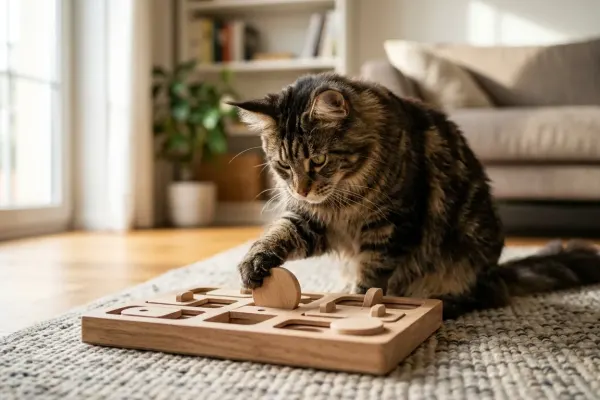
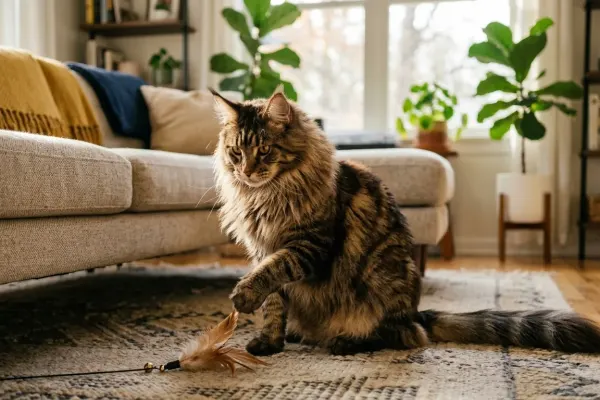
Furthermore, Maine Coons exhibit a companionable loyalty that differs distinctly from demanding or clingy French Bulldogs that require constant physical touch. A Maine Coon is content to stay in the same room as you, providing calm companionship without suffering severe distress if you step away for a moment. They greet guests at the front door with friendly curiosity rather than darting under the bed, establishing a welcoming presence in active homes. Maine Coons thrive on social engagement rather than solitude. Their high intelligence means they benefit greatly from puzzle feeders, interactive feather wands, and regular mental enrichment to channel their natural curiosity constructively.
Family and Multi-Pet Compatibility: Living with Kids and Dogs
A common question among prospective owners is how well Maine Coons integrate into established family dynamics. Thanks to their patient nature and sturdy bone structure, Maine Coons are exceptionally well-suited for families with children. Unlike fragile toy breeds, a Maine Coon is physically robust enough to handle the energetic atmosphere of a busy household.
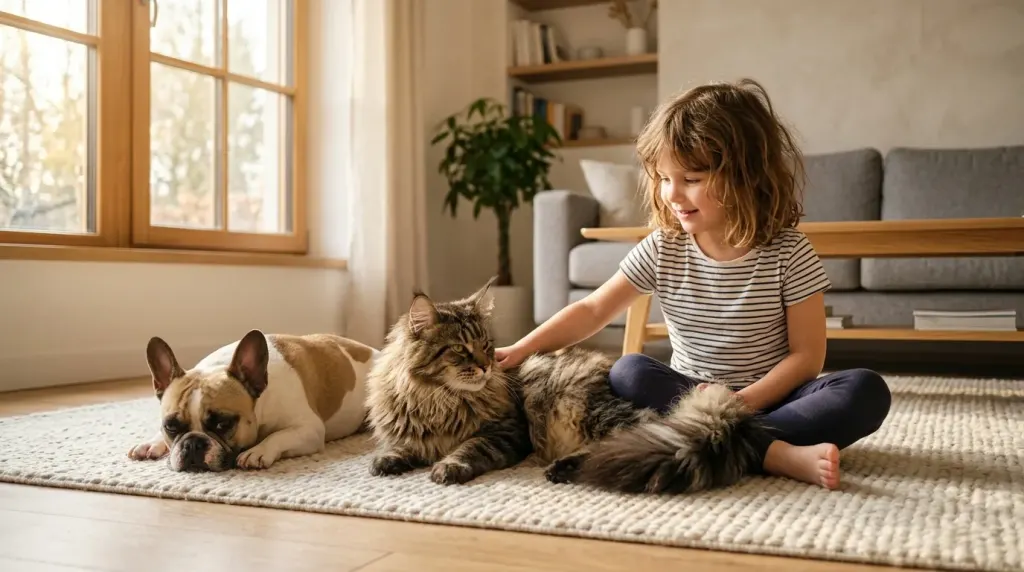
Their compatibility extends seamlessly to canine companions. A properly socialized Maine Coon will comfortably share sofa space with dogs, often engaging in playful chases or mutual grooming sessions. Households that already enjoy companion animals such as family-friendly French Bulldogs find that Maine Coons adapt quickly to a dog’s presence, provided introductions are handled with gradual scent swapping and controlled visual contact.
Even when coexisting with energetic or gentle Pugs, a Maine Coon establishes respectful boundaries without resorting to unprovoked aggression. Their confidence allows them to claim high vantage points on cat trees when they desire quiet time, keeping household interactions calm and positive.
- Interactions with young children: Teach children to support the cat’s full body weight when holding them, avoiding pulling on their plumed tail or ear tufts.
- Coexistence with dogs: Ensure the cat has elevated pathways and vertical escape routes in every shared living area.
- Small household pets: Because Maine Coons possess a strong historic hunting instinct, small rodents, birds, and reptiles must always be kept in secure, enclosed habitats.
Daily Care Requirements: Grooming, Diet, and Living Space
Caring for a Maine Coon requires commitment to a consistent grooming schedule and adequate spatial accommodations. Although their shaggy coat is naturally water-resistant and less prone to severe matting than a Persian coat, regular maintenance remains essential.
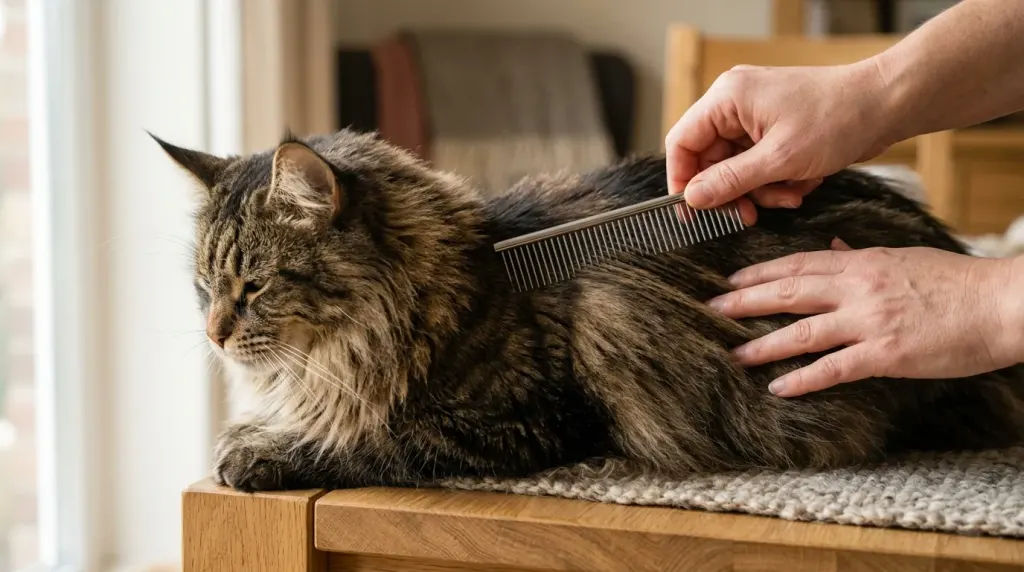
Routine grooming sessions 2 to 3 times weekly using a wide-toothed metal comb and a slicker brush remove loose undercoat and prevent tangles. Special attention must be paid to friction-prone areas: behind the ears, the armpits, the belly, and the dense britches around the hind legs. During spring and autumn shedding transitions, daily brushing prevents hairballs and keeps the undercoat clean.
Spatial planning is equally important. While compact living arrangements accommodate apartment-friendly Pugs or smaller domestic cats, Maine Coons need equipment scaled to their length. Standard litter boxes are often too tight; high-sided jumbo storage containers or specialized extra-large litter pans prevent accidents and accommodate their wide turning radius.
Note: Provide scratching posts with heavy, wide wooden bases at least 32 to 36 inches tall. A standard cardboard post will easily tip over when a 20-pound adult Maine Coon stretches for a full-body scratch.
Health Considerations, Genetic Screening, and Breed Lifespan
Maine Coons are generally sturdy and healthy cats, but their substantial size and pedigree background predispose them to specific hereditary health conditions. Responsible prospective owners should understand these risks and confirm that breeders conduct comprehensive genetic testing and cardiac screenings.
- Hypertrophic Cardiomyopathy (HCM): The most common heart disease in felines, characterized by the thickening of the heart muscle walls. In Maine Coons, a specific mutation in the MYBPC3 gene (A31P mutation) is responsible for many inherited cases. Breeding stock should undergo both DNA testing and routine echocardiograms by a board-certified veterinary cardiologist.
- Hip Dysplasia: A malformation of the hip ball-and-socket joint that can lead to stiffness, reduced mobility, and arthritis. It occurs more frequently in Maine Coons than in most domestic cat breeds due to their heavy bone structure.
- Spinal Muscular Atrophy (SMA): A genetic motor neuron condition causing muscle weakness in the lower back and hindquarters. Simple DNA screening can verify if parent cats are clear of the recessive gene.
- Pyruvate Kinase Deficiency (PKDef): An inherited lack of an essential enzyme in red blood cells that can lead to intermittent anemia and lethargy.
As Maine Coons transition into their later years, their senior health management follows structured milestones similar to senior dog care milestones, requiring semiannual veterinary checkups, joint mobility supplements, and kidney function monitoring to support an average lifespan of 9 to 15 years.
Pros and Cons: Do Maine Coon Cats Make Good Pets for Everyone?
Deciding whether a Maine Coon is the right pet depends on matching the breed’s physical and social traits with your lifestyle and budget.
Pros of Owning a Maine Coon:
- Exceptionally affectionate, loyal, and friendly temperament with family members.
- High adaptability to multi-pet homes, children, and visiting guests.
- Intelligent and trainable for harness walking, fetch, and household routines.
- Quiet vocal profile with pleasant trills and chirping sounds.
Cons and Challenges to Consider:
- High grooming demands requiring consistent weekly brushing to prevent mats.
- Higher daily food consumption and increased costs for extra-large equipment and premium nutrition.
- Potential predisposition to hereditary conditions requiring veterinary screenings.
- Initial acquisition costs; similar to planning Ragdoll cat adoption costs, purchasing a pedigreed kitten from an ethical, health-testing breeder represents a significant financial investment.
Frequently Asked Questions About Maine Coons as Pets
Are Maine Coons high-maintenance pets?
Maine Coons require moderate to high maintenance primarily due to their grooming and space needs. Their semi-longhair coat demands brushing two to three times per week, and their large body size requires heavy-duty scratching posts, robust cat furniture, and extra-large litter boxes. However, their easygoing personality and emotional stability make daily living uncomplicated.
Can Maine Coons live comfortably in small apartments?
Yes, Maine Coons can adapt successfully to apartment living if their vertical territory and exercise needs are met. Installing sturdy wall shelves, tall cat trees, and providing interactive play sessions allows them to climb and expend energy without needing a massive floor plan.
Do Maine Coon cats get lonely when left alone?
Maine Coons form strong bonds with their human families and can develop boredom or separation anxiety if left completely isolated for long working days. If your household is frequently empty, having another friendly cat or dog companion provides the social interaction they naturally crave.
Are Maine Coons hypoallergenic?
No, Maine Coons are not hypoallergenic. They produce standard levels of the Fel d 1 protein in their saliva, skin dander, and sebaceous glands. Their dense double coat and seasonal shedding can distribute dander throughout the home, making them unsuitable for individuals with severe cat allergies.
Leave a Reply