
Table of Contents
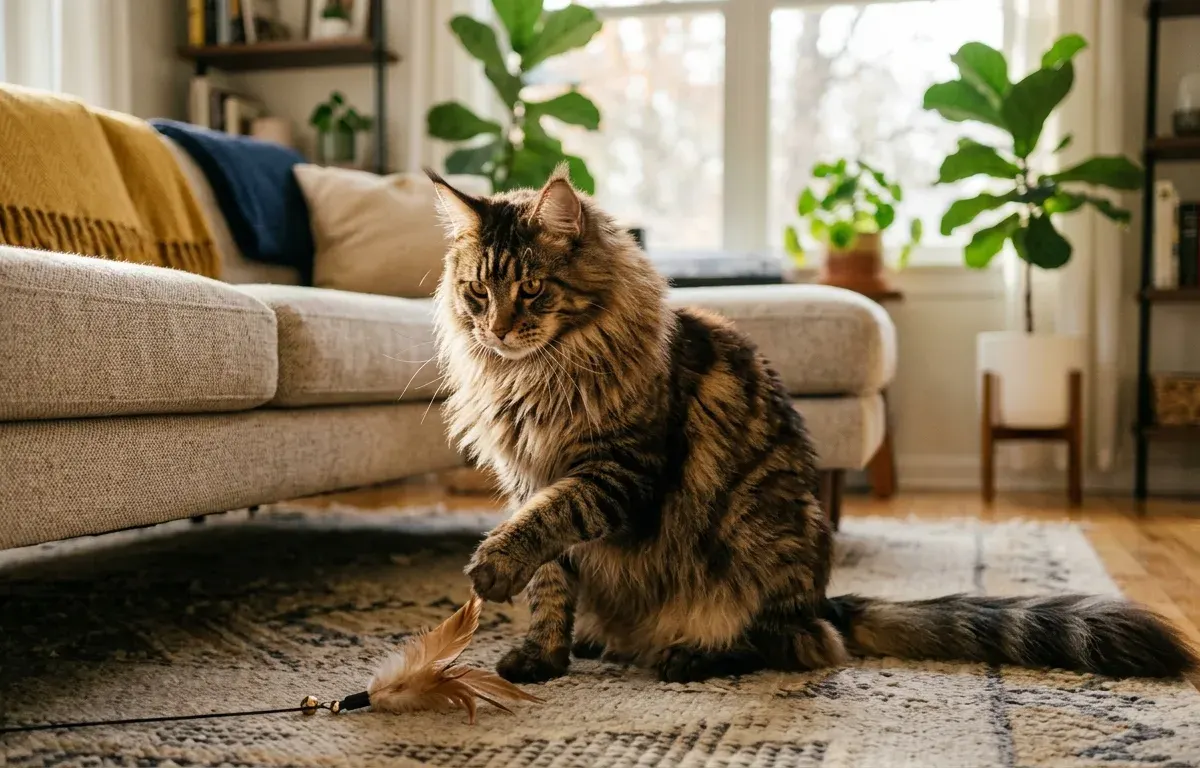
In understanding what is the personality of Maine Coon cats, the breed stands out for an affectionate, easygoing, and sociable nature that earned them the title of gentle giants. They are highly intelligent, people-oriented, and playful without being clingy. Maine Coons converse with soft chirps and trills, adapt easily to homes with children and dogs, and often display dog-like habits such as playing fetch and investigating water.
- Affectionate "gentle giants" that thrive on human companionship while maintaining a polite, independent presence.
- Distinctive vocal communication characterized by chirps, trills, and soft chirrups instead of loud meows.
- Dog-like traits include retrieving toys, greeting family at the door, and enjoying water play.
- Exceptional patience and sociability make them well-suited for homes with children and canine companions.
- Mental enrichment, interactive play, and sturdy climbing trees help channel their energetic, working-breed intelligence.
Core Personality Traits of Maine Coon Cats
Understanding what is the personality of Maine Coon cats starts with their celebrated reputation as the gentle giants of the domestic feline world. Despite reaching adult weights between 11 and 25 pounds, these cats possess an exceptionally sweet, calm, and approachable demeanor. According to the Cat Fanciers’ Association (CFA), the breed standard emphasizes an amiable disposition paired with high intelligence and remarkable adaptability.
Maine Coons are devoted companions that prefer being part of family activities rather than isolating themselves in quiet corners. They are rarely aloof, yet they do not demand constant physical holding. Most Maine Coons act as companion perching cats: they follow you into the kitchen, supervise your work from a nearby desk chair, and curl up beside you on the sofa. Their emotional balance provides steady companionship without the frantic neediness found in some vocal oriental breeds.
Unique Vocalizations: Chirps, Trills, and Soft Chirrups
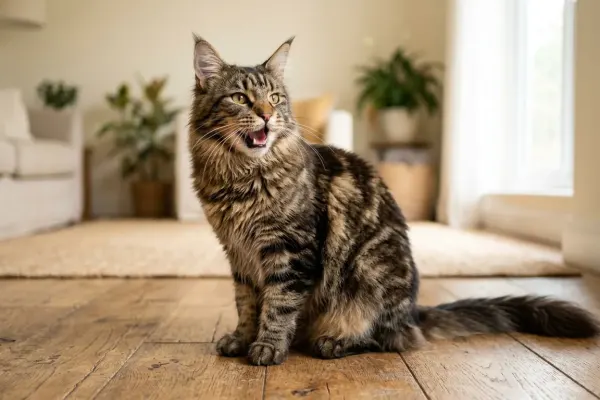
One of the most charming personality traits of Maine Coon cats is their unique vocal style. Owners expecting a deep, booming meow to match the cat’s massive frame are often surprised by their small, melodious voices.
Maine Coons converse through an expressive vocabulary of chirps, trills, and chirrups. A chirp sounds like a rapid, high-pitched bird call used to greet family members or signal excitement when a toy appears. A trill combines a soft purr with a gentle rolling pitch, often used when asking for attention or inviting play. They rarely vocalize in harsh or demanding tones, making their soft chatter a pleasant backdrop to household life.
“Dog-Like” Habits: Fetch, Water Fascination, and Loyalty
Maine Coons frequently earn comparisons to dogs due to their interactive play styles and steadfast loyalty. While many domestic cats prefer solitary exploration, Maine Coons actively participate in games with their human families. Much like observing what were Pug dogs bred for in terms of human-centered companionship, Maine Coons naturally shadow their owners from room to room with devoted attention.
Many individuals naturally learn to retrieve crumpled paper balls or small plush mice, carrying the item back in their mouths and dropping it at your feet for another toss. They often wait by the front door to greet returning family members with an upright, quivering tail. While toy companions such as what type of dog is a Pug are known for their sociable indoor presence, Maine Coons match that enthusiasm with athletic agility.
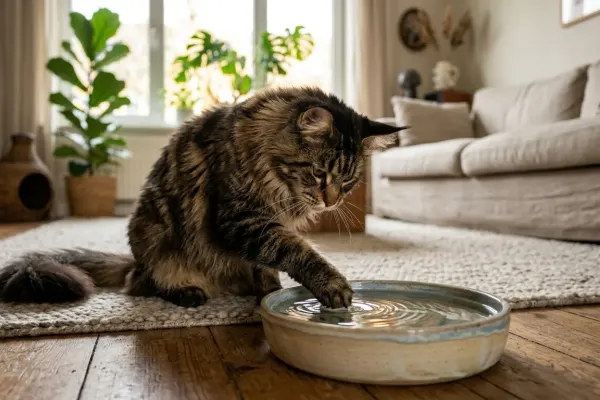
Furthermore, Maine Coons possess an enduring fascination with water, inherited from their history in rugged New England climates where water-repellent double coats protected them from snow and rain. It is common to find a Maine Coon dipping its front paws into water bowls, splashing liquid across the floor, or sitting patiently on the edge of the bathtub to watch running faucets.
Social Temperament: Children, Dogs, and Multi-Pet Households
The steady, unshakeable temperament of the Maine Coon makes the breed one of the most reliable choices for busy, multi-pet households. Their working-cat ancestry produced a confident animal that rarely panics over sudden noises, doorbells, or energetic footsteps.
When interacting with children, Maine Coons show remarkable tolerance and patience. They participate in gentle games, follow kids around playrooms, and calmly walk away to high perches if handling becomes too chaotic, rather than reacting with defensive swatting.
| Household Factor | Maine Coon Temperament Response |
|---|---|
| Young Children | Patient, tolerant, retreats gently |
| Companion Dogs | Confident, playful, unflappable |
| Other Cats | Cooperative, non-territorial |
| Frequent Houseguests | Curious, friendly, welcoming |
| Routine Environmental Noise | Adaptable, calm, low anxiety |
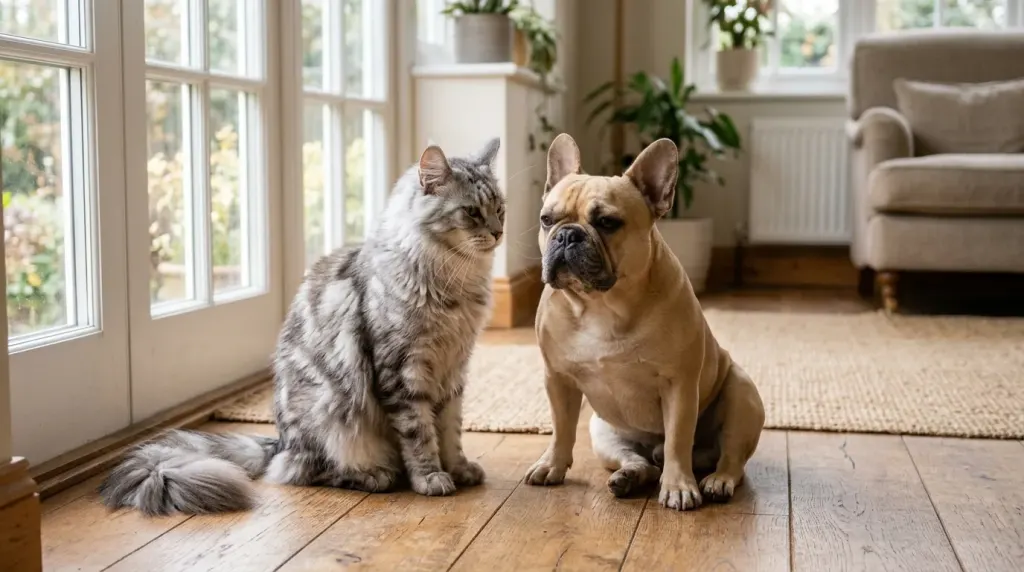
In multi-pet homes, Maine Coons integrate smoothly alongside canine companions. Because of their size and confident posture, they rarely run in fear, which prevents triggering a dog’s predatory chase instinct.
When introducing new animals to the household, observing canine body language is essential. For example, recognizing what does it mean when dogs put their ears back helps owners identify whether a dog is feeling appeasing, anxious, or overstimulated during early meetings.
Maine Coons share natural compatibility with sturdy companion breeds. Households that welcome calm, compact dogs like what is a French Bulldog often find that the cat and dog quickly form nap partnerships and share household spaces without friction. The Maine Coon’s harmonious relationship with other pets stems from its historical evolution as an indispensable farm mouser. Selected over generations for stable nerves, problem-solving skills, and self-assurance rather than territorial aggression, the breed views companion animals as part of its social circle rather than threats.
How Maine Coon Temperament Compares to Other Cat Breeds
Prospective owners often weigh Maine Coon personality traits against other popular companion breeds to find the best match for their lifestyle.
| Breed | Energy Level | Vocalization Style | Lap Preference | Dog Compatibility |
|---|---|---|---|---|
| Maine Coon | Moderate – Active | Soft chirps/trills | Beside you/Close | Outstanding |
| Ragdoll | Low – Moderate | Quiet, soft meows | Limp lap cuddler | High |
| Persian | Low / Sedentary | Rare, quiet | Sedentary lap | Moderate |
| Siamese | High / Demanding | Loud, raspy yowls | Clingy lap | High |
While both Maine Coons and Ragdolls rank among the most affectionate large cats, their social expressions differ significantly. Looking into what is a Ragdoll cat reveals a feline that tends to go limp in human arms, preferring placid floor cuddling and low-intensity lap lounging. Exploring variations like what is a mink Ragdoll cat confirms that Ragdolls generally maintain a softer, quieter physical presence.
In contrast, a Maine Coon remains an active participant in home routines. They retain a kitten-like play drive well into adulthood, often engaging in athletic leaps and puzzle games. Their higher daily energy expenditure also means their nutritional management differs from sedentary breeds.
Caring for Maine Coon Personality in Daily Life
Supporting a Maine Coon’s mental health requires acknowledging their high intelligence and physical power. A bored Maine Coon will invent its own entertainment, which may include opening kitchen cupboards, unrolling toilet paper, or batting items off high shelves.
To keep their active minds fulfilled, owners should incorporate structured daily enrichment:
- Interactive Play Sessions: Dedicate 15 to 20 minutes daily to wand toys, laser chases, and fetch routines that allow the cat to stalk, pounce, and sprint.
- Heavy-Duty Climbing Furniture: Invest in wide, weighted cat trees with scratching posts wrapped in thick sisal rope. Standard commercial cat trees often wobble under a 20-pound cat, discouraging healthy vertical climbing.
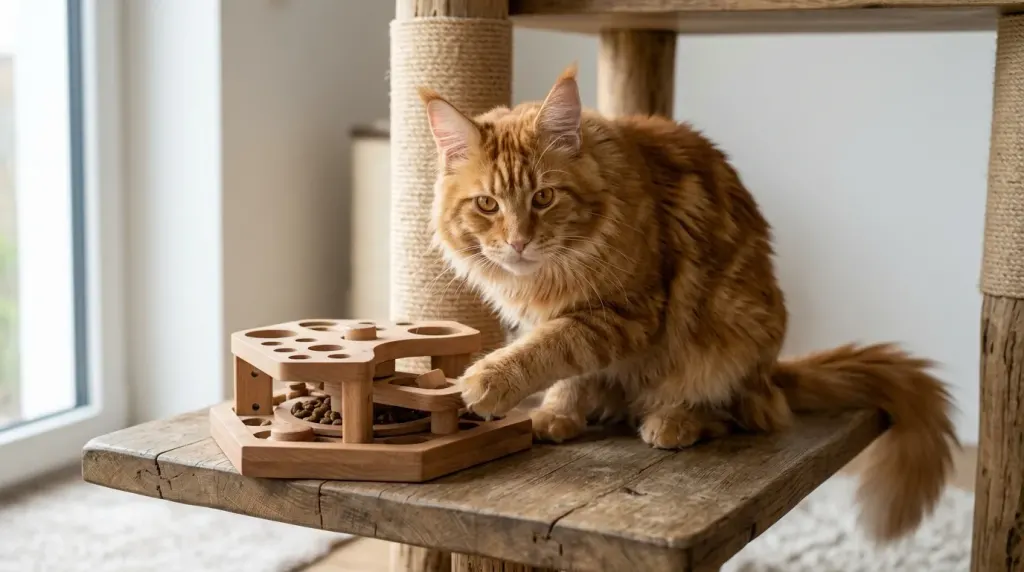
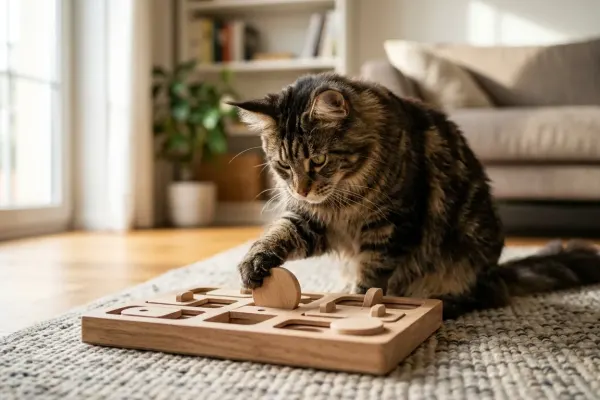
- Food Puzzles and Foraging: Use maze feeders and puzzle boards that require problem-solving to release kibble or treats, engaging their innate hunting drive. Because active Maine Coons burn significant energy during play, their caloric needs differ from lower-activity cats, contrasting with how owners balance what do Ragdoll cats eat.
- Harness Training: Many Maine Coons enthusiastically accept harness training, allowing safe outdoor walks on walking paths and backyards.
Keeping energetic cats active during daytime hours also prevents evening restlessness, a management strategy similar to understanding what causes a Pug dog to keep moving and not lay down when household pets fail to expend physical energy during the day.
Note: Maine Coons tolerate normal working-day schedules when left with toys and scratching posts. However, prolonged social isolation spanning multiple days without human or animal interaction can cause depressive withdrawal and destructive habits.
Frequently Asked Questions About What Is the Personality of Maine Coon Cats
Are Maine Coon cats cuddly lap cats?
Maine Coons are intensely affectionate but express their love as companion perching cats rather than permanent lap warmers. Due to their long bodies and thick coats, they often overheat quickly on human laps. They prefer sitting immediately next to you on the sofa, leaning against your legs, or resting their chin on your foot.
Why do Maine Coon cats chirp and trill instead of meow?
Chirps and trills are instinctive social greetings inherited from their ancestral communication patterns. Maine Coons use high-pitched chirps to express delight, greet familiar humans, and direct attention toward food bowls or toys without the abrasive volume of standard meows.
Do Maine Coon cats get along well with dogs?
Maine Coons are among the best cat breeds for dog-friendly homes. Their large physical stature, confident demeanor, and low reactivity mean they rarely flee from friendly dogs, helping establish calm, playful relationships when introductions are handled gradually.
How do male and female Maine Coon personalities differ?
Male Maine Coons tend to be more overtly outgoing, clownish, and persistent in their social interactions across the entire household. Female Maine Coons are equally affectionate and loyal, but they often exhibit a more observant, dignified demeanor, frequently bonding closely with one or two primary caregivers.
Leave a Reply