
Table of Contents
So, are pugs good apartment dogs? The short answer is yes. Pugs make excellent apartment dogs because of their compact size, quiet indoor demeanor, and modest daily exercise needs. However, their brachycephalic facial structure makes them sensitive to warm temperatures, meaning indoor climate control, strict weight management, and consistent shedding care are essential for their health in compact living spaces.
- Compact body weight between 14 and 18 pounds allows Pugs to navigate small square footage comfortably without needing a private yard.
- Daily physical exercise requirements are low to moderate, usually satisfied by two 15 to 20 minute walks and light indoor play.
- Year-round shedding from a dense double coat and deep facial wrinkles require consistent grooming and hygiene routines.
- Respiratory vulnerabilities mean Pugs are strictly indoor dogs and should not be housed outside or exposed to high heat and humidity.
- Structured crate routines and positive reinforcement training prevent separation anxiety and alert barking in shared buildings.
Space, Exercise, and Daily Rhythm in Small Living Quarters
Living in a compact condominium or rental unit requires a dog that does not demand expansive running space. Prospective pet parents wondering whether pugs are apartment dogs will find that the breed adapts naturally to compact square footage. Pugs were selectively bred for centuries as indoor companions rather than working farm dogs or high-stamina hunting hounds.
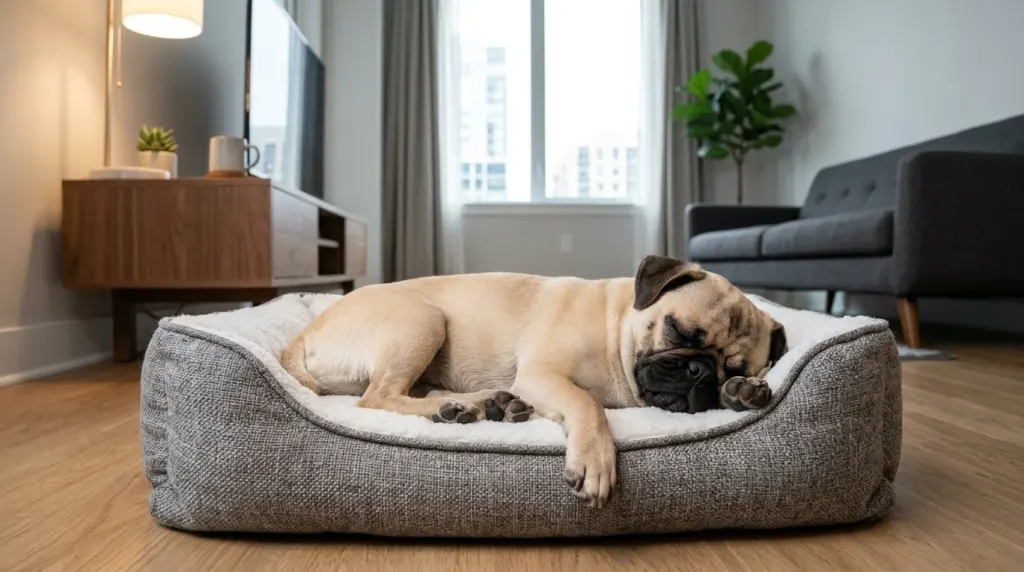
Because of this companion background, their daily physical demands remain manageable. Adult Pugs generally require about 20 to 30 minutes of total outdoor activity per day, split across two gentle walks. Inside the apartment, they spend most hours napping, following family members from room to room, or resting on soft bedding. Understanding realistic pug daily activity levels helps owners set balanced exercise routines that keep muscles toned without overworking the dog’s respiratory system. A Pug’s compact build and low prey drive make it far easier to manage in small apartments than high-energy terriers or sporting breeds. As long as owners commit to short, consistent bathroom walks, the lack of a private yard does not hinder their physical or mental health.
Health Considerations That Affect Apartment Living
The defining physical feature of the Pug is its brachycephalic, or shortened, skull shape. While this gives them their expressive face, it narrows their upper airways and limits their ability to cool down by panting. According to epidemiological research by the Royal Veterinary College, Pugs face substantially elevated odds of upper airway obstruction compared to non-brachycephalic breeds.
In an apartment environment, these physiological traits dictate specific home care standards:
- Airflow and Air Quality: Avoid aerosol sprays, plug-in air fresheners, and indoor smoke in tight rooms, as fine airborne particles irritate sensitive bronchial passages.
- Stair Safety: Frequent high-impact jumping down long flights of stairs strains developing joints and backs. Use elevators or carry your dog when navigating steep building stairwells.
- Cooling Access: Because flat-faced dogs cannot disperse body heat efficiently, keeping your living space cool during summer is a health requirement rather than a luxury.
Training and Behavior for Apartment Living
Living in multi-unit buildings requires good canine manners. Pugs are not typically nuisance barkers, but they can vocalize if startled by foot traffic or elevator chimes outside the front door. Learning proper routines through how to take care of a pug dog helps establish clear boundaries, crate training protocols, and dependable house training in high-rise settings.
Pugs respond best to gentle, positive reward-based training. While their pug intelligence and learning traits make them capable of learning house rules quickly, they can show stubborn streaks when pressured. Consistency, small low-calorie treats, and calm praise yield reliable results when teaching building etiquette.
Diet, Weight Management, and Energy Balance
In smaller living quarters where spontaneous sprinting is limited, excess calories quickly turn into extra body weight. Obesity places dangerous physical pressure on a Pug’s heart, spine, and narrowed windpipe.
To maintain healthy physical condition indoors:
- Measure daily kibble portions precisely with a kitchen scale rather than free-feeding from an open bowl.
- Use fresh vegetable pieces, such as plain green beans or carrot slivers, as training rewards instead of high-fat commercial biscuits.
- Monitor your dog’s waistline weekly: you should easily feel the ribs under a light layer of fat without pressing hard.
Environmental Factors and Comfort in Multi-Unit Buildings
Maintaining the right indoor environment is crucial for keeping a Pug healthy in an apartment. Because pugs are indoor dogs that cannot tolerate extreme heat or freezing weather, their living quarters must remain temperature controlled throughout the year. In addition to temperature regulation, managing double-coated pug shedding through regular grooming keeps indoor dander and loose fur manageable in small rooms.
The People’s Dispensary for Sick Animals recommends keeping indoor environments below 24°C (75°F) during warm seasons to prevent respiratory distress in brachycephalic breeds. If an apartment lacks reliable air conditioning or suffers from poor cross-ventilation, a Pug can quickly develop heat exhaustion even while resting indoors.
| Environmental Factor | Apartment Recommendation | Practical Benefit |
|---|---|---|
| Ambient Temperature | Maintain indoor climate between 20°C and 23°C (68°F to 74°F) | Protects respiratory comfort and prevents overheating |
| Hallway Noise Control | Position the dog’s bed away from the main entryway door | Reduces reactive alert barking triggered by corridor steps |
| Floor Traction | Place washable runners over slick hardwood or tile flooring | Prevents patellar slips and protects growing joints |
| Air Filtration | Use a HEPA air purifier in the main living space | Removes dust, dander, and allergens from confined air |
Note: Never leave a Pug in an unventilated apartment room with direct sun exposure during warm weather. Even moderate indoor heat can escalate into respiratory failure for flat-faced dogs without active cooling.
Safety, Enrichment, and Socialization in Shared Spaces
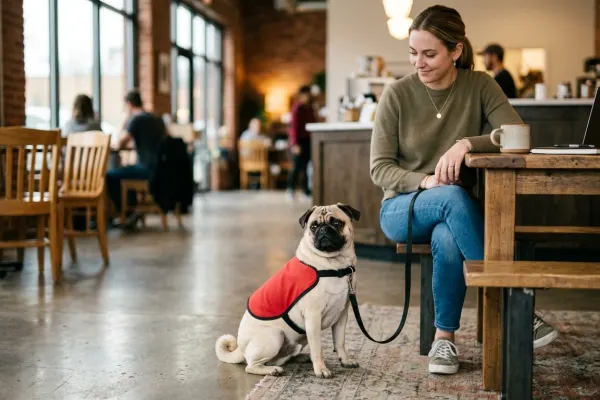
Apartment living involves frequent encounters in elevators, lobbies, and shared courtyards. Fortunately, a friendly pug temperament allows these dogs to greet passing neighbors, building staff, and other leashed pets with polite curiosity rather than territorial hostility.
To keep your Pug safe and socially confident in shared residential settings:
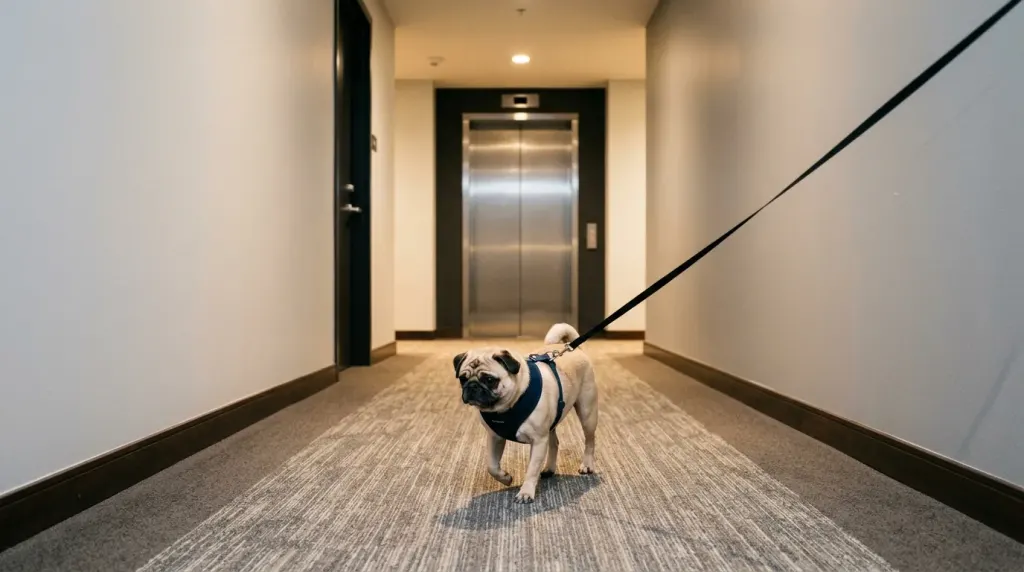
- Elevator Safety: Always keep your dog on a short, non-retractable leash when entering or exiting elevator doors to prevent tragic door-trapping accidents.
- Mental Enrichment: Use snuffle mats, puzzle feeders, and soft chew toys to provide mental stimulation indoors, keeping their minds engaged on days when bad weather limits outdoor time.
- Corridor Socialization: Reward your dog with praise when they remain calm as neighbors walk past your door, reinforcing relaxed behavior in shared hallways.
Because Pugs possess an inherently sociable nature, their gentle pug lap dog temperament means they enjoy resting closely alongside their human companions after short play sessions.
Are Pugs Good House Dogs and Family Companions?
Beyond small apartments, pugs are good house dogs for standard suburban residences as well. Their adaptable personality means they settle comfortably into multi-room houses, condominiums, or townhomes. They do not exhibit intense guarding tendencies, though their natural alert barking will notify owners when visitors approach the front door. Their reliable watchdog alertness allows them to signal arrivals without escalating into aggressive territorial guarding.
When living in busy family households, pugs are good dogs for apartments and houses alike because they tolerate family commotion well. Their steady disposition makes them patient family dogs around children, provided young kids learn to handle the dog’s delicate facial area with care. Furthermore, their low risk of aggression makes them one of the most reliable companion breeds for multi-pet and multi-person households.
Why Pugs Are Strictly Indoor Dogs and Not Outside Dogs
A critical distinction in breed care is understanding that pugs are good indoor dogs but poor outdoor candidates. People occasionally ask whether pugs are good outside dogs or whether they can live in an outdoor kennel. The definitive answer from veterinarians and breed clubs is no: pugs are not outside dogs under any circumstances.
Their short single-layer or dense double coats offer minimal protection against freezing winter winds, while their shortened airways prevent them from cooling down during humid summer afternoons. Reviewing core pug breed characteristics and standards makes it clear that their delicate anatomy leaves them reliant on indoor climate control. Leaving a Pug in an outdoor yard or kennel exposes them to rapid hypothermia in winter and fatal heatstroke in summer. Pugs must reside indoors alongside their human family, venturing outside solely for supervised walks, bathroom breaks, and controlled playtime.
Can Pugs Be Left Alone at Home in an Apartment?
Prospective owners with full-time jobs frequently ask whether pugs are good dogs to leave at home during the workday. Adult Pugs can comfortably manage 4 to 6 hours alone once they are thoroughly house-trained and settled into a predictable routine.
However, because they are deeply bonded companion animals, leaving them isolated for 8 to 10 hours daily without a break can trigger separation distress, nuisance whining, or stress-related chewing. Providing safe interactive toys that engage pug intelligence and learning traits helps satisfy their mental curiosity while they rest indoors. If you work long hours away from your apartment, hiring a midday dog walker or arranging pet sitting ensures your Pug receives essential bathroom breaks and social companionship.
Practical Checklist for Apartment-Ready Pugs
Preparing your living space before bringing a Pug home prevents common apartment living headaches. Review this practical checklist:
- [ ] Verify that your building’s lease or HOA bylaws permit dogs with no hidden weight or breed restrictions.
- [ ] Install dependable air conditioning units that maintain temperatures below 24°C (75°F) in hot weather.
- [ ] Purchase a step-in chest harness instead of walking your dog on a neck collar, protecting their sensitive windpipe from pressure.
- [ ] Set up a dedicated sleeping and rest area positioned in a quiet corner away from drafty entryways.
- [ ] Invest in a rubber grooming curry brush and pet-safe wrinkle wipes for regular facial fold hygiene based on your dog’s skin needs.
- [ ] Plan for routine veterinary care and budget for the real cost to own a pug across every stage of your dog’s life.
Common Myths vs. Realities of Apartment Pugs
Misconceptions about Pugs often mislead new apartment owners. Here are the realities behind common breed myths:
- Myth: Pugs do not shed because their hair is short.
- Reality: Pugs shed steadily year-round. Their dense undercoat produces a continuous volume of fine loose fur that requires regular brushing and frequent vacuuming in small apartments.
- Myth: Pugs require zero exercise and can stay on the couch all day.
- Reality: While low energy compared to working breeds, Pugs still require 20 to 30 minutes of daily walking and mental play to prevent obesity, muscle loss, and indoor boredom.
- Myth: Pugs are completely hypoallergenic.
- Reality: Pugs are not hypoallergenic. They produce standard amounts of dander and saliva protein, which can trigger reactions in allergy-sensitive individuals.
- Myth: Pugs can adapt to outdoor kennels if given a doghouse.
- Reality: Pugs lack thermal tolerance due to their brachycephalic anatomy. Housing a Pug outdoors is dangerous and incompatible with their health requirements.
Frequently Asked Questions About Are Pugs Good Apartment Dogs
Are pugs good apartment dogs for first-time owners?
Yes, Pugs are among the best apartment breeds for first-time dog owners. Their eager-to-please temperament, small size, and absence of high prey drive make them easier to manage than larger or more demanding working breeds.
Do pugs tolerate heat or cold well in apartments?
No, Pugs have poor tolerance for extreme temperatures. In apartments, they require active air conditioning during summer to prevent heat stress and should wear a warm fleece or coat during freezing winter potty walks.
How much exercise does a pug need indoors?
An adult Pug needs two short outdoor walks of 15 to 20 minutes each day, paired with 10 to 15 minutes of light indoor play such as gentle fetch or scent puzzle games on carpeted floors.
Can pugs live alone in apartments during the day?
Mature Pugs can stay home alone for 4 to 6 hours if provided with fresh water, comfortable bedding, and safe chew toys. For workdays exceeding 6 hours, arranging a midday dog walker prevents house-training regression and emotional distress.
Leave a Reply