
Table of Contents
The Pug dog breed is an ancient Toy group companion originating in Han Dynasty China, recognized for its compact, muscular "multum in parvo" build, deeply wrinkled face, and curled tail. Standing 10 to 13 inches tall and weighing 14 to 18 pounds, Pugs are affectionate, even-tempered companions. However, their brachycephalic anatomy requires dedicated daily wrinkle care, weight control, and heat protection to ensure a healthy 12 to 15-year lifespan.
- Compact Toy breed weighing 14 to 18 pounds under the Latin motto "multum in parvo" (much in little).
- Royal heritage spanning over 2,000 years from imperial Chinese palaces to European royal courts.
- Requires daily facial skin fold cleaning and strict portion control to prevent severe obesity.
- Vulnerable to respiratory stress and heatstroke due to shortened brachycephalic airways.
- Gentle, companion-oriented temperament that adapts well to families and apartment living.
The Pug dog breed combines a comical personality with loyal affection, making it one of the most beloved companion dogs across the globe. Characterized by a square body, deep facial folds, and large dark eyes, this toy dog was refined over centuries for close human companionship. While their charming temperament makes them ideal house pets, responsible ownership requires an understanding of their unique anatomy, respiratory limitations, daily grooming needs, and potential genetic health conditions.
Pug Origin and Royal History: From Imperial China to European Nobility
The history of the Pug spans more than two thousand years, originating in ancient China during the Han Dynasty (circa 206 BCE to 220 CE). Chinese emperors prized short-faced lap dogs known as “Lo-sze,” breeding them exclusively as imperial court companions. These dogs lived in luxury within palace walls, guarded by imperial soldiers and attended to by dedicated servants who catered to their daily needs. Examining where pug dogs originate from reveals how early selective breeding focused entirely on lap companionship rather than field sports, herding, or guarding duties.
During the late sixteenth and early seventeenth centuries, Dutch East India Company maritime traders introduced the breed to Western Europe. The dogs rapidly captured the attention of European aristocracy, establishing a lasting legacy in the royal courts of the Netherlands, France, and England. According to historical breed chronicles documented by PetMD, early European fanciers valued the breed for its devoted personality, stable demeanor, and expressive facial expressions.
How Did Ancient Chinese Emperors Shape the Early Pug?
Ancient Chinese royalty valued the Lo-sze for its distinctive physical traits, particularly the intricate forehead wrinkles. Emperors favored dogs whose facial folds resembled the Chinese calligraphy character for “prince” (Wang), viewing these markings as symbols of royal nobility. The dogs were bred to possess compact bodies, flat muzzles, and affectionate temperaments suited for warming the laps of imperial family members.
Selective breeding in imperial kennels emphasized a docile nature and an attachment to people. Investigating what pug dogs were bred for highlights how centuries of court life eliminated predatory instincts and territorial aggression, creating the people-focused companion known today.
How Did the Pug Become the Official Mascot of the House of Orange?
The Pug achieved legendary status in the Netherlands in 1572 during the Eighty Years’ War. According to European historical records, a Pug named Pompey saved the life of Prince William the Silent of Orange at the Siege of Hermigny. Pompey alerted the sleeping prince to approaching Spanish assassins by barking, scratching frantically, and jumping on his master, allowing him to escape unharmed.
In gratitude, the House of Orange adopted the Pug as its official mascot. When William III and Mary II ascended the British throne in 1688, their royal Pugs accompanied them to London, igniting widespread popularity among British aristocrats and setting the stage for formal kennel club recognition in the nineteenth century.
Pug Physical Characteristics and Breed Standards
The physical conformation of the Pug is defined by the Latin phrase “multum in parvo,” meaning “much in little.” This standard describes a compact, muscular dog packed into a small, square frame. The breed standard published by the American Kennel Club outlines precise proportions that balance substantial bone and hard muscle with a balanced, dignified gait.
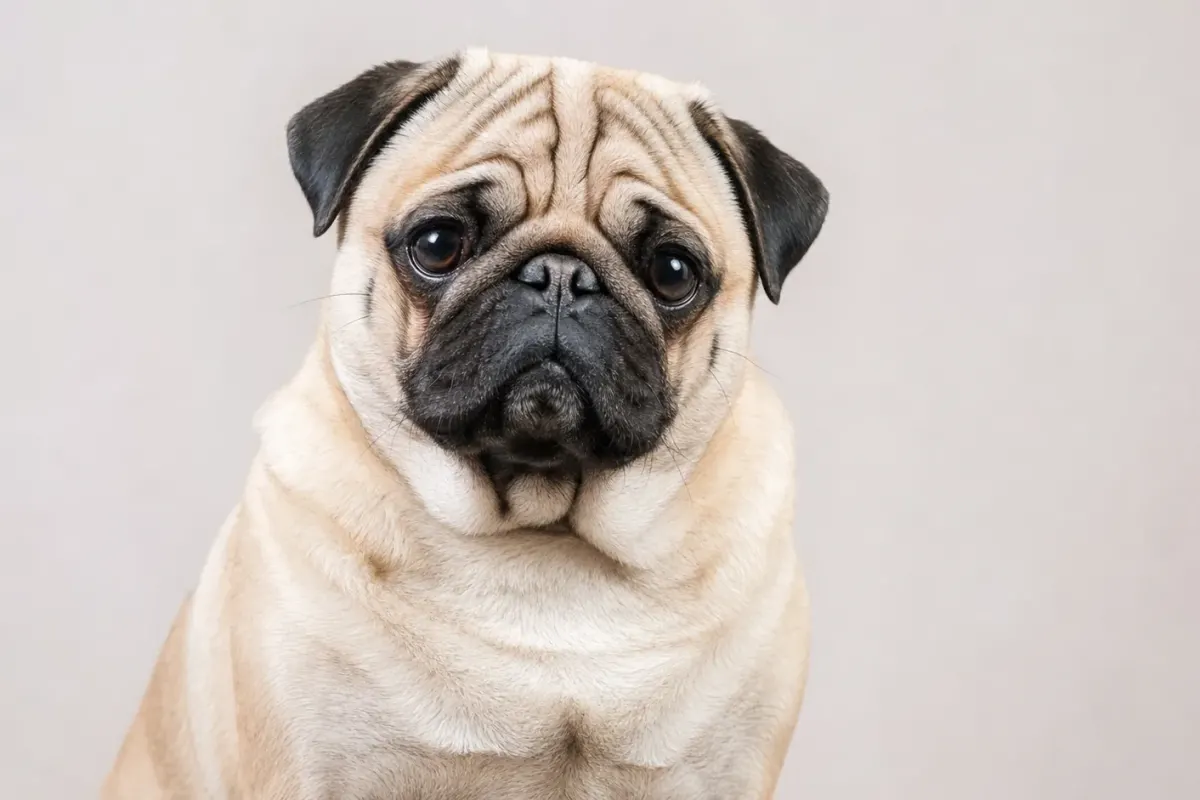
Official standards require a level backline, a broad chest, and straight, strong limbs. The head is large, round, and massive without being apple-headed, framed by deep wrinkles on the forehead. The muzzle is short, blunt, and square, but must never be tilted upward. Dark, lustrous eyes provide a soft, solicitous expression, while the small, thin ears fall in either a forward button fold or a backward rose fold. Prospective pet parents studying what a pug dog looks like can evaluate these key visual traits against show ring standards.
| Conformation Trait | American Kennel Club (AKC) Standard | The Kennel Club (UK) Standard |
|---|---|---|
| Height at Withers | 10 to 13 inches (25.4 to 33.0 cm) | Not specified in official standard |
| Weight Range | 14 to 18 pounds (6.3 to 8.2 kg) | 14 to 18 pounds (6.3 to 8.1 kg) |
| Body Build | Compact, square, cobby, muscular | Decidedly square, cobby, hard muscle |
| Head Shape | Large, massive, round; short blunt muzzle | Large, round; short, square, blunt muzzle |
| Ear Types | Button (preferred) or Rose fold | Button or Rose fold; soft velvet texture |
| Tail Conformation | High-set, tightly curled over hip | High-set, tightly curled over hip |
| Recognized Colors | Fawn and Black (clear mask and trace) | Silver, Apricot, Fawn, and Black |
| Average Lifespan | 12 to 15 years | 12 to 15 years |
What Defines the “Multum in Parvo” Pug Body Structure?
The concept of “multum in parvo” refers to a dense, compact build where the dog exhibits substantial substance without appearing lean, leggy, or excessively short-legged. A well-conditioned adult Pug carries firm muscle across the shoulders, back, and thighs, maintaining a visible waistline when viewed from above.
Monitoring physical development through benchmarks on how big pug dogs get allows owners to track healthy growth milestones from puppyhood to maturity. Excess body fat must not be confused with true muscular substance, as carrying extra weight places dangerous strain on the dog’s respiratory system and joints.
Pug Coat Colors and Markings: Fawn vs. Black Varieties
Kennel clubs recognize two primary color classifications: fawn and black. The fawn category encompasses shades ranging from soft silver-fawn to warm apricot-fawn. Fawn dogs display distinct black markings that create sharp visual contrast, including a dark facial mask covering the muzzle and chin, dark ears, cheek moles, and a dark dorsal stripe known as the “trace” extending from the occiput to the tail base.
Fawn Pugs possess a dense double coat composed of a soft insulating undercoat and smooth outer guard hairs, leading to heavy shedding throughout the year. In contrast, solid black Pugs typically have a single coat without a dense undercoat, resulting in a sleek, jet-black appearance that sheds slightly less than the fawn variety.
Pug Temperament: Personality, Social Dynamics, and Living Needs
Pugs are celebrated for their stable, charming, and affectionate temperament. Often referred to as “shadow dogs” or “velcro dogs,” they form deep attachments to their owners and prefer staying close by during daily household activities. They combine a playful, comical sense of humor with a calm indoor disposition, making them adaptable companions for city apartments and suburban homes alike.
Understanding pug behavior and temperament quirks helps owners anticipate common breed habits, such as following family members from room to room, seeking physical lap contact, and vocalizing through quiet grumbles. Pugs are generally sensitive dogs that respond best to positive reinforcement techniques using high-value rewards, whereas harsh reprimands can cause stress and stubborn resistance.
Are Pugs Good With Children, Cats, and Other Dogs?
Pugs are exceptionally sociable animals that excel in multi-member and multi-pet households. Their sturdy body structure makes them less vulnerable to accidental bumps than finer-boned toy breeds, and their patient, gentle nature helps them interact safely with respectful children.
Because of their social openness, pugs get along with other dogs and household cats without displaying territorial aggression. However, parents must actively supervise interactions with toddlers to prevent curious fingers from scratching or injuring the Pug’s large, prominent eyes.
How Much Daily Exercise Does a Pug Really Need?
An adult Pug requires 20 to 30 minutes of moderate, low-impact exercise each day to maintain cardiovascular health, muscle tone, and a lean body weight. This activity is best divided into two 15-minute walks during the cooler morning and evening hours.
Because their shortened facial structure restricts evaporative heat dissipation through panting, outdoor exercise must be curtailed when temperatures exceed 80 degrees Fahrenheit (27 degrees Celsius) or during high humidity. During warm weather, indoor games, trick training, and food puzzle toys provide vital mental stimulation without risking thermal distress.
Pug Care Guide: Daily Hygiene, Grooming, and Nutrition
Maintaining a healthy Pug requires a consistent daily and weekly care routine focused on skin fold cleanliness, coat shedding control, and strict dietary portion management. Establishing structured habits early in the dog’s life ensures comfortable hygiene and prevents common dermatological issues.
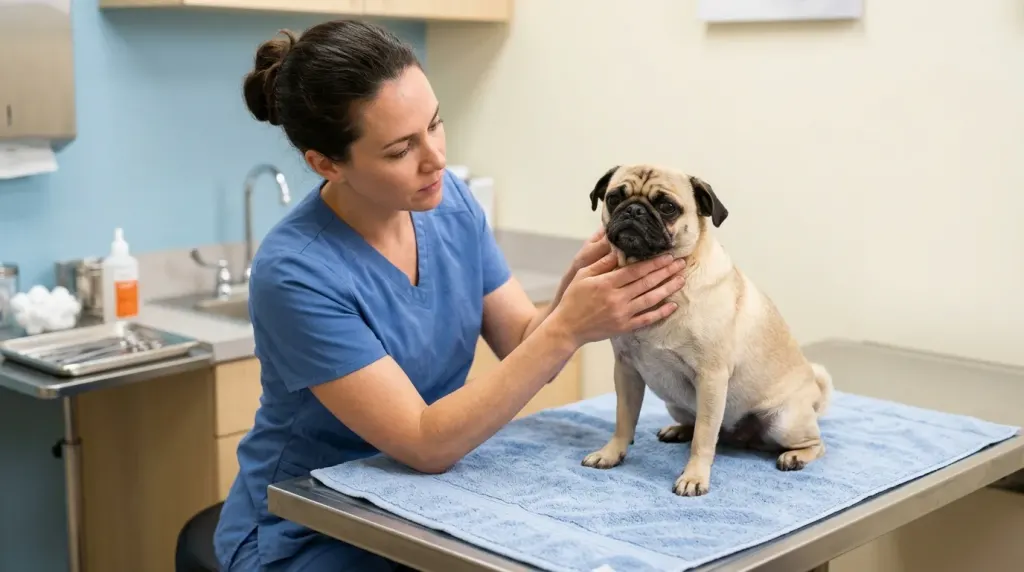
Comprehensive care schedules outlined in guides on how to take care of a pug dog emphasize that regular maintenance takes only a few minutes each day but prevents costly veterinary treatments for secondary skin infections and overgrown nails.
- Daily Wrinkle Care: Wipe deep inside facial skin folds with a damp, fragrance-free pad and dry thoroughly with a soft tissue.
- Coat Brushing: Brush two to three times weekly with a rubber curry brush or de-shedding mitt to remove loose undercoat hair.
- Ear Inspection: Check folded ear canals weekly for dark discharge, wax accumulation, or yeast odor.
- Nail Trimming: Clip or grind nails every two to three weeks to maintain proper foot conformation and joint alignment.
- Dental Cleaning: Brush teeth daily using dog-formulated enzymatic toothpaste to prevent periodontal bacterial buildup.
How Do You Clean Pug Facial Wrinkles and Ears?
The prominent skin fold directly above the Pug’s nose bridge naturally traps moisture, exfoliated skin cells, and environmental dirt. Without daily cleaning, this dark, warm environment fosters rapid overgrowth of Malassezia yeast and Staphylococcus bacteria, leading to painful skin fold dermatitis (intertrigo).
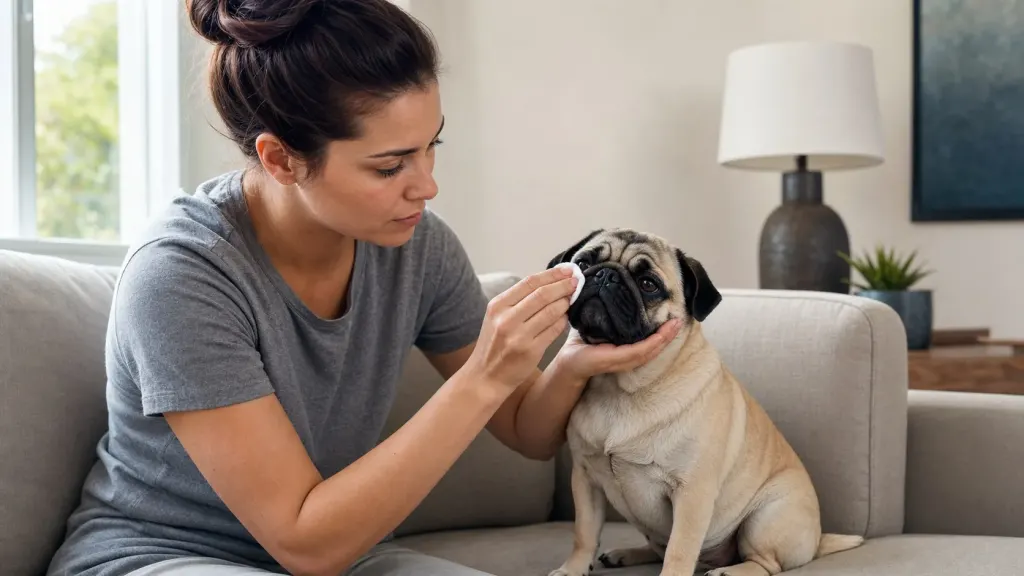
To clean the folds safely, gently lift the wrinkle to expose the underlying skin. Wipe the crease clean using an unscented pet wipe or a soft cloth moistened with warm water. Crucially, follow with a dry tissue to absorb all residual moisture, as trapped dampness is the primary trigger for skin breakdown. Inspect ear flaps weekly, cleaning outer canal surfaces with a veterinary-approved ear solution while avoiding deep cotton swab insertion.
How Should You Manage Diet to Prevent Pug Obesity?
Pugs possess hearty appetites combined with relatively low basal metabolic rates, making them exceptionally susceptible to rapid weight gain. Excess body fat exacerbates airway resistance, strains spinal discs, and accelerates osteoarthritis. Reviewing nutritional guidelines on what pug dogs eat and dietary requirements helps owners formulate balanced feeding regimens tailored to small, low-activity dogs.
Feed measured portions of high-quality small-breed dry kibble, typically split into two controlled meals totaling 1/2 to 1 cup daily depending on age, weight, and activity level. Use low-calorie vegetables like plain green beans or baby carrots for training rewards, and ensure treats comprise no more than 10 percent of total daily caloric intake. Weight management is the single most controllable factor influencing a Pug’s long-term comfort and lifespan. Maintaining a visible waist and easily palpable ribs significantly reduces the physical workload on shortened upper airways and stabilizes orthopedic joints.
Major Pug Health Issues: Brachycephalic and Genetic Conditions
Due to their unique anatomical conformation and genetic background, Pugs are predisposed to several well-documented health challenges. Clinical overviews of pug health problems and common conditions classify these vulnerabilities into respiratory, ocular, neurological, and orthopedic categories, all of which benefit from early veterinary detection and preventive management.
According to clinical breed health overviews documented by PetMD, prospective owners should familiarize themselves with key clinical signs associated with compressed airways and inherited central nervous system conditions before acquiring a puppy.
| Health Condition | Primary Affected Area | Common Symptoms | Preventive & Clinical Management |
|---|---|---|---|
| Brachycephalic Airway Syndrome (BOAS) | Upper respiratory tract | Snoring, stridor, exercise intolerance, heat sensitivity | Weight management, cooling protocols, nares/palate surgical resection |
| Pug Dog Encephalitis (PDE / NME) | Central nervous system | Seizures, circling, head pressing, disorientation | Pre-breeding DNA testing (UC Davis VGL), anti-inflammatory therapy |
| Corneal Ulcers & Keratitis | Ocular surface | Squinting, cloudiness, discharge, vascularization | Lubricating eye drops, prompt vet exams, avoiding eye trauma |
| Skin Fold Dermatitis (Intertrigo) | Facial and tail folds | Redness, foul yeast odor, itching, discharge | Daily hygiene wipes, thorough drying, topical antiseptics |
| Patellar Luxation & Hemivertebrae | Stifle joint and spine | Intermittent hopping, back weakness, ataxia | Weight control, joint supplements, surgical stabilization |
What Is BOAS and How Does It Affect Pug Breathing?
Brachycephalic Obstructive Airway Syndrome (BOAS) occurs because the Pug’s shortened facial skull bones compress internal soft tissues into a restricted throat space. Primary anatomical components include pinched nostrils (stenotic nares), an overly long soft palate that obstructs the trachea opening, and an underdeveloped, narrow windpipe (hypoplastic trachea).
These obstructions increase air resistance during inhalation, creating negative pressure that causes throat tissues to swell over time. Clinical insights explaining why pug dogs snort and reverse sneeze help owners differentiate benign soft palate vibrations from progressive airway obstruction. In moderate to severe cases, corrective veterinary surgeries such as staphylectomy (shortening the soft palate) and rhinoplasty (widening nostril openings) dramatically improve breathing comfort.
What Is Pug Dog Encephalitis (PDE / NME)?
Pug Dog Encephalitis, clinically termed Necrotizing Meningoencephalitis (NME), is an idiopathic, progressive inflammatory disease of the central nervous system that affects Pugs as well as several other small companion breeds, including Maltese, Chihuahuas, and Yorkshire Terriers. According to veterinary pathology research published through the National Center for Biotechnology Information (NCBI), clinical onset most typically occurs in young dogs between 6 months and 3 years of age (with a median onset around 18 months to 2.5 years), causing rapid inflammation and necrosis of brain tissue.
Early clinical signs include focal or generalized seizures, behavioral changes, compulsive circling, blindness, and head pressing against solid objects. While NME cannot be cured, genetic susceptibility testing developed by veterinary genetics laboratories allows breeders to test breeding stock and eliminate high-risk pairings.
Caution: If a Pug shows acute signs of respiratory distress, including open-mouth gasping, blue or pale gums, or collapse during warm weather, move the dog into an air-conditioned room immediately, apply cool (not ice-cold) water to the paws and belly, and transport them to an emergency veterinary clinic without delay.
Buying, Adoption, and Long-Term Ownership Costs
Acquiring a healthy Pug requires careful research to ensure the puppy comes from an ethical, health-tested breeding program rather than an irresponsible commercial puppy mill. Prospective owners should review vetting procedures on where to buy a pug dog responsibly before committing to a breeder or rescue organization.
Responsible ownership also involves budgeting for both initial setup fees and recurring annual veterinary, nutritional, and grooming expenses. Financial planning details covering how much pug dogs cost to buy and own reveal that long-term medical care and comprehensive pet insurance represent the largest lifetime investments.
| Expense Category | First-Year Estimated Cost (USD) | Ongoing Annual Cost (USD) |
|---|---|---|
| Purchase Price / Rescue Adoption Fee | $1,500 – $3,000 (Adoption: $250 – $500) | $0 |
| Veterinary Exams, Vaccines & Preventatives | $400 – $800 | $300 – $600 |
| Pet Health Insurance (Comprehensive) | $600 – $1,200 | $600 – $1,200 |
| Premium Small-Breed Nutrition & Healthy Treats | $350 – $600 | $350 – $600 |
| Hygiene Supplies, Wipes & Grooming Tools | $150 – $300 | $150 – $300 |
| Essential Gear (Harness, Crate, Bedding, Toys) | $250 – $500 | $100 – $200 |
| Total Estimated Investment | $3,250 – $6,400 | $1,500 – $2,900 |
How Do You Identify a Responsible, Health-Focused Pug Breeder?
An ethical breeder prioritizes functional health, clear breathing conformation, and genetic screening over extreme flat-faced aesthetics. Responsible breeders openly share official health testing clearances from certified registries, including DNA screening for Pug Dog Encephalitis (PDE), patella luxation evaluations, and Respiratory Function Grading Scheme (RFGS) assessments.
When screening breeders, avoid sellers who advertise “rare” non-standard coat colors, refuse on-site kennel visits, or offer immediate puppy shipping without screening buyer suitability. Alternatively, breed-specific rescue organizations offer wonderful opportunities to adopt adult Pugs whose temperaments and medical profiles are already well understood.
Pug Lifespan, Senior Care, and Breed Comparisons
According to breed longevity benchmarks from The Royal Kennel Club, companion Pugs enjoy an average lifespan of 12 to 15 years when provided with proactive veterinary care, daily wrinkle maintenance, and strict weight control. Because biological aging accelerates around 7 to 8 years of age, understanding when pugs are considered senior dogs allows families to adapt living spaces with orthopedic memory foam beds, non-slip floor runners, and bi-annual geriatric health screenings.
Throughout history and modern living, pugs as dedicated lap dogs have offered unique lifestyle advantages compared to other small brachycephalic companion breeds like the French Bulldog and Boston Terrier.
| Comparative Trait | Pug | French Bulldog | Boston Terrier |
|---|---|---|---|
| Kennel Club Group | Toy Group | Non-Sporting Group | Non-Sporting Group |
| Typical Weight | 14 to 18 lbs (6.3 to 8.2 kg) | 16 to 28 lbs (7.3 to 12.7 kg) | 12 to 25 lbs (5.4 to 11.3 kg) |
| Energy & Exercise | Low to moderate (20-30 min/day) | Low to moderate (20-30 min/day) | Moderate to high (45-60 min/day) |
| Coat & Shedding | Double coat (heavy shedding) | Single coat (moderate shedding) | Single coat (low shedding) |
| Ear Conformation | Dropped button or rose fold | Erect “bat” ears | Erect, pointed ears |
| Barking Tendency | Low (quiet grumbles/chortles) | Low (infrequent barker) | Low to moderate |
| General Temperament | Affectionate, comical, shadow dog | Easygoing, alert, playful | Lively, highly trainable, friendly |
Frequently Asked Questions About the Pug Dog Breed
Do Pugs shed a lot of hair?
Pugs shed heavily throughout the entire year despite having a short coat. Fawn Pugs possess a dense double coat with an insulating undercoat that releases hair continuously, with increased shedding during seasonal changes in spring and autumn. Regular brushing with a rubber curry brush two to three times weekly removes loose fur and keeps shedding manageable.
Why do Pugs snore and make grunting noises?
Pugs snore and grunt due to their brachycephalic skull anatomy. The shortened facial bones compress soft tissues in the pharynx, causing the elongated soft palate to vibrate against the airway during respiration. While mild, relaxed snoring is common, loud wheezing, gasping, or blue gums during waking hours indicate airway obstruction requiring immediate veterinary assessment.
Can Pugs be left alone for long periods?
Pugs should not be left alone for longer than 4 to 6 hours. Bred exclusively as human companion dogs, they form intense bonds with their owners and can develop separation anxiety if isolated for extended periods. Providing interactive puzzle toys, leaving comfortable bedding, or arranging dog-walking visits helps keep them calm during brief owner absences.
Are Pugs difficult to house train?
Pugs can be moderately challenging to house train due to their sensitive nature and independent streak. They respond poorly to harsh corrections, which often cause anxiety and training setbacks. Consistent crate training, frequent outdoor bathroom schedules, and immediate high-value food rewards yield the most reliable, positive house-training results.


Leave a Reply