

Table of Contents
Understanding how to take care of pug dog daily needs requires feeding measured meals to maintain a lean body condition, offering short, climate-appropriate activity under 20°C (68°F), cleaning and drying facial skin folds twice weekly, and promptly consulting a veterinarian for any breathing, eye, heat, or labor concerns. A consistent routine must be adapted to the dog's age, weight, and health status.
- Feed a complete diet in measured portions to prevent weight gain.
- Use a harness and keep exercise short and cool to protect their breathing.
- Inspect, clean, and thoroughly dry facial folds to prevent dermatitis.
- Treat heavy panting, eye injuries, or prolonged labor as veterinary emergencies.
Step 1: Build a Pug’s everyday care routine
Establishing a responsible day-to-day schedule ensures a Pug’s needs are met consistently. A core routine involves providing measured meals, fresh water, and short, climate-appropriate activity alongside regular toilet breaks. Because Pugs thrive on companionship, close contact and supervised play are essential, but this affection does not replace the need for structure.
A daily assessment involves checking their breathing effort, eyes, facial folds, appetite, and general behavior. Weekly care expands to brushing the coat, inspecting the ears and nails, and practicing tooth-brushing. This baseline routine shifts naturally as puppies grow into adults and eventually require modified senior care, but the daily focus on observation remains constant.
Feed for a healthy body condition
Feed a complete, life-stage-appropriate diet and measure portions accurately instead of leaving food out for free-feeding. While establishing a balanced Pug diet is important, managing how much they consume is critical for their health. An average adult Pug weighing 6 to 8 kg (13 to 18 lbs) typically requires 300 to 400 calories per day, divided into two meals. Treats should constitute no more than 10% of their daily caloric intake to prevent obesity, which drastically worsens breathing issues.
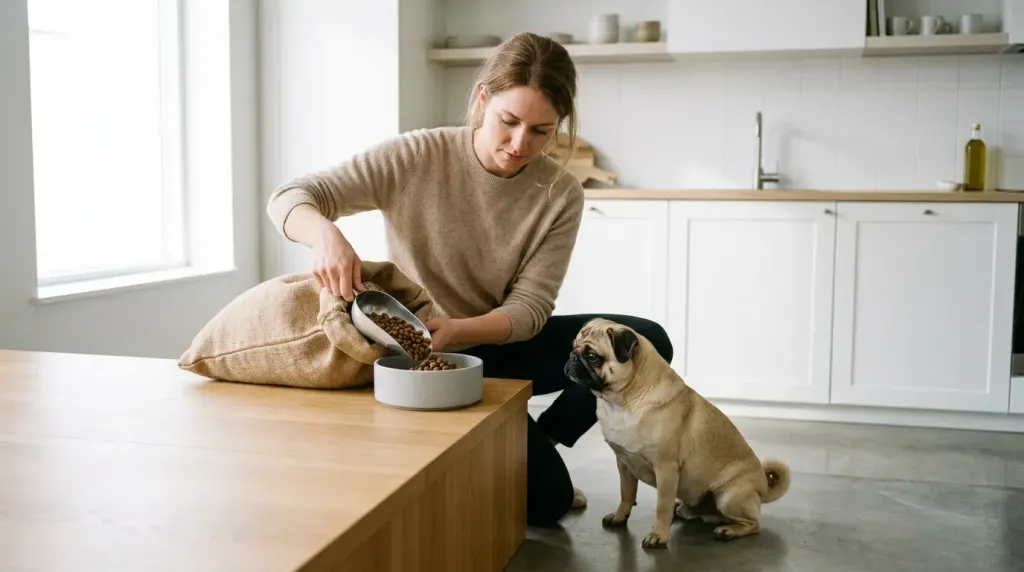
Owners must monitor body condition and weight over time rather than relying strictly on the feeding guidelines printed on dog food packaging. According to the World Small Animal Veterinary Association (WSAVA), adjusting portions based on a 1-9 Body Condition Score (BCS) helps maintain an ideal lean shape, targeting a score of 4 or 5 where ribs are palpable but not visible. Always seek veterinary advice for rationing, especially if preparing homemade Pug meals, which requires a vet-formulated recipe to guarantee nutritional balance.
Step 2: Exercise safely around heat and breathing
Pugs require calm, short walks of 15 to 20 minutes and indoor play matched to their individual fitness levels and the current weather. Avoid forced activity and stop exercise before the dog exhibits heavy panting or fatigue. Since Pugs are brachycephalic (flat-faced), they are highly susceptible to Brachycephalic Obstructive Airway Syndrome (BOAS). According to VCA Animal Hospitals, BOAS symptoms can worsen significantly with heat, humidity, stress, and excess weight, leading to severe respiratory compromise.
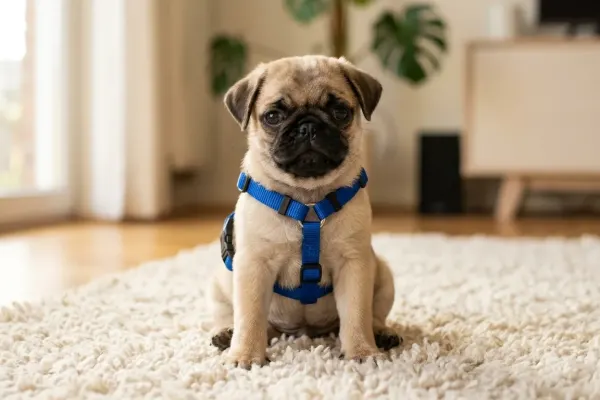
Always use a well-fitted body harness rather than a neck collar to avoid placing pressure on the airway and trachea. Provide plenty of fresh water and shade, and never leave a Pug in a hot car. Understanding a Pug’s natural activity levels helps owners balance necessary movement with safety precautions. If you notice unusual respiratory sounds, understanding the reasons behind common Pug snorting noises can help distinguish between habitual breed sounds and concerning changes that require medical attention. Keep ambient indoor temperatures below 24°C (75°F) if possible.
Recognize a breathing or heat emergency
Stop activity and move the dog to a cool, calm environment immediately if their breathing becomes markedly louder or more effortful, or if their resting respiratory rate exceeds 30 breaths per minute. If the dog displays weakness, collapse, blue or purple gums (cyanosis), disorientation, or persistent distress, contact an emergency veterinarian at once. According to veterinary studies, heat stroke is a medical emergency, and brachycephalic dogs are over-represented because their restricted airways severely impair their ability to cool down by panting. Use cool water (never ice or freezing water, which constricts blood vessels) to wet the dog’s coat and paws during urgent transport to the clinic.
Step 3: Groom the coat, folds, teeth, ears and eyes
Grooming a Pug serves as preventive health observation rather than just cosmetic maintenance. Brush the double coat two to three times a week to manage heavy shedding and distribute natural oils. Inspect and fully dry the facial folds at least every other day, introduce dog-safe tooth-brushing daily or three times a week to prevent periodontal disease, and ensure nails are trimmed every two to four weeks so they do not click on the floor.
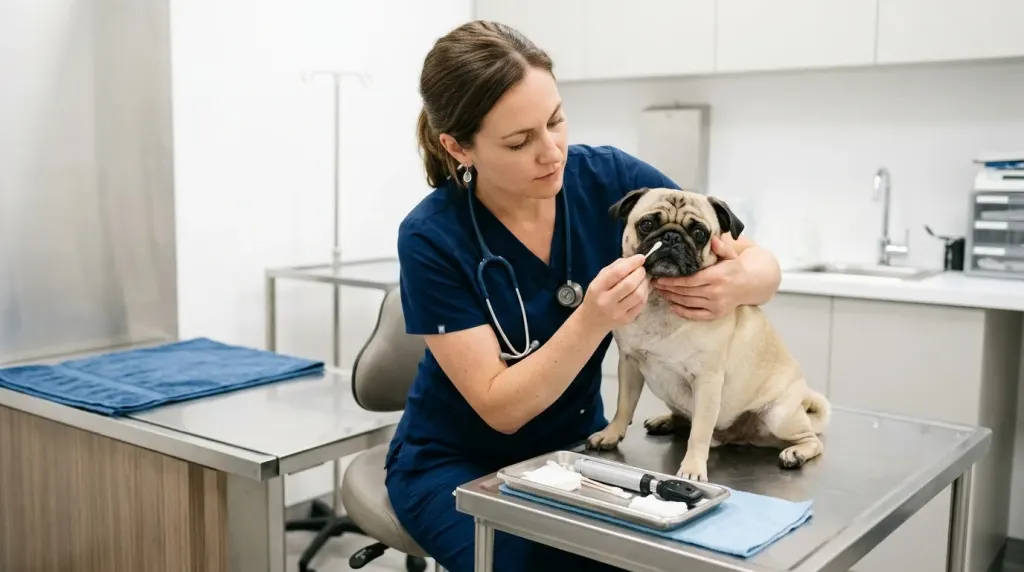
Check their prominent eyes daily for squinting, cloudiness, discharge, or signs of trauma. According to PetMD, the Pug’s specific conformation contributes to vulnerabilities like skin-fold dermatitis, crowded teeth, and corneal ulcers. Keep a close watch on their ears for redness or odor, as their specific anatomy increases Pug ear infection risks. Since facial anatomy affects saliva management, monitoring for excessive Pug drooling can also highlight potential dental pain, oral tumors, or fold moisture issues.
Avoid common grooming mistakes
Never leave facial folds damp after cleaning, as trapped moisture promotes bacterial (Staphylococcus) and yeast (Malassezia) overgrowth in the dark, warm crevices. Avoid pushing cotton swabs deep into the ear canals, which can rupture the eardrum, and never use human toothpaste, which contains toxic ingredients like xylitol.
Do not attempt to treat a painful eye or a persistently inflamed skin fold at home with over-the-counter creams. The Pug’s shallow eye sockets and deep facial wrinkles are anatomical risk areas. Sudden squinting (blepharospasm), cloudiness, pain, foul odor, swelling, or unusual green or yellow discharge warrants immediate professional veterinary advice. If your dog exhibits excessive licking behaviors paired with visible skin or mouth discomfort, discuss this with a veterinarian to rule out underlying allergic dermatitis or infections.
Step 4: Support training, social life and the home
Provide a safe environment that includes close human contact, reward-based training, and age-appropriate socialization. Ensure the dog has a temperature-controlled resting space and arrange the home to reduce avoidable jumping and slipping on hard floors.
The goal is to encourage safe, regular movement and companionship, not to create a sedentary lifestyle. This structured approach helps manage separation distress and sets boundaries for safe living, which is why Pugs make excellent apartment dogs when properly cared for. Introduce new pets gradually under supervision to ensure your Pug gets along with other dogs safely.
Step 5: Plan preventive veterinary care
Routine veterinary appointments twice a year are vital for proactive monitoring. Ask the veterinarian to review the dog’s breathing, body condition, eyes, skin, teeth, and mobility. Keep core vaccinations (parvovirus, distemper, adenovirus) and parasite prevention current, and report any changes in stamina, sleep patterns, appetite, or behavior.
Because brachycephalic breeds carry conformation-related risks, weight control and early detection are central to preventive care. According to the PDSA, ongoing veterinary care is a necessary commitment for Pug owners due to their high risk of BOAS, eye conditions, and spinal problems. Investigating behavioral changes, such as understanding why a Pug licks obsessively, can also help a veterinarian diagnose skin allergies or anxiety early. The monitoring focus naturally shifts as the dog ages, especially when Pugs reach their senior years, requiring blood panels and arthritis checks.
Know when to call the veterinarian
Seek prompt veterinary advice for new or worsening breathing difficulties, collapse, eye pain or injury, repeated vomiting, marked lethargy, or refusal to eat or drink. A painful or foul-smelling facial fold or a sudden change in mobility also requires clinical evaluation. For severe breathing distress, collapse, suspected heat stroke, or eye trauma, proceed to emergency veterinary care immediately rather than waiting for a scheduled appointment.
Step 6: Care for a pregnant Pug with veterinary oversight
Knowing exactly how to take care of pregnant pug dog demands early veterinary and reproductive guidance from the moment a mating is confirmed. Canine gestation lasts approximately 63 days. Avoid unsupervised changes to diet or medication during the first 40 days of gestation; after day 40, a veterinarian usually recommends transitioning the dam to a high-calorie puppy formula to support fetal growth. Owners must prepare a comprehensive whelping box in a quiet, draft-free room well in advance and monitor the dam’s rectal temperature twice daily as her due date approaches. A drop in temperature below 37.2°C (99°F) typically indicates labor will begin within 24 hours.
According to The Royal Kennel Club, birthing difficulties (dystocia) are common in brachycephalic dogs because the puppy size-particularly the large, blocky head-is frequently disproportionate relative to the mother’s narrow pelvis, leading to fetal-pelvic disproportion. This anatomical reality can endanger both the dam and the puppies, making close monitoring and pre-whelping radiographs around day 55 essential to count the litter. Owners should budget accordingly for routine ultrasounds and emergency veterinary care, including a potential caesarean section, when calculating the overall cost of owning a Pug.
Labor signs that need urgent veterinary contact
Contact a veterinarian immediately for prolonged, strong abdominal contractions lasting more than 30 minutes without producing a puppy, if there is a gap of more than two hours between puppies with weak contractions, or if there is abnormal green, black, or heavy bloody discharge before the first puppy is born. These signs strongly indicate dystocia, and rapid veterinary assessment is critical. Treatment may require physical examination, ultrasound imaging to check fetal heart rates (which should be above 180-200 bpm), medical support with oxytocin, or an emergency caesarean section to ensure survival.
Frequently asked questions about how to take care of a pug dog
How often should an adult Pug eat?
Most adult Pugs do best with two measured meals rather than having food left out all day. The exact amount depends on the diet, activity level, body condition, and the veterinarian’s advice. Monitor their body condition score rather than relying on a single universal cup measurement.
How much exercise does a Pug need?
A Pug needs regular, low-impact movement, but activity should be shortened or moved indoors when heat, humidity, breathing noise, or fatigue make exertion unsafe. Avoiding heat and excess weight is especially important for dogs displaying signs of BOAS.
How often should Pug wrinkles be cleaned?
Inspect facial folds routinely and clean and dry them whenever debris or moisture is present. Persistent redness, odor, discharge, or discomfort requires veterinary evaluation, as the folds can harbor bacterial or yeast infections.
Is snoring or snorting normal in Pugs?
Some snoring and snorting is common in flat-faced dogs, but it should not be dismissed if it worsens or occurs alongside distress, collapse, blue or purple gums, or heat intolerance. These symptoms require prompt veterinary assessment.
What is the most important rule for pregnant Pug care?
Make veterinary planning the absolute priority. Birthing difficulties are common in brachycephalic dogs, so owners must have a veterinarian’s contact details, an emergency plan, and clear instructions for when labor requires immediate intervention.


Leave a Reply