
Table of Contents
Yes, most Pugs get along exceptionally well with other dogs. When dog owners consider how do Pugs get along with other dogs, breed history explains their friendly disposition: bred for centuries primarily as companion animals, Pugs have low territorial and hunting drives, making them naturally sociable, gentle, and cooperative around other canines. Their success with housemates or new playmates depends on structured puppy socialization, respectful introductions, and matching energy levels to prevent physical fatigue.
- Pugs possess a friendly, even-tempered companion nature that supports peaceful canine interactions.
- Structured puppy socialization and positive early exposures establish lifelong confidence around other canines.
- Brachycephalic facial shapes and snorting sounds can temporarily puzzle unfamiliar dogs during initial greetings.
- Supervised neutral introductions and mealtime separation prevent unnecessary resource tension.
Pug temperament and social tendencies
Understanding how Pugs interact with other dogs begins with their genetic history and companion heritage. According to the American Kennel Club (AKC), the Pug temperament is officially defined as even-tempered, charming, mischievous, and loving. As members of the Toy Group weighing between 14 and 18 pounds (6.3 to 8.1 kg), Pugs were bred specifically to live peacefully alongside people and other household pets. Unlike working terriers or herding breeds, they carry minimal predatory drive and rarely show territorial hostility toward other canines.
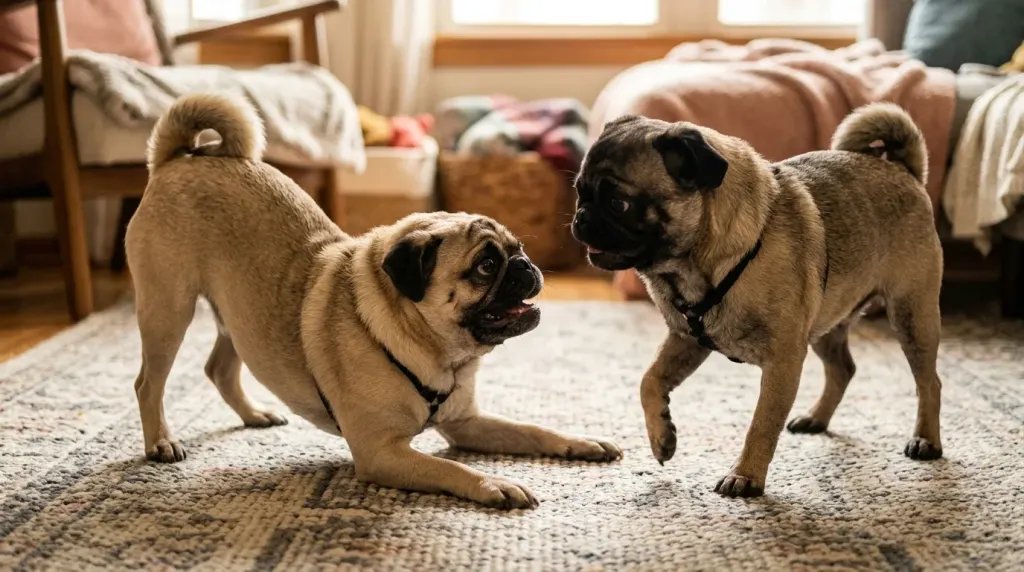
Because of this innate pug friendly breed temperament, healthy Pugs typically view other dogs as potential companions rather than rivals. When meeting new dogs, they frequently display playful behaviors such as play bows, tail wags, and curious sniffing. Their gentle nature means they generally adapt well to various household routines, though their moderate stamina limits vigorous physical exertion. While their eagerness to please supports good habits, understanding pug learning ability and intelligence helps owners apply patient, positive reinforcement when teaching social manners.
How socialization shapes outcomes in pugs
While genetic heritage provides a friendly baseline, individual social behavior is heavily shaped during early development. The American Veterinary Society of Animal Behavior (AVSAB) states in its Position Statement on Puppy Socialization that the primary socialization period occurs during the first three months of life, specifically between 3 and 16 weeks of age. During this critical window, puppies are uniquely receptive to learning that other dogs, varied environments, and novel sounds are safe and non-threatening.
Puppies that receive positive, controlled exposure to vaccinated, calm adult dogs during this developmental stage learn essential canine communication cues. This foundation minimizes fear-based reactivity later in life and supports strong pug family dog compatibility in homes with existing pets. Conversely, dogs that miss out on early social experiences may feel overwhelmed in group settings, leading to timid avoidance or defensive posturing.
Practical socialization steps
To build positive social habits, owners should implement structured, gradual exposure routines:
- Enroll in structured puppy classes: Controlled indoor training environments allow young dogs to practice polite greetings under professional supervision before full adult vaccination schedules conclude.
- Arrange one-on-one playdates: Pair your puppy with calm, gentle adult dogs that have proven social skills rather than visiting chaotic off-leash dog parks.
- Reward calm observations: Reward your Pug with high-value treats when they remain relaxed while observing other dogs from a comfortable distance.
- Keep interactions brief: Conclude play sessions after 10 to 15 minutes to prevent overstimulation and overtiredness, reinforcing their gentle pug lap dog companion traits.
Canine body language relies heavily on subtle facial expressions and ear positions. Pugs possess compact facial structures and tightly curled tails, which can occasionally lead other breeds to misinterpret their relaxed expressions as direct stares. Monitoring initial interactions helps ensure mutual communication remains clear and friendly.
What to watch for: signs of harmony or distress
Evaluating whether two dogs are interacting well requires observing their overall body language. Harmonious interactions involve loose, fluid body movements, mutual play bows, role reversals during gentle chasing, and brief natural pauses where both animals check in with their surroundings. When two dogs feel comfortable, their mouths remain slightly open and relaxed, and their ears stay in neutral positions.
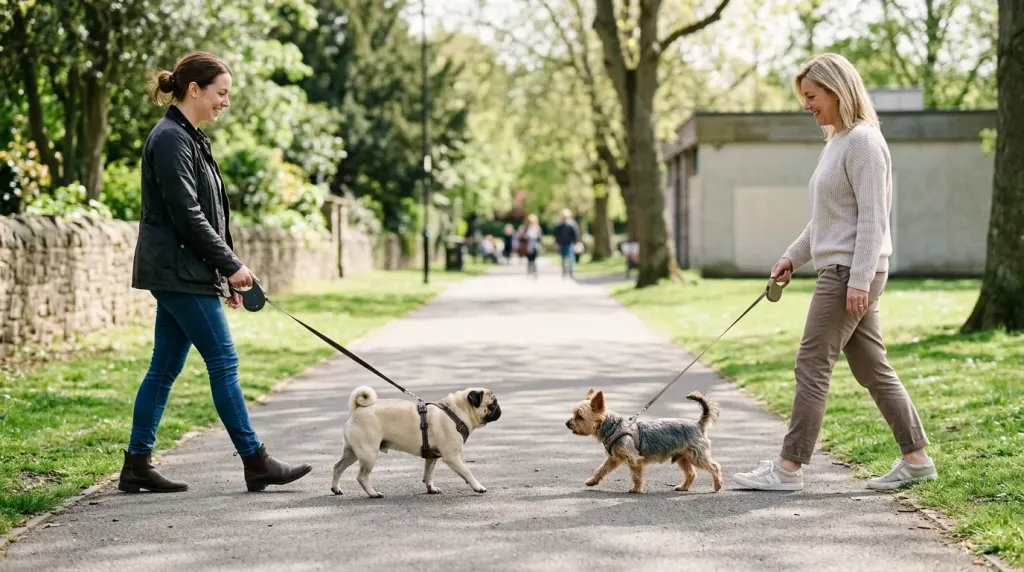
In contrast, distress signals include sudden body stiffness, a tightly tucked tail, excessive lip licking, continuous yawning, or avoidance behaviors such as turning the head away repeatedly. If a dog feels trapped or uncomfortable, it may let out a low growl or snap defensively to create physical space. Identifying these early cues allows owners to manage pug aggression risk factors before minor anxiety escalates into genuine conflict. Owners should also observe physical fatigue during group play, ensuring that pug daily exercise needs are fulfilled in moderate sessions without causing breathing distress.
Case considerations by dog size and age
Matching playmates appropriately protects a Pug from accidental injury and emotional stress:
- Pugs with small to medium companion dogs: Breeds with similar weights and gentle play styles, such as French Bulldogs, Cavalier King Charles Spaniels, and Boston Terriers, often make ideal playmates.
- Pugs with large or high-energy dogs: While many Pugs live peacefully with large breeds like Golden Retrievers or Labradors, owners must supervise play closely. A high-energy large dog can accidentally injure a toy breed during boisterous wrestling.
- Age differences: Energetic young puppies can easily overwhelm an aging companion. Recognizing senior pug age milestones ensures that older dogs aged 8 years and above have quiet retreat spaces away from active youngsters.
Environment and management tips
Creating a peaceful multi-dog home requires practical household management:
- Separate feeding stations: Feed dogs in separate rooms or place bowls at least 6 feet apart to eliminate competition over food, especially since Pugs are highly food-motivated.
- Provide multiple resting areas: Ensure each pet has its own comfortable bed in quiet corners, which supports harmonious pug apartment living suitability.
- Manage high-value toys: Pick up favored chews or bones when multiple dogs are sharing common spaces to prevent possessive behavior.
- Maintain neutral introductions: When introducing a new dog to your home, walk both pets together on loose leashes on neutral outdoor ground before bringing them inside.
Note: Schedule a veterinary check if a previously sociable Pug suddenly shows irritability or snaps when approached by other pets. Underlying joint discomfort, ear irritation, or airway inflammation often lowers a dog’s patience threshold during social play.
Frequently asked questions about pugs and other dogs
Do pugs get along with other dogs?
Yes, most Pugs get along exceptionally well with other dogs. Their genetic background as companion animals gives them an outgoing, affectionate nature with very low instinctual aggression or territorial drive.
Are pugs friendly with other dogs?
Pugs are naturally friendly and enjoy social interactions with fellow canines. They thrive when socialized early and typically welcome play sessions with calm, respectful dog companions.
Do dogs fear pugs?
Some dogs show brief hesitation when first meeting a Pug due to the Pug’s compressed facial anatomy and distinct snorting or grunting airway sounds. Once the other dog realizes these sounds are normal breathing and observes relaxed body language, hesitation quickly fades.
Are pugs aggressive to other dogs?
No, Pugs are not an aggressive breed. Any snapping or defensive posturing is almost always a response to physical pain, fear, or feeling cornered by a larger, overly boisterous animal.
Do pugs do well with other dogs?
Pugs do very well living with other dogs when households maintain fair resource management, provide separate feeding areas, and ensure introductions occur gradually on neutral ground.
Leave a Reply