
Table of Contents
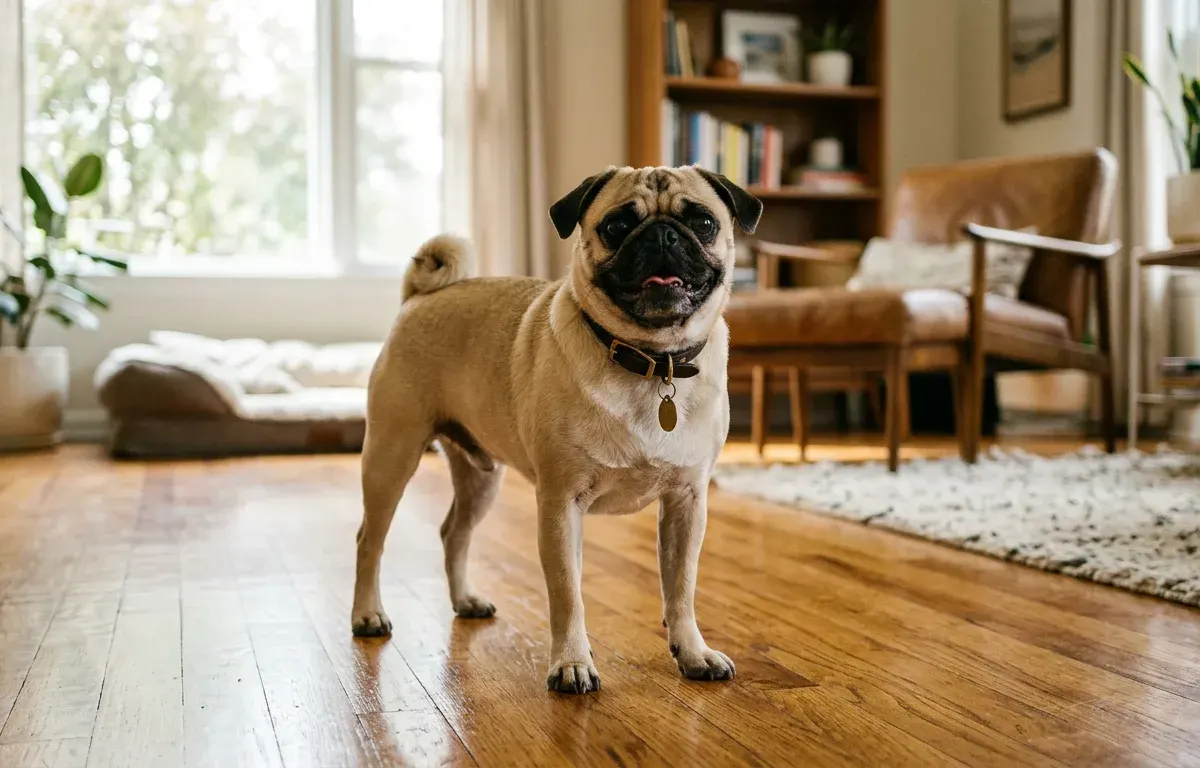
Adult Pugs typically reach a height of 10 to 13 inches at the shoulder and weigh between 14 and 18 pounds according to official kennel club standards. When evaluating how big a pug dog is at full maturity, most puppies achieve their full shoulder height between 9 and 12 months of age, though muscle density and chest width continue filling out until around 18 months.
- AKC standard height for adult Pugs is 10-13 inches at the withers, with an ideal weight of 14-18 pounds.
- Fast growth occurs during the first 6 months before skeletal development slows down noticeably.
- Height development finishes between 9 and 12 months, while body frame filling out continues up to 18 months.
- Underweight dogs under 14 pounds need gradual weight gain via protein-dense nutrition after veterinary evaluation.
AKC Standard Size Benchmarks for Adult Pugs
Evaluating adult size in this breed begins with official guidelines. Owners often wonder how big pug dogs can get when raised on a healthy diet. According to the Pug Dog Club of America (PDCA) and the American Kennel Club (AKC), a healthy adult belongs to the Toy group, characterized by a compact, cobby body with a distinct square outline. Height is measured vertically from the flat ground to the top of the withers (the highest point of the shoulder blades).
When evaluating mature physical dimensions, official breed judges measure shoulder height alongside total body weight:
| Dimension | AKC Standard Range | Metric Equivalent | Additional Structural Benchmarks |
|---|---|---|---|
| Height at Withers | 10 – 13 inches | 25.4 – 33.0 cm | Measured vertically from ground to shoulder |
| Adult Weight | 14 – 18 pounds | 6.35 – 8.16 kg | Ideal balance for mature show and pet dogs |
| Body Proportion | Square (height equals length) | 1:1 proportion | Equal distance from shoulder to tail root |
| Average Chest Girth | 18 – 21 inches | 45.7 – 53.3 cm | Deep, broad sternum with well-sprung ribs |
| Neck Circumference | 12 – 15 inches | 30.5 – 38.1 cm | Thick, muscular neck supporting head profile |
Official standards emphasize balanced proportion over sheer body volume. Beyond shoulder height, understanding how much pug dogs weigh helps owners monitor overall physical development. Judges penalize leggy frames, narrow chests, and overly squat builds. A well-proportioned adult displays a broad chest and level topline, complementing the distinct square body structure of a Pug that defines overall appearance.
In veterinary evaluation, ideal body composition corresponds to a 4/9 or 5/9 on the 9-point Body Condition Score (BCS) scale. At this rating, the ribs are easily felt under a light layer of fat, a subtle waistline is visible behind the ribcage when viewed from above, and an abdominal tuck is evident from the side profile.
Can Real Weight Exceed Official Standards?
While official benchmarks specify 14 to 18 pounds, many healthy companion dogs in household settings weigh between 16 and 20 pounds. Genetic background, bone density, and individual torso length explain why non-show dogs naturally settle slightly above the 18-pound threshold without carrying excess fat. Observing how large do pug dogs get in typical home environments reveals that pet-line breeding often produces slightly stockier builds than show stock.
However, distinguishing between heavy bone structure and excessive fat storage remains critical. According to Dr. Jerry Klein, Chief Veterinary Officer at the American Kennel Club, “A healthy Pug should be compact and cobby, with a square outline and firm musculature, but overfeeding can quickly push this brachycephalic breed past its healthy weight range.”
Because these small companion dogs exhibit lower daily energy expenditure than working breeds, monitoring daily food intake is essential. Owners should align meal portions with the moderate activity levels of Pugs to maintain a lean frame throughout adult life.
Month-by-Month Pug Puppy Growth Chart
Tracking monthly puppy growth requires monitoring weight and height milestones from weaning through maturity. Understanding how big do pug dogs grow month by month helps owners identify normal growth trajectories early. Veterinary growth models published by PetMD indicate that puppies experience rapid skeletal expansion during their first 24 weeks of life before transitioning to steady mass accumulation.
The reference chart below outlines average weight and height progression across early development stages:
| Age | Average Weight (lbs) | Average Weight (kg) | Estimated Height (inches) | Weekly Gain & Milestones |
|---|---|---|---|---|
| 8 Weeks (2 Months) | 2.0 – 4.0 lbs | 0.9 – 1.8 kg | 4.0 – 6.0 in | Rapid early weaning growth phase (~0.5 lb/wk) |
| 12 Weeks (3 Months) | 4.0 – 7.0 lbs | 1.8 – 3.2 kg | 6.0 – 8.0 in | Paw size offers early adult size indicators |
| 16 Weeks (4 Months) | 7.0 – 10.0 lbs | 3.2 – 4.5 kg | 7.0 – 9.0 in | Reaches ~50% of adult skeletal frame height |
| 20 Weeks (5 Months) | 9.0 – 12.0 lbs | 4.1 – 5.4 kg | 8.0 – 10.0 in | Steady muscle mass and bone mineralization |
| 24 Weeks (6 Months) | 11.0 – 14.0 lbs | 5.0 – 6.4 kg | 9.0 – 11.0 in | Attains ~75% – 80% of final adult weight |
| 36 Weeks (9 Months) | 13.0 – 16.0 lbs | 5.9 – 7.3 kg | 10.0 – 12.0 in | Growth plates begin fusing; height stabilizes |
| 12 Months (1 Year) | 14.0 – 18.0 lbs | 6.4 – 8.2 kg | 10.0 – 13.0 in | Full height reached; chest thickening continues |
During the first 12 weeks, a young pup gains approximately 0.5 to 1 pound per week. Caloric demands are high during peak puppy growth, requiring roughly 55 to 60 calories per pound of body weight daily. By 6 months of age, caloric requirements taper down toward 40 to 45 calories per pound as growth slows. Providing a balanced daily diet for a Pug throughout early development supports steady bone mineralization. Comparing weight metrics against standard reference ranges during routine veterinary visits helps identify growth delays early.
Do Males and Females Differ in Size?
When examining size variation by sex, physical differences remain subtle compared to larger breeds. Gender plays a minor role in how big can a pug dog get, with both males and females sharing the official weight standard of 14 to 18 pounds while displaying subtle structural variations.
In practice, subtle sexual dimorphism exists:
- Male Size Profile: Males often lean toward the upper end of the scale (11.5 to 13 inches tall and 16 to 18 pounds). They feature slightly broader head structure, wider muzzle baselines, heavier bone density in the forelimbs, and a chest girth averaging 19 to 21 inches.
- Female Size Profile: Females frequently measure between 10 and 11.5 inches at the withers and weigh between 14 and 16 pounds. Their torso outline is slightly narrower, with a chest girth averaging 18 to 19.5 inches and a somewhat refined pelvic structure.
At What Age Do Growth Plates Fuse and Height Stop Increasing?
A primary concern for dog owners is learning at what age do pug dogs stop growing in height versus filling out in chest width. Anatomical development proceeds in two distinct phases: skeletal height extension and muscular chest broadening.
- Skeletal Height Phase (9 to 12 Months): Long bones in the legs continue lengthening until the distal radius and ulna growth plates (epiphyseal plates) close. Clinical data from VCA Animal Hospitals confirms that these epiphyseal plates fuse between 9 and 12 months, fixing permanent shoulder height.
- Muscular Chest & Density Phase (12 to 18 Months): After skeletal height plateaus, chest girth expands, shoulder musculature hardens, and adult bone density stabilizes. Full physical maturity is achieved around 18 months.
Tracking development phases works best alongside a structured daily weight tracking and care routine for a Pug. As growth plate fusion completes after 12 months, daily caloric intake must be reduced by 10% to 15% to prevent excess fat accumulation as dogs transition into adult life and eventually approach the aging process in Pugs. Furthermore, neutering or spaying performed early (before 6 months) can cause growth plates to stay open slightly longer, sometimes adding a fraction of an inch to leg height.
How to Help an Underweight Frame Gain Weight Safely
While overweight dogs draw frequent attention, some young or recovering animals fall below the healthy 14-pound threshold. When researching how to make pug dog fat or put on healthy weight safely after illness, owners must focus on gradual, muscle-focused mass gain rather than feeding empty calories or high-fat table scraps.
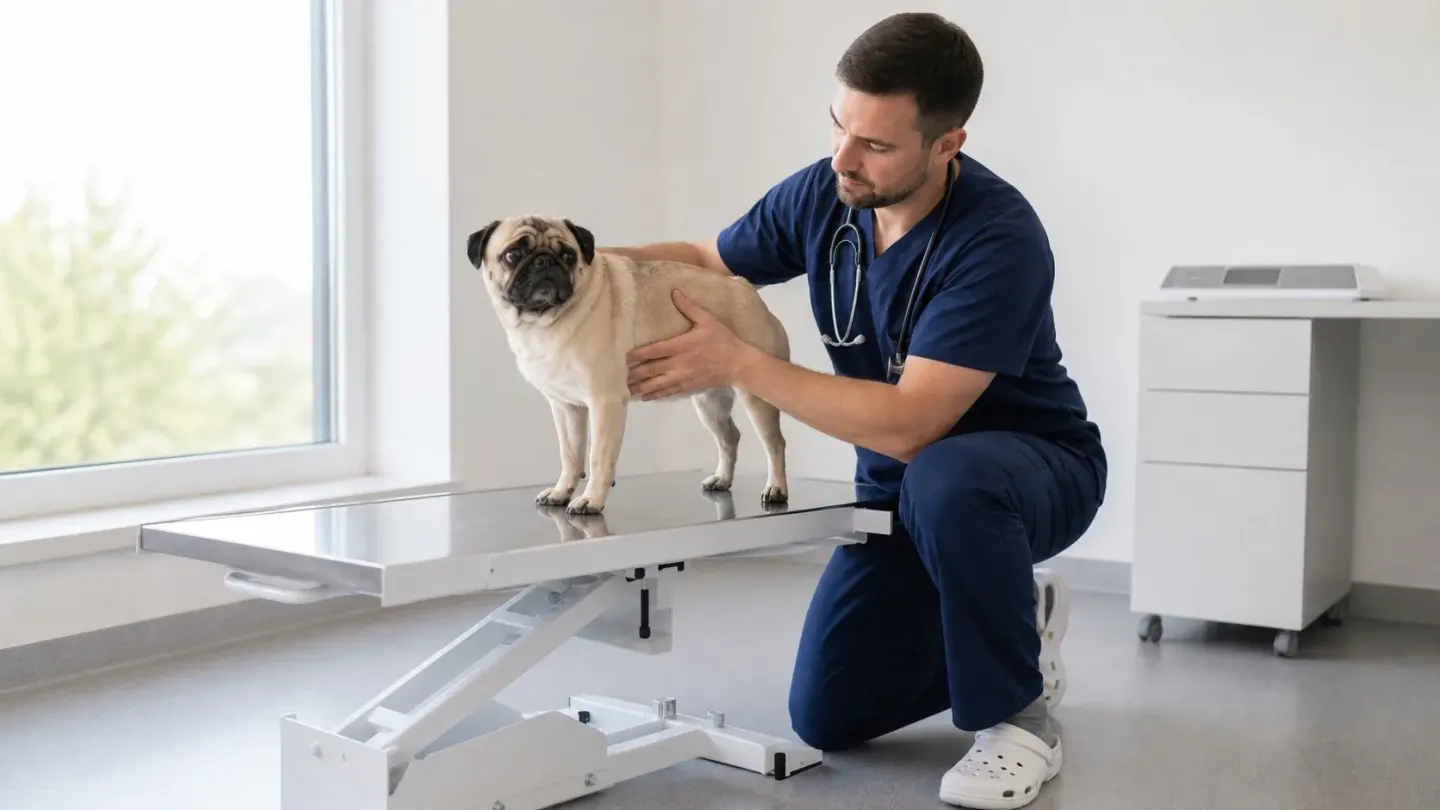
A dog is clinically underweight when the Body Condition Score drops below 3/9. Visible indicators include prominent ribs, exposed spinal vertebrae, and a severely tucked abdomen with visible hip bones under a thin coat.
To rebuild body mass safely:
- Increase Caloric Surplus with Digestible Protein: Transition to high-protein puppy or active formulas containing 26% to 30% crude protein and healthy omega-3 fatty acids. Protein builds lean muscle mass rather than soft belly fat. Increase daily caloric intake by 10% to 15% above maintenance baseline.
- Divide Food into Smaller, Frequent Portions: Distribute total daily food intake into 3 or 4 small meals spaced 4 hours apart. This prevents gastric stress and optimizes nutrient absorption in short-muzzled dogs.
- Incorporate Nutrient-Dense Toppers: Adding plain boiled chicken breast, scrambled eggs, or a tablespoon of plain canned pumpkin puree increases caloric density and palatability without adding artificial sodium or heavy fats.
Owners can prepare balanced vet-informed homemade food recipes for Pugs or adjust daily commercial kibble portions to support steady weight gain of 0.25 to 0.5 pounds per week. Weight restoration for flat-faced (brachycephalic) breeds requires maintaining a lean waistline while building lean muscle. Gradual caloric increases prevent liver strain and protect fragile knee joints.
Note: Always consult a licensed veterinarian before altering feeding routines, particularly to rule out underlying causes like intestinal parasites, pancreatic insufficiency, or food intolerances.
Medical Risks of an Overweight Body Frame
Allowing a small dog to exceed 19 or 20 pounds without a larger skeletal frame creates severe medical vulnerabilities. Because even a 2-pound weight gain on a 15-pound dog represents a 13.3% increase in total body mass (equivalent to a 150-pound human gaining 20 pounds rapidly), the physiological impact is substantial.
As a flat-faced brachycephalic breed, extra body fat deposited around the neck compresses narrowing airways, escalating Brachycephalic Obstructive Airway Syndrome (BOAS). This leads directly to elevated risks of heat exhaustion at ambient temperatures above 80°F (27°C), exercise intolerance, patellar luxation, and severe breathing difficulties and snoring in overweight Pugs. Keeping weight within the 14-to-18-pound ideal range preserves daily mobility and protects long-term health.
Frequently Asked Questions About Size and Weight
How big are pugs dogs compared to other small breeds?
Pugs stand 10 to 13 inches tall and weigh 14 to 18 pounds, placing them on the larger end of the Toy breed category. They are heavier and stockier than Chihuahuas or Pomeranians, but remain smaller and more compact than French Bulldogs or Boston Terriers.
How big will a mixed-breed pup get?
Pug mixes vary depending on the secondary parent breed. Crosses with smaller breeds like Chihuahuas (Pugaliers or Chugs) typically weigh 10 to 15 pounds, while crosses with Beagles (Puggles) range from 15 to 30 pounds and stand 13 to 15 inches tall.
How can I tell if a puppy will grow into a larger adult?
Inspecting paw size and leg joint width at 12 weeks provides reliable clues. Puppies with thick bone structure, wide wrist joints, and noticeably large paws generally grow toward the upper limit of 18 pounds or slightly above once fully mature.
Is an 18-pound adult dog considered overweight?
Not necessarily. An 18-pound dog with a tall 13-inch shoulder height, broad chest, and a visible waistline tucked behind the ribs is well within ideal standard proportions. However, an 18-pound dog standing only 10 inches tall carries excess fat and requires caloric reduction.


Leave a Reply