
Table of Contents
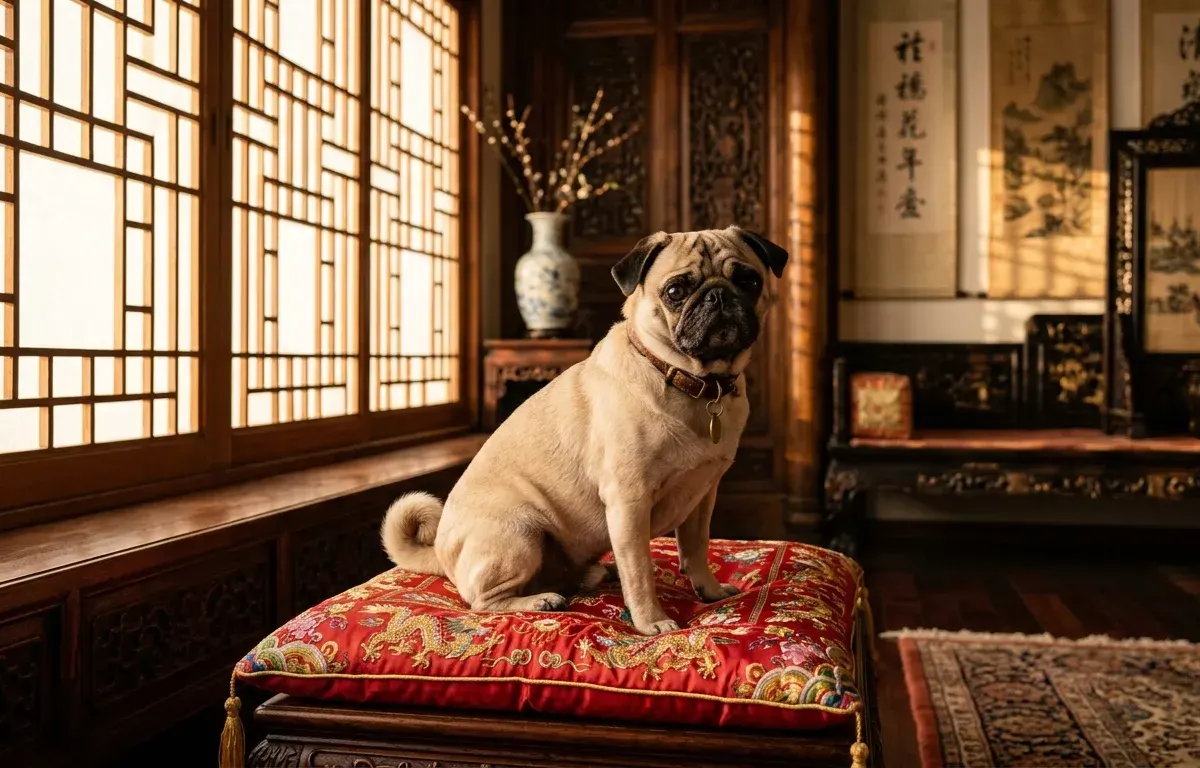
Understanding what were pug dogs bred for begins in ancient China around 400 BCE, where imperial breeders developed them exclusively to serve as cherished lapdogs and royal companions for emperors, nobility, and Buddhist monks. Unlike working breeds developed for herding, hunting, or property defense, breeders selected pugs entirely for their gentle temperament, compact size, and affectionate nature. They lived in luxury within palace walls, warmed imperial laps, and served as prized diplomatic gifts. Today, their purpose remains unchanged: they are dedicated, low-exercise indoor companion pets.
- Ancient Chinese breeders developed pugs around 400 BCE exclusively as royal lap warmers and companions.
- Pugs were never bred for hunting, fighting, tracking, or physical labor.
- Common myths suggesting pugs hunted or took down lions are false, stemming from confusion with African hunting breeds and Chinese guardian lion statues.
- Dutch traders introduced the breed to Europe in the 16th century, where they became royal favorites in the House of Orange and the British royal family.
- Modern pugs retain their historical companion traits, thriving as loving household pets suited for indoor and apartment living.
Origins of the Pug and early purpose
The history of the pug stretches back more than two thousand years, placing it among the oldest documented canine breeds in existence. Historical records recognized by the American Kennel Club document that the breed existed in ancient China as early as 400 BCE, during the era of Confucius. Early lineage records detailing where pug dogs originate from show that imperial courts developed three distinct short-faced breeds: the Lion Dog, the Pekingese, and the Lo-Sze, which is the direct ancestor of the modern pug.
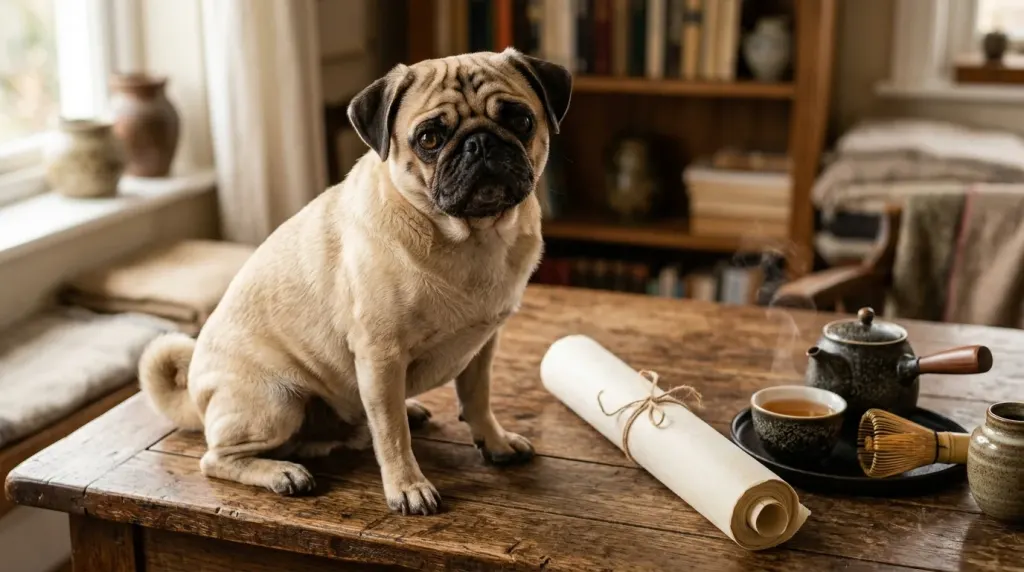
Understanding how imperial breeders did select traits to determine how pug dogs get bred requires examining the selective breeding records of the Han, Tang, and Song dynasties. Imperial dog breeders paired small Asian canines to emphasize compact bodies, short muzzles, smooth coats, and peaceful temperaments. Unlike common working dogs in rural provinces, these companions were kept exclusively by emperors, royal family members, and high-ranking mandarins. Owning a Lo-Sze was an imperial privilege, and theft of an imperial dog carried severe penalties.
Emperors valued these dogs as living luxury items and personal lap warmers in unheated stone palaces. Breeders paid particular attention to forehead wrinkles, selectively cultivating facial skin folds that resembled the Chinese character for “prince” or “king” (王, wang). Dogs bearing this natural mark on their brows were treasured as symbols of royal legitimacy and good fortune. Outside palace compounds, Tibetan Buddhist monks kept these small dogs in monasteries, valuing their calm, quiet presence during daily meditation.
European adoption and reinforcement of traits
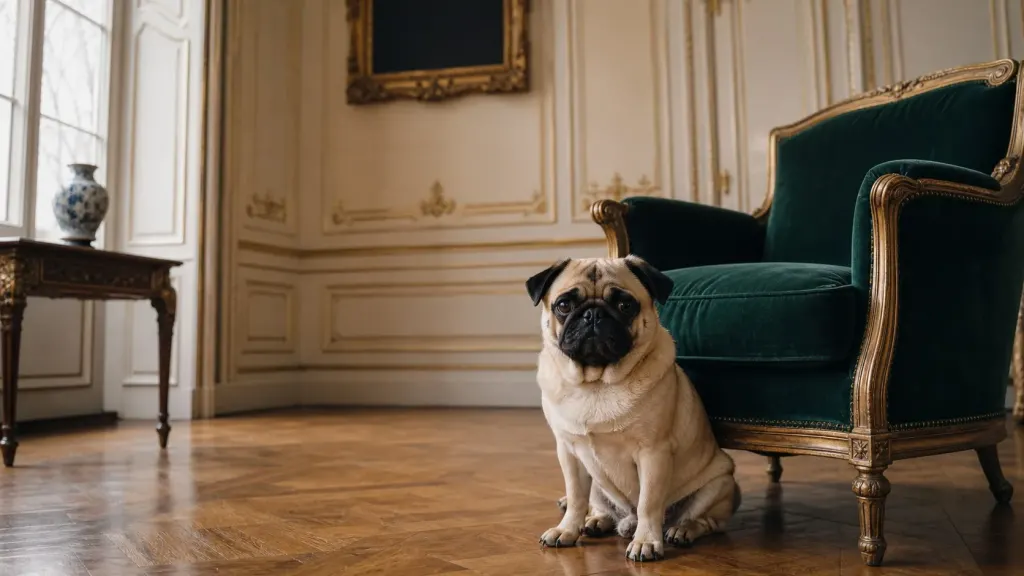
During the late 16th and early 17th centuries, maritime trade between Asia and Europe expanded rapidly through the Dutch East India Company. Dutch merchants returning from Canton brought several pairs of Lo-Sze dogs back to the Netherlands, introducing the Asian toy breed to Western royalty. Breed registries documenting what dogs make a pug establish how European fanciers preserved the breed’s signature flat face and curled tail while standardizing coat colors.
The breed cemented its royal standing in Europe in 1572. According to Dutch historical accounts, a pug named Pompey saved the life of William the Silent, Prince of Orange, by scratching and barking at his tent to awaken him as Spanish assassins approached during the Eighty Years’ War. Following this event, the House of Orange adopted the pug as its official court dog. When William III and Mary II ascended the English throne in 1688, they brought their favored dogs to London, igniting widespread popularity among British aristocrats.
By the 19th century, Queen Victoria became one of Britain’s most influential pug breeders, establishing her own royal kennels and helping standardize breed characteristics. According to historical breed standards documented by The Kennel Club, Victorian breeders emphasized the breed’s solid structure, short square muzzle, tightly curled tail, and docile personality, ensuring that pugs remained dedicated companions rather than working animals.
Physical traits bred for affection and usability
A detailed evaluation of physical breed standards illustrates how every trait was selected for indoor lap companionship rather than field work. The breed’s compact, cobby body provided comfortable weight and warmth when resting on an owner’s lap. Short, fine coats required minimal outdoor maintenance, while large, dark eyes and expressive facial wrinkles maximized human emotional connection. The Latin phrase multum in parvo (“a lot in a little”) became the official breed motto, capturing their sturdy substance in a compact frame.
Breeding focus: traits selected for companionship, not labor
Every stage of pug breeding history prioritized human-oriented behavioral traits over physical utility. When analyzing what are pug dogs bred for, breed historians emphasize that human sociability, low prey drive, and emotional stability were the core selection criteria. Pugs were never asked to herd livestock, retrieve game, or patrol property boundaries.
When analyzing what were pugs bred for, small dogs bred for protection (such as terriers or pinschers) offer an informative contrast. Unlike working canines developed forsmall estate protection or pest elimination, pugs were intentionally bred without territorial aggression or predatory instincts. Royal breeding programs cultivated pugs solely to provide companionship and lap warmth, favoring dogs that sought constant human physical contact and integrated peacefully into busy households. Breed historical documentation confirms that selective breeding over two millennia focused on non-aggressive companion traits. By eliminating hunting and defensive drives, breeders created a pet specifically adapted for close, peaceful indoor living with human families.
Note: The brachycephalic facial structure of pugs means they have shortened upper airways. Owners must provide climate-controlled environments and avoid strenuous exercise in hot weather.
Misconceptions about aggression and hunting
Online discussions occasionally circulate questions asking whether Chinese pugs were bred to be fighting dogs or if small pugs were used for protection. Historical evidence directly refutes these theories. Documented pug lap dog temperament traits confirm that pugs lack the jaw leverage, muscular drive, and dog-on-dog aggression required for combat sports or guard duties.
Another widespread internet myth asks whether pug dogs were bred to kill lions or take down large African game. This misconception stems from two unrelated historical references:
- Confusion with African lion hounds: The Rhodesian Ridgeback was bred in Southern Africa to track and distract lions during hunts. Some casual readers confuse the courageous temperament of small companion breeds with the specialized tracking role of large African hounds.
- Chinese Foo Dog sculptures: Traditional Chinese temples and palaces feature stone guardian statues known as “Foo Dogs” or “Imperial Guardian Lions.” While these stylized stone guardians share rounded ears and broad snouts, they represent mythical spiritual protectors, not working hunting dogs.
Historical records show that at no point in history did pug dogs hunt lions, fight in arenas, or track big game. Their anatomy and temperament reflect pure companion breeding.
Modern role as companion animals
Today, practical assessments of why pugs are good apartment dogs demonstrate how ancient lapdog traits translate into modern households. Modern pugs serve primarily as household companion animals, therapy dogs in healthcare settings, and emotional support companions. Their moderate exercise requirements, quiet demeanor, and strong desire for human proximity make them well suited for urban living.
How breeding history informs breed health and welfare today
Centuries of selective breeding for exaggerated physical traits created unique health requirements that modern owners must manage. Veterinary studies on how long pug dogs live emphasize that proper preventive care directly addresses anatomical traits inherited from historic breeding.
Key health considerations linked to historical breeding include:
- Brachycephalic Airway Syndrome: Compressed nasal passages and elongated soft palates reduce heat tolerance and respiratory efficiency during heavy exercise.
- Facial Wrinkle Hygiene: The deep skin folds originally bred to resemble the royal character 王 require regular cleaning to prevent bacterial and yeast infections.
- Weight Management: Sturdy bone structures combined with low daily activity levels make pugs prone to rapid weight gain. Carefully monitoring what pug dogs eat with strict portion control prevents obesity and relieves strain on their joints and shortened airways.
- Eye Protection: Prominent, shallow eye sockets leave the corneas vulnerable to accidental scratches from household objects and dry air.
Understanding these traits helps owners provide appropriate care, balanced nutrition, and climate-controlled living environments.
Debunking myths about lion-hunting pugs
To clarify historical breeding facts, the table below compares common myths with documented historical reality:
| Myth or Common Claim | Historical Reality | Breed Evidence |
|---|---|---|
| Bred to fight or hunt lions | Never used for hunting or combat | Developed purely as indoor companion lapdogs in Chinese courts |
| Bred as vicious fighting dogs | Selected exclusively for peaceful temperaments | Low prey drive, non-aggressive social behavior |
| Bred for perimeter protection | Kept as personal lap warmers | Lacks physical build and jaw structure for guard work |
| Originated as European hunting hounds | Native to ancient East Asia around 400 BCE | Imported to Europe via Dutch maritime trade in the 16th century |
| Required high-speed athletic tasks | Suited for quiet indoor living | Compact, heavy-boned toy group classification |
Frequently asked questions about pug breeding history
What were pug dogs originally bred for?
Pug dogs were originally bred in ancient China around 400 BCE to serve as royal lapdogs and affectionate companions for emperors, nobility, and Buddhist monks. They were created to live indoors, provide companionship, and keep owners warm in unheated palace rooms.
Did pugs serve as fighting dogs or guard dogs?
No. Pugs were never bred for fighting, guarding, or arena combat. Imperial breeders specifically selected dogs with gentle, sociable, and non-aggressive temperaments suitable for palace living.
Were pugs ever bred to hunt or take down lions?
No. Historical evidence shows that at no time did pug dogs hunt lions or take down wild predators. The myth arose from confusion with Rhodesian Ridgebacks (African lion tracking dogs) and Chinese “Foo Dog” temple guardian statues. Pugs lack the physical build, airway capacity, and jaw structure for hunting large predators.
How did pug breeding change after arriving in Europe?
After Dutch traders brought pugs to Europe in the 16th century, European breeders refined their physical appearance while preserving their companion temperament. Breed clubs formalized standards for coat colors, facial masks, and compact body proportions.
What is a pug dog used for today?
Today, pugs serve as devoted family pets, therapy dogs, and companion animals. Their calm demeanor, low exercise demands, and affectionate nature make them popular companions worldwide.

Leave a Reply