

Table of Contents
Understanding what pug dogs eat starts with providing a complete, balanced small-breed commercial dog food as their primary daily diet, supplemented by small portions of safe fruits and vegetables. Nutritionally, pugs are facultative carnivores and omnivores that digest both animal proteins and plant starches efficiently.
- Commercial small-breed kibble or canned food provides 90% of daily caloric needs.
- Pugs possess amylase gene adaptations to digest starches alongside meat.
- Safe treats include carrots, blueberries, pumpkin, and cooked eggs.
- Toxic foods like grapes, chocolate, onions, and xylitol must be strictly avoided.
- Brachycephalic facial structure requires slow-feeder bowls to prevent air swallowing.
What Do Pug Dogs Eat Daily?
A healthy adult pug thrives on a diet formulated specifically for small dog breeds. The main portion of what pug dogs eat should consist of high-quality commercial kibble or wet food that meets the nutritional standards established by the Association of American Feed Control Officials (AAFCO). According to AAFCO guidelines, adult maintenance dog food must contain a minimum of 18% crude protein and 5.5% crude fat on a dry matter basis, while growing puppies require at least 22% protein. Commercial formulas designed for small breeds contain smaller kibble pieces that match the jaw structure of a pug while delivering concentrated nutrients.
To maintain proper body weight and metabolic balance, a pug diet needs four core nutritional categories:
- Animal Protein: High-grade chicken, beef, lamb, or fish should be the first ingredient, providing essential amino acids like lysine and methionine for muscle maintenance.
- Healthy Fats: Omega-3 and Omega-6 fatty acids from salmon oil or flaxseed support coat health, reduce inflammation, and maintain skin fold hygiene.
- Digestible Carbohydrates: Brown rice, sweet potatoes, and oatmeal supply steady energy, prebiotic fibers, and aid gastrointestinal motility.
- Vitamins and Minerals: Balanced calcium (1.0% to 1.8% dry matter) and phosphorus strengthen bone density, while antioxidant vitamins E and C support immune function.
Feed amounts depend heavily on age, metabolic rate, and physical activity. Veterinary nutritionists calculate a dog’s Resting Energy Requirement (RER) using the formula RER = 70 × (body weight in kg)^0.75. For an average 15-pound (6.8 kg) pug, the baseline RER is approximately 300 calories per day, adjusted for daily activity. Balancing daily caloric intake with pug energy levels and exercise needs while understanding expected adult pug size and weight helps owners estimate precise daily food portions and prevent overfeeding.
Are Pug Dogs Carnivores, Omnivores, or In-Between?
A common question among pet owners is whether pug dogs are carnivores that require an all-meat diet. Evolutionary research clarifies this topic: while taxonomically classified under the order Carnivora, domestic pugs are facultative carnivores and adaptive omnivores. When examining whether pug dogs are carnivores or omnivores in their dietary needs, scientists look at how their digestive physiology evolved alongside human agricultural settlement.
Genetic studies reveal that domestic dogs possess between 4 and 30 copies of the AMY2B gene, which codes for pancreatic amylase enzyme production. In contrast, wild wolves carry only two copies. This genetic adaptation enables pugs to digest up to 99% of cooked plant starches, converting complex carbohydrates into usable glucose for energy alongside animal proteins.
According to research published by the American Veterinary Medical Association, dogs digest cooked carbohydrates easily when combined into a balanced diet. Feeding an all-meat raw diet without proper mineral balancing can lead to nutritional secondary hyperparathyroidism, severe calcium deficiency, and elevated kidney stress. Labeling pugs as obligate carnivores creates risky feeding habits. Pure meat lacks balanced levels of calcium, phosphorus, and trace minerals essential for canine skeletal health.
Note: Dietary changes should always maintain nutrient ratios recommended by veterinary guidelines.
Do Pugs Eat Dog Food and Do They Like It?
Pugs readily eat commercial dog food and rarely show finicky eating habits. In fact, most pugs display an enthusiastic appetite for almost any food presented to them. Pet parents exploring what pug dogs like to eat will find that pugs are strongly driven by food aroma, high moisture content, and savory meat proteins. Pugs possess approximately 1,700 taste buds and are particularly responsive to fats and warm meals.
Commercial dog foods come in three primary formats, each offering distinct advantages for pugs:
- Dry Kibble: Promotes dental hygiene by scraping plaque from teeth while providing consistent caloric density (typically 350 to 450 kcal per cup).
- Canned Wet Food: Offers higher moisture content (75% to 82% water), which aids urinary tract health and enhances palatability for picky eaters.
- Fresh or Cooked Diets: Provides minimally processed ingredients prepared under veterinary guidance to ensure precise vitamin fortification.
When considering cooked meals, owners can explore vet-informed home-cooked pug recipes to ensure home preparations meet complete nutrient profiles. Because pugs like dog food so much and eagerly eat commercial options, portion control is vital during daily feeding care for a pug to keep body condition scores within a healthy range.
Safe and Dangerous Foods for Pugs
While commercial kibble forms the foundation of a pug diet, owners often share fresh produce as low-calorie treats. Treats should never exceed 10% of a dog’s total daily caloric intake to avoid nutrient imbalances.
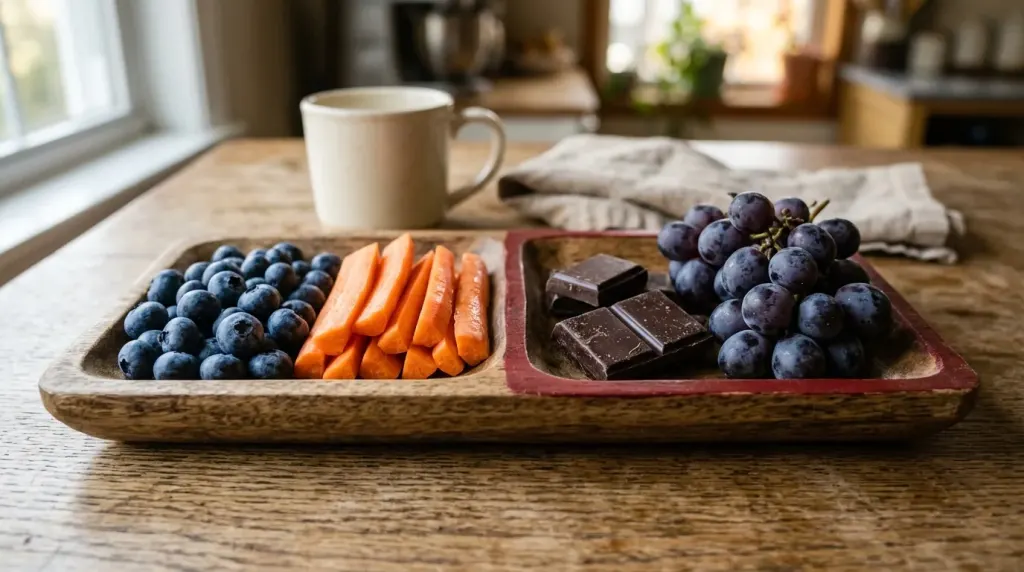
According to safety guidelines from the ASPCA Animal Poison Control Center, certain human foods contain potent toxins that pose severe risks to canine health.
| Food Category | Safe Foods for Pugs | Dangerous / Toxic Foods to Avoid |
|---|---|---|
| Vegetables | Carrots, green beans, cucumbers, plain pumpkin | Onions, garlic, chives, wild mushrooms |
| Fruits | Blueberries, sliced apples (no seeds), watermelon | Grapes, raisins, avocado, cherries |
| Proteins & Dairy | Plain cooked chicken, cooked eggs, plain yogurt | Macadamia nuts, cooked poultry bones, bacon |
| Sweets & Baking | Xylitol-free peanut butter in small amounts | Chocolate, xylitol sweetener, coffee, alcohol |
Pugs can enjoy raw carrots or blueberries as crunch-filled snacks. However, toxic items cause severe organ damage. Tartaric acid in grapes and raisins causes sudden acute kidney failure, even in tiny doses (as few as 1 to 2 raisins for a 14-pound pug). Xylitol, an artificial sweetener found in sugar-free products, triggers rapid insulin release within 10 to 60 minutes, leading to severe hypoglycemia (blood glucose dropping below 40 mg/dL) and acute liver necrosis at doses as low as 0.1 g/kg. Chocolate contains theobromine and caffeine; doses over 20 mg/kg can trigger cardiac arrhythmia and seizures. Onions and garlic contain N-propyl disulfide, which destroys red blood cells (Heinz body anemia).
Emergency Protocol for Toxic Ingestion
Contact a veterinarian or pet poison control center IMMEDIATELY (such as ASPCA Animal Poison Control at 888-426-4435 or Pet Poison Helpline at 855-764-7661) if you suspect your pug has ingested any toxic food. Immediate professional care is vital because irreversible organ damage can occur before clinical signs emerge. Never attempt to induce vomiting at home unless explicitly instructed to do so by a licensed veterinarian.
Feeding Pugs by Life Stage
Nutritional requirements change significantly as a pug transitions from puppyhood to adulthood and senior years.
Puppy Stage (Up to 12 Months)
Pug puppies grow rapidly and require high-protein formulas (25% to 30% crude protein) enriched with docosahexaenoic acid (DHA) for brain and vision development. Feed puppies four small meals daily between 8 and 12 weeks of age, reducing to three meals daily until six months. Smaller, frequent meals prevent hypoglycemia and maintain stable blood sugar levels in small-breed puppies.
Adult Stage (1 to 7 Years)
Adult pugs need standard maintenance formulas fed in two measured meals daily. Total daily intake usually ranges between 300 and 500 calories, depending on activity level, spay/neuter status, and body condition. Measuring food with a digital scale rather than a volume cup prevents accidental overfeeding.
Senior Stage (8 Years and Older)
As pugs reach senior pug age milestones, their resting metabolic rate slows down by 10% to 20%. Senior formulas feature lower caloric density, elevated fiber (5% to 8%) for digestive health, reduced phosphorus (0.5% to 0.8%) to protect kidney function, and joint supplements like glucosamine (500 mg daily) and chondroitin sulfate. Tailoring diet to senior needs supports optimal mobility and helps extend average pug lifespan.
Breed-Specific Eating Challenges in Pugs
Pugs possess unique physical traits that create specific feeding challenges requiring proactive owner management.
Obesity Management
Pugs have one of the highest rates of obesity among small dog breeds due to lower resting metabolic rates and intense food motivation. On the 9-point Nestlé Purina Body Condition System, an ideal pug scores 4/9 to 5/9, where ribs are easily palpable under a thin fat layer and an abdominal tuck is visible from the side. Adding just 2 pounds of excess weight to a 15-pound pug represents a 13% increase in total body mass. This extra weight strains joint cartilage, aggravates spinal abnormalities (such as hemivertebrae), and compresses respiratory airways.
Brachycephalic Eating Difficulties
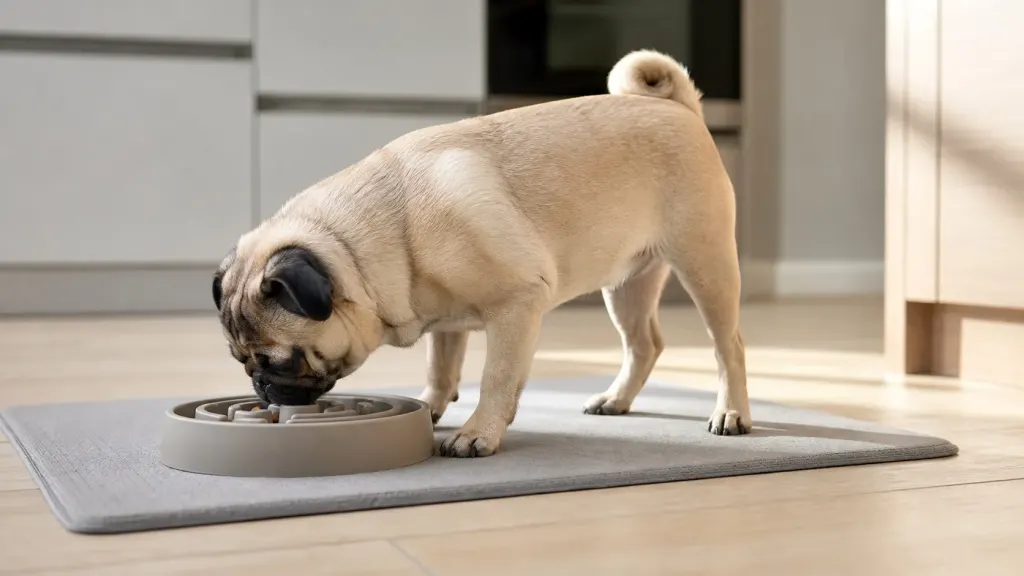
The flat face and shortened upper jaw of a brachycephalic pug make grasping standard kibble difficult. Pugs tend to scoop food using their tongue and gulp meals rapidly, swallowing large amounts of air during feeding. Swallowing excess air leads to uncomfortable pug gas and air swallowing or regurgitation after meals. Using a wide, shallow dish or an ergonomic slow-feeder maze bowl slows eating speed by up to 500%, drastically reducing air intake and choking risks. Slow-feeder maze bowls slow down eating speed by up to 500%, drastically cutting down air intake during mealtime.
Note: Facial wrinkles must be wiped clean with a damp cloth after wet food meals to prevent bacterial accumulation and skin fold dermatitis.
Air swallowing during fast eating also exacerbates throat irritation and pug snorting causes linked to elongated soft palates. Managing mealtime pacing alongside regular daily movement keeps pugs lean, active, and comfortable throughout life.
Frequently Asked Questions About What Pugs Eat
Can pugs eat human food?
Pugs can safely consume select plain human foods like carrots, blueberries, green beans, plain pumpkin, and cooked unseasoned chicken. Human food treats must remain unseasoned without butter, salt, or spices, and should not exceed 10% of daily total calories.
How many times a day should a pug eat?
Adult pugs should be fed twice per day, once in the morning and once in the evening, spaced 10 to 12 hours apart. Puppies under six months require three to four smaller meals daily to prevent hypoglycemia and support steady growth.
What fruits and vegetables are safe for pugs?
Safe fruits and vegetables include seedless apples, blueberries, strawberries, seedless watermelon, carrots, cucumbers, steamed broccoli, and plain canned pumpkin. Always remove seeds, cores, and thick rinds, and introduce new foods in small quantities.


Leave a Reply