

Table of Contents
The safest starting points when looking for where to buy a Pug dog are a Pug breed-club referral, an AKC-based breeder search used as a lead, and established Pug rescues. A listing, registration, or polished website alone is not enough; ask for parent-health results, meet or interact live with the source, and read the contract before leaving a deposit.
- Start your search with the Pug Dog Club of America (PDCA) breeder directory or breed-specific rescues.
- AKC registration proves pedigree eligibility, not ethical breeding practices or guaranteed health.
- Request verifiable OFA/CHIC health screening certificates for both the sire and the dam.
- Never commit money from an online ad alone; always meet the breeder and verify living conditions.
The safest places to start your Pug search
Where should a buyer look first? Begin with a Pug breed-club referral and established Pug rescues; use AKC tools as an additional way to identify and contact breeders, then verify each one independently. The PDCA maintains a breeder directory, and the AKC Marketplace lists litters from AKC-registered breeders.
When considering a Pug, evaluating your lifestyle is as important as finding a source. If you are assessing whether Pugs are lap dogs, their strong desire for human companionship means they thrive in homes where they receive constant interaction rather than long periods of isolation. A responsible source will discuss this breed trait openly with you.
Breed-club referrals and responsible breeders
A Pug club referral can connect buyers with people active in the breed, but it should start – not end – your due diligence. Ask whether the breeder follows the club’s ethics rules, request both parents’ registered names, and independently check documentation and living conditions. Breed clubs such as the PDCA publish breeder directories used precisely for this first step.
- Contact the national club or regional specialty clubs for leads.
- Ask breeders about their involvement in club activities or conformation showing.
- Remember that membership alone does not replace your own independent verification of health records.
AKC tools and why registration is not enough
No, AKC registration alone does not automatically make a breeder responsible. AKC Marketplace lists litters from AKC-registered breeders, but registration documents pedigree eligibility – it does not replace checking practices, parent-health screening, the contract, and willingness to answer questions. Responsible-breeder guidance still tells buyers to visit, meet the parents, and confirm health testing.
AKC Registration:
- Useful signal: Confirms purebred status and pedigree tracking.
- Not proof of: Appropriate parent health screening, ethical early-care conditions, or a breeder’s post-sale accountability.
Pug rescue, shelters, and adult-dog rehoming
Rescue may suit people open to an adult dog, a foster-based temperament assessment, or a dog with known care needs. Ask the organization what veterinary care, behavioral information, adoption screening, return policy, and follow-up support it provides; do not assume every rescue has identical intake history or medical records.
Before applying to a rescue, ensure you are prepared for a daily Pug care routine, which includes wrinkle cleaning, managing shedding, and preventing heatstroke. Rescues often prioritize applicants who understand these ongoing care requirements.
Verify the breeder before you place a deposit
What must be checked before committing money? A responsible breeder discusses the breed’s strengths and limits, shows health-screening records for the sire and dam, lets you assess where dogs are raised through a visit or meaningful live interaction, asks questions about your home, and provides a written contract with a welcome-back program.
According to the American Kennel Club (AKC), a responsible breeder prioritizes the health and temperament of their dogs above all else, ensuring parent dogs are screened for breed-specific genetic health conditions before breeding. Observing adult dogs in their home environment is the best way to understand what a healthy adult Pug should look like and how they interact with people.
- Make contact: Initiate a conversation to assess the breeder’s willingness to communicate.
- Ask open questions: Let the breeder explain their practices without feeding them the “right” answers.
- Request records: Obtain the registered names of the sire and dam along with their health test certificates.
- Assess the environment: Visit the home to see the mother and litter in their daily living space.
- Review the contract: Read the entire agreement, focusing on health guarantees and return policies.
- Delay payment: Never pay a deposit until all your questions are satisfactorily answered.
Ask for health records – and know what they mean
Ask for the health-test results the Pug’s parent club recommends for breeding dogs, plus the parents’ registered names so records can be checked. Genetic testing of the dam and sire helps screen for diseases common to the breed, but completion of testing is not a guarantee a puppy will never develop a health problem.
| Document | What to request | How to check | What it does not prove |
|---|---|---|---|
| OFA/CHIC Certificate | OFA numbers for hips, patellas, and PDE DNA | Verify the numbers on the official OFA database | A specific puppy will be disease-free |
| Eye Clearance | OFA Companion Animal Eye Registry (CAER) exam | Check the date (must be current within a year) | Lifetime immunity to eye injuries |
Note: Breathing difficulty, eye injury, mobility problems, or neurological signs in a Pug require a veterinarian’s assessment; a buying guide cannot determine whether an individual dog is healthy.
Verify public health records
- Request exact registered names and certificate numbers from the breeder.
- Search the relevant registry (such as the OFA public database).
- Compare the names, dates, and test types against the breeder’s claims.
- Ask the breeder to explain any non-public or incomplete record without immediately assuming misconduct.
Meet the source and assess early care
Look for clean, well-cared-for dogs; calm, transparent answers; access to the puppy’s mother; and evidence of careful placement decisions. Buyers are advised never to commit from photos or an ad alone, to insist on visiting the home, and to meet the parents in person.
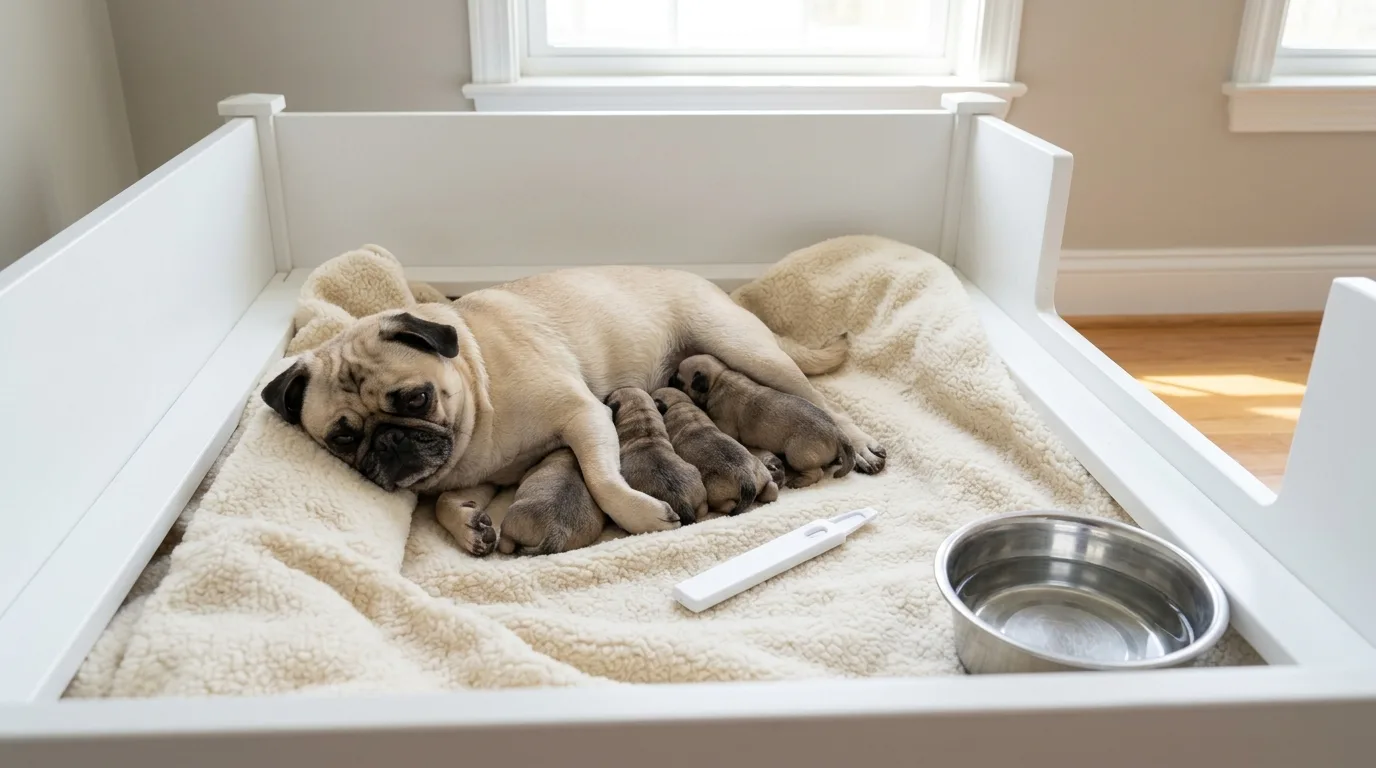
- Dogs: Do they appear clean, appropriately weighted, and comfortable around the breeder?
- Environment: Is the indoor area sanitary, safe, and integrated into the household?
- Communication: Does the breeder answer questions directly and ask you thoughtful questions in return?
- Paperwork: Are vaccination records, vet exam notes, and parent clearances ready to view?
Read the contract before paying
Before any nonrefundable payment, read the full agreement and confirm it identifies the puppy, breeder, parents, and health information, and states payment/refund terms, a welcome-back program, and your right to a prompt veterinary examination. Reputable breeders provide a contract and a health guarantee; use traceable payment, never wire transfer or gift cards.
Pug-specific questions that affect the buying decision
What extra questions matter because the dog is a Pug? Ask how the breeder prioritizes functional health and temperament, what health information they provide, and how they prepare buyers for heat, activity, grooming, and respiratory realities. Genetic testing free of breed-common diseases and honest disclosure are core signals of a responsible Pug breeder.
Understanding Pug snorting causes and warning signs helps you differentiate between normal brachycephalic noises and serious respiratory distress. A transparent breeder will openly discuss the realities of brachycephalic airway syndrome (BOAS). Additionally, clarifying how active Pugs really are ensures your expectations align with the breed’s physical limits, particularly in warm weather.
| Question to ask | Why the answer matters |
|---|---|
| What focus do you place on nostril size and breathing in your breeding dogs? | Functional conformation directly impacts the dog’s quality of life and veterinary costs. |
| How do you socialize your puppies? | Early, positive exposure prevents fearful behavior in adult Pugs. |
| Which veterinarian examines your puppies before they leave? | A valid veterinary relationship ensures the puppy has had a baseline professional health check. |
Do not buy a promise of a “perfectly healthy” Pug
No breeder can guarantee a lifetime free of disease. Treat sweeping claims, refusal to discuss breed health, or unwillingness to share screening records as reasons to pause. Health testing is a risk-management tool for breeding decisions – it screens parents for breed-common conditions but cannot promise a specific puppy’s future health. Absolute guarantees of perfect health are a red flag. Responsible breeders use testing to minimize risks, but biology involves unpredictable variables. Transparency about these limitations indicates an honest breeder.
Avoid puppy brokers, mills, and online scams
Which seller behaviors are red flags? Walk away if a seller pressures quick payment, requests wire transfer or gift cards, will not allow a home visit, sells multiple breeds with no health records, or releases puppies before about ten weeks. These are documented signs of scams and irresponsible breeding.
While calculating how much Pug dogs cost to buy and own, remember that unusually low prices or “clearance” sales are strong indicators of commercial mills or outright fraud.
| Concern | What to do next |
|---|---|
| Refusal of a home visit or live video call | End contact; do not proceed with the purchase. |
| Demand for wire transfers or gift cards | Walk away; these payment methods offer no buyer protection against fraud. |
| Multiple unrelated breeds always available | Avoid; this pattern strongly points to a commercial high-volume broker. |
| Releasing puppies at six weeks old | Decline; puppies need eight to ten weeks with their mother for proper behavioral development. |
How to handle an online Pug listing safely
You can use the internet to find leads, but never commit from photos or an ad alone. Verify identity and documentation, arrange a meaningful live interaction with the breeder and dogs, read the contract, use a traceable payment method, and be willing to walk away if details cannot be confirmed.
- Use the listing strictly as an initial introduction.
- Search the breeder’s name and kennel name independently for reviews or warnings.
- Request a live video call to see the puppies interacting with their mother.
- Ask for the OFA numbers of the parents before discussing price or deposits.
- Plan an in-person visit to finalize the decision and sign the contract.
Choose the route that fits your household
Should the reader buy a puppy, adopt, or keep researching? Choose a responsible breeder if you specifically want a puppy and can patiently verify breeding and early-care practices; choose rescue if you are open to the individual dog and its known needs; wait if a seller creates pressure or you cannot obtain the records to decide. The right route stays transparent under questions – not the one with the fastest availability.
For those living in smaller spaces, confirming whether Pugs are good apartment dogs is an important step. Pugs adapt well to apartments provided their exercise needs are met. Likewise, understanding Pug lifespan and long-term commitment – often 12 to 15 years – is critical before finalizing your decision, whether through a breeder or rescue.
- If predictability matters most: Consider a responsible breeder where you can verify generations of health and temperament data.
- If saving a life matters most: Consider adoption, recognizing that the dog’s past history may be incomplete.
- If you feel pressured: Wait. A good breeder or rescue organization respects your need to make an informed, unhurried decision.
Frequently Asked Questions
Where is the safest place to buy a Pug dog?
Start with a PDCA breeder-directory referral, a carefully vetted AKC Marketplace lead, or a reputable Pug rescue. Then independently confirm the source’s health documentation, transparency, contract, and care practices; no directory or registration status substitutes for those checks.
How do I know whether a Pug breeder is legitimate?
Ask for the sire and dam’s registered names, parent health-screening evidence, a written contract with a welcome-back program, and a chance to meet the dogs and parents in person. A breeder who welcomes questions, provides references and a vet contact, and screens you back shows responsible practice.
Is it better to adopt or buy a Pug?
Neither is automatically better. Adoption suits households open to an individual adult dog and a rescue’s matching process; a responsible breeder suits people seeking a puppy and prepared to verify breeding and early-care practices. Choose based on transparent records, the dog’s needs, and your capacity.
Should I send a deposit before meeting the breeder?
Do not rush. First verify the breeder’s identity, the parents’ information and records, contract terms, and the dogs’ living conditions, and keep a traceable payment record. If a seller refuses reasonable questions, only takes wire transfer or gift cards, or pushes immediate payment, pause or walk away.

Leave a Reply