
Table of Contents
Why do pug dogs snort so frequently? They snort primarily due to their brachycephalic (short-nosed) facial structure, which compresses their nasal passages and upper respiratory tract into a compact skull. This anatomy restricts airflow efficiency, causing soft tissues to vibrate and produce snorting sounds when they breathe rapidly, get excited, or try to sigh. While occasional snorting is typical for the breed, frequent resting respiratory distress may indicate brachycephalic obstructive airway syndrome (BOAS).
- Pugs have a brachycephalic skull structure with compressed nasal passages and shortened upper airways.
- Airway tissue vibrations increase during excitement, physical play, or warm temperatures as breathing accelerates.
- Distinct mouth and nose anatomy prevents standard canine sighs, leading to compensatory snorting sounds.
- An elongated soft palate can cause throat irritation and increased respiratory noise.
- Persistent resting snorts, blue-tinged gums, or exercise collapse require immediate veterinary evaluation.
Why Do Pug Dogs Snort? The Brachycephalic Anatomy Behind the Sound
Pug dogs snort because selective breeding over centuries produced a flattened skull and shortened snout, known scientifically as a brachycephalic facial structure. While the bones of the face and skull were compressed, the volume of internal soft tissue remained largely unchanged. As a result, the soft palate, tongue, and mucosal linings must fit into a substantially smaller cavity. This anatomical compression creates higher resistance to airflow, causing inhaled and exhaled air to generate audible vibrations that sound like snorts, grunts, or snuffles.
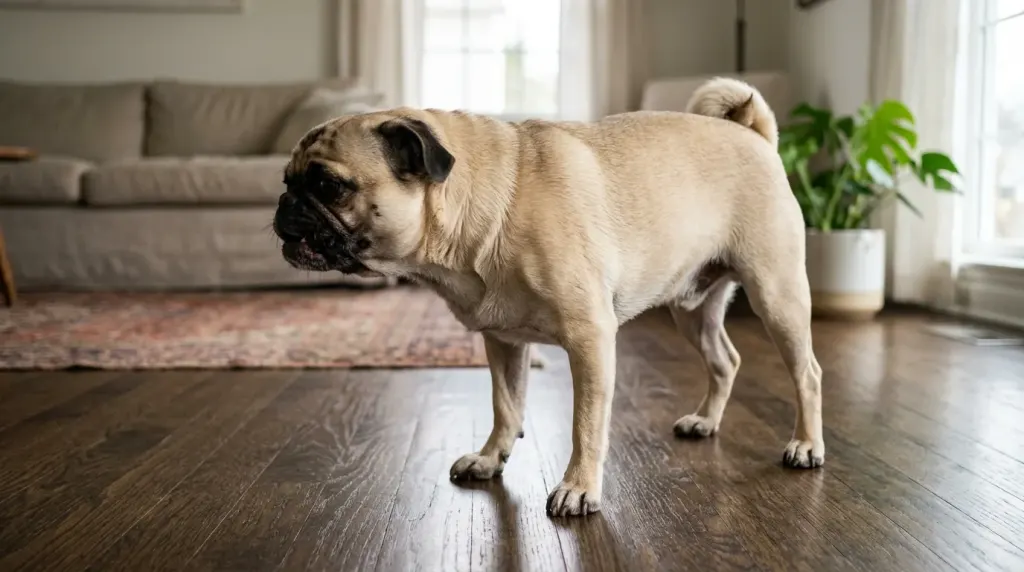
Understanding this physical conformation is essential when evaluating what a pug looks like across different bloodlines, including their distinct nose wrinkles and compact facial features. Historically, pugs were originally bred as royal companion dogs in ancient China and later popularized among European nobility, where breeders prioritized extreme flat-faced aesthetics over optimal respiratory aerodynamics.
Three primary anatomical features contribute directly to routine snorting sounds in healthy pugs:
- Compressed nasal passages: In longer-snouted breeds, air moves smoothly across expansive nasal turbinates that warm and filter incoming air. In pugs, these delicate scroll-like bones are crowded together inside shortened nasal chambers, forcing air through narrow gaps and creating turbulent air currents.
- Stenotic nares: Many pugs are born with pinched or narrowed nostril openings. When nostrils are tight, the dog must generate higher negative pressure with each inhalation, pulling surrounding nasal cartilage inward and producing snuffling noises.
- Elongated soft palate: The flap of mucosal tissue that separates the nasal cavity from the oral cavity often extends past the tip of the epiglottis. As air rushes past, the loose edges of the soft palate flutter and vibrate against the back of the throat.
According to Dial-A-Vet clinical guidance, this anatomical layout means that even low-effort daily activities involve higher airway friction than seen in standard canine profiles, making mild snorting a constant acoustic background to a pug’s daily routine. Snorting is not a deliberate vocal habit or behavioral quirk. It is the direct acoustic result of air moving through physically restricted, compressed upper respiratory anatomy.
Behavioral Triggers: Excitement, Breathing Rates, and Compensatory Sighs
While baseline skull shape explains why pugs are prone to respiratory noise, external triggers and emotional states frequently amplify snorting frequency and volume throughout the day.
Emotional arousal, greeting family members, and enthusiastic play immediately increase a pug’s heart rate and oxygen demand. Resting breathing rates in healthy adult dogs typically range between 15 and 30 breaths per minute. During bursts of excitement, this rate can easily triple or quadruple. When large volumes of air rush through narrow nasal pathways at high velocity, tissue friction escalates, generating loud, rhythmic snorting bursts. Caregivers should manage play sessions in accordance with the energy and exercise needs of pugs, allowing regular rest intervals so breathing can settle back to baseline.
Most dog breeds release tension or indicate relaxation by exhaling slowly through an open mouth and elongated muzzle, producing a quiet, audible sigh. Because pugs possess a uniquely shaped oral cavity and compact pharyngeal space, they cannot easily produce standard canine sighs. Instead, when a pug attempts to vent excess air or express contentment, the sudden burst of exhaled air rattles through their compressed nasal passages and vibrating soft palate, resulting in a distinct snort or short grunt. This daytime respiratory sound is also distinct from nighttime snoring habits in pugs, which occurs when pharyngeal muscles fully relax during deep sleep.
Environmental Irritants, Reverse Sneezing, and Physical Airway Pressures
The elongated soft palate in a pug frequently rubs against the tonsils and epiglottis during routine breathing. This constant friction can dry out mucosal membranes and create localized tickling sensations. To clear the sensation, a pug will rapidly draw air through its nose or forcefully clear its throat with a sudden snort.
Environmental irritants also play a major role. Household dust, chemical cleaning aerosols, smoke, and outdoor pollen particles settle quickly on the crowded nasal lining. When settling down indoors after play, behavioral habits like digging in blankets to create a nest can kick up fabric fibers and lint, triggering protective nasal clearing snorts.
Caregivers often confuse routine snorting with reverse sneezing, clinically known as paroxysmal respiration. While a normal snort is a brief, one-off sound during exhalation or sniffing, reverse sneezing is an involuntary reflex episode triggered by temporary nasopharyngeal irritation. During a reverse sneeze, a pug stands rigid, extends its neck forward, and inhales rapidly in repeated, loud snorts that sound like honking. These episodes usually resolve on their own within 15 to 60 seconds without causing harm. Gently stroking the dog’s throat or briefly covering one nostril can stimulate a swallowing reflex that resets the soft palate.
Physical condition and outdoor climate directly affect upper airway diameter:
- Excess weight: Fat deposits accumulate around the neck, pharynx, and chest wall, compressing the trachea externally. Maintaining an ideal adult pug weight (typically 14 to 18 pounds for standard adults) keeps excess soft tissue from worsening airway restriction.
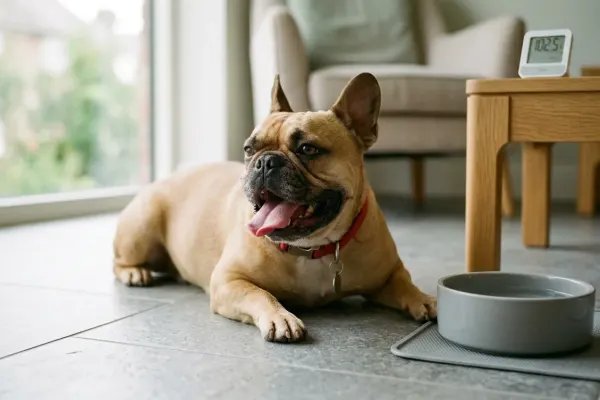
- Heat and humidity: Dogs lack sweat glands across their bodies and rely on nasal panting for evaporative cooling. Because a pug’s shortened muzzle has less surface area, heat exchange is inefficient. Temperatures above 24°C (75°F) force rapid panting, causing airway tissues to swell and snorting to intensify.
Normal Snorting vs. BOAS: Warning Signs and When to Consult a Vet
Although occasional snorting during activity or greeting is expected in brachycephalic breeds, excessive or worsening respiratory struggles can signal Brachycephalic Obstructive Airway Syndrome (BOAS). BOAS is a progressive medical condition where congenital airway defects cause chronic oxygen deprivation, secondary tissue deformation, and strain on the heart and lungs.
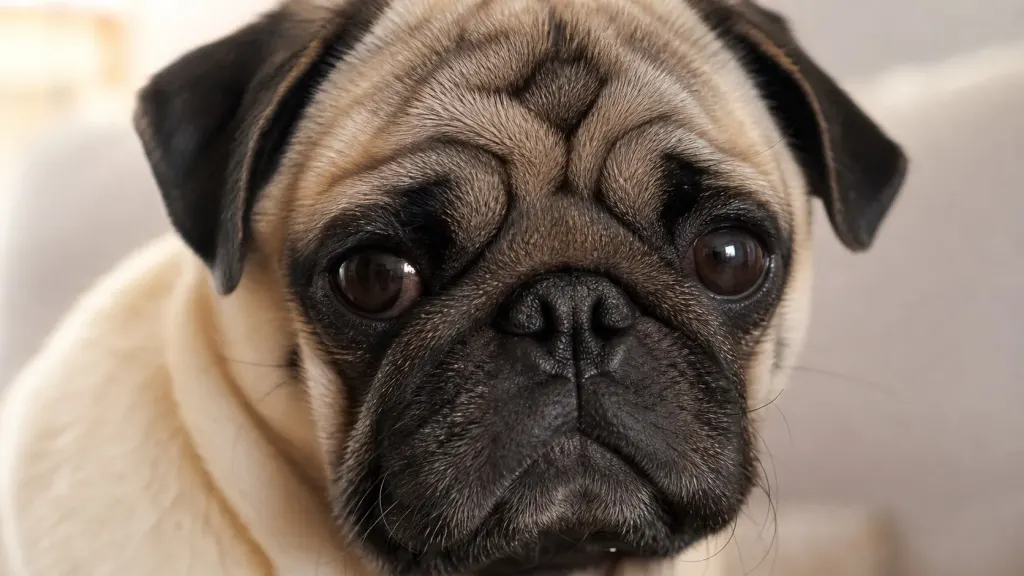
The table below outlines the clinical differences between benign breed-typical snorting and warning signs of airway obstruction:
| Clinical Feature | Benign Breed-Typical Snorting | BOAS Airway Obstruction |
|---|---|---|
| Breathing posture | Relaxed chest; normal upright or resting posture | Extended neck, flared elbows, heavy abdominal thrusts |
| Timing of noise | Occurs during play, sniffing, or excitement | Present continuously at rest, during sleep, or while lying still |
| Gum and tongue color | Healthy bubblegum pink | Pale, blue, or purple tint (cyanosis) indicating hypoxia |
| Heat tolerance | Mild panting in warm weather; cools down quickly | Immediate distress, loud raspy breathing in mild warmth |
| Recovery after exercise | Returns to normal breathing within 2 to 5 minutes | Prolonged panting, wheezing, or collapse after short walks |
| Sound quality | Soft nasal snuffle or brief clearing grunt | High-pitched whistling (stridor) or wet, rattling throat noise |
According to official clinical publications from the American College of Veterinary Surgeons (ACVS), brachycephalic airway syndrome is characterized by progressive stages where untreated high negative suction pressure leads to everted laryngeal saccules and eventual laryngeal collapse. The ACVS notes that early veterinary assessment and surgical correction (such as widening stenotic nares or trimming an elongated soft palate) significantly improve airflow and long-term quality of life.
Monitoring breathing patterns becomes increasingly critical when tracking senior pug health milestones, as cumulative years of turbulent airway pressure can lead to secondary cartilage weakness in older dogs. Proactive care helps protect the average pug lifespan, allowing owners to intervene before chronic hypoxia damages internal organs.
Note: Schedule a non-urgent veterinary examination if your pug snorts continuously while resting or struggles during short walks. Seek emergency veterinary care immediately if your dog displays blue-tinged gums, persistent high-pitched raspy stridor, extreme weakness, or sudden collapse.
Daily Management and Preventative Airway Care for Pugs
Caregivers can significantly reduce airway strain through practical adjustments in their daily pug care routine:
- Use a chest harness: Never attach a leash directly to a neck collar. Collars apply concentrated pressure on the fragile trachea and larynx, triggering acute airway narrowing and coughing spasms.
- Maintain lean body condition: Feed a balanced, measured vet-informed pug diet to prevent obesity. Keeping body condition score at 4 or 5 on a 9-point scale prevents excess adipose tissue from crowding the pharynx.
- Control indoor climate: Use air conditioning during summer months, run HEPA air purifiers to capture environmental dust and dander, and avoid walking during the hottest hours of the day.
Frequently Asked Questions About Pug Snorting
Why do pugs make snorting noises when they get excited?
When pugs become excited, their breathing rate accelerates. The sudden surge of air rushing through their shortened nasal passages and past an elongated soft palate creates friction and tissue vibrations, producing loud snorting sounds.
Can pugs sigh like other dog breeds?
Pugs cannot easily produce standard canine sighs because their compressed mouth and pharynx alter how air exits the body. When relaxing or releasing air, they vent through their narrow nasal passages, turning a sigh into an audible snort or grunt.
When does pug snorting indicate a serious medical problem?
Occasional snorting during play or greeting is normal. However, if snorting becomes constant while resting, causes visible abdominal straining, is accompanied by blue-tinged gums, or leads to exercise collapse, it indicates BOAS and requires prompt veterinary evaluation.

Leave a Reply