
Table of Contents
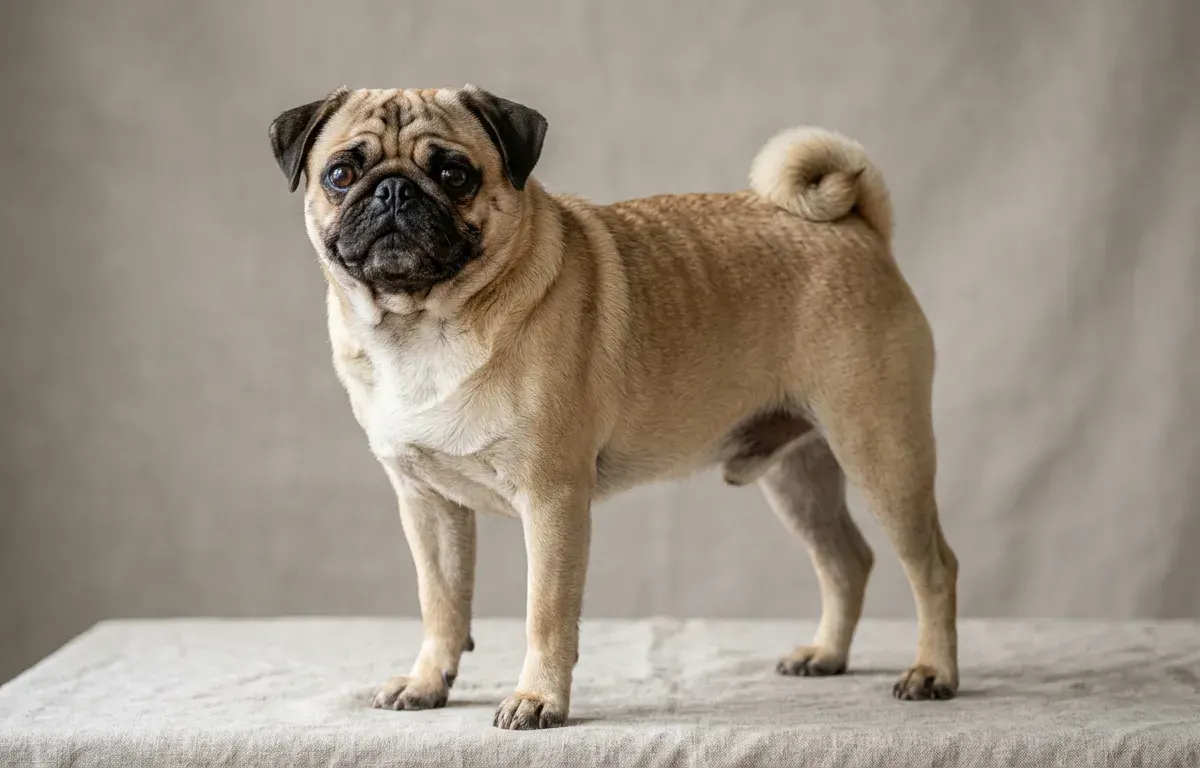
What does a Pug dog look like? At a glance, a Pug is a small toy breed recognized by its compact, square body, large round head, flat face with deep wrinkles, dark prominent eyes, and tightly curled tail. Adult Pugs typically stand 10 to 13 inches tall at the shoulder and weigh between 14 and 18 pounds. They feature a short, smooth coat that comes in fawn with a contrasting black facial mask or solid black.
- Compact, muscular body weighing 14 to 18 pounds with a deep chest and sturdy cobby proportions.
- Short, flattened facial profile with deep forehead wrinkles, large globular eyes, and an undershot jaw.
- High-set tail curling tightly over the hip, with a double curl considered ideal in show standards.
- Smooth, short double coat available primarily in fawn with black markings or solid black.
- Airway compression causes unique vocal sounds including snorts, grunts, and heavy sleep snoring.
Physical appearance and anatomy
A Pug presents a sturdy, compact silhouette that distinguishes it from all other members of the toy dog group. Major kennel organizations describe the breed as decidedly square and cobby. This term means the dog has a solid, thickset body where the height measured at the withers roughly matches the total length from the breastbone to the rump.
| Measurement or Trait | Standard Specification | Physical Description |
|---|---|---|
| Height at withers | 10 to 13 inches (25 to 33 cm) | Proportionate and low to the ground |
| Body weight | 14 to 18 pounds (6.3 to 8.1 kg) | Muscular and dense without excess flab |
| Body silhouette | Square and cobby | Height equals torso length |
| Chest shape | Wide and deep | Ribs well arched and sprung |
| Leg structure | Straight and moderate | Strong bone structure set well under body |
This balanced musculature gives the breed a solid, confident stance. Prospective owners tracking canine growth can consult standard Pug size milestones to see how puppies develop from lightweight infants into sturdy adult companions.
Head and facial features
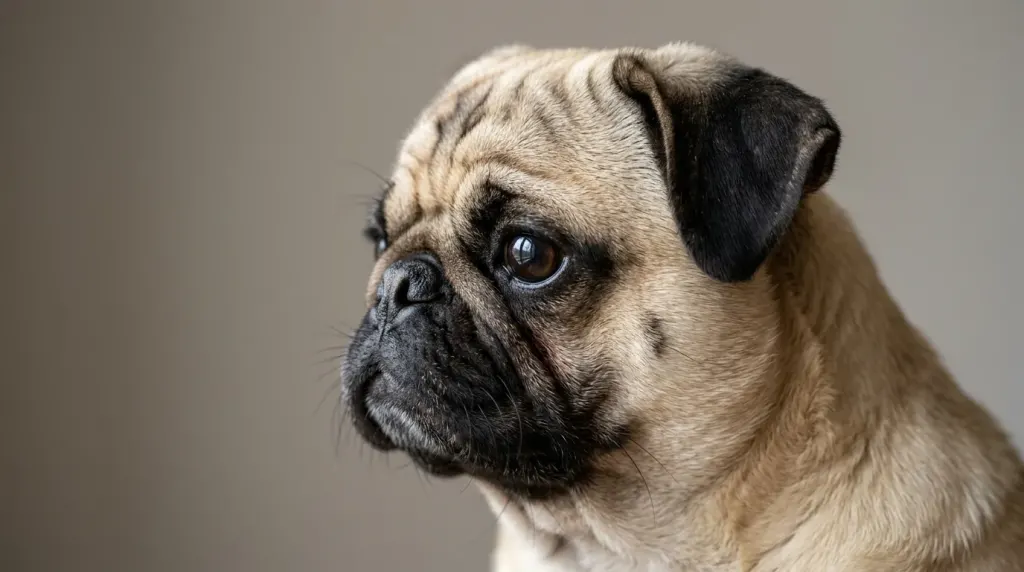
The head of a Pug is large, massive, and rounded, without any central indentation in the skull bone. The muzzle is short, blunt, and square, sitting flat against the front of the face. Large, dark eyes project slightly from shallow orbital sockets, lending the dog a soft, questioning, and animated expression.
Scientific research explains why these facial bones developed in such a compact shape. According to Dr. Jeffrey Schoenebeck from the Roslin Institute at the University of Edinburgh, genetic analysis shows that disruption in the SMOC2 gene suppresses bone extension along the upper jaw during embryonic development. This research, published in PMC5462623, explains the biological mechanism that produces the pushed-in facial profile characteristic of brachycephalic dogs.
Wrinkles and expression
Deep, heavy skin folds cover the forehead and bridge of the nose. These wrinkles form distinct patterns across the brow, often creating an appearance of gentle worry or intense curiosity. Because these skin folds trap moisture and debris, daily cleaning with a damp cloth prevents bacterial build-up.
Body size and proportions
When people ask how tall are pug dogs, official standards indicate they reach a height of 10 to 13 inches at the shoulder. Despite their modest height, Pugs feel surprisingly heavy and solid when lifted. The wide rib cage and level topline support a dense layer of muscle across the shoulders and hindquarters, avoiding any frail or delicate appearance.
Coat, color, and distinguishing marks
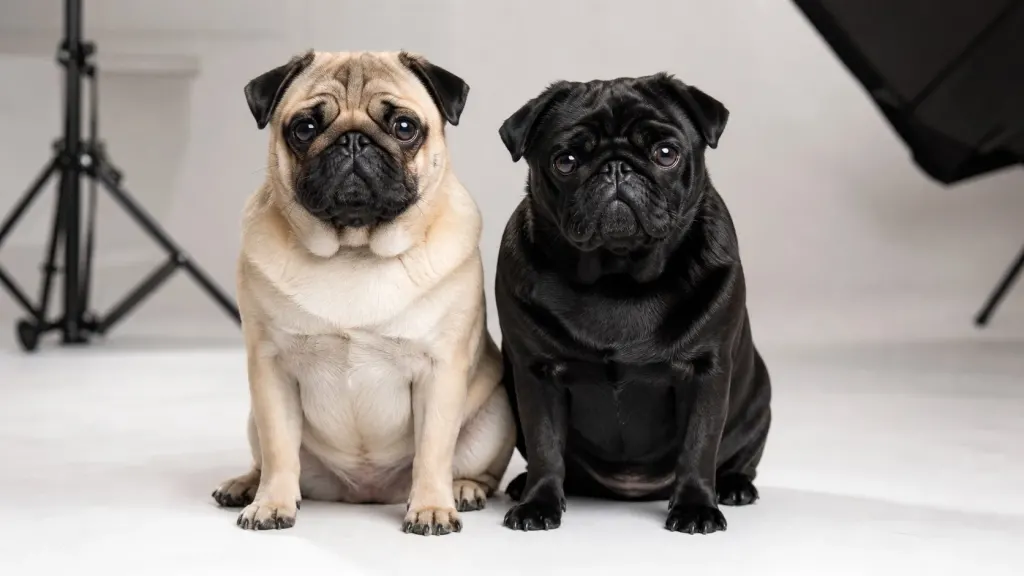
The Pug possesses a fine, smooth, short, and glossy coat. The official AKC Pug Breed Standard recognizes two primary color varieties: fawn and black. Fawn coats range from warm apricot to soft silver-fawn, creating a sharp visual contrast against dark facial pigment.
On a fawn Pug, four classic markings define the breed look:
- Black mask: Solid black pigmentation covering the muzzle, chin, and eye contours.
- Thumb mark: A dark diamond or thumb-shaped patch centered on the forehead.
- Trace: A dark dorsal line running from the back of the skull along the spine to the base of the tail.
- Black ears: Small, thin ears covered in black velvet-like fur.
Managing seasonal hair loss is an important part of living with Pugs in apartments, where consistent brushing keeps shed fur under control indoors.
A black pug dog displays a solid, jet-black coat across its entire body, from the tip of the nose to the tail. Because the background fur is already dark, black Pugs do not show a contrasting face mask or dorsal trace.
Tail, ears, and overall silhouette
The tail sits high on the rump and curls tightly over the hip. Breed enthusiasts prize a double curl, where the tail forms two tight spiral loops resting against the lower back. The ears are small, thin, and soft like black velvet. They present in two recognized shapes: the rose ear, which folds inward and back to reveal the burr, and the button ear, which folds forward with the tip pointing toward the eye. The button ear shape is widely favored in conformation show rings because it covers the inner ear opening and emphasizes the rounded contour of the head.
Origins and breed history
The Pug is an ancient breed with roots tracing back over two thousand years to imperial China. Royal dynasties prized these flat-faced lap companions, keeping them in luxurious quarters alongside imperial courtiers.
What dogs make a pug?
Historical breed research indicates that ancient Chinese breeders selected short-headed domestic dogs, related to early ancestors of the Shih Tzu and Pekingese, to create companion dogs with compact frames and distinct facial wrinkles. Tracing Pug historical origins shows how Dutch trading ships transported these treasured animals to European royal courts during the sixteenth and seventeenth centuries.
Early breeding goals focused strictly on companionship and lap warming. Learning what Pugs were originally bred for explains why modern Pugs remain devoted human shadows that crave close contact.
Historical appearance vs modern pugs
When examining what did pug dogs originally look like, historical art reveals a noticeable contrast with modern dogs. Eighteenth-century paintings, such as William Hogarth’s 1745 portrait of his Pug named Trump, depict dogs with longer snouts, leaner bodies, and longer legs than contemporary show champions.
| Anatomical Feature | 18th-Century Historical Pug | Modern 21st-Century Pug |
|---|---|---|
| Muzzle length | Extended, with visible nasal bridge | Compact, flat against skull |
| Torso shape | Lean and athletic | Square, deep-chested, and cobby |
| Leg length | Proportionately longer and slender | Short, straight, and strong |
| Skin folding | Moderate, shallow brow lines | Deep, continuous facial folds |
| Tail carriage | Single loose curl | Tight single or double loop |
Selective breeding in nineteenth-century Britain accentuated facial flattening and compact body mass, creating the look recognized worldwide today.
Health and welfare implications of appearance
The distinctive visual traits of the Pug directly shape its everyday health and maintenance requirements. Understanding this anatomical relationship helps owners provide appropriate care throughout the dog’s life.
Note: Because extreme brachycephalic conformation can narrow upper airways, prospective owners should choose responsible breeders who prioritize open nostrils and functional breathing.
Care considerations linked to appearance
The combination of shallow eye sockets, facial skin folds, and a folded ear leather demands regular hygiene. Reviewing Pug ear anatomy and infection risks helps caretakers spot early signs of wax accumulation or irritation before infections start.
Essential appearance-related care includes:
- Facial hygiene: Gently wiping facial wrinkles with a clean, damp cloth daily to prevent skin fold dermatitis.
- Eye protection: Checking prominent eyes daily for redness, dust particles, or dryness.
- Dental attention: Brushing crowded teeth regularly, as 42 adult teeth sit within a shortened jaw arch.
Breathing concerns and activity
The shortened skull bones compress soft tissues inside the upper respiratory tract. This anatomical structure causes characteristic sounds, such as snorting, wheezing during excitement, and loud nighttime snoring. Owners seeking details on respiratory sounds can learn why Pugs snort and make breathing noises to distinguish ordinary vocalizations from signs of airway distress.
Choosing and recognizing a healthy pug
Evaluating physical appearance is a practical way to gauge an individual Pug’s overall vitality and breeding quality.
Key indicators of healthy conformation include:
- Wide, open nostrils: Clear nasal passages that allow quiet, easy breathing at rest without constant mouth panting.
- Clear, bright eyes: Eyes free from discharge, cloudiness, or excessive squinting.
- Supple skin folds: Clean, dry facial wrinkles with healthy pink skin underneath.
- Balanced gait: Straight, confident movement with level shoulders and steady rear drive.
Selecting a puppy with open airways and balanced proportions supports long-term vitality, helping the dog reach a typical Pug life expectancy without early respiratory or cardiac strain.
Red flags in appearance
Certain visual warning signs suggest underlying health issues or structural imbalances:
- Pinched, slit-like nostrils (severe stenotic nares) that force constant gasping.
- Excessive skin roll directly covering the nasal opening or rubbing against the cornea.
- Pronounced spinal dips or swaybacked posture caused by poor muscular support.
- Raw, moist, or foul-smelling skin within the deep facial crevices.
Once owners bring home a healthy dog, adhering to a structured daily Pug care routine keeps facial wrinkles clean and catches physical changes before minor irritations escalate.
Frequently Asked Questions About Pug Appearance
What does a pug dog sound like?
A Pug produces a mix of low snorts, rhythmic grunts, soft wheezes, and rhythmic snores. These sounds happen because air moves through narrowed nasal passages and vibrates relaxed soft palate tissue in the throat.
What did pug dogs originally look like?
Originally, Pugs had longer snouts, longer legs, leaner torsos, and fewer facial wrinkles. Historical artwork from the eighteenth century illustrates that earlier Pugs had more extended muzzles before modern selective breeding favored flatter faces.
What do pug nosed dog skulls look like?
A pug-nosed skull features a shortened maxillary bone compressed tightly against the braincase. The lower jaw remains normal in length, creating a characteristic mild underbite where the bottom teeth sit slightly in front of the upper teeth.
What is a black pug dog?
A black Pug is a purebred color variety with an all-black coat covering its entire body. Unlike fawn Pugs, black Pugs do not display a contrasting black mask or dark spinal stripe because their base fur is uniformly dark.
How tall are pug dogs?
Pugs generally stand between 10 and 13 inches tall at the withers. Their low-to-the-ground, cobby build gives them a sturdy, compact silhouette that carries between 14 and 18 pounds of body weight.

Leave a Reply