
Table of Contents
Understanding how to groom a Maine Coon requires combing their dense, semi-long double coat several times each week according to individual coat thickness, using a wide-tooth metal comb and slicker brush. Full maintenance includes trimming sharp claw tips as they grow, checking ears for wax, and bathing only when the coat becomes noticeably greasy or soiled. Always work through tangles gently from the tips inward and never use household scissors near feline skin.
- Comb several times weekly (escalating during seasonal spring and autumn molts), focusing on high-friction zones: armpits, belly, ruff, and britches.
- Use a dual-tool system: a wide-tooth stainless steel comb for deep undercoat and a slicker brush for loose guard hairs.
- Never use scissors to cut mats; feline skin tents easily into knots, causing severe accidental lacerations.
- Bathe sparingly when soiled, using cat-formulated shampoo with warm water in a low-stress setting.
- Trim claw tips periodically when sharp edges emerge, staying clear of the pink vascular quick.
Understanding the Maine Coon Double Coat Structure
Maine Coons possess a heavy, semi-longhaired double coat comprising a soft, insulating undercoat and water-resistant guard hairs that naturally protect against cold climates.
According to the Cat Fanciers’ Association (CFA), the Maine Coon coat consists of a heavy, water-resistant double layer featuring three distinct lengths of fur. Understanding this anatomical layering is essential for proper maintenance. The outer layer consists of coarse guard hairs and awn hairs that repel moisture and snow. Beneath this protective shield lies a fine, downy undercoat that provides thermal insulation. While this dense fur protected the breed in harsh New England winters, it creates distinct grooming challenges in indoor domestic environments.
Unlike single-coated breeds or short-haired companions, the Maine Coon does not shed its undercoat cleanly onto furniture. Instead, dead undercoat hairs become trapped within the surrounding living fur. Friction from daily movement causes these loose fibers to twist, forming small knots that rapidly tighten into solid felted mats if left unaddressed. Similar to how breeders evaluate physical markers to identify a Ragdoll cat by coat silkiness and density, Maine Coon owners must recognize that coat texture dictates grooming frequency. Establishing consistent coat maintenance early ensures seamless integration alongside the broader care routine for a French Bulldog or other household pets.
Seasonal molting patterns further influence your routine. Maine Coons undergo two major coat transitions each year: a heavy spring “blow-out” where the dense winter undercoat sheds to prepare for warmer weather, and an autumn thickening phase where new undercoat emerges. During these transitional months, weekly maintenance must escalate to daily brushing sessions to prevent rapid matting. Prospective owners who research the rarity and popularity of Maine Coon cats should note that regardless of coat color or genetic lineage, every individual within this breed requires the same level of dedicated coat care.
Essential Grooming Tools Checklist
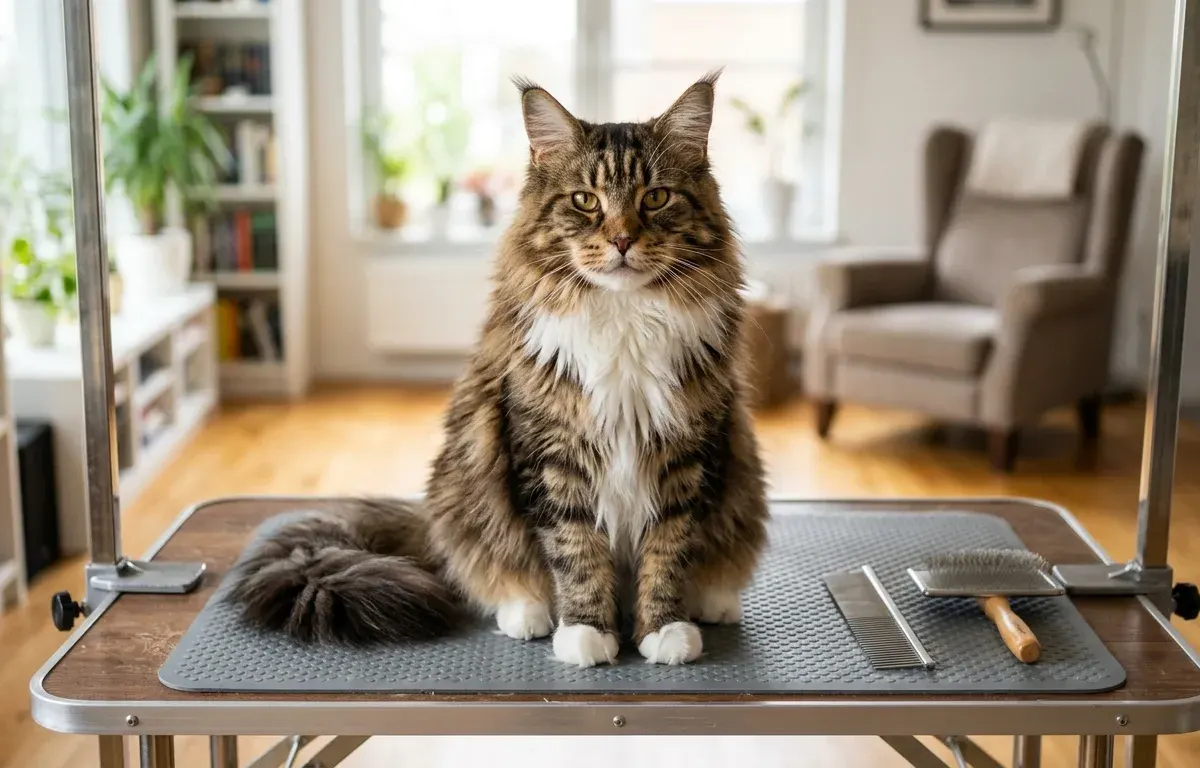
The optimal Maine Coon grooming kit consists of a wide-tooth stainless steel butter comb, a soft-pin slicker brush, a de-shedding undercoat rake, cat nail clippers, and feline-specific pH-balanced shampoo.
Attempting to groom a longhaired cat with standard plastic brushes or short bristle combs is ineffective because the bristles cannot reach past the topcoat to the skin line. A complete grooming toolkit requires specific implements tailored to each coat layer.
| Tool Name | Primary Function | Target Fur Layer | Recommended Frequency |
|---|---|---|---|
| Wide-Tooth Steel Comb (Greyhound Comb) | Line-combing, parting sections, detecting early knots | Deep undercoat down to skin level | 2 to 3 times weekly |
| Soft-Pin Slicker Brush | Removing surface debris, capturing loose guard hairs | Outer topcoat and awn hairs | 2 to 3 times weekly |
| Undercoat De-shedding Rake | Thinning dead trapped undercoat during seasonal molts | Dense undercoat layer | 1 to 2 times monthly (seasonal) |
| Scissor-Style Claw Clipper | Trimming sharp nail tips to protect digital pads | Claws (front and rear) | Every 2 to 3 weeks |
| Feline Ear Cleaner & Cotton Rounds | Dissolving wax and clearing external ear canal debris | Outer ear flap and canal base | Weekly inspection |
| Feline pH-Balanced Shampoo | Cleansing fur without drying natural skin oils | Full coat and skin | Every 4 to 12 weeks (as needed) |
Investing in high-quality grooming gear ensures safety for both you and your cat. For example, rounded stainless steel tines glide smoothly through dense fur without scratching sensitive skin. Maintaining dedicated hygiene equipment also aligns with best practices across multi-pet households, such as learning how to clean French Bulldog ears safely with sanitized cotton pads. Keeping clean tools ready makes it just as straightforward to take care of a Pug dog and maintain spotless grooming standards for every companion in your home.
High-Friction Matting Zones: Where Knots Form First
Friction-prone anatomical areas, specifically the armpits, inner groin, chest ruff, behind the ears, and hind leg britches, are the primary sites where Maine Coon mats develop.
Mats rarely develop on the flat, exposed expanse of the back. Instead, they form where body parts rub together during walking, running, or grooming. Daily tactile inspections should focus on five critical friction zones:
- Axillary Region (Armpits): The continuous forward and backward motion of the front legs rubs the fine undercoat beneath the shoulder joints, creating dense knots within 48 to 72 hours if unchecked.
- Groin and Lower Abdomen: The fur between the hind legs and across the soft belly is extremely fine and prone to moisture clumping when the cat lies down.
- Chest Ruff (Mane): The magnificent ruff surrounding the neck frequently encounters saliva during self-grooming and food particles during meals, leading to sticky tangles.
- Britches (Rear Leg Trousers): The long, flowing fur on the hind legs easily catches litter dust, outdoor debris, and occasional fecal matter.
- Base of the Ears: The thin skin behind the ears contains active sebaceous glands that produce natural oils, causing fine hairs to stick together.
Performing a 60-second tactile check each evening allows you to feel for tiny seed knots with your fingertips before they consolidate. Establishing these regular checks mirrors how owners inspect anatomical folds when they clean French Bulldog ears for wax buildup. Monitoring posterior britches and coat cleanliness also helps owners distinguish simple surface matting from internal health issues, such as when canine caretakers must express French Bulldog glands due to localized discomfort.
Step-by-Step Brushing and Dematting Routine
Groom your Maine Coon by parting the fur in sections, gently combing from the tips towards the root with a wide-tooth metal comb, and finishing with a slicker brush down the back and sides.
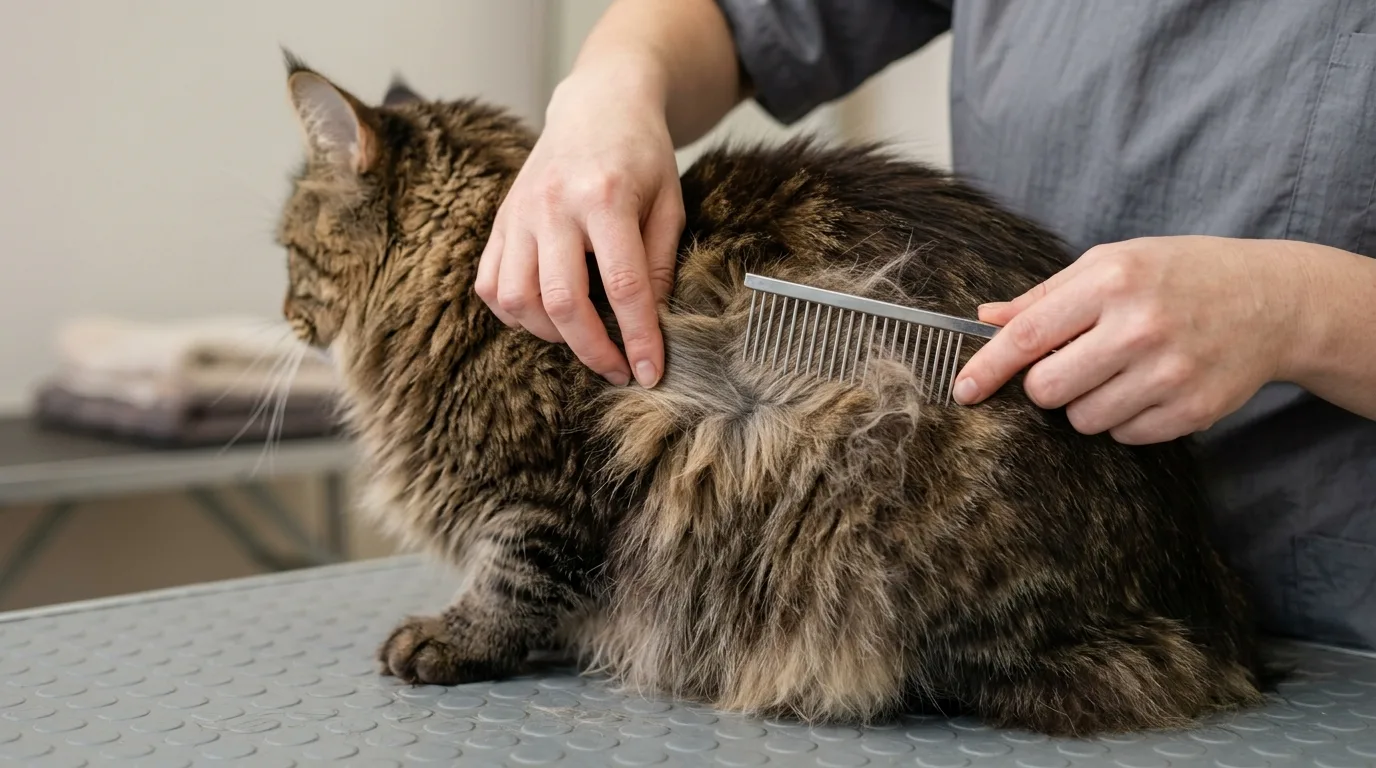
Proper technique matters as much as the tools you use. Simply dragging a brush over the top of the coat creates a deceptive surface smoothness while leaving deep undercoat mats to tighten against the skin. Follow this structured five-step protocol for thorough, stress-free grooming.
Step 1: Pre-Grooming Relaxation and Tactile Inspection
Place your Maine Coon on a non-slip surface, such as a rubber-backed grooming mat on a sturdy table or countertop. Spend the first minute petting your cat gently, running your fingers through the coat to locate any sensitive tangles or skin irregularities. This tactile scan allows you to plan your session and prevents accidentally snagging a hidden knot.
Step 2: Line-Combing the Undercoat
Line-combing is the gold standard technique for semi-longhaired cats. Begin at the lower rear of the body or along the side. Use your non-dominant hand to hold the fur upward, exposing a straight line of visible skin. With your dominant hand, gently insert the wide-tooth metal comb into the exposed fur right at the skin line and comb downward in small, 2-inch sections. Work systematically upward and forward across the entire body, ensuring the comb teeth reach the base of every section.
Step 3: Targeted Detangling and Mat Management
When your comb meets resistance, stop immediately. Do not pull or yank against the knot. Separate the tangled clump using your fingers to loosen the outer fibers. Apply a dime-sized drop of cat-safe leave-in detangling spray to lubricate the hair shafts. Hold the base of the fur firmly between your thumb and forefinger close to the skin to absorb mechanical tension, then use the end tines of your steel comb to gently tease the tangle apart, working exclusively from the outer tips inward toward the body.
Step 4: Slicker Brush Pass for Guard Hairs
Once the undercoat is completely free of tangles, use your soft-pin slicker brush to smooth the outer coat. Use light, long strokes following the natural direction of hair growth along the back, flanks, chest, and tail. This step removes loosened undercoat hairs that the comb freed and evenly distributes natural sebum oils along the guard hair shafts, imparting a healthy natural sheen.
Step 5: Post-Grooming Positive Reinforcement
Conclude every grooming session on a calm, positive note. Offer a high-value treat, such as a lickable puree treat or cooked chicken morsel, accompanied by verbal praise. Ending sessions with positive associations ensures your cat remains cooperative for future grooming. Managing large pedigree cats on grooming tables becomes second nature once owners understand how big Ragdoll cats get and practice safe handling for substantial feline frames. Throughout prolonged sessions, always keep the room well-ventilated, just as careful pet owners monitor environmental heat to tell if a French Bulldog is overheating during physical handling.
Caution: Never use household scissors or kitchen shears to cut out mats on a Maine Coon. Feline skin is exceptionally thin and stretches upward into the base of dense knots, making accidental skin lacerations one of the most common feline grooming emergencies treated in veterinary clinics.
Bathing Guidelines: When and How to Wash a Maine Coon
Bathe a Maine Coon only when their coat becomes noticeably greasy, soiled, or sticky, typically every 4 to 12 weeks, using lukewarm water and cat-safe shampoo.
According to the ASPCA cat grooming guidelines, bathing domestic longhaired cats should be kept to occasional intervals unless medically necessary, as excessive washing strips natural protective oils and induces skin dryness. While healthy adult cats maintain hygiene through daily self-grooming, Maine Coons benefit from occasional baths to remove oily buildup, dander, and trapped shed hair that self-grooming cannot eliminate.
Before introducing your cat to water, always perform a complete brushing session. Water tightens existing mats, turning manageable tangles into hard, felted clumps that are nearly impossible to comb out once wet.
Follow this bath procedure to minimize stress:
-
Setup: Place a textured rubber mat inside your sink or bathtub to provide secure footing. Prepare a handheld sprayer or a plastic pouring pitcher, two large microfiber towels, and diluted cat shampoo before bringing your cat into the room.
-
Water Temperature: Adjust the water to lukewarm, approximately 100°F to 102°F (37.8°C to 38.9°C), matching feline body temperature. Avoid hot water, which easily burns delicate feline skin.
- Wetting: Wet the coat starting from the shoulders down to the tail, keeping water away from the eyes, nose, and inner ears. The water-repellent guard hairs require thorough saturation before water reaches the undercoat.
- Lathering and Rinsing: Work a small amount of cat-formulated, fragrance-free shampoo through the fur. Rinse meticulously for several minutes. Any residual soap trapped within the dense undercoat causes contact irritation and flaking.
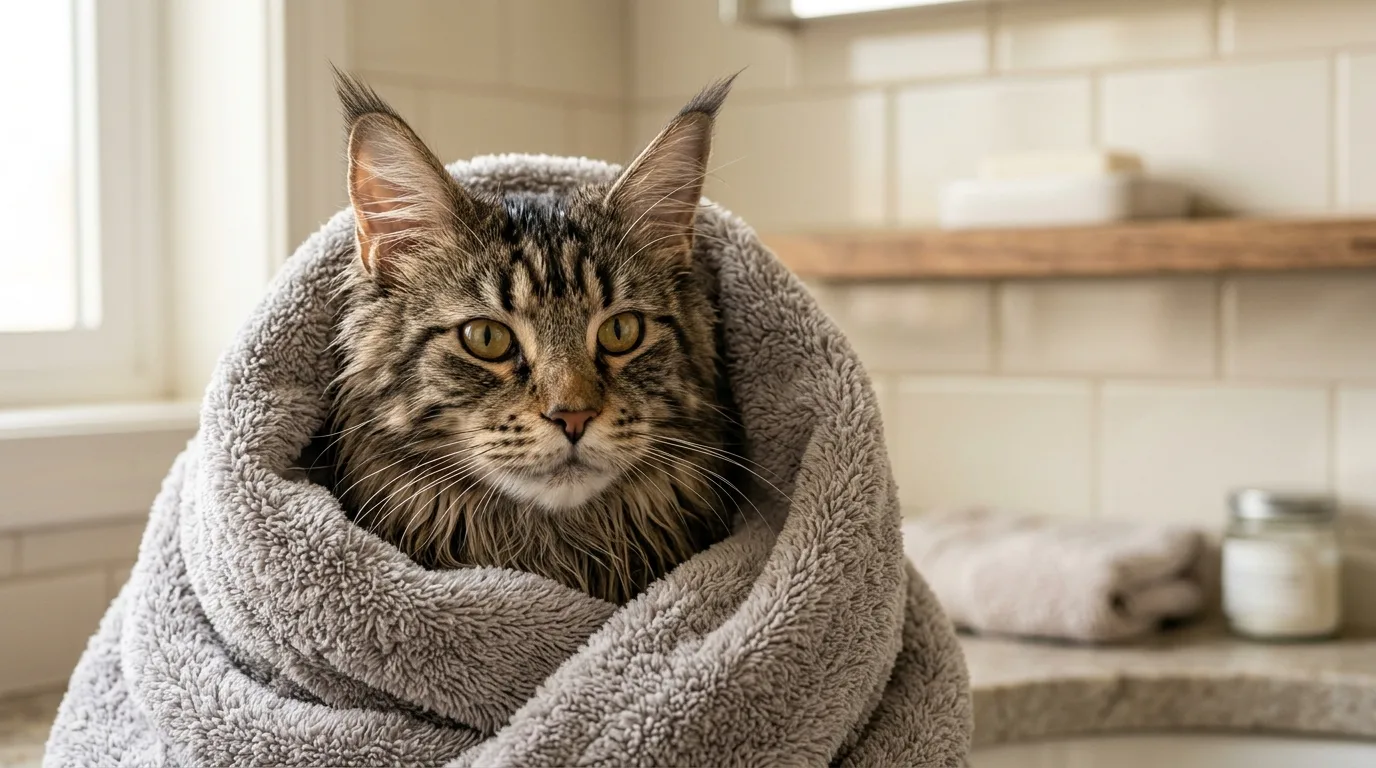
- Drying: Wrap your Maine Coon in a dry microfiber towel and gently blot the coat to press out moisture. Never rub aggressively, as friction creates new tangles. If your cat tolerates low noise, use a specialized pet dryer on the lowest, cool airflow setting held at least 12 inches away from the skin.
Understanding species-specific bath schedules is essential. Pet owners accustomed to canine routines must note that determining how often to bathe a French Bulldog involves distinct skin lipid dynamics compared to feline double coats. Furthermore, maintaining moderate water and ambient temperatures prevents stress, following the same gentle temperature controls used when owners cool down a French Bulldog after heat exposure.
Nail Trimming, Ear Care, and Sanitary Maintenance
Clip only the transparent tips of Maine Coon claws every 2 to 3 weeks using dedicated cat clippers, inspect ears weekly for dark discharge, and perform sanitary trims around the rear as needed.
Complete grooming extends beyond coat brushing. Regular maintenance of claws, ears, and sanitary regions prevents painful overgrowth, infections, and hygiene complications.
| Component | Maintenance Interval | Key Technique | Warning Signs to Monitor |
|---|---|---|---|
| Claws (Front & Rear) | Every 2 to 3 weeks | Press paw pad to extend nail; clip only the clear tip 2mm ahead of the pink quick | Splayed claws, splitting, nails curling into paw pads |
| Outer Ears | Weekly inspection | Wipe outer ear flap with a damp cotton pad moistened with feline ear rinse | Dark coffee-ground discharge, head shaking, foul odor |
| Sanitary Region (Britches) | Every 4 to 8 weeks | Trim 1 to 2 inches of fur around the perianal area using rounded safety clippers | Fecal adhesion, litter clumping, skin redness |
| Teeth & Gums | 2 to 3 times weekly | Brush outer tooth surfaces using feline enzymatic toothpaste and soft finger brush | Bad breath, red swollen gums, yellow tartar buildup |
When trimming claws, hold the paw gently and apply light pressure to the top and bottom of the digital pad to extend the nail. Identify the pink vascular tissue, known as the quick, inside the base of the translucent claw. Clip only the clear sharp tip, staying at least 2 millimeters away from the quick to avoid pain and bleeding. If minor bleeding occurs, press a small pinch of styptic powder against the nail tip.
For ear maintenance, apply a veterinary-approved ear cleaner to a soft cotton round and gently wipe away wax from the inner pinna. Never insert cotton swabs into the ear canal, as this packs debris deeper against the tympanic membrane.
Oral care should also be integrated into your weekly grooming regimen. Checking your cat’s 30 adult teeth for plaque buildup helps preserve overall health, contrasting with canine dental profiles such as how many teeth French Bulldogs have when managing multi-pet households.
A sanitary trim (hygiene clip) is particularly valuable for indoor Maine Coons. Trimming the long fur beneath the base of the tail and around the perianal region reduces the risk of litter tracking and fecal contamination. Use electric grooming clippers equipped with a #10 safety blade, keeping the blade flat against the skin while holding the tail elevated.
Acclimation and Low-Stress Grooming Techniques
Train Maine Coons to accept grooming through gradual cooperative-care desensitization, keeping initial sessions under 3 to 5 minutes paired with high-value food rewards.
Grooming should never turn into a physical struggle. Forcing a reluctant cat through a long, uncomfortable session damages trust and creates aggressive avoidance behaviors in Maine Coons. Cooperative care teaches your cat that grooming is predictable, painless, and rewarding.
Implement these desensitization principles:
- The 3-Minute Rule: Keep early grooming sessions brief, lasting only 2 to 3 minutes. Focus on comfortable areas such as the back and shoulders before attempting sensitive zones like the belly or britches. End the session while your cat is still relaxed.
- Reading Sensory Overload Cues: Watch for subtle feline stress indicators. Twitching skin, a swishing tail tip, pinned ears, low growls, or sudden head turns toward the brush signal that your cat is reaching sensory threshold. Stop brushing immediately when these signs appear.
- Distraction and Lick Mats: Spread wet food or churu puree onto a textured silicone lick mat during grooming. Licking triggers endorphin release in felines, keeping the cat calm while distracting them from comb manipulation.
- Handling Paws and Tail Daily: Outside of grooming sessions, gently touch your cat’s paws, ears, and tail during relaxed petting. Rewarding your cat for allowing light handling makes nail trims and hygiene checks routine.
These structured behavior-shaping protocols parallel positive reinforcement approaches used to train a French Bulldog or train a Pug puppy, reinforcing that patient, stepwise exposure yields lifelong cooperation across all companion animals.
Professional Grooming vs. At-Home Care: When to Seek Help
At-home maintenance is sufficient for healthy Maine Coons, but veterinary or professional feline grooming is mandatory when pelted mats adhere tightly to the skin, severe fecal soiling occurs, or the cat exhibits extreme aggression.
Most Maine Coons thrive on dedicated home grooming. However, recognizing the limits of at-home care is essential for animal welfare. Knowing when to transition from home brushing to professional intervention protects your cat from avoidable injury.
| Coat Condition | Severity Level | Recommended Home Action | Professional or Veterinary Action |
|---|---|---|---|
| Minor surface knots (<0.5 inch) | Mild | Apply detangling spray, separate with fingers, tease out with metal comb | Not required; manageable at home |
| Clumped mats in armpits or groin | Moderate | Isolate knot, gently line-comb edges; stop if skin pulls | Professional groomer sanitary clip if tight |
| Solid pelted matting across back or belly | Severe | Do NOT cut with scissors; do not pull | Veterinary shaving under mild sedation |
| Heavy fecal contamination with skin irritation | Moderate to Severe | Sponge clean surface with warm water | Professional sanitary shave and antiseptic skin wash |
| Extreme fear-aggression during handling | Behavioral | Halt home grooming immediately | Fear-Free certified feline groomer or clinic |
A “pelted coat” occurs when multiple mats merge into a solid sheet of felted fur that constricts movement and traps moisture against the skin, promoting bacterial dermatitis and fungal infections. Attempting to comb or cut pelted fur at home causes intense pain and skin tears. In such cases, professional veterinary grooming utilizing medical-grade clippers, occasionally accompanied by mild sedation, is the safest and most humane solution.
Understanding long-term care commitments ensures that your grooming routine remains consistent throughout your pet’s life, supporting overall vitality much like the dedicated care that influences the lifespan of a Ragdoll cat and other giant cat breeds. Responsible owners should also factor routine grooming equipment and occasional professional hygiene visits into their general household pet budget, just as prospective buyers evaluate how much Ragdoll cats cost and how much do maine coon kittens cost along with the ongoing maintenance requirements of pedigree companions. While full-body shave styles like the “lion cut” are popular on social media, unnecessary shaving of a healthy Maine Coon coat compromises their natural thermoregulation and leaves delicate skin vulnerable to sunburn and mechanical injury. Routine line-combing eliminates the need for radical clipping.
Frequently Asked Questions About How to Groom a Maine Coon
How often should a Maine Coon be groomed?
A Maine Coon should be thoroughly combed 2 to 3 times per week during normal periods and daily during peak seasonal shedding in spring and autumn, with nail trims performed every 2 to 3 weeks.
Should you shave a Maine Coon?
You should generally not shave a Maine Coon because their double coat acts as natural insulation against both heat and cold while protecting delicate skin, with full clipping reserved solely for severe medical matting under professional veterinary supervision.
Do Maine Coons need baths?
Maine Coons do not require frequent bathing because they maintain cleanliness through daily self-grooming, but an occasional bath every 1 to 3 months helps eliminate excess grease, dander, and loose undercoat.
How do you get mats out of a Maine Coon?
To remove mats from a Maine Coon, apply a feline detangling spray, isolate the knot with your fingers, and gently tease the fibers apart from the outside tip inward using a wide-tooth steel comb or a specialized mat splitter with guarded blades.
Can you cut Maine Coon hair with scissors?
You should never use household scissors to cut hair or mats off a Maine Coon because feline skin is extremely thin and pliable, easily pulling up into the fur knot where it can be accidentally severed.
Leave a Reply