

Table of Contents
Knowing how to care for a French Bulldog requires structured daily management focused on respiratory safety, thermal control, spinal protection, and skin hygiene. Because of their flat-faced (brachycephalic) anatomy, Frenchies cannot tolerate high heat, vigorous exertion, or jumping from elevated surfaces. A standard care routine includes keeping indoor temperatures below 75°F (24°C), feeding measured portions of high-protein food to avoid excess weight, providing 20 to 30 minutes of low-impact exercise daily, and cleaning facial wrinkles multiple times weekly to prevent dermatitis.
- Maintain indoor climate control below 75°F (24°C) and avoid outdoor activity during hot hours because brachycephalic airways cannot dissipate heat efficiently.
- Protect the spine from Intervertebral Disc Disease (IVDD) by setting up pet ramps and stopping dogs from jumping off furniture.
- Clean and completely dry facial folds regularly to prevent yeast and bacterial skin infections.
- Measure meals twice daily and monitor body condition to keep adult weight strictly under 28 pounds (12.7 kg).
- Walk on a supportive chest harness rather than a neck collar to protect narrow airways from physical compression.
About the French Bulldog
Understanding how to care for a french bulldog starts with recognizing the physical build and historical background of the breed. French Bulldogs are compact, heavily muscled companion dogs with distinctive bat ears and shortened muzzles. Understanding what French Bulldogs were bred for explains their low prey drive and strong desire to stay close to human family members. Their pleasant, adaptable nature explains why French Bulldogs are so popular among apartment dwellers and suburban families alike.

However, their charm comes with anatomical trade-offs. The flat skull structure (brachycephaly) means all normal canine soft tissues (soft palate, tongue, and tonsils) are compressed into a drastically reduced space. Responsible ownership means structuring daily life around these anatomical limitations to ensure comfort and longevity. Managing a flat-faced dog requires proactive daily habits rather than reactive emergency treatment. Prevention through weight control and temperature regulation reduces lifelong veterinary complications significantly.
Size, Build, and Temperament
The American Kennel Club (AKC) breed standard specifies that a healthy adult French Bulldog should weigh under 28 pounds (12.7 kg). Males typically range from 20 to 28 pounds, while females sit between 18 and 24 pounds. Height at the withers is typically 11 to 13 inches.
To evaluate whether your dog meets the defining characteristics of a French Bulldog, look for a heavy bone structure, a broad chest, and a short, smooth coat. Temperamentally, Frenchies are alert, playful, and deeply affectionate. They adapt easily to quiet household routines, and owners often observe unique French Bulldog sleep patterns where adults sleep between 12 and 14 hours per day.
| Physical Attribute | Standard Metric | Care Implication |
|---|---|---|
| Adult Male Weight | 20 to 28 lbs (9.1 to 12.7 kg) | Strict portion control required to prevent spinal stress |
| Adult Female Weight | 18 to 24 lbs (8.2 to 10.9 kg) | Calorie adjustments needed after spaying |
| Shoulder Height | 11 to 13 inches (28 to 33 cm) | Low center of gravity, cannot clear tall obstacles |
| Coat Type | Short, smooth, single coat | Moderate shedding, low grooming time, minimal cold insulation |
| Skull Conformation | Brachycephalic (flat-faced) | Vulnerable to airway obstruction and heat stress |
Health Snapshot (IVDD Risk, BOAS, and Skin Conditions)
French Bulldogs carry specific genetic and structural health predispositions. According to Dr. Dan G. O’Neill, Associate Professor in Companion Animal Epidemiology at the Royal Veterinary College (RVC) in the RVC VetCompass study on French Bulldogs: “Achieving meaningful changes to the typical conformation of French Bulldogs over time would require all of us, breeders, breed clubs, owners, and veterinary professionals, to stop seeing these extreme physical traits as normal or desirable.” The study documented that French Bulldogs face a markedly elevated risk for Brachycephalic Obstructive Airway Syndrome, with an adjusted odds ratio (aOR) of 30.89 (95% CI: 20.91-45.64) compared to other dog breeds. As detailed by the American College of Veterinary Surgeons, the syndrome stems from primary congenital malformations like stenotic (pinched) nares and an elongated soft palate, which restrict airflow and generate chronic negative airway pressure that can lead to secondary complications such as everted laryngeal saccules.
Spinal vulnerabilities are equally significant. Due to their chondrodysplastic (dwarf) genetics, Frenchies are predisposed to IVDD in French Bulldogs, where intervertebral discs calcify prematurely and herniate under physical pressure. Sudden pain or muscle spasms can also explain why French Bulldogs shake, which warrants immediate resting protocols and veterinary evaluation.
Common Health Risks & Monitoring Focus:
- Upper Airway Obstruction (BOAS): Snoring, stridor, exercise intolerance.
- Spinal Compression (IVDD): Reluctance to walk, arched back, hind limb weakness.
- Skin Fold Dermatitis: Redness, damp odor, scratching around muzzle folds.
- Chronic Otitis Externa: Wax buildup in erect bat ears.
- Corneal Ulcers: Bulging eyes prone to surface scratches.
Daily Routine Basics
Establishing a predictable daily routine helps keep your dog healthy and emotionally balanced. When you organize how to take care of a french bulldog, plan active periods during the coolest parts of the day and integrate skin checks into daily relaxation time.
Flat-faced dogs ingest extra air while eating and panting, which can cause excessive gas in French Bulldogs. Using a slow-feeder bowl and keeping them calm for 30 minutes after meals also reduces reasons French Bulldogs vomit or regurgitate undigested food.
A practical daily timetable:
- 7:00 AM (Morning Routine): Short 10 to 15 minute bathroom walk before outdoor temperatures rise.
- 7:30 AM (Breakfast): Measured portion of kibble served in an elevated slow-feeder bowl with fresh water.
- 8:00 AM to 12:00 PM (Rest): Quiet rest indoors in an air-conditioned room.
- 12:30 PM (Midday Break): Quick 5-minute outdoor bathroom relief, followed by indoor cognitive puzzle play.
- 5:30 PM (Dinner): Second measured meal of the day.
- 6:30 PM (Evening Exercise): Second 10 to 15 minute walk on a flat sidewalk after the sun sets.
- 8:30 PM (Grooming Check): Quick 2-minute wipe-down of facial wrinkles, tail pocket, and paws with dog-safe wipes.
Nutrition and Feeding Guidelines
Proper nutrition maintains lean muscle while protecting joints and airways from the hazards of obesity. In brachycephalic dogs, carrying even one or two extra pounds significantly worsens airway resistance and increases spinal strain.
Feed a commercial diet that meets Association of American Feed Control Officials (AAFCO) standards for your dog’s life stage. Choose recipes featuring identifiable animal proteins (chicken, turkey, lamb, or fish) as the first ingredient. For protein variety, owners often explore feeding salmon to French Bulldogs for rich omega-3 fatty acids that support skin health.
When offering enrichment snacks or pill pockets, offering peanut butter to French Bulldogs is safe in small amounts, provided it is 100% xylitol-free. For low-calorie vegetable snacks, serving broccoli to French Bulldogs provides beneficial fiber and vitamin C when prepared plain and steamed without seasonings. If your dog accidentally ingests xylitol, chocolate, or any toxic substance, contact your veterinarian or the Pet Poison Helpline immediately before taking any other action. Do not wait for symptoms to develop, and never attempt to induce vomiting at home unless explicitly instructed to do so by a veterinary professional.
| Dog Weight | Approximate Daily Calories | Measured Daily Kibble (Standard 350 kcal/cup) | Feeding Schedule |
|---|---|---|---|
| 18 lbs (8.2 kg) | ~480 kcal | 1.35 cups | Divide into 2 meals (0.65 cup each) |
| 22 lbs (10.0 kg) | ~560 kcal | 1.60 cups | Divide into 2 meals (0.80 cup each) |
| 26 lbs (11.8 kg) | ~630 kcal | 1.80 cups | Divide into 2 meals (0.90 cup each) |
| 28 lbs (12.7 kg) | ~670 kcal | 1.90 cups | Divide into 2 meals (0.95 cup each) |
Note: Caloric needs decrease by 10% to 15% after neutering or in senior dogs over 7 years of age. Always adjust portion sizes based on weekly hands-on body condition score (BCS) checks.
Grooming and Skin Fold Care
Although French Bulldogs possess a short, low-shed coat, their hygiene requirements are demanding. Their facial folds, tail pocket, and open ears trap moisture, bacteria, and dead skin cells. Managing French Bulldog body odor requires proactive hygiene habits before trapped dampness leads to bacterial or yeast infections.
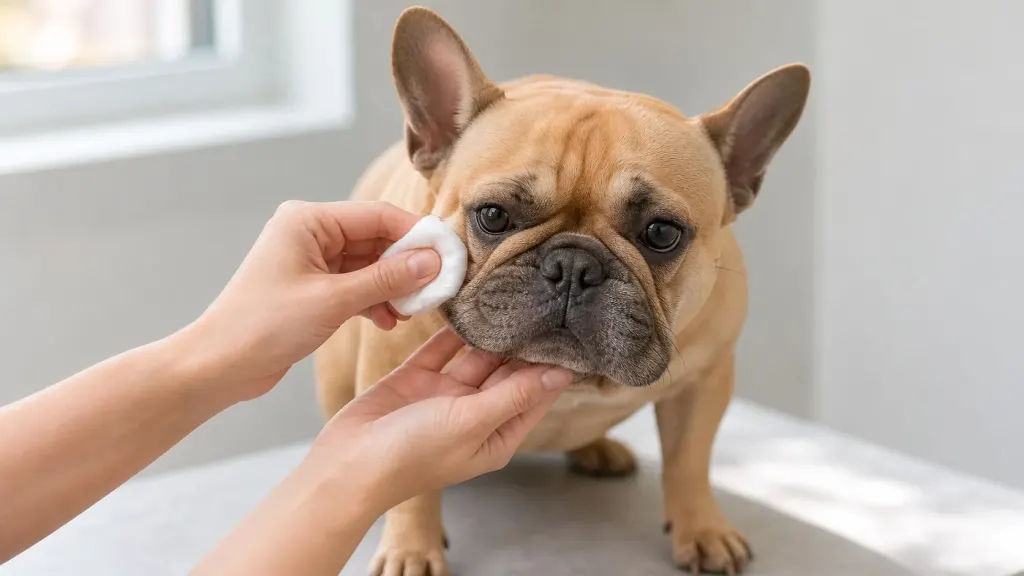
Facial wrinkle care procedure:
- Lift each skin fold around the nose and under the eyes gently.
- Wipe the interior crease using an alcohol-free, fragrance-free dog wipe or chlorhexidine wipe.
- Take a clean, dry cotton pad and wipe the fold until completely dry. Leaving residual dampness invites fungal growth.
- Repeat this cleaning routine consistently as moisture accumulates, or daily if your dog has active irritation.
Ear and body maintenance:
Because bat ears collect dust and pollen, follow a structured guide on how to clean French Bulldog ears bi-weekly using a veterinary-approved ear cleaner. Full baths should be given based on coat condition and outdoor activity rather than a rigid calendar schedule. Because frequent bathing can strip natural protective oils from sensitive skin, wash your dog only when noticeably dirty using a gentle hypoallergenic oatmeal shampoo. Follow safe techniques for expressing French Bulldog anal glands if your dog exhibits scooting behavior.
Exercise Requirements and Temperature Safety
French Bulldogs require consistent, low-intensity exercise to maintain muscle tone without triggering respiratory stress. An adult dog needs roughly 20 to 30 minutes of walking daily, divided into two gentle sessions.
When planning outdoor activities, assess French Bulldog running capacity realistically. Frenchies are not built for jogging, distance running, or high-intensity fetch.
Water safety requires strict vigilance. Because of their heavy skulls and compact body density, review swimming safety for French Bulldogs before visiting lakes, beaches, or backyard pools. Never allow a French Bulldog near open water without a fitted canine life vest.
Temperature Safety Scale for French Bulldogs:
- Under 60°F (15°C): Comfortable; normal walking conditions.
- 60°F to 74°F (16°C to 23°C): Safe for standard 15-minute walks; monitor breathing.
- 75°F to 84°F (24°C to 29°C): Caution; limit walks to 5-10 minutes in the shade with water.
- 85°F (30°C) and above: High Danger; keep dogs strictly indoors in air conditioning.
Training and Behavioral Guidance
French Bulldogs respond best to positive reinforcement techniques utilizing high-value treats, praise, and play rewards. Harsh corrections cause anxiety and trigger stubborn refusal to cooperate.
During how to train a French Bulldog sessions, keep training intervals short (5 to 10 minutes) to match their attention span. Housebreaking requires patience and a strict schedule; following step-by-step methods for potty training a French Bulldog puppy ensures reliable results within the first few months.
Key socialization milestones:
- Weeks 8 to 12: Gentle exposure to novel household sounds (vacuums, doorbells) and varied walking surfaces (tile, carpet, grass).
- Weeks 12 to 16: Controlled interactions with calm, vaccinated dogs and friendly visitors.
- Handling conditioning: Touch paws, ears, and facial folds daily while offering treats to make future grooming and vet visits stress-free.
Veterinary Care and Health Monitoring
Routine preventive veterinary care extends a French Bulldog’s lifespan. Adult dogs require an annual wellness examination, while senior dogs (age 7 and older) benefit from bi-annual checkups with routine blood chemistry panels.
During wellness visits, veterinarians evaluate airway patency, heart health, and joint stability. Owners should also discuss when to neuter a French Bulldog to determine the optimal developmental window for surgery.
Eye health requires daily visual checks. Bulging eyes are prone to scratches and corneal irritation, so monitor for causes of red eyes in French Bulldogs to treat ulcers before permanent damage occurs.
Emergency warning signs requiring immediate veterinary attention:
- Blue, grey, or dark purple tongue or gums (severe oxygen deprivation).
- Heavy, raspy breathing accompanied by white foam at the mouth.
- Sudden inability to stand, dragging hind paws, or crying out when touched along the spine.
- Eye cloudiness, squinting, or excessive green discharge.
- Rectal body temperature above 104°F (40°C), indicating acute heatstroke.
Travel, Housing, and Home Safety
Creating a safe home environment protects your French Bulldog from preventable orthopedic injuries and climate-related emergencies.
Spine-safe home setup:
- Place foam or wooden pet ramps beside sofas and beds so your dog does not jump to the floor.
- Lay non-slip area rugs across polished hardwood, tile, or laminate flooring to provide traction.
- Install baby gates at the top and bottom of steep staircases to prevent falls.
Travel safety protocols:
- Never transport a French Bulldog in the cargo hold of an airplane due to extreme respiratory risks; fly only in-cabin with airline approval.
- Secure your dog in the back seat of your vehicle using an approved crash-tested harness or secure travel crate.
- Keep a portable battery-powered cooling fan and fresh water bottles in your vehicle during summer trips.
Common Myths Debunked
Several misconceptions surround the care requirements of flat-faced dogs. Correcting these myths protects animal welfare:
-
Myth 1: Snoring and heavy snorting are normal, harmless traits for the breed.
Fact: Loud snoring, wheezing, and snorting indicate airway resistance (BOAS). While common, severe airway noise reflects respiratory compromise and should be evaluated by a veterinarian. -
Myth 2: French Bulldogs are lazy and need zero exercise.
Fact: French Bulldogs need 20 to 30 minutes of low-impact walking daily to maintain joint flexibility and cardiovascular health. Sedentary dogs quickly become obese. -
Myth 3: French Bulldogs can swim naturally like other dogs.
Fact: Their dense musculature, short legs, and heavy head create negative buoyancy. Most Frenchies sink quickly without a life jacket. -
Myth 4: A French Bulldog only needs wrinkle cleaning when it smells bad.
Fact: An odor indicates that a bacterial or fungal infection has already taken hold. Wrinkles require routine preventative cleaning before moisture and debris accumulate.
Frequently Asked Questions About Caring for a French Bulldog
How often should I feed an adult French Bulldog?
An adult French Bulldog should be fed twice daily, once in the morning and once in the evening. Dividing their daily caloric requirement into two measured meals prevents digestive distress, reduces gas accumulation, and helps stabilize blood sugar levels throughout the day.
Can French Bulldogs swim without a life jacket?
No. French Bulldogs should never be allowed near deep water without a properly fitted canine life jacket. Their heavy skulls, compact body mass, and short limbs make it difficult for them to keep their snouts above water, leading to rapid exhaustion and drowning risks.
How often do French Bulldog facial wrinkles need cleaning?
Cleaning frequency depends on wrinkle depth, tear production, and individual skin sensitivity. Most French Bulldogs need their facial folds gently wiped clean and thoroughly dried several times a week. Dogs with prominent skin folds, heavy tear staining, or active skin irritation benefit from daily cleaning with a dog-safe wipe followed immediately by a dry cotton pad to stop yeast and bacterial buildup.
How much daily exercise does a French Bulldog need?
A healthy adult French Bulldog requires approximately 20 to 30 minutes of moderate, low-impact exercise per day. This is best divided into two 15-minute walks during the cooler morning and evening hours. Avoid vigorous running or high-intensity fetch games.
What ambient temperature is too hot for a French Bulldog?
Temperatures above 75°F (24°C), especially when paired with high humidity, present serious heatstroke risks for French Bulldogs. Because flat-faced dogs cannot cool their bodies efficiently through panting, outdoor activities should be restricted to brief bathroom breaks during warm weather.



Leave a Reply