
Table of Contents
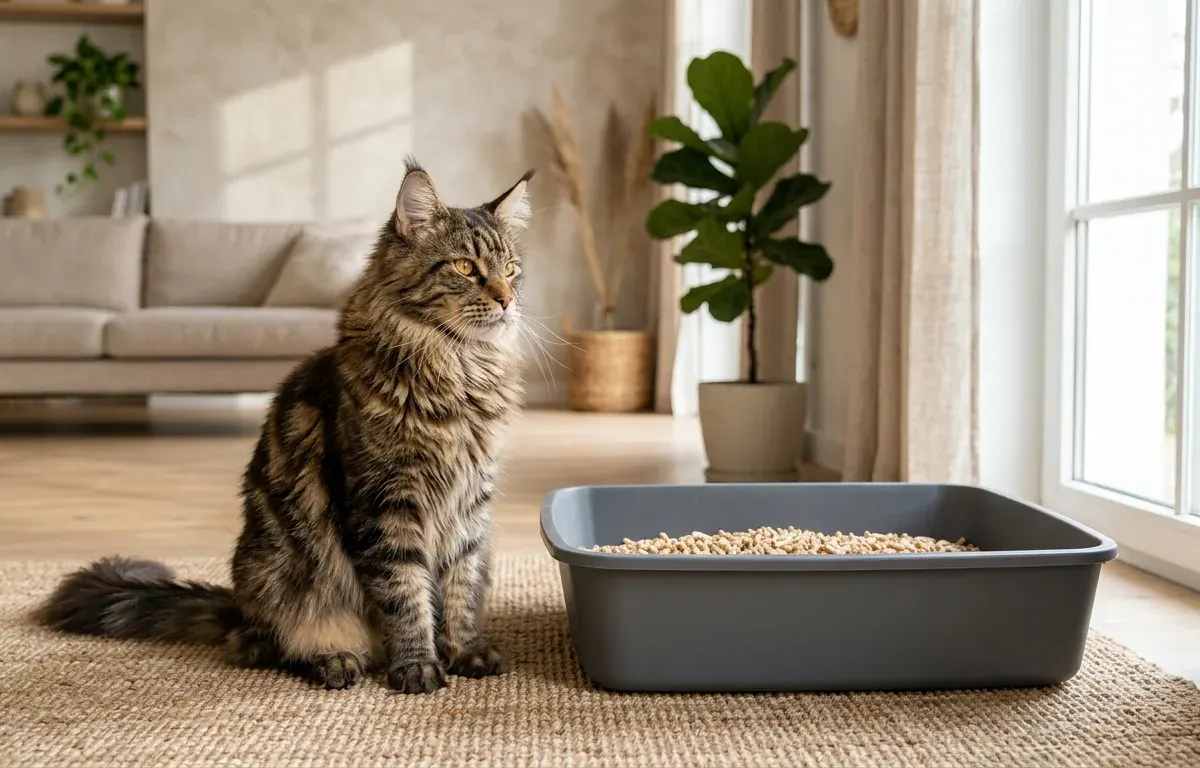
Yes, Maine Coon cats instinctively use a litter box just like any domestic feline. However, because adult Maine Coons reach lengths of 30 to 40 inches and weigh up to 25 pounds, standard commercial boxes are too cramped, requiring extra-large pans (minimum 30 to 36 inches long) to prevent accidental misses and box aversion.
- Maine Coons possess natural feline litter instincts and require minimal training when provided an adequately sized box.
- The standard veterinary guideline requires a litter box at least 1.5 times the length of the cat from nose to base of tail.
- High-sided storage totes (30+ gallons) and extra-large stainless steel open pans are superior to enclosed hooded boxes.
- Avoiding the litter box is often triggered by physical cramping, dirty substrate, or medical issues like FLUTD and arthritis.
- The N+1 rule applies: maintain one litter box per cat plus one extra in quiet, non-confined household areas.
Do Maine Coon Cats Naturally Use a Litter Box?
Maine Coon cats have the exact same innate instinct to eliminate in loose substrate and bury their waste as any other domestic cat breed. Kittens learn to use a litter tray between three and four weeks of age by observing their mother. Because this behavior is an evolutionary drive to conceal scent from predators and territorial rivals, healthy Maine Coons do not require specialized behavioral conditioning to adopt a litter box.
The main difference between Maine Coons and typical domestic cats lies in their physical development. While standard domestic cats reach physical maturity around twelve months of age, Maine Coons continue growing for three to five years. Adult male Maine Coons typically weigh between 15 and 25 pounds (6.8 to 11.3 kg) and measure 30 to 40 inches (76 to 101 cm) from nose to tail tip. Females are moderately smaller, usually weighing between 10 and 15 pounds (4.5 to 6.8 kg).
Prospective owners comparing large feline breeds often evaluate how big Ragdoll cats get alongside Maine Coons when planning household space and equipment sizing. In both cases, successful house training depends on accommodating their muscular physique, dense double coat, tufted paws, and wide stance. When giant cats fail to use a litter tray, the root cause is almost always equipment failure or environmental discomfort rather than a lack of litter box understanding within essential cat care guidelines.
| Trait | Standard Domestic Cat | Adult Maine Coon |
|---|---|---|
| Average Adult Weight | 8 – 10 lbs (3.6 – 4.5 kg) | 15 – 25 lbs (6.8 – 11.3 kg) for males |
| Full Body Length | 18 – 20 inches (45 – 50 cm) | 30 – 40 inches (76 – 101 cm) with tail |
| Time to Full Skeletal Maturity | 10 – 12 months | 3 – 5 years |
| Litter Pan Space Requirement | 18 x 14 inches (Standard) | 30 x 20+ inches (Giant / Jumbo) |
| Daily Litter Volume Produced | Baseline standard | Roughly 1.5x to 2x baseline |
Ideal Litter Box Dimensions for Giant Cats (The 1.5x Sizing Rule)
The most common mistake owners make when setting up a litter station for a Maine Coon is buying a standard commercial litter box. Most retail litter pans measure roughly 18 to 20 inches in length and 14 to 15 inches in width. While adequate for an eight-pound domestic shorthair, these dimensions severely restrict a giant cat.
According to feline behavioral guidelines from the Cornell University College of Veterinary Medicine, a litter box must measure at least 1.5 times the length of the cat from the tip of its nose to the base of its tail. For an adult Maine Coon with a nose-to-tail-base body length of 20 to 26 inches, the interior pan length must measure between 30 and 39 inches, with a width of at least 20 to 24 inches.
When a box is too small, a Maine Coon cannot complete its natural pre-elimination routine: entering, sniffing, turning 360 degrees, digging a depression, squatting comfortably, and turning back to bury the deposit. Physical confinement forces the cat to perch awkwardly on the rim or stand with its front paws outside the box. This posture frequently leads to elevator butt syndrome, where the cat raises its rear during urination and sprays urine directly over the low plastic edge onto the surrounding floor.
Multi-pet households with mixed animals, such as homes where owners observe how Ragdoll cats get along with dogs in shared spaces, benefit significantly from establishing expansive, quiet elimination stations that cannot be cornered by energetic canine companions. While easygoing temperaments, including friendly Ragdoll cat temperaments and gentle Maine Coon dispositions, make giant breeds adaptable companions, their massive physical frames require unobstructed pan layouts to avoid confinement stress.
| Cat Life Stage / Size | Nose-to-Tail-Base Length | Minimum Recommended Box Dimensions | Wall Height Recommendation |
|---|---|---|---|
| Maine Coon Kitten (3 – 6 months) | 10 – 14 inches (25 – 35 cm) | 20 x 15 inches (50 x 38 cm) | 4 – 6 inches (Low entry) |
| Sub-Adult (6 – 18 months) | 16 – 20 inches (40 – 50 cm) | 26 x 18 inches (66 x 45 cm) | 8 – 10 inches |
| Adult Female Maine Coon | 18 – 22 inches (45 – 55 cm) | 30 x 20 inches (76 x 50 cm) | 10 – 14 inches (5-inch entry cutout) |
| Full-Grown Adult Male | 22 – 26+ inches (55 – 66+ cm) | 34 – 39 x 22+ inches (86 – 100 x 55+ cm) | 12 – 16 inches (6-inch entry cutout) |
Best Litter Box Options: Open Pans, Stainless Steel, and DIY Storage Totes
Finding commercial litter boxes that meet giant-breed specifications can be challenging, but owners have three primary successful formats: extra-large open plastic pans, industrial stainless steel trays, and converted DIY plastic storage totes.
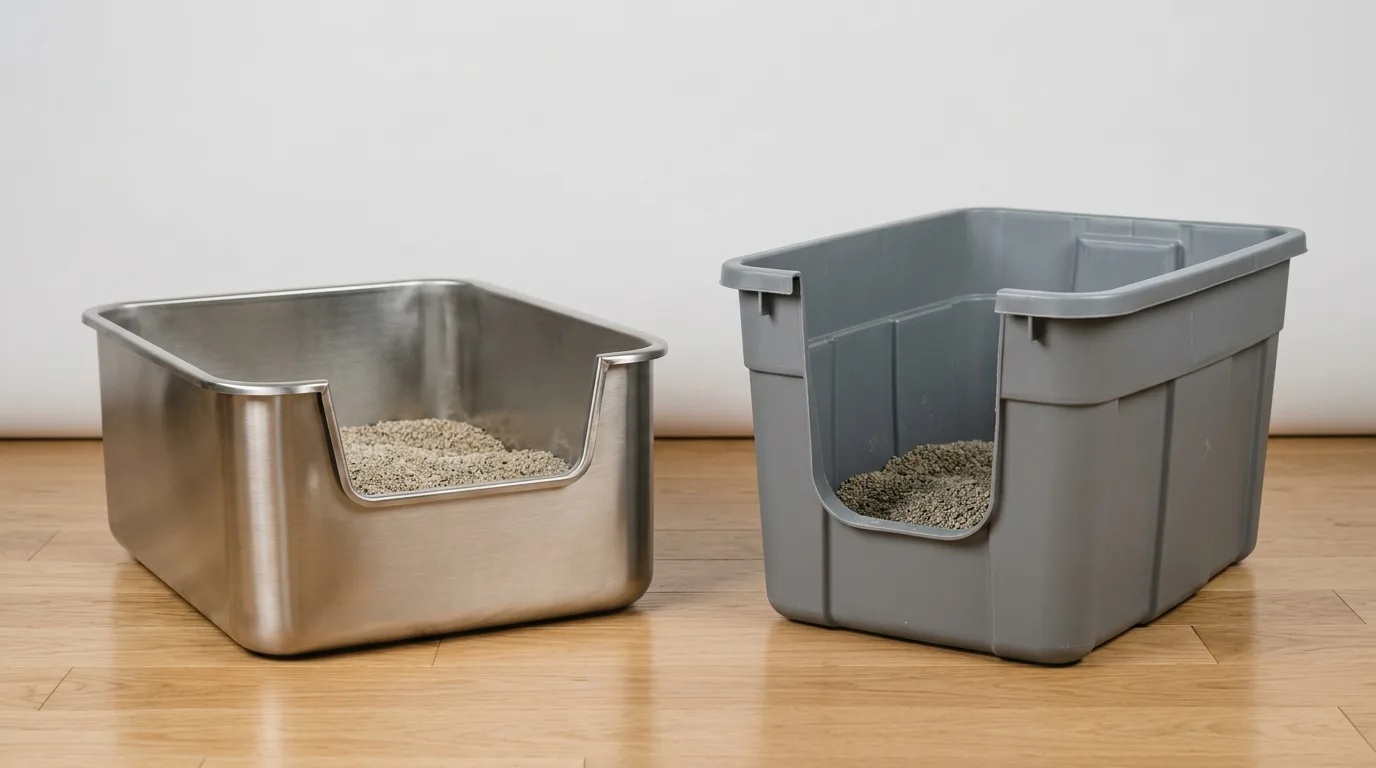
- Extra-Large Stainless Steel Pans: Stainless steel catering steam pans or commercial XL metal litter boxes measuring 30 to 36 inches long offer exceptional durability. Unlike plastic, stainless steel is completely non-porous. It does not absorb foul urine odors, resists claw scratching where bacteria fester, and cleans effortlessly with hot water and mild soap.
- DIY Plastic Storage Containers (The Gold Standard): Purchasing a heavy-duty 30 to 35 gallon clear storage tote (such as a Sterilite or Rubbermaid bin) provides the ideal dimensions at low cost. Using a utility knife or heated blade, cut a smooth U-shaped entry door 5 to 6 inches above the floor on one short side, smoothing the cut edges with sandpaper or duct tape. The high 14 to 16 inch walls contain all kicked litter and standing urine spray while leaving the entire top wide open.
- Giant Open Commercial Pans: Purpose-built giant open trays with removable snap-on high walls provide ample floor area without feeling restrictive.
Enclosed, hooded litter boxes are strongly discouraged for Maine Coons. Hoods trap ammonia vapors, concentrate dust, and restrict headroom, forcing a long cat to hunch uncomfortably. Furthermore, enclosed entries prevent the cat from maintaining visual surveillance of its surroundings, which induces anxiety during vulnerable moments.
Breed enthusiasts who appreciate active felines, such as Ragdoll cats that like water or Maine Coons that splash around water fountains, will find that heavy stainless steel pans and high-sided totes also prevent water-tracking spills near the litter station. Unlike historical regional breeds developed in rugged climates, exploring where Ragdoll cats originate from in 1960s California highlights how specialized indoor domestic breeds still share the fundamental feline requirement for spacious, open-air waste areas.
| Litter Box Type | Pros | Cons | Ideal For |
|---|---|---|---|
| Extra-Large Stainless Steel Pan | Zero odor absorption, scratch-proof, lifetime durability, easy sanitization | Heavier to lift, higher upfront purchase cost | Adult cats with high urine volume |
| Converted 30-Gallon Storage Tote | 14-16 inch high walls stop spray, low cost, expansive floor area | Requires 10 minutes of DIY cutting, bulky footprint | High-sprayers, vigorous diggers, budget setup |
| Commercial Jumbo Open Plastic Pan | Lightweight, pre-molded low entry, widely available | Plastic scratches over time, absorbs odors after 1-2 years | Standard adult females and senior cats |
| Enclosed / Hooded Commercial Box | Conceals waste from human sight | Traps odors, cramped headroom, triggers box aversion | Not recommended for adult giant breeds |
While automated self-cleaning litter boxes offer electronic convenience, the vast majority of rotating globes offer interior chamber diameters under 20 inches. This severely restricts a 35-inch Maine Coon’s natural turning and posturing motion, making traditional large open pans significantly safer and more reliable.
Substrate and Maintenance: Best Litter Types for Longhaired Breeds
Maine Coons have thick, water-resistant semi-long coats with dense fur britches on their hind legs and prominent tufts of fur sprouting between their paw pads (snowshoes). These physical adaptations require thoughtful substrate selection to prevent litter tracking, fur matting, and chemical irritation.
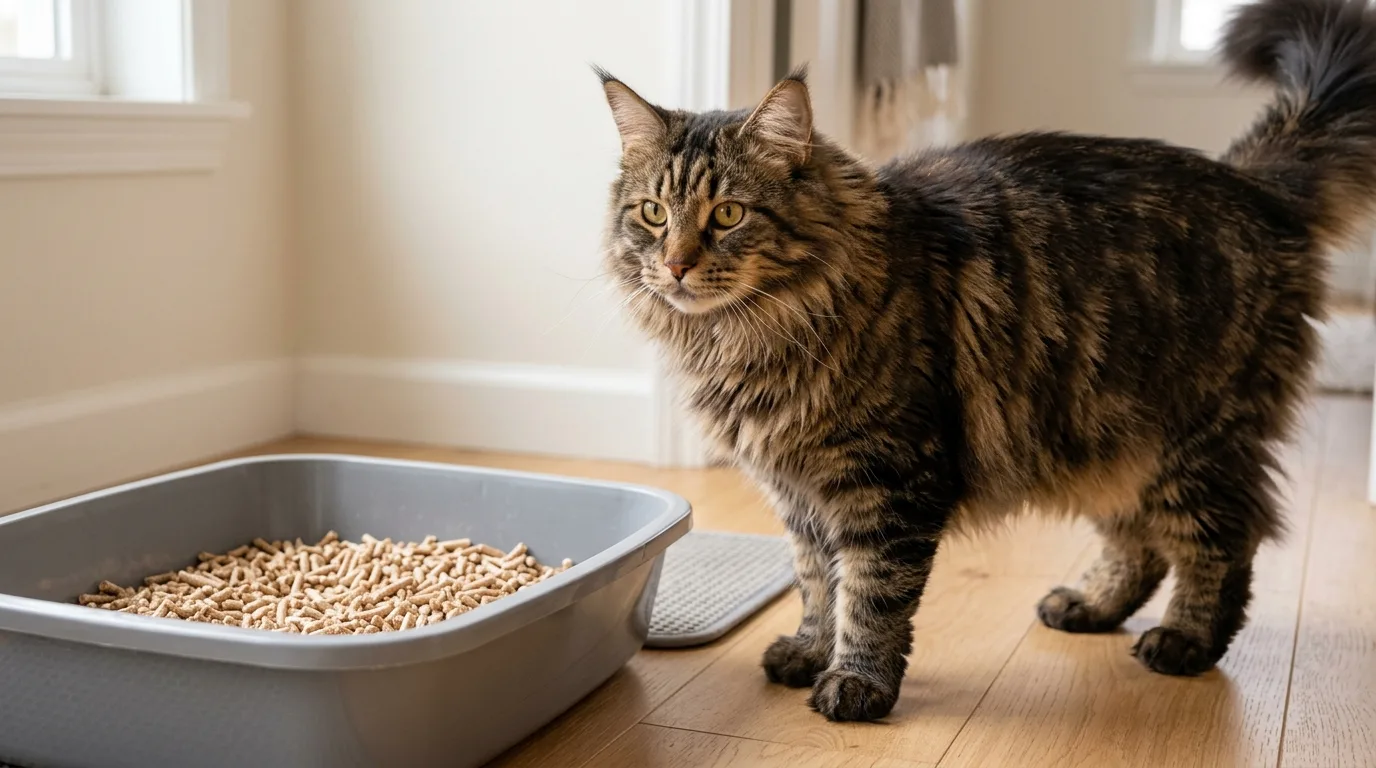
When choosing a litter substrate for a longhaired cat, prioritize the following characteristics:
- Low Dust and Unscented: Cats possess an acute sense of smell roughly fourteen times stronger than that of humans. Strongly perfumed chemical litters cause respiratory irritation and drive cats to avoid the box.
- Medium to Large Granule Size: Micro-fine clay litters easily become trapped inside dense toe tufts and are tracked across furniture or ingested during self-grooming. Medium-grain clumping clay, whole-kernel corn, or cassava-based substrates provide firm clumping without clinging excessively to paw fur.
- Pellet Options: Natural kiln-dried pine pellets or paper pellets do not cling to fur, making them popular for owners managing long coats. However, transition to pellets gradually, as some cats dislike the hard texture underfoot.
Managing coat cleanliness and loose fur is a routine consideration for longhaired breeds, much like tracking how Ragdoll cats shed during seasonal coat transitions. Placing high-density ribbed litter trapping mats outside the pan exit catches stray particles before they spread, while positioning nearby scratching posts satisfies natural territory-marking urges when Ragdoll cats scratch furniture in common household paths.
Maintain a strict hygiene schedule: scoop the litter box at least twice daily, replenish depth to 2.5 to 3 inches, and perform a full pan wash with warm water and fragrance-free dish soap every two to three weeks.
Troubleshooting Litter Box Problems: Size Aversion vs. Medical Conditions
When a previously reliable Maine Coon begins eliminating outside the litter box, you must determine whether the issue is behavioral (environmental dissatisfaction) or a clinical medical emergency. Cats do not soil outside the box out of spite or malice; inappropriate elimination is always a clear distress signal.
Medical Differential Diagnoses
Before modifying household routines, rule out underlying medical disorders:
- Feline Lower Urinary Tract Disease (FLUTD): FLUTD encompasses sterile cystitis, bladder stones, and urethral plugs. Cats experiencing urinary pain associate the litter box with discomfort and seek cool, smooth surfaces like tile floors, bathtubs, or laundry piles.
- Urinary Tract Infections (UTIs): Bacterial infections cause urgency, frequent attempts to urinate with small output, and visible blood in the urine.
- Osteoarthritis and Hip Dysplasia: Due to their heavy frame, Maine Coons have a genetic predisposition to hip dysplasia. Stepping over a 10-inch plastic rim or squatting in deep, shifting litter can cause joint pain, causing the cat to eliminate right beside the box instead.
- Gastrointestinal Distress: Chronic constipation or diarrhea triggers sudden elimination accidents.
Recognizing early health indicators is vital across all breeds, just as monitoring when Ragdoll cats have health problems allows for timely intervention. Providing adequate hydration through balanced moisture-rich diets, similar to evaluating what Ragdoll cats eat, supports urinary tract dilution and reduces crystal formation.
Caution: Inappropriate elimination is never intentional or spiteful behavior. If a cat strains repeatedly, cries out in the litter pan, or produces little to no urine, seek immediate emergency veterinary care to rule out life-threatening urethral obstruction.
| Symptom / Behavior | Likely Cause | Recommended Action |
|---|---|---|
| Cat squats on the plastic rim or pees over the edge | Litter box interior is too small or walls are too low | Upgrade immediately to a 34+ inch open pan or 30-gallon DIY tote. |
| Cat eliminates right next to the box on bare floor | Litter pan entry is too high (joint pain) or litter is dirty | Lower entry cutout to 4 inches; scoop twice daily and change substrate. |
| Frequent visits, straining, vocalizing, bloody urine | Urethral obstruction or severe FLUTD | Emergency Veterinary visit required immediately. |
| Eliminates in quiet hidden corners or on soft rugs | Stress, multi-cat guarding, or scent aversion | Apply the N+1 box rule; switch to unscented, fine-grain litter. |
Original Perspective: The True Cost and Daily Reality of Giant Breed Waste Management
Caring for an adult 20-pound Maine Coon introduces practical waste management realities that generic pet guides rarely mention. Understanding these factors beforehand prevents frustration and ensures a clean home environment.
- Substrate Consumption Volume: A full-grown Maine Coon produces double the liquid urine and solid fecal volume of an average domestic cat. Owners should budget for 30 to 45 pounds (14 to 20 kg) of clumping litter per month per adult cat, compared to 15 to 20 pounds for standard breeds.
- Heavy-Duty Equipment Demands: Standard thin plastic scoops frequently snap under the weight of large, heavy clay clumps. Invest in an industrial cast-aluminum or stainless steel litter scoop with a reinforced handle.
- Multi-Cat Placement (The N+1 Rule): In a home with multiple cats, follow the standard veterinary formula of one box per cat plus one extra (N+1). For two Maine Coons, provide three giant boxes distributed in separate, quiet rooms rather than lined up in a single closet where one cat can block access.
- Floor Protection: Position heavy waterproof silicone kennel mats beneath the entire footprint of the litter box to protect wood or carpet against accidental overspray and deep digging scatter.
Considering the extended lifespan of companion felines, such as noting how long Ragdoll cats live across 12 to 15 years, establishing a durable, ergonomic litter station early ensures a stress-free living arrangement for the lifetime of your giant cat. While prospective owners often research purchase pricing like how much Ragdoll cats cost or initial Maine Coon adoption fees, ongoing lifetime expenditure on high-grade clumping substrate, heavy-duty scoops, and extra-large pans represents a significant portion of long-term ownership costs.
Frequently Asked Questions About Maine Coon Litter Box Care
What size litter box does a Maine Coon need?
An adult Maine Coon requires an extra-large litter box measuring at least 30 to 36 inches in length, 20 to 24 inches in width, and 10 to 14 inches in height. This provides sufficient space for the cat to turn around completely and dig comfortably without feeling restricted.
Why is my Maine Coon peeing over the edge of the litter box?
Maine Coons usually pee over the edge because standard commercial box walls are too low for their tall stance or because the interior floor area is too narrow for them to squat fully inside. Upgrading to a high-sided 30-gallon storage container with 14-inch walls eliminates this issue.
Do Maine Coons prefer open or closed litter boxes?
Maine Coons strongly prefer large, open-top litter boxes. Enclosed hoods trap dust and ammonia odors, cramp their long bodies, and restrict their view of the surrounding room, which frequently triggers litter box refusal.
Can Maine Coons use automatic self-cleaning litter boxes?
Most standard automatic self-cleaning litter boxes are too small for full-grown Maine Coons weighing over 15 to 18 pounds. Only specialized models with extra-wide interior drums and open access ports can comfortably accommodate giant breeds.
How often should you clean a Maine Coon’s litter box?
Due to the high volume of waste produced by giant cats, scoop the box at least twice daily. Perform a full litter replacement and sanitize the pan with warm water and unscented soap every two to three weeks.
Leave a Reply