
Table of Contents
Are Maine Coon cats rare? Officially, no. Maine Coon cats are not biologically rare, consistently holding the number two spot among the most registered pedigreed cat breeds worldwide, trailing only the Ragdoll according to annual registry statistics. While the breed is widely established, prospective owners often perceive them as scarce due to high demand, lengthy breeder waitlists, and purebred adoption prices between $1,500 and $4,000. True rarity applies only to specific genetic coat variations, including black smoke, chinchilla silver, and solid white.
- Maine Coons rank as the second most popular pedigreed cat breed globally in official cat registry records.
- The perception of rarity comes from high consumer demand exceeding ethical cattery supply, creating multi-month breeder waitlists.
- True purebred Maine Coons are exceptionally rare in rescue shelters; over 95% of longhaired shelter cats are domestic longhair mixes.
- Authentic genetic rarity is limited to specific coat patterns like smoke, shaded silver, and solid white rather than the breed itself.
Are Maine Coon Cats Rare? The Reality Behind the Breed’s Popularity
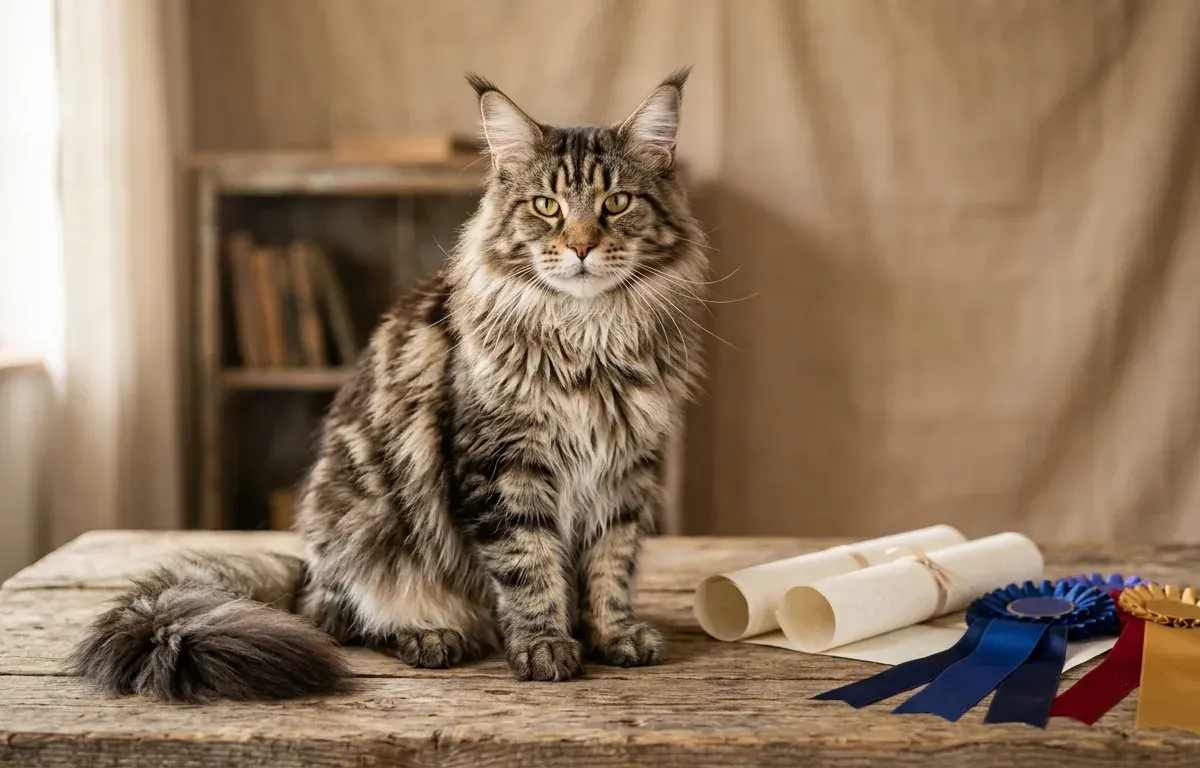
Maine Coon cats are not rare. In North America, Europe, and across the globe, they represent one of the most widely recognized and sought-after domestic cat breeds. According to official annual registration statistics published by the Cat Fanciers’ Association annual registration rankings, the Maine Coon consistently ranks as the second most popular pedigreed cat breed in the world, positioned just behind the Ragdoll.
The enduring belief that Maine Coons are scarce often stems from feline breed history. Native to the northeastern United States, the Maine Coon was a dominant show cat in the late nineteenth century. However, following the introduction of exotic longhaired breeds like Persians in the early twentieth century, interest in Maine Coons waned dramatically. By the 1950s, the breed had become so uncommon in show rings that some organizations declared it nearly extinct.
Dedicated feline preservationists formed the Central Maine Cat Club in 1953 to document pedigrees and protect native bloodlines. Their efforts sparked a remarkable resurgence, culminating in full championship status acceptance by the Cat Fanciers’ Association in 1976. Since that reinstatement, the population of registered Maine Coons has expanded steadily into international prominence.
In companion animal rankings, temperament heavily influences registration numbers, much like how prospective owners value how Ragdoll cats are friendly and docile when selecting an indoor pet. This surge in recognition mirrors broader trends across pedigreed companion animals, as seen in registration records detailing why French Bulldogs are so popular among urban pet parents.
| Breed Rank (Global) | Breed Name | Primary Coat Style | Global Availability |
|---|---|---|---|
| 1 | Ragdoll | Semi-longhair, colorpoint | High (Wide breeder network) |
| 2 | Maine Coon | Longhair, shaggy double coat | High (High demand, ample registries) |
| 3 | Persian | Longhair, dense undercoat | High (Global show presence) |
| 4 | Exotic Shorthair | Plush shorthair | Moderate to High |
| 5 | Devon Rex | Short, rippled rex coat | Moderate |
| 6 | British Shorthair | Dense, plush shorthair | High (Particularly in Europe and Asia) |
Understanding these registry rankings clarifies why Maine Coons remain readily accessible through certified catteries despite competitive adoption waitlists.
Why Do Maine Coons Feel Rare? High Demand, Breeder Waitlists, and Price
If Maine Coons are so numerous in registry databases, why do so many prospective owners feel they are impossible to find? The answer lies in market friction rather than biological scarcity.
The global demand for healthy, well-socialized Maine Coon kittens consistently outpaces the annual output of ethical catteries. A reputable breeder limits breeding frequency to preserve maternal welfare. As a result, qualified catteries maintain active waitlists that frequently extend for months, with timing varying based on litter size and planned pairings.
Adoption costs also contribute to the perception of exclusivity. Purebred Maine Coon kittens from certified catteries typically range between $1,500 and $4,000 USD, aligning closely with market ranges for how much Ragdoll cats cost through certified catteries. These financial commitments reflect comprehensive genetic screenings and pediatric care, similar to the health testing investments determining how much Pug dogs cost from certified breeders:
- Cardiovascular Screenings: Hypertrophic Cardiomyopathy (HCM) is an inherited heart muscle condition in large cats. Responsible breeders perform annual echocardiograms on all breeding kings and queens with board-certified veterinary cardiologists.
- Comprehensive DNA Panels: Breeders test parent cats for Spinal Muscular Atrophy (SMA) and Pyruvate Kinase Deficiency (PKDef) to eliminate genetic disease transmission.
- Specialized Giant-Breed Nutrition: Developing Maine Coon kittens require high-protein diets and tailored supplementation to support slow musculoskeletal growth that continues up to four years of age.
- Pediatric Veterinary Care: Complete vaccination series, microchipping, parasite prevention, and routine spay or neuter procedures before placement.
What Are the Rarest Maine Coon Colors and Coat Patterns?
While the Maine Coon breed itself is common, certain coat colors and genetic patterns are genuinely rare. The foundational and most widespread Maine Coon pattern is the brown classic tabby (often called the brown mackerel tabby), which served as natural camouflage in the Maine wilderness. Red tabbies, blue tabbies, and tortoiseshell patterns are also frequently produced.
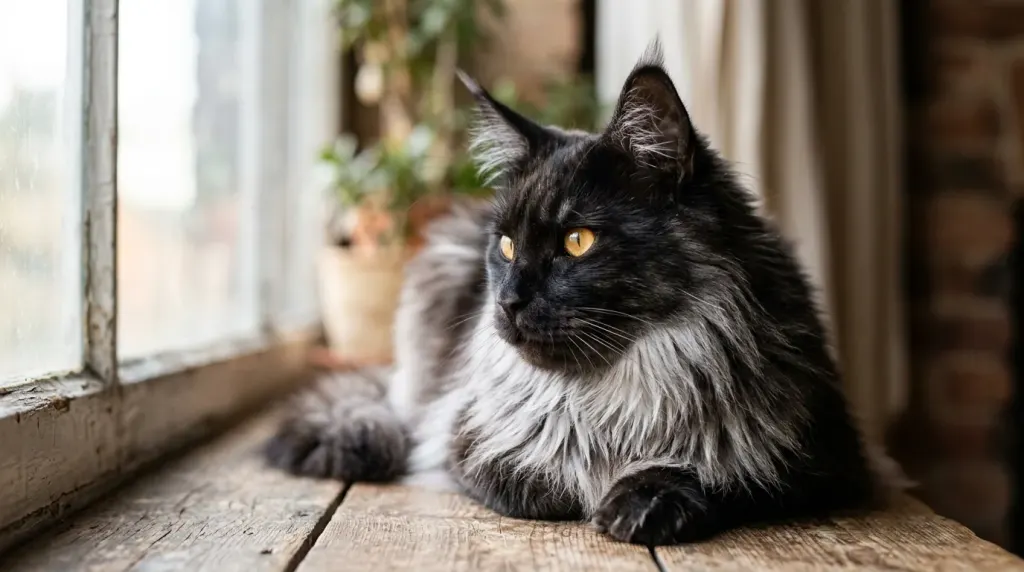
In contrast, colors requiring rare recessive traits or epistatic masking factors appear far less often in catteries.
| Color / Pattern Variety | Coat Characteristic | Visual Presentation | Breed Availability Tier |
|---|---|---|---|
| Brown Classic Tabby | Agouti tabby pattern | Warm brown ground with dense black swirls | Common (Breed Standard) |
| Red Tabby (“Ginger”) | Sex-linked orange pigmentation | Vibrant orange-red ground with distinct striping | Common |
| Solid Black | Non-agouti solid pigmentation | Jet black coat from base to tip | Uncommon |
| Solid Blue | Dilute solid pigmentation | Uniform slate blue-gray with silver sheen | Uncommon |
| Black Smoke | Silver inhibitor with solid base | Black outer coat over pure white hair roots | Rare |
| Shaded / Chinchilla Silver | Silver inhibitor with tipped pigment | Silvery-white undercoat with color tipped on ends | Very Rare |
| Solid White | Dominant epistatic white masking | Pristine white fur masking underlying genetics | Extremely Rare |
Solid White Maine Coons
Solid white is among the rarest color variations. Dominant epistatic white masking acts as an all-encompassing blanket, completely suppressing melanin production in the hair follicles. Because white coat pigmentation is biologically linked to inner ear cochlear development, responsible breeders perform Brainstem Auditory Evoked Response (BAER) hearing tests on white breeding stock to screen against congenital deafness.
Smoke and Shaded Silver Patterns
Smoke coats are created when the silver inhibitor trait halts pigment production along the lower half of each hair shaft. When a black smoke cat rests quietly, the fur appears solid black; when the cat moves or the coat is parted, a stark, luminous white undercoat becomes visible.
Producing shaded silver and chinchilla patterns requires combining multiple polygenic tipping traits on top of the inhibitor effect, making these kittens some of the least common varieties available. While rare coat colors attract high attention, owners sensitive to dander must note that Maine Coons produce substantial allergens, paralleling why Ragdoll cats are not hypoallergenic despite having semi-long fur. Similar grooming and dander realities apply across domestic pets, consistent with health findings explaining why French Bulldogs are not hypoallergenic for sensitive households.
Are Polydactyl Maine Coons Actually Rare?
Polydactyl Maine Coons, cats possessing extra toes on their front or hind paws, are a historic and natural hallmark of the breed rather than a modern laboratory mutation. In early twentieth-century New England, up to 40% of the native Maine Coon population was polydactyl.
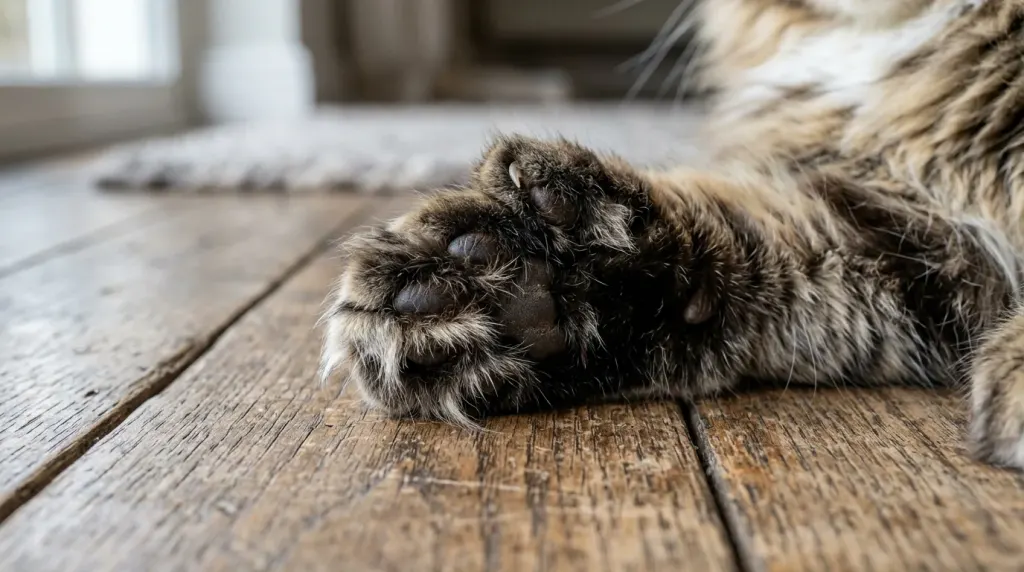
Extra digits provided functional evolutionary benefits in northeastern coastal climates. Broad, oversized paws with six or seven toes acted as natural snowshoes, allowing farm cats to traverse deep snow drifts and secure footing on icy surfaces.
The genetic basis of feline extra toes is documented in a clinical characterisation study on Maine Coon polydactyly published in veterinary genetics research. The trait is governed by the autosomal dominant Pd mutation. Because the gene is dominant, a kitten needs only one polydactyl parent to inherit extra digits, creating a 50% statistical probability of expression in each litter.
Polydactyl Maine Coon Registry Status:
- The International Cat Association (TICA): Recognized in official championship show classes under a dedicated breed standard.
- Cat Fanciers’ Association (CFA): Permitted in non-championship and household pet divisions, but excluded from standard breed championship rings.
The Maine Coon’s broad polydactyl paws evolved as practical snowshoes for active hunting in harsh climates, contrasting with low-intensity energy profiles when evaluating whether Pugs are active dogs suited for quiet indoor life. Working heritage shaped the Maine Coon’s keen environmental awareness and trainability, similar to how historical breeding purposes influence whether French Bulldogs are smart at adaptive tasks.
Can You Find a Real Maine Coon in an Animal Shelter?
Prospective pet parents frequently search municipal animal shelters and rescue websites hoping to adopt a purebred Maine Coon. While longhaired rescue cats are abundant, encountering a genuine, pedigreed Maine Coon in a general shelter is exceptionally rare.
Over 95% of longhaired rescue cats labeled as Maine Coons by shelter staff are Domestic Longhairs (DLH). Domestic Longhairs are mixed-breed cats that carry natural longhair genes without any pedigreed lineage.
Identifying a True Purebred Maine Coon vs. Domestic Longhair:
- Facial Structure: Maine Coons have a distinct square muzzle, strong chin, and gentle concave nose profile. Domestic Longhairs usually have wedge-shaped or rounded heads.
- Bone and Torso: Maine Coons exhibit heavy rectangular bodies, broad chests, and substantial boning. Males weigh 15 to 25 pounds; females weigh 10 to 15 pounds.
- Ear Shape and Lynx Tips: Large, wide-based ears sitting high on the head, crowned with dense tufts of hair extending from the tips.
- Definitive Proof: Certified 3 to 5 generation pedigree registration papers from the CFA, TICA, or an equivalent national registry.
Purebred Maine Coons rarely reach open-intake shelters because ethical cattery contracts include lifetime return clauses. If an owner becomes unable to care for their cat, the breeder accepts the cat back directly. Prospective adopters often prioritize predictable temperaments around children, assessing compatibility just as families evaluate whether Pugs are good family dogs before welcoming a rescue pet home. Understanding purebred versus mixed-breed traits helps prospective owners make informed adoption choices, much like researching whether French Bulldogs make good pets for specific living situations.
Original Analysis: Breed Availability vs. Market Friction
The ongoing misconception that Maine Coons are rare stems from conflating biological population numbers with consumer access barriers. In feline conservation and pedigree management, there is a clear distinction between biological scarcity and transactional friction.
- Biological Scarcity: Applies to truly rare, endangered, or newly developing feline breeds with tiny global gene pools, such as the Sokoke, Peterbald, or Korat.
- Transactional Friction: Applies to popular breeds like the Maine Coon, where healthy populations exist worldwide, but rigorous breeder vetting, health testing requirements, geographic distance, and multi-month waitlists limit immediate consumer acquisition.
High adoption fees and long waitlists do not indicate biological scarcity. In Maine Coons, market friction reflects substantial veterinary investments in genetic screening, cardiac ultrasounds, and extended kitten socialization that responsible breeders maintain to protect breed health.
Because buyer demand is substantial, unlicensed backyard breeders and online scammers exploit the perceived rarity myth. Fraudulent websites often advertise low-cost Maine Coon kittens without health testing or official pedigree papers. Giant-breed cats require dedicated vertical territory and sturdy climbing trees, presenting different spatial needs than evaluating whether Pugs are good apartment dogs in compact living quarters.
Frequently Asked Questions About Maine Coon Rarity
Why are Maine Coons so expensive if they are not rare?
Maine Coons command prices between $1,500 and $4,000 because ethical breeding involves significant financial and medical overhead. Reputable breeders invest in routine cardiac echocardiograms to screen for Hypertrophic Cardiomyopathy (HCM), complete genetic testing panels, high-protein nutrition, microchipping, and comprehensive pediatric vaccinations before kittens are ready for placement once fully weaned.
What is the single rarest color of Maine Coon?
Solid white with odd-colored eyes and shaded chinchilla silver represent the rarest Maine Coon coat variations. Solid white requires dominant epistatic white masking along with auditory screening, while chinchilla silver relies on multiple polygenic inhibitor traits that confine melanin strictly to the tips of each hair strand.
How can I tell if my shelter cat is a real Maine Coon?
The only definitive proof that a cat is a purebred Maine Coon is a certified pedigree registration certificate from a recognized feline registry such as the CFA or TICA. While many domestic longhair rescue cats possess large paws, ear tufts, or bushy tails, over 95% of longhaired rescue cats are mixed-breed domestic cats without pedigreed Maine Coon ancestry.
Are female Maine Coons rarer than male Maine Coons?
Female Maine Coons are not genetically rarer than males, as kittens are born in approximately equal 50:50 sex ratios. However, catteries frequently retain top-quality female kittens to sustain future breeding programs, which can occasionally make male pet-quality kittens slightly more accessible on public waitlists.
Leave a Reply