
Table of Contents
For owners asking how long do ragdoll cats live, the largest breed-specific study to date by Royal Veterinary College VetCompass found a median lifespan of 12.85 years, with some individuals living past 21 years of age. Half died younger and half older. While informal breed overviews often suggest lifespans extending well into the teens, this 12.85-year median reflects typical outcomes for purebred cats overall. An individual cat's longevity depends heavily on inherited genetics, lifelong body condition, comprehensive dental care, and maintaining a safe indoor environment.
- A UK primary-care study found a median age at death of 12.85 years for Ragdolls.
- Periodontal disease and obesity are common early risks, while chronic kidney disorder is the leading cause of senior mortality.
- The breed is predisposed to hypertrophic cardiomyopathy (HCM), linked to the MYBPC3 gene mutation, requiring specific screening.
- Feline guidelines mandate veterinary visits every six months once a cat reaches 10 years old, tracking specific blood and weight metrics.
What is the average lifespan of a Ragdoll cat?
In a 2025 Royal Veterinary College VetCompass study covering cats under UK primary veterinary care, 133 out of a random sample of 2,025 Ragdolls died during the research period. Their median age at death was 12.85 years. This figure provides the most statistically reliable baseline available today. The interquartile range ran from 5.71 to 16.11 years, meaning exactly half of the population passed away within this broad decade. The absolute range stretched from 0.08 years (barely a month old) to an impressive 21.51 years. The study highlighted that Ragdoll popularity has risen almost five-fold since 2005, making them the second most common pure cat breed under primary veterinary care in the UK.
This 12.85-year median is more than a year shorter than the 14.0-year median for cats overall. However, it closely matches the typical life expectancy for purebred cats, which generally live shorter lives than crossbreds (moggies) due to reduced genetic diversity and higher levels of inbreeding. Meanwhile, breed references like Royal Canin typically cite an expected lifespan of 12 to 17 years. The most honest answer is that indoor Ragdolls commonly live into their low-to-mid teens, provided they receive consistent veterinary care and are kept free from infectious diseases.
A median age is a statistical midpoint. It helps owners set reasonable expectations for planning veterinary budgets and housing commitments over a decade or more. To understand how your cat’s mature physical frame drives calorie needs throughout its life, read our Ragdoll adult size and weight guide. If you are unsure of your pet’s exact breed lineage, checking how to identify a Ragdoll cat can clarify whether these specific longevity statistics apply to your household.
Why should “average” not be treated as a promise?
A median age at death is a population midpoint, not a forecast for any single cat. The VetCompass data showed ages at death ranging from under a year to over 21 years. Cats passing before age five often succumb to congenital defects, severe early-onset heart disease, or fatal accidents outdoors. Conversely, cats reaching 15 or 20 years usually benefit from a combination of favorable genetics, strict indoor living, ideal body condition scores, and proactive treatment of age-related diseases. Genetics, disease history, care access, body condition, and the precise age at which a diagnosis occurs all move an individual cat’s course.
How does the newest evidence compare with older Ragdoll data?
An earlier UK study from 2009 to 2012 recorded a lower Ragdoll median of about 10.1 years. Swedish insurance data also suggested low survival rates during that era. The authors of the newer study noted those older figures were likely biased downward by a younger, rapidly expanding breed population where early deaths were disproportionately represented. The 2025 finding of 12.85 years is far more current, reflects a maturing overall population, and confirms that Ragdoll longevity behaves identically to other large UK purebred cats.
Which health issues can affect Ragdoll longevity?
In the VetCompass sample, 61.28% of the Ragdolls had at least one disorder recorded over the course of a single year. The most common precise disorders diagnosed by veterinarians were periodontal disease (8.84%), diarrhoea (7.11%), and obesity (6.91%). The top broad disorder groups were dental (14.52%), enteropathy (13.48%), skin (7.75%), and obesity (6.91%).
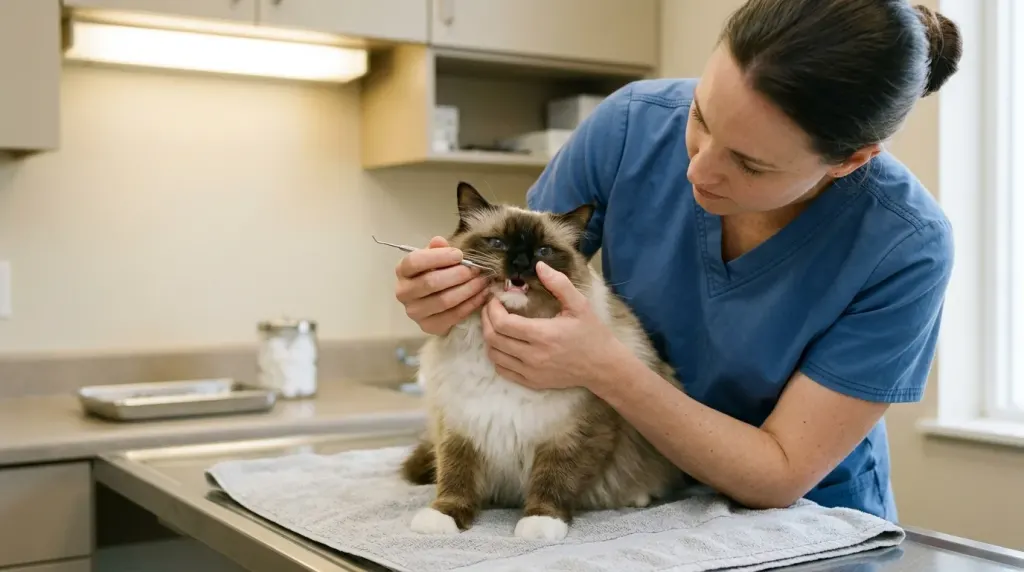
Interestingly, while periodontal disease was highly prevalent, the researchers noted that Ragdolls actually showed a lower relative risk compared to crossbred cats. However, because advanced Stage 3 and Stage 4 dental disease is strongly linked with an increased risk of developing chronic kidney disease, it remains a critical welfare priority. Bacteria from inflamed gums routinely enter the bloodstream, constantly showering the kidneys with bacteria and damaging the delicate filtration system over the years. Among the 85 deaths with a specifically recorded cause in the study, kidney disorder was the leading cause of mortality at 21.18%, followed by poor quality of life at 12.94%.
It is important to separate everyday lifestyle conditions from inherited predispositions. The breed carries a known genetic risk for hypertrophic cardiomyopathy (HCM) and blood-group incompatibility. Understanding these exact risks helps you act early. For a broader overview of the breed’s medical profile, read about Ragdoll cat health problems. Additionally, since skin and ear issues frequently appear in clinical data, establishing hygiene routines similar to how to clean French Bulldog ears can teach owners to spot early signs of localized infection before they become systemic.
Why is hypertrophic cardiomyopathy important to discuss?
Hypertrophic cardiomyopathy (HCM) is the most common feline heart disease, causing the muscular walls of the heart to thicken inward and severely reducing the heart’s pumping efficiency. Ragdolls are one of the specific breeds carrying a known genetic mutation (the MYBPC3 gene R820W mutation) predisposing them to this condition.
Its clinical course varies widely. Many affected cats show no signs of illness for years during a subclinical phase, while others rapidly develop congestive heart failure, severe blood clots, or suffer sudden cardiac death. Screening should begin early. Veterinarians often use a blood test measuring NT-proBNP levels to flag heart muscle stress before outward symptoms appear. However, a definitive diagnosis requires a veterinary cardiologist performing echocardiography (an ultrasound of the heart). DNA tests for the specific Ragdoll MYBPC3 mutation only show if a cat carries the defective gene, not whether the physical disease has actively progressed.
Note: According to the Cornell Feline Health Center, because many cats hide heart disease until it is advanced, owners must watch for critical warning signs. A healthy cat’s resting respiratory rate should remain under 30 breaths per minute. Labored breathing, open-mouthed panting, and extreme lethargy indicate congestive heart failure. Sudden acute hind-limb pain, vocalization, or hind-limb paralysis are classic signs of a saddle thrombus (a major blood clot blocking circulation). Any of these symptoms require immediate, emergency veterinary care. Do not attempt home treatment.
What does the evidence say about kidney, dental, and weight concerns?
The VetCompass data revealed that age acts as a major risk factor for these specific conditions. Periodontal disease prevalence showed a steep rise to over 35% around nine years of age before reducing in older age brackets. Obesity affected roughly 7% of the cats, with male Ragdolls having a statistically significantly higher probability of being overweight than females. Overweight cats face a sharply increased risk of developing diabetes mellitus and osteoarthritis.
Chronic kidney failure, on the other hand, appeared much later, presenting at a median age of 14.41 years. Because kidney disorder was the most common recorded cause of death (21.18%), establishing proactive screening is non-negotiable. Traditional creatinine blood tests only detect kidney failure after 75% of kidney function is already destroyed. Modern veterinary clinics use SDMA blood testing, which can identify kidney impairment when just 25% of function is lost, allowing for early dietary intervention using the International Renal Interest Society (IRIS) staging system. Since dental disease correlates strongly with later kidney risk, establishing a proactive oral care routine and keeping an aging cat lean reduces stress on their joints and vital organ systems simultaneously.
What can owners do to support a longer, healthier life?
Consistent preventive care dictates the outcome more than any other variable. Keep an appropriate body condition, follow a vet-guided nutrition plan, support indoor enrichment, keep veterinary appointments, remove avoidable hazards, and act early when daily habits shift. The AAFP / AAHA Feline Senior Care Guidelines emphasize the vital importance of trend tracking over time, because older cats are notoriously adept at hiding illness until a disease is clinically advanced.
Their recommendations focus on maintaining lean body weight alongside solid muscle condition, ensuring adequate hydration, and establishing baseline diagnostics. This means running a complete blood count (CBC), chemistry panel, thyroid test (T4), and urinalysis at least annually starting around age 7 to 10. When explaining that a large companion animal needs measured calories rather than free-feeding, looking at a Pug feeding portions and diet guide provides a helpful cross-species portion-planning example. If you struggle with keeping pets lean, reading how to help a Pug lose weight safely shows the universal importance of strict calorie control.
Keep body condition, food, and water under review
Feed an age-appropriate complete diet in vet-set portions, track body condition over time, and ensure reliable water access. Veterinary professionals assess weight using a Body Condition Score (BCS). An ideal BCS is 5 out of 9. Because obesity affected roughly 7% of the studied Ragdolls, any change in appetite, thirst, weight, or litter-box habits should prompt a veterinary discussion rather than a homemade diet switch.
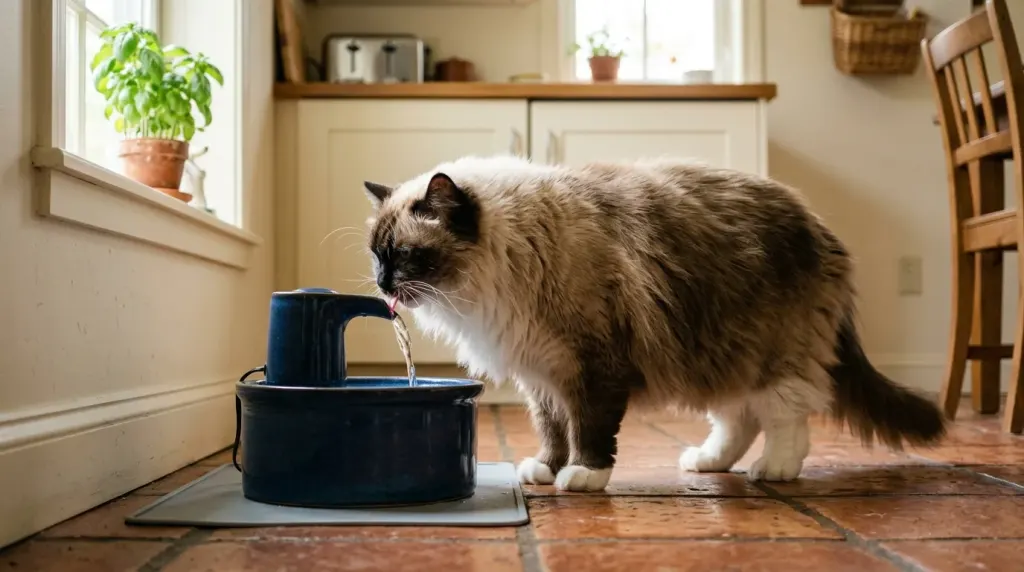
Hydration is equally critical. A normal cat needs roughly 40 to 60 ml of water per kilogram of body weight daily. For a large 6 kg Ragdoll, this means consistently consuming 240 to 360 ml of water. AAHA guidelines highlight that feeding canned wet food is an excellent way to artificially increase water intake, as wet food contains about 75% moisture compared to just 10% in dry kibble. Providing wide, shallow ceramic or stainless steel water fountains also prevents whisker fatigue and encourages more frequent drinking.
Make indoor life safe and enriching
A safe, supervised environment significantly reduces a cat’s exposure to traffic accidents, toxins, fights with neighborhood animals, and infectious diseases like FIV and FeLV. Because Ragdoll cat behavior is characterized by a placid, trusting, and less defensive nature, many breeders and veterinary guides strictly recommend indoor-only living or access to a fully enclosed outdoor “catio”. An effective catio must have escape-proof wire mesh and safe flooring to prevent exposure to soil-borne parasites.
However, an indoor life must still meet the cat’s instinctual behavioral needs. This means providing vertical climbing spaces, daily interactive play to simulate hunting, multiple resting spots, and tall, sturdy scratching options. Common indoor hazards like toxic lilies, essential oil diffusers, and hanging blind cords must be strictly removed. While the VetCompass study did not assign a specific number of extra years directly to indoor living, trauma and accidents remain leading causes of early mortality in outdoor cats, making hazard reduction a universally supported strategy for maximizing lifespan.
Establishing daily routines makes spotting problems easier. A predictable schedule helps cats thrive by reducing environmental stress. Gentle handling routines also teach owners to check their pets consistently, making early detection of lumps, skin lesions, coat matting, or joint mobility issues much simpler.
When is a Ragdoll cat considered a senior?
Feline veterinary guidance officially treats cats older than 10 years as seniors. Ragdolls in the study showed specific terminal conditions like chronic kidney failure clustering at 14 years and older. More frequent monitoring in the double-digit years is absolutely sensible. Discuss weight, mobility, dental status, blood pressure, and advanced organ screening with your vet.
Veterinarians will check Muscle Condition Scoring (MCS) alongside fat weight, as senior cats often suffer from sarcopenia, losing muscle mass over their spine and hips even if their belly fat remains high. Gentile handling routines matter profoundly as pets age. Similar to how to take care of a Pug dog in its later years, senior Ragdolls need easy access to resources, including low-sided litter boxes and ramps to their favorite resting spots. Life-stage comparisons, like seeing how long Pug dogs live, highlight that all companion animals require highly tailored medical care once they enter their senior decade.
Which changes should trigger a veterinary appointment?
Unexplained weight loss or gain, reduced appetite, increased thirst or urination volume, persistent vomiting or diarrhea, litter-box accidents, lower activity levels, signs of pain, poor grooming, or changes in breathing rate all warrant a vet visit. Exact clinical thresholds matter: weight loss exceeding 5% of their body weight within a few months is a major red flag. Drinking more than 100 ml per kg of body weight daily defines clinical polydipsia and requires immediate testing for kidney failure or diabetes.
The AAFP / AAHA strongly states that a cat over 10 should not be managed with just a once-a-year “wellness only” visit. Their guidelines mandate that healthy cats aged 10 to 15 years old undergo comprehensive veterinary examinations every six months, while healthy cats older than 15 years should be examined every four months. They also firmly advise assessing blood pressure at each examination in cats older than 10 years to catch silent hypertension. A blood pressure reading consistently over 160 mmHg severely risks target organ damage and hypertensive retinopathy, which causes sudden blindness due to detached retinas.
Does sex, size, or slow maturity determine lifespan?
The VetCompass mortality data found no statistically significant sex difference in median age at death. Females lived a median of 13.72 years and males 11.41 years, but the statistical difference yielded a P-value of 0.264, meaning the gap could be due to chance.
However, spaying and neutering play a massive, proven role in general feline longevity. Altered cats generally live significantly longer. Spaying prevents pyometra (a rapidly fatal uterine infection) and nearly eliminates the risk of malignant mammary tumors in females. Neutering reduces roaming, aggressive territorial fighting, and the subsequent spread of fatal retroviruses like FIV in males.
Ragdolls mature slowly, reaching their full adult size around 2 to 4 years, with males averaging 4.97 kg. Size and maturity rate are care management factors, not standalone lifespan predictors. Understanding that Ragdolls take years to physically mature helps with lifelong financial planning. Factoring in how much Ragdoll cats cost over a 15-year lifespan ensures you are financially prepared for specialized senior veterinary care later on. Furthermore, acknowledging that a large, slow-maturing breed needs consistent daily management, much like learning how to care for a French Bulldog, reinforces that daily routines dictate long-term well-being.
A realistic Ragdoll longevity checklist
Focus on diligent monitoring and prompt professional care rather than arbitrarily chasing a target age. Establish a solid veterinary baseline early in life, track weight and daily eating habits, adhere strictly to preventive visit schedules, discuss specific heart and kidney risks based on the cat’s lineage, and immediately step up blood and blood pressure screening as the cat officially becomes senior at age 10.
Consistent litter habits make systemic health changes vastly easier to spot. Just as you learn how to potty train a French Bulldog to build a behavioral baseline, knowing your cat’s normal bathroom routine helps you notice when kidney issues, urinary blockages, or digestive failures arise in their earliest, most treatable stages.
Leave a Reply