
Table of Contents
If you are wondering how to train a pug bull dog puppy, start the day they come home, typically from about 8 weeks of age depending on individual adoption and weaning timing. Keep a predictable routine, reward the behavior you want within a second or two, and manage the environment to prevent rehearsal of mistakes. Progress from quiet rooms to mild distractions. Because "pug bull dog puppy" is an informal search phrase and not a recognized breed, you should train according to your puppy's observed needs and veterinary guidance rather than a presumed mix.
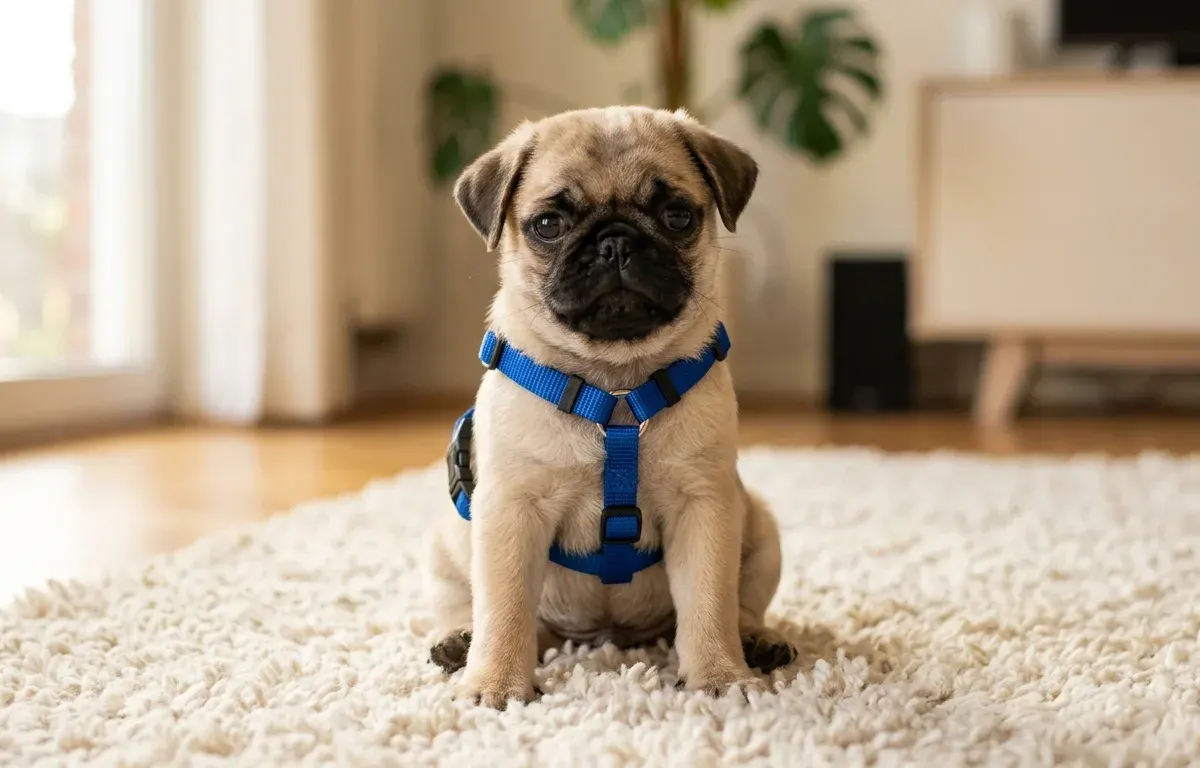
- Use a properly fitted Y-front chest harness instead of a neck collar to protect delicate airways.
- Mark the exact moment your puppy succeeds, then deliver a high-value treat.
- Take your puppy outside after waking, eating, playing, and napping.
- Limit training sessions to a few minutes, two to three times a day.
- Stop outdoor activity immediately if you notice heavy panting or noisy breathing.
Start with a safe, consistent setup
Training works when every family member uses the same cue words, boundaries, and reward timing. Before you begin teaching your pug bull dog puppy formal cues, set up the environment for success. Prepare a puppy-safe area, a rest space, a suitable chew, a Y-front chest harness, and a simple log for meals, naps, potty trips, and successful repetitions. Keep yarn, craft supplies, and decorative crochet pug items safely out of reach in closed containers to prevent foreign body ingestion. Then, begin your training in a calm, low-distraction room.
Pick a marker word like “yes” or use a clicker, and choose tiny, high-value rewards to reinforce good decisions. Use management, such as baby gates and playpens, rather than repeated correction. Introduce the crate through positive association only. You should never force a puppy into a confined space. According to the American Animal Hospital Association (AAHA), stress-reducing handling and positive reinforcement help early development. Growing puppies need plenty of downtime in their safe area, and establishing normal sleep habits helps prevent overtired tantrums. Avoid intense exercise while their joints are developing, and structure safe physical limits rather than long runs.
Use reward-based teaching, not corrections
Mark the exact instant the puppy does the wanted action, then deliver a reward they value. If the puppy cannot succeed, make the task easier or change the setup. You should never add pain, fear, leash jerks, choke collars, prong collars, shock collars, or “dominance” handling.
The American Veterinary Society of Animal Behavior (AVSAB) recommends using exclusively reward-based training methods for all canine learning and behavior modification, citing current scientific evidence on animal welfare and training efficacy.
Follow this four-step loop:
- Set up the environment to prevent failure.
- Lure or cue the behavior.
- Mark the exact moment of success.
- Reward immediately.
Note: Aversive tools suppress behavior through fear and increase the risk of anxiety and aggression. Use positive reinforcement to build confidence.
Build a daily routine before expecting reliability
Use predictable repetitions instead of a rigid clock. Take the puppy out after waking, eating, drinking, playing, and napping. Supervise your puppy actively, or use a safe area between chances, and reward outdoor success immediately. Keep lessons to a few minutes, two to three times daily, and adjust the frequency to the puppy’s age, health, and accident pattern. A consistent puppy training daily routine prevents confusion and accelerates learning.
House-train and crate-train without punishment
Prevent accidents through supervision and frequent, well-timed chances. When your pug bull dog puppy goes in the right spot, reward them within two seconds. If they have an accident indoors, clean it calmly and thoroughly with an enzymatic cleaner, and reassess your schedule instead of punishing the dog. Read pre-potty signals like sniffing and circling, use one chosen spot in the yard, and wait quietly for them to finish. Record accidents in your log to identify patterns.
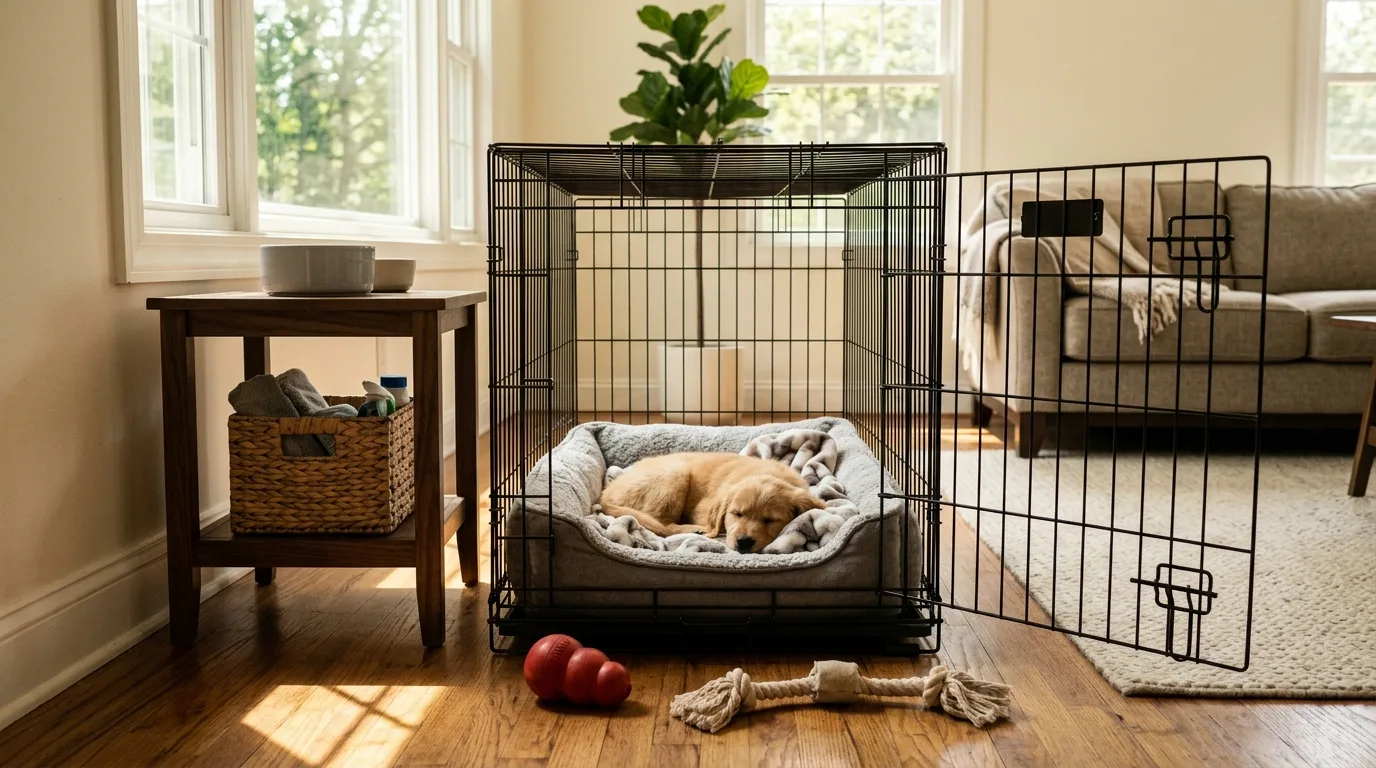
Pair the crate with food, chews, calm rest, and an open door so it becomes a voluntary safe place. You can feed meals in the crate to build a positive association. Crate training helps establish a reliable toilet routine when you cannot supervise directly. If you notice a sudden change in toilet habits or loose stools, check for digestive issues and consult your vet if symptoms persist.
Troubleshoot accidents by changing the setup
If you find an indoor accident after the fact, do not punish the puppy. A dog cannot link a delayed correction to an earlier act. Clean the area, note the likely trigger, shorten the interval to the next chance, and improve supervision.
| Pattern | Setup Issue | Humane Fix | When to Call the Vet |
|---|---|---|---|
| Soiling the crate | Space too large or left too long | Use a divider; increase potty breaks | Frequent, small urination |
| Accidents after play | Missed transition | Take out immediately after activity ends | Sudden loss of bladder control |
| Hiding to eliminate | Fear of punishment | Stop scolding; reward outdoor success heavily | Pain while eliminating |
Teach crate comfort in small increments
Start with the door open and toss treats or a chew inside so the puppy chooses to enter. Add a few seconds of closed-door time, then build duration only while the puppy stays relaxed. Never use the crate as punishment. If distress escalates, slow down and get professional help. A pug bulldog mix puppy needs to feel secure, so advance the training based on observable readiness criteria, not a rigid deadline.
Socialize deliberately and at the puppy’s pace
Give your puppy many brief, positive, controllable experiences with people, surfaces, sounds, handling, transport, and carefully chosen dogs. Each exposure must stay below the puppy’s fear threshold. Allow distance and choice rather than forcing interaction, and coordinate public exposure with your vet’s vaccination advice. Pair novelty with treats and stop before the puppy gets overwhelmed.
- People: Introduce calm adults and respectful children at a distance.
- Environments: Expose them to different floor textures and mild outdoor settings.
- Sounds: Play recorded traffic or thunder at very low volumes, paired with food.
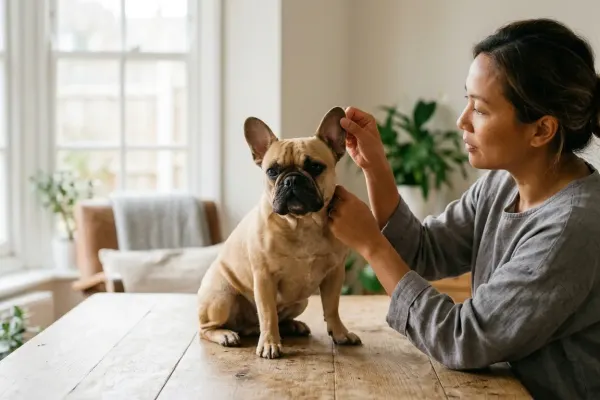
- Touch: Practice cooperative handling for ear cleaning and nail trims.
- Travel: Take short, stationary car rides before moving trips.
- Dogs: Arrange safe meetings with fully vaccinated, gentle adult dogs.
If you plan to introduce your puppy to swimming later, focus on positive water safety exposure early on, and ensure their body shape allows safe flotation.
Recognize “too much, too soon”
If your puppy is scared during socialization, add distance. Let the puppy move away, reward calm observation or voluntary curiosity, and keep sessions short. Do not force greetings or lure a frightened puppy closer. Try again later at an easier level.
- Green light: Loose body, relaxed ears, willing to take treats.
- Yellow light: Hesitant, lip licking, yawning, stiff posture. Stop and add distance.
- Red light: Trying to flee, barking, lunging, refusing food. Remove the puppy from the situation immediately.
Teach the safety and life skills first
Begin with name response, watch-me, sit, recall, leave it, and settle. Teach one behavior in a quiet room, reward promptly, and add duration, distance, or distraction one at a time only after the puppy succeeds reliably. A recall must never predict something unpleasant. Teach “leave it” through choice and reward, and use a settle behavior on a mat for greetings and rest.
Use luring and hand targeting instead of physical force. If your puppy shows sudden reluctance to train or exhibits shaking, check for underlying pain or discomfort. Similarly, eye redness can make a dog sensitive to handling and easily distracted.
Teach recall as a positive emergency skill
Indoors at short range, say the puppy’s name and cue once. Crouch or move back to invite approach, mark their arrival, and reward generously. Practice when success is likely and never use the cue to end fun or deliver something unpleasant, so the word keeps a positive history. Off-leash work requires local-law compliance and a secure area.
- Show the puppy a high-value treat.
- Say their name and your recall word (like “Come”).
- Take a few steps backward to encourage them to follow.
- Mark with “yes” as they reach you.
- Deliver the treat.
- Release them to play.
Teach “leave it” and redirection for biting
Start with a low-value item in a closed hand. When the puppy pauses or turns away, mark and reward from your other hand, then practice with floor items under control. For mouthing, calmly end access to hands or clothes, offer a suitable chew, and reward the puppy for engaging with the right item. Do not chase the puppy or pry items away, and never scold harshly.
Build loose-leash skills with brachycephalic safety
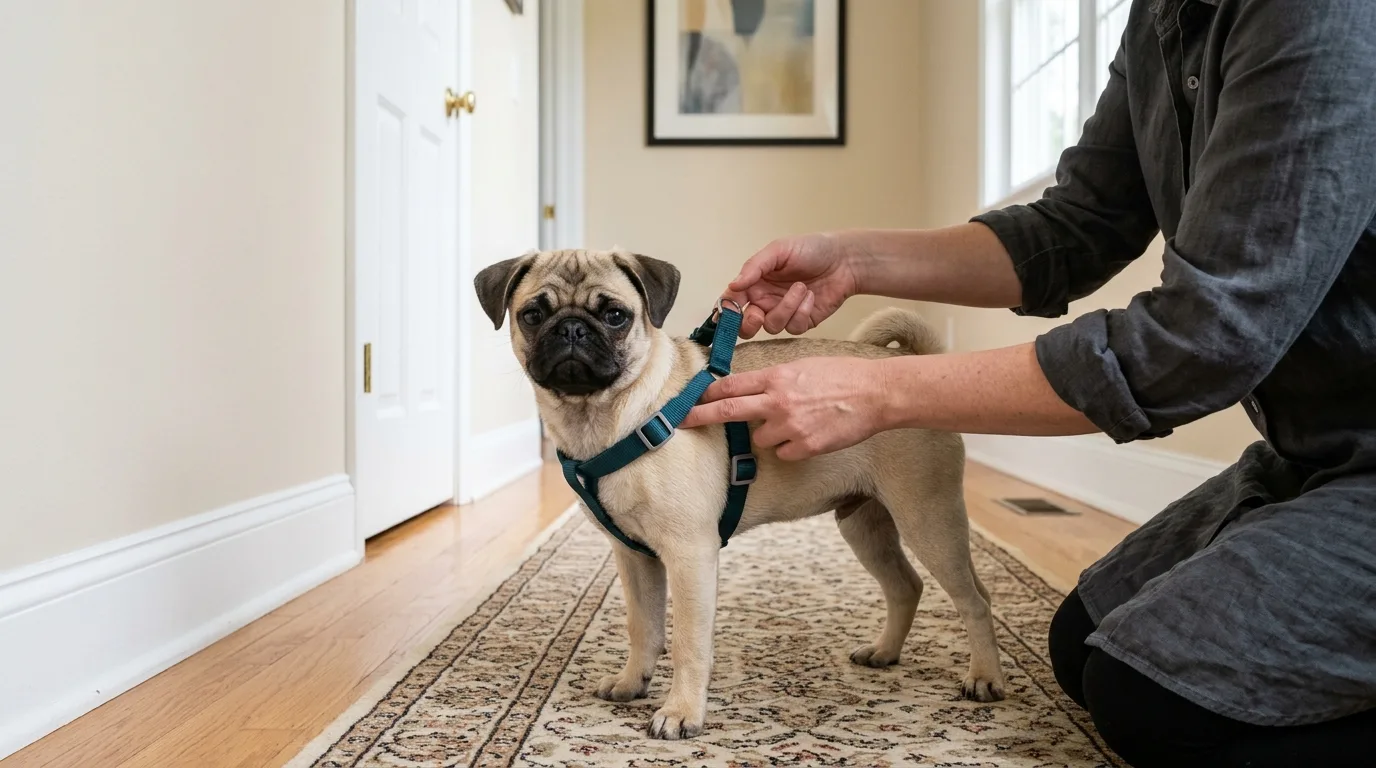
Use a properly fitted Y-front chest harness rather than a neck collar, which can pressure the trachea. Train loose-leash walking in short, calm sessions. Stop moving when the leash tightens, and reward a slack leash.
Pugs, English Bulldogs, and French Bulldogs are common brachycephalic breeds prone to obstructive breathing. According to the American College of Veterinary Surgeons (ACVS), brachycephalic syndrome involves abnormalities like an elongated soft palate and stenotic nares, leading to severe airway resistance. Avoid heat and humidity, as flat-faced dogs cannot pant efficiently. Stop for any breathing distress.
Check the harness fit by ensuring two fingers fit comfortably under the straps. Keep outings low-intensity to protect their spine and avoid high-impact repetitive activity. If you are trying to understand the specific traits of the flat-faced breeds behind the “pug bull dog” search, research each parent breed’s physical limits. A harness distributes force across the chest. Neck collars on flat-faced breeds risk collapsing the trachea or exacerbating existing airway obstruction, making a Y-front harness a strict medical necessity, not just a training preference.
Know when training stops and veterinary care begins
Stop activity and contact a vet for laboured or noisy breathing beyond the usual, repeated gagging, exercise intolerance, blue or gray gums, weakness, or collapse. These can signal airway obstruction in brachycephalic dogs and must not be “trained through.” Avoid heat and humidity during outdoor sessions.
Solve common puppy problems by teaching alternatives
Manage the trigger, prevent rehearsal, and reward an incompatible behavior. Offer a chew instead of hands, teach four paws down instead of jumping, ask for quiet attention instead of demand barking, and reward a slack leash instead of pulling.
If your family chose a flat-faced breed for their companionship, remember that they still need mental enrichment and structured boundaries. Do not rely on training to fix medical or hormonal issues; decisions about spaying or neutering should involve your vet, not just a behavior plan.
| Behavior | Prevention | Teach Instead | Avoid | Referral Trigger |
|---|---|---|---|---|
| Nipping | Provide varied chews | Target hand / “Leave it” | Yelling or physical correction | Breaking skin / unprovoked aggression |
| Jumping | Manage greetings with a leash | “Sit” or “Settle” on a mat | Kneeing the chest | Knocking over vulnerable people |
| Barking | Block visual triggers | Quiet eye contact | Shouting back | Non-stop frantic vocalization |
Escalation: when to call a professional
Seek a vet for sudden behavior change, pain signs, breathing concerns, or elimination changes. For fear, aggression, or persistent distress, work with a vet plus a qualified reward-based professional, and avoid anyone relying on intimidation, pain, or dominance claims.
Use an age-and-skill progression, not a deadline
From about 8 to 16 weeks, focus on potty routine, crate, handling, bite inhibition, and name response. From roughly 16 to 24 weeks, add sit, stay, come, leave it, and loose-leash walking. Progress depends on the individual puppy’s health, learning history, and vet-confirmed exposure, not a guaranteed finish line.
Keep sessions to 5 or 10 minutes. When proofing a skill in new places, drop your criteria temporarily so the puppy can succeed. You can use dog-safe foods like plain cooked rice or xylitol-free peanut butter as high-value rewards, provided treats stay within the daily calorie limits.
Track progress with observable criteria
Advance only when the puppy performs the current version calmly and repeatedly in its current setting. Change one variable at a time: duration, distance, distraction, or location. Drop back a level if the dog fails repeatedly or shows frustration or fear. Limit treats to about 10% of their daily calories.
Frequently Asked Questions about how to train a pug bull dog puppy
When should I start training a pug bull dog puppy?
Begin household routines, gentle handling, potty training, and name response as soon as the puppy arrives, usually around 8 to 10 weeks of age. Coordinate early socialization and public exposure with your vet’s vaccination advice.
Are pug bull dog puppies hard to potty train?
No breed label guarantees an outcome. Housetraining improves with consistent opportunities, supervision, immediate reward at the right spot, and calm cleanup rather than punishment.
Should I use a collar or harness for a flat-faced puppy?
Favour a properly fitted Y-front chest harness over neck pressure, which can strain the trachea, and confirm the fit with your vet. Stop and seek care for breathing distress or collapse.
How do I stop my puppy biting hands and clothes?
Calmly end access, offer a suitable chew or an alternative behavior, and reward the puppy for choosing it. Never use physical punishment, and get professional help for escalating behavior.
Leave a Reply