
Table of Contents
Learning how to clean a French Bulldog's ears safely at home requires just a few simple steps. Inspect the flaps for redness or odor, lift the pinna, and gently fill the canal with a veterinary-approved dog cleaning solution without touching the bottle tip to the skin. Massage the base for 20 to 30 seconds until you hear a squishing sound, then step back to let your pet shake its head to loosen debris. Finish by wiping visible buildup from the outer flap using a clean cotton ball or gauze, reaching only as deep as your finger allows. Healthy canals only need maintenance once every 1 to 2 months.
- Clean only healthy, uninfected canals using a veterinary-approved dog cleaning solution, cotton balls, or gauze.
- Fill the canal, massage the base for 20 to 30 seconds, and allow your pet to shake its head naturally.
- Wipe visible areas that your finger can easily reach; never insert cotton swabs (Q-tips), hydrogen peroxide, alcohol, or water.
- Routine maintenance should occur no more than once a month for healthy pets to avoid moisture buildup and irritation.
- Stop immediately and consult a veterinarian if you observe severe redness, swelling, dark discharge, unpleasant odor, or signs of pain.
Why French Bulldog Ears Need Special Attention
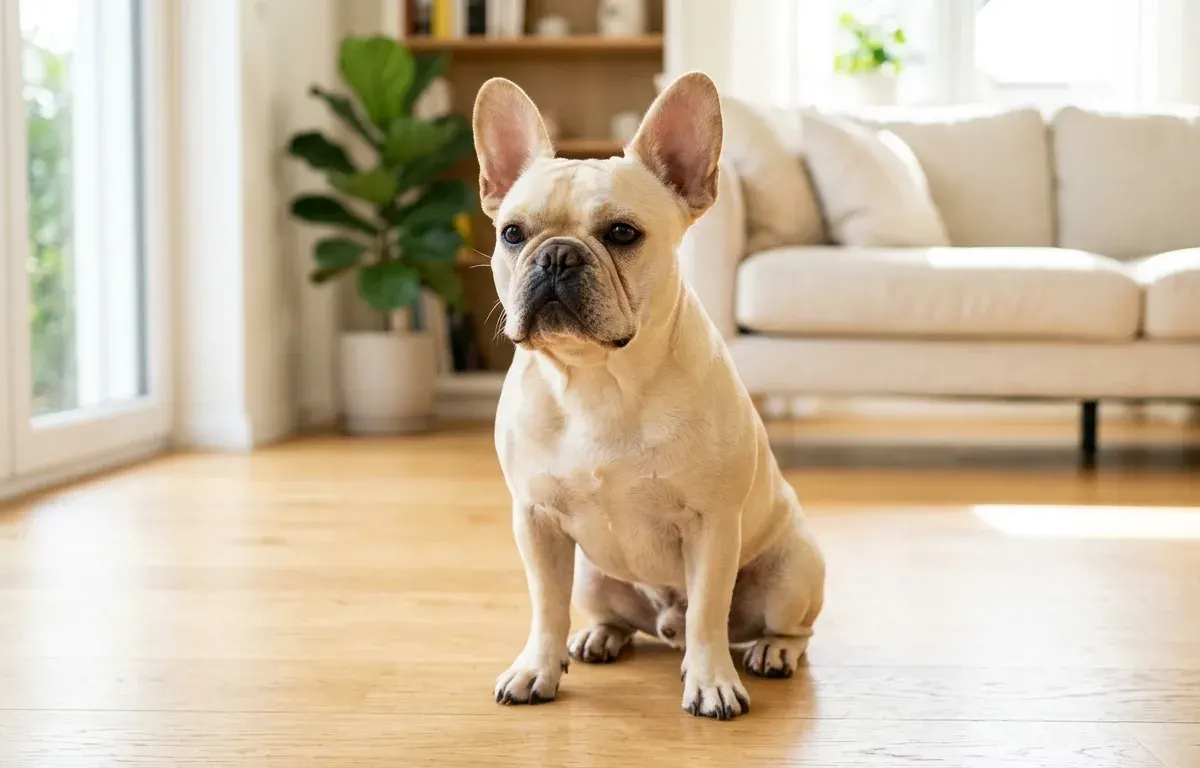
French Bulldogs are famous for their upright, triangular “bat ears.” While this open structure provides good airflow compared to floppy-eared breeds, their auditory canals still present unique anatomical challenges. The canine canal forms an “L” shape, traveling vertically down from the opening before bending horizontally toward the eardrum. This deep structural bend makes it easy for wax, environmental dust, skin oils, and moisture to become trapped at the bottom of the passage.
Owners who understand overall breed traits through a complete French Bulldog breed characteristics and care guide know that Frenchies also possess sensitive skin and a genetic predisposition to allergies. When allergic reactions cause inflammation in the skin lining the canal, the tissue produces excess wax and secretions. If trapped moisture and debris remain unmanaged, microscopic yeast and bacteria can multiply rapidly, leading to otitis externa (inflammation of the outer canal).
Additionally, monitoring cranial and facial health in brachycephalic dogs involves tracking multiple structural features, much like managing French Bulldog breathing problems and BOAS. Regular inspection ensures that routine care remains a smooth, stress-free part of your pet’s life.
Why Frenchie Ears Get Dirty and Waxy
Even though bat ears stand erect, their open, forward-facing orientation acts like a natural funnel for outdoor dust, pollen, and debris. Inside the canal, specialized glands constantly produce cerumen (wax) to trap foreign particles and sweep them outward.
In healthy dogs, this self-cleaning mechanism works automatically. However, hot weather, humidity after swimming or baths, skin allergies, and excessive hair growth near the canal entrance can disrupt natural drainage. When buildup accumulates faster than the tissue can clear it, the lining becomes a prime environment for bacterial and fungal growth.
What Healthy vs Problem Ears Look Like
Before attempting any cleaning routine, inspect both sides under good lighting to determine whether maintenance is safe:
- Healthy Condition: The inner tissue appears light pink, clean, and smooth. A minor amount of pale, odorless wax is completely normal. The area should feel cool or mildly warm, and your pet should not resist gentle handling.
- Problem Condition (Do Not Clean): The flap or canal opening appears bright red, swollen, or inflamed. You may smell a sour, musty, or foul odor. Dark brown, yellow, black, or bloody discharge is visible, or your dog flinches, whines, or pulls away in pain when you touch the base.
According to guidance from PDSA and the Cornell University College of Veterinary Medicine Riney Canine Health Center, attempting to clean an infected or ulcerated canal with liquid solution causes intense stinging and discomfort. Cleaning inflamed tissue can also force microorganisms deeper toward the eardrum. If any signs of infection are present, hold off on cleaning and schedule a veterinary examination.
Note: Always seek professional veterinary evaluation if your dog shows persistent head shaking or scratching. Infections require targeted diagnostic swabs and prescribed topical medications rather than home cleaning solutions.
What You Need Before Cleaning Your Frenchie’s Ears
Gathering all necessary supplies beforehand ensures a swift, calm session. Having everything within arm’s reach prevents you from stopping mid-process to retrieve forgotten items.
Preparing a quiet, comfortable grooming space is just as important as setting up proper resting areas, such as choosing the right what size crate for a French Bulldog to keep your pet relaxed during routine care.
Assemble the following items:
- A veterinary-approved dog cleaning solution.
- Several clean cotton balls or square gauze pads (do not use cotton swabs).
- A clean, dry towel to wipe up splash back when your dog shakes.
- High-value treats to reward your pet throughout the process.
Choosing a Safe Ear Cleaning Solution
Selecting the right product is critical for protecting delicate tissue. Always choose a dedicated canine formula recommended by your veterinarian, as advised by the FDA Center for Veterinary Medicine. High-quality commercial products are specifically engineered to dissolve wax, dry excess moisture, and maintain a healthy, slightly acidic pH balance that inhibits yeast and bacteria.
Avoid using home remedies or household products. Water traps moisture inside the horizontal canal, creating ideal conditions for yeast infections. Hydrogen peroxide and rubbing alcohol cause painful stinging on sensitive skin and severely dry out the lining, triggering defensive wax overproduction. Vinegar solutions and essential oils can cause severe chemical burns and allergic contact dermatitis.
Setting Up a Calm Space for Your Frenchie
Choose a room with easy-to-clean flooring, such as a bathroom or kitchen, because your Frenchie will shake liquid and wax droplets onto nearby surfaces.
To position your pet comfortably:
- Sit on the floor with your legs extended or bent, gently placing your dog between your thighs facing away from you.
- Alternatively, have a helper gently hold your dog’s chest while offering small treats.
- Allow your Frenchie to sniff the bottle and cotton balls beforehand so the items feel familiar and non-threatening.
How to Clean a French Bulldog’s Ears Step by Step
When learning how to clean French Bulldogs’ ears, following a structured step-by-step approach prevents accidental injury and ensures a thorough routine without causing discomfort to your dog:
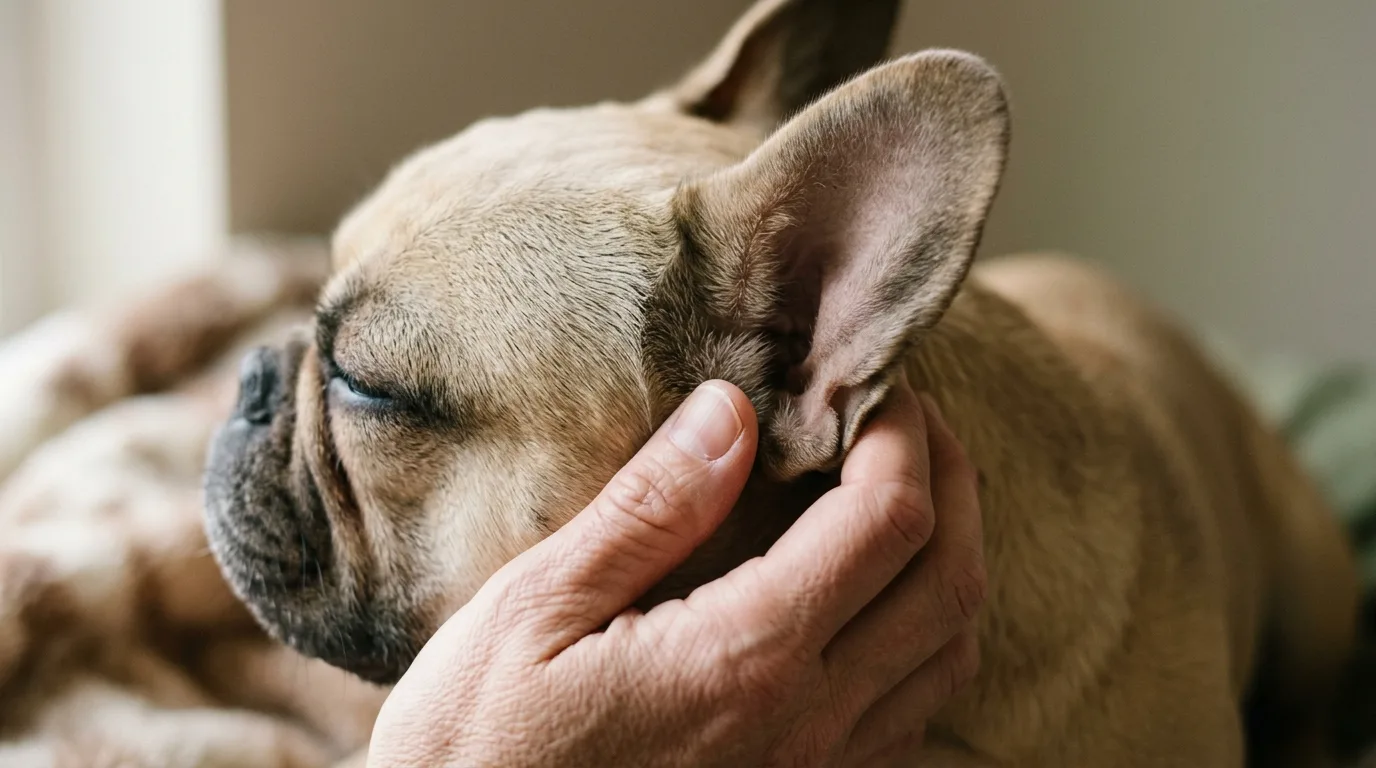
Steps 1 and 2 : Inspect and Get Into Position
- Inspect the Flap: Hold your Frenchie gently and fold back the pinna to inspect the entrance of the canal. Verify that the skin is pale pink, free of deep redness, and without heavy dark discharge or foul odor.
- Position the Head: Tilt your dog’s head slightly to one side so the target side opens upward. Hold the tip of the flap between your thumb and forefinger, lifting it gently upward to straighten the L-shaped canal.
Maintaining good hygiene around the head and mouth goes hand-in-hand with routine care, especially when evaluating whether do French Bulldogs drool and how to manage routine facial wrinkle wiping.
Steps 3 and 4 : Apply Cleaner and Massage the Ear Base
- Apply the Solution: Carefully position the tip of the cleaner bottle just above the opening. Gently squeeze until the passage is filled with liquid. Crucial safety rule: Never insert the tip of the bottle directly inside the canal. Touching the tip to the skin can contaminate the container with bacteria or injure the wall if your dog jerks its head. If the nozzle accidentally touches tissue, wipe it clean with an alcohol swab before closing.
- Massage the Base: While holding the flap upright, use your other hand to massage the cartilage at the base (located just below the opening against the skull) for 20 to 30 seconds. You should hear a distinct, wet “squishing” sound as the liquid breaks up wax deep inside.
Steps 5 and 6 : Let Them Shake and Wipe Visible Areas
- Allow Your Dog to Shake: Release the flap and step back slightly. Your Frenchie will naturally shake its head vigorously. This shaking action uses centrifugal force to dislodge loosened wax, debris, and fluid from the deep horizontal canal up into the outer flap.
- Wipe Away Debris: Wrap a clean cotton ball or piece of gauze around your index finger. Gently wipe out the loosened wax and excess liquid from the inner flap and the outer entrance. Safety limit: Only wipe areas that your finger can easily reach. Never push cotton or gauze deep into the opening.
Steps 7 and 8 : Repeat and Reward
- Clean the Second Side: Repeat steps 1 through 6 on the opposite side using fresh cotton balls or clean gauze to avoid cross-contamination.
- Reward and Praise: Immediately give your Frenchie a delicious treat, enthusiastic praise, or a favorite toy. Positive reinforcement teaches your pet that routine grooming results in rewards, making future sessions smooth and enjoyable.
How Often Should You Clean French Bulldog Ears?
Finding the correct cleaning frequency is essential for maintaining optimal health. For a healthy adult French Bulldog with normal wax production, routine cleaning should be performed once every 1 to 2 months.
Checking overall physical development during routine care aligns with tracking milestones on a French Bulldog adult size and growth chart to ensure your dog maintains steady health throughout adulthood.
Because individual anatomy and skin sensitivity vary, keep the following guidelines in mind:
- Weekly Inspection: Inspect both sides visually once a week. If the skin is pink, dry, and clean, leave it alone.
- Post-Bath Care: Clean and dry the area after baths or outdoor water play to remove trapped moisture.
- Allergy Management: Frenchies prone to seasonal allergies may require more frequent care during peak allergy months, as discussed in guides examining whether are French Bulldogs hypoallergenic and how canine allergies manifest.
Signs You’re Cleaning Too Often
Over-cleaning is one of the most common mistakes owners make. Cleaning healthy tissue too frequently strips away natural protective lipids, dries out the delicate skin lining, and causes chronic irritation.
Signs of over-cleaning include:
- Persistent redness inside the flap after cleaning.
- Increased scratching or head rubbing immediately following routine maintenance.
- Flaky, dry skin inside the canal entrance.
- Rebound wax production where the tissue produces excess secretions to replace lost moisture.
When Your Vet May Recommend Cleaning More Often
If your French Bulldog suffers from chronic otitis externa or environmental allergies, your veterinarian may prescribe a specific medicated protocol. In treatment scenarios, medicated drops or specialized flushing solutions may be applied weekly or even daily for a short duration. Always follow your veterinarian’s explicit instructions regarding medicated care schedules.
What Not to Do When Cleaning Frenchie Ears
Protecting your Frenchie’s hearing requires avoiding dangerous techniques and harmful substances.
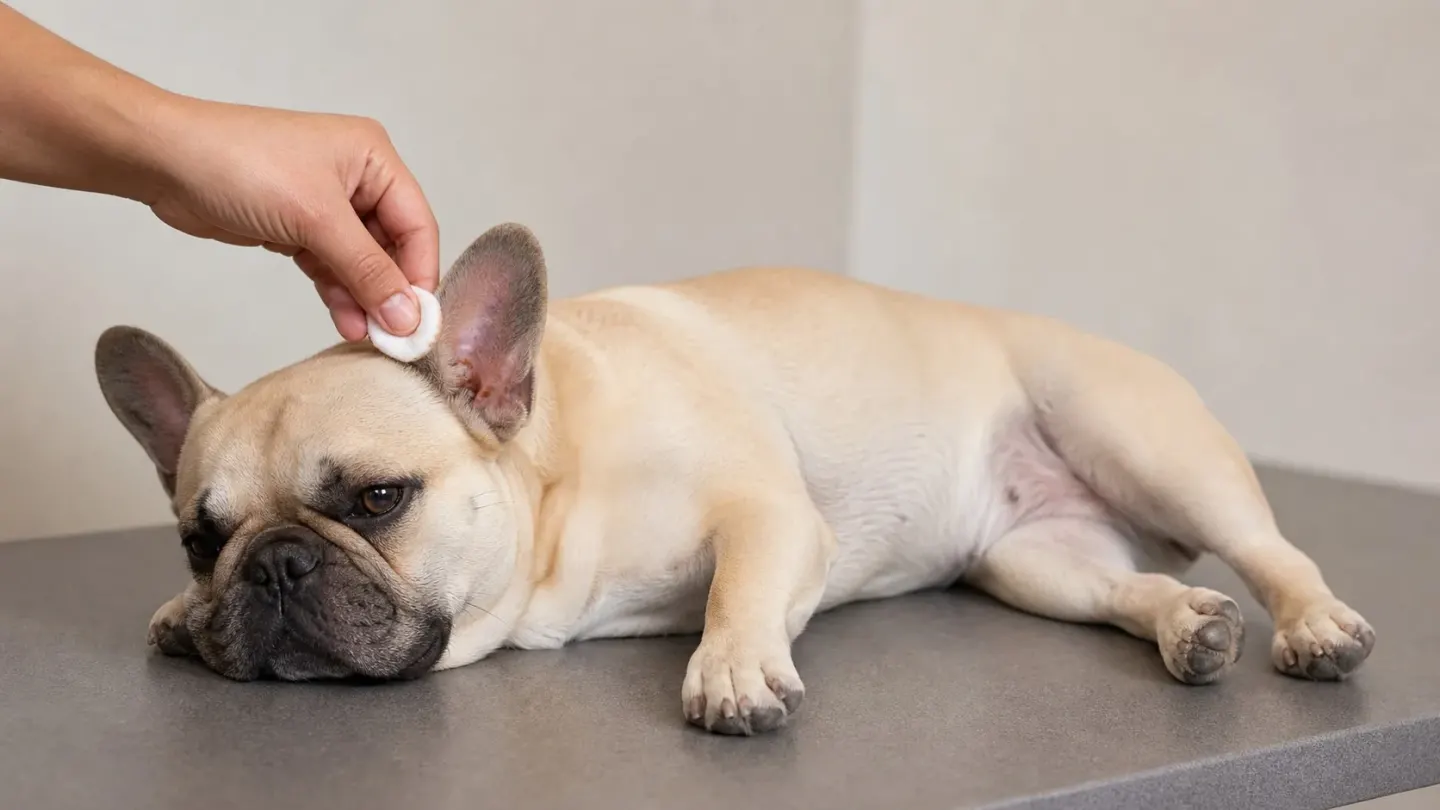
Why Cotton Swabs and Hard Tools Are Dangerous
Never insert cotton swabs (Q-tips), tweezers, alcohol wipes, or hard tools into the canal. According to clinical recommendations from the Cornell Riney Canine Health Center and PDSA:
- Impacted Wax: Cotton swabs act like a ramrod, pushing wax, dead skin cells, and debris deeper into the horizontal canal against the eardrum.
- Eardrum Rupture: If your dog twitches or moves suddenly while a rigid swab is inside, the tip can easily puncture the delicate tympanic membrane (eardrum), leading to severe pain and permanent hearing loss.
- Tissue Trauma: Rigid tools scratch the sensitive epithelial lining, opening micro-wounds where bacteria can enter.
Why to Avoid Water, Hydrogen Peroxide, Alcohol, and DIY Mixes
Sticking to veterinary-approved formulas keeps your pet safe:
- Water: Plain water does not break down wax. Instead, it pools inside the horizontal passage, creating a warm, damp environment where yeast thrives.
- Hydrogen Peroxide: Peroxide bubbles aggressively, damaging healthy skin cells and leaving behind water residue that encourages fungal growth.
- Rubbing Alcohol: Alcohol causes immediate, intense burning on inflamed skin and severely dehydrates delicate tissue.
- Vinegar & Oil Mixes: Homemade vinegar or essential oil remedies lack safety testing and frequently cause chemical irritation inside the canal.
When to Stop and See a Veterinarian
Routine cleaning is a preventive hygiene measure, not a medical treatment for active disease. Knowing when to stop home care and seek professional diagnosis protects your dog from unnecessary pain and chronic complications.
Monitoring subtle behavioral changes helps owners spot discomfort early, much like recognizing shifts in temperament when exploring why French Bulldogs are so clingy and seeking attention.
Stop cleaning and contact your vet immediately if you notice:
- Your dog cries, whines, or snaps in pain when you touch the area or massage the base.
- Significant swelling, narrowing of the entrance, or intense redness.
- Thick yellow, green, black, or bloody discharge.
- A strong, unpleasant yeast or sweet odor coming from the canal.
- Your dog tilts its head continuously to one side, stumbles, or flickers its eyes (signs of potential inner ear involvement).
Telling Normal Wax From an Infection or Mites
Distinguishing normal secretions from pathological conditions ensures timely treatment:
| Feature | Normal Wax | Bacterial or Yeast Infection | Ear Mites |
|---|---|---|---|
| Color | Pale tan, light brown | Dark brown, yellow, black, or red | Dark reddish-brown to black (“coffee grounds”) |
| Consistency | Soft, slightly waxy | Moist, sticky, thick, or purulent | Dry, crumbly, crusty debris |
| Odor | Odorless or mild neutral odor | Strong pungent, sour, or musty smell | Fusty, dirty odor |
| Behavior | Normal comfort | Frequent shaking, scratching, head tilt | Intense, frantic scratching |
How Allergies and Skin Health Affect the Canal
The auditory canal is an extension of the skin. Consequently, underlying environmental or food allergies frequently manifest as recurrent inflammation. If your Frenchie experiences repeated infections despite regular cleaning, your veterinarian will evaluate underlying allergic triggers to create a comprehensive skin and ear treatment plan.
Ear Care for French Bulldog Puppies and Dogs With Recurring Infections
Caring for a young puppy requires a gentle approach focused on building trust.
Understanding early physical timelines, such as knowing when do French Bulldog ears stand up, provides valuable context on cartilage development during puppyhood.
Additionally, early socialization and touch tolerance help young dogs adapt to handling, which is beneficial whether preparing a companion or considering if can a French Bulldog be a service dog.
Helping a Puppy Get Used to Ear Handling
Start desensitizing your Frenchie puppy to touch as soon as you bring them home:
- During quiet cuddling time, gently touch and lift your puppy’s ear flaps for a few seconds.
- Reward your puppy immediately with a small treat and gentle praise when they stay calm.
- Gently rub a dry cotton ball around the outer flap so the sensation feels normal.
- Keep early sessions short (30 to 60 seconds). By establishing positive associations early, full routine cleanings will be stress-free as your dog matures.
Frequently Asked Questions
Can I clean my French Bulldog’s ears with baby wipes?
You can use unscented, alcohol-free baby wipes or specialized canine ear wipes to clean the outer flap (pinna). However, wipes cannot reach or flush out wax trapped deep inside the L-shaped canal. For proper cleaning, use a liquid veterinary ear cleaning solution.
What should I do if my Frenchie won’t let me clean its ears?
Never force your dog or use aggressive restraint, as this creates fear and increases the risk of injury. Take a step back and practice desensitization using high-value treats (like small pieces of cooked chicken). Touch the area, reward, and stop. Gradually work up to lifting the flap and introducing the cleaner bottle over several days. If your dog remains highly fearful or aggressive, ask your veterinarian or a professional fear-free groomer for assistance.
Is brown ear wax normal in a French Bulldog?
A small amount of light tan or light brown wax is a normal byproduct of natural self-cleaning. However, if the wax is dark brown or black, has a crusty “coffee ground” texture, appears moist and thick, or is accompanied by a foul odor, it indicates a yeast infection, bacterial infection, or ear mites requiring veterinary evaluation.
Leave a Reply