
Table of Contents
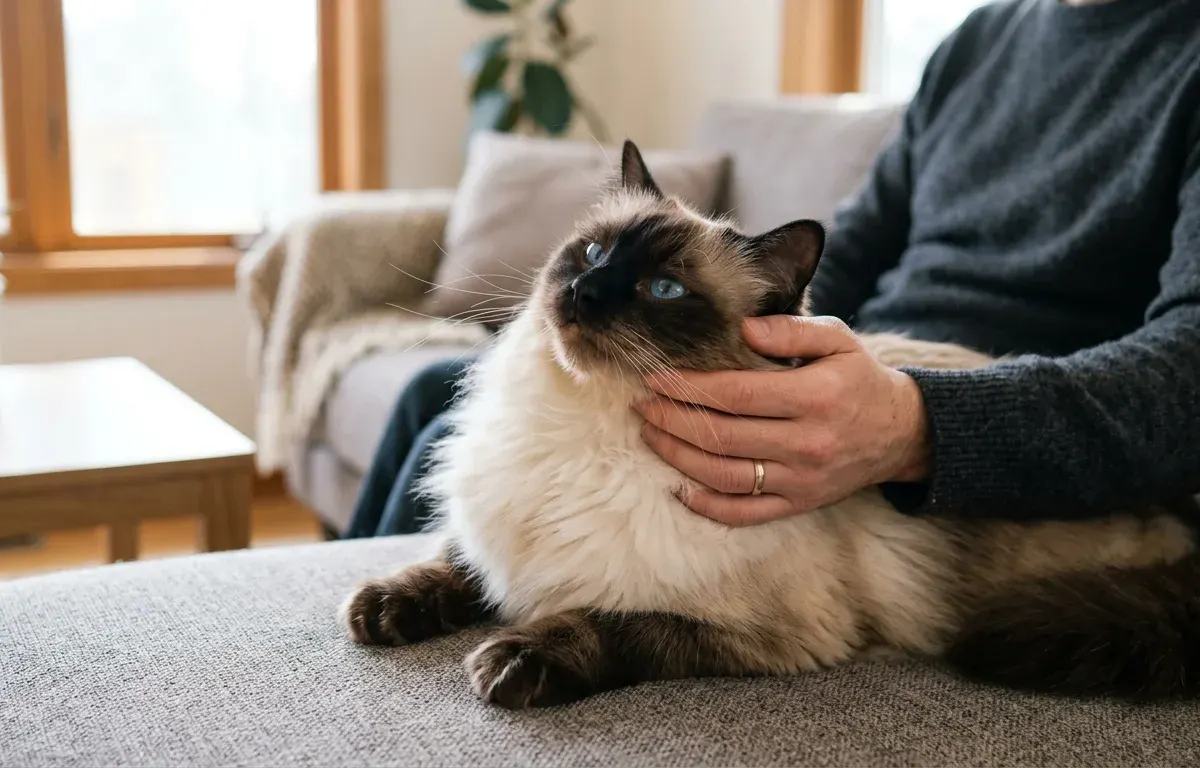
Typical Ragdoll cat behavior is defined by a docile, affectionate, and human-focused temperament. Frequently called "puppy cats," they follow family members from room to room, greet arrivals at the front door, and relax their muscles when cradled in supportive arms. They are natural floor dwellers that prefer low-altitude lounging over scaling high furniture, making them gentle companions for multi-pet households and families.
- Exceptionally low aggression: Selective breeding produces low startle reactivity, placid dispositions, and high trust in human caregivers.
- Canine-like sociability: Ragdolls actively seek proximity, play interactive fetch, and adapt well to positive reinforcement training.
- Grounded physical nature: Heavy bone mass encourages lounging on rugs, low sofas, and sturdy perches rather than high shelves.
- Voluntary floppy reflex: Muscular relaxation occurs when fully supported; Ragdolls feel pain normally and require attentive welfare monitoring.
- Strict indoor safety: Because they lack defensive fighting instincts, Ragdolls must live strictly indoors to stay safe from predators and traffic.
Ragdoll cats have earned a dedicated following among pet owners for their gentle presence and deeply social nature. Understanding their ethological instincts, daily habits, and environmental needs helps owners create a home where these large, sweet felines truly thrive.
Core Ragdoll Temperament: Docility, Affection, and Daily Demeanor
The core Ragdoll temperament centers on gentle compliance, high social tolerance, and calm household companionship. Unlike many domestic felines that maintain territorial independence, Ragdolls actively orient their daily routine around human family members. When learning what is a Ragdoll cat, prospective owners quickly discover that placidity is the defining baseline of the breed.
Breed registries and veterinary behaviorists recognize Ragdolls for their exceptionally gentle demeanor, low territorial hostility, and high tolerance for human interaction. This placid nature is genetically grounded, reinforced by decades of selective breeding recognized by the Cat Fanciers’ Association (CFA).
| Core Behavioral Trait | Daily Life Expression | Household Management Need |
|---|---|---|
| High Human Affiliation | Shadows owners through rooms, rests against feet, sleeps beside beds | Provide daily social companionship; avoid isolation exceeding 8 hours |
| Low Startle Reactivity | Stays calm during normal household noises and vacuuming | Protect from rough handling, as they rarely defend themselves aggressively |
| Ground-Dwelling Lounging | Rests on carpets, broad armchairs, and low windowsill beds | Set up wide, stable perches 2 to 3 feet high rather than tall, narrow cat trees |
| Gentle Vocal Range | Communicates through soft chirps and melodic trills | Pay close attention to subtle behavioral shifts that may signal physical distress |
Because of how big Ragdoll cats get, with adult males regularly reaching 15 to 20 pounds, their large physical frame shapes their everyday movement and energy expenditure.
The Ground-Dwelling Nature: Why Ragdolls Prefer Low Perches
Ragdolls are confirmed floor dwellers rather than vertical tree-climbers. In the feline world, species and breeds often divide into vertical climbers that seek high ceiling rafters and ground-dwellers that prefer low lookouts. The Ragdoll’s heavy bone density, substantial muscle volume, and broad hips make leaping onto refrigerators or narrow door tops physically demanding.
Instead of scaling bookcases, Ragdolls prefer wide, low surfaces. They enjoy stretching out across living room rugs, resting on the lower cushions of a sofa, or watching garden birds from a wide window perch positioned 24 to 36 inches above the floor. Setting up sturdy, broad-based furniture prevents accidental falls and joint strain in heavy adult cats.
Human-Centric Bonding: Affection Without Clinginess
Ragdolls show affection through steady proximity rather than frantic demands. They rarely scream for attention or jump onto keyboards with chaotic energy. Instead, a Ragdoll practices subtle contact: resting a chin on your foot while you cook, curling up beside your hip on the sofa, or making direct eye contact with slow, deliberate blinks.
Ethologists refer to this behavior as allorubbing and proximity maintenance. When a Ragdoll rubs their cheeks and forehead against your hands or shins, they deposit facial pheromones that mark you as a safe, bonded family member. They enjoy gentle chin scratches and long back strokes, purring quietly with rhythmic satisfaction.
The “Puppy Cat” Phenomenon: Socialization and Canine-Like Traits
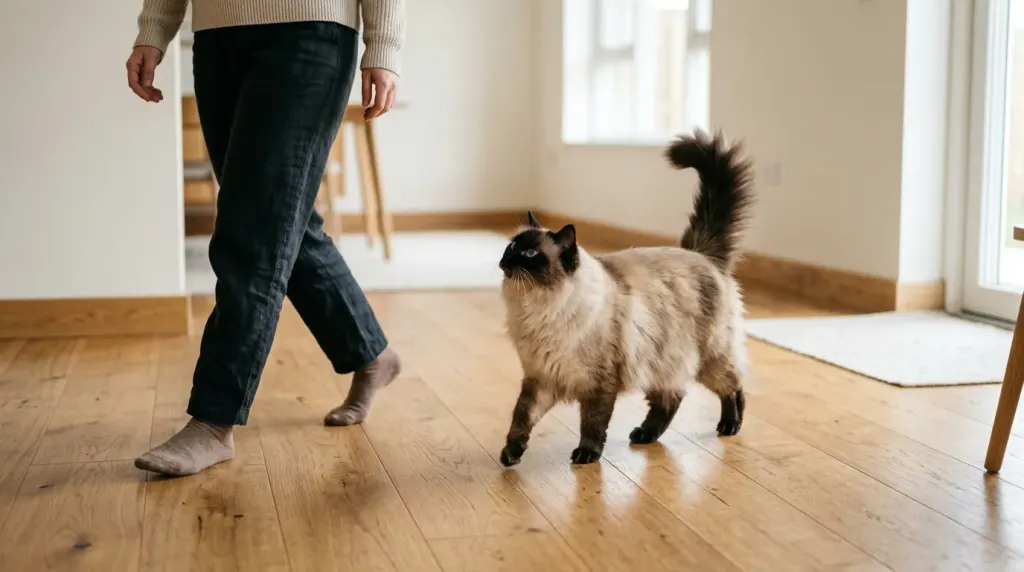
Ragdolls are widely celebrated as the “puppy cats” of the feline kingdom. This title comes from behavioral habits that mirror domestic canines: greeting owners at the entrance door, following people from room to room, retrieving tossed toys, and welcoming leash walks. Exploring whether are Ragdoll cats friendly reveals that their social curiosity extends to almost every friendly visitor entering the home.
Historically, where Ragdoll cats originate from in 1960s California reflects intentional selection by founder Ann Baker for affectionate, dog-like domestic dispositions. Veterinary ethologists at VCA Animal Hospitals note that Ragdolls learn household routines rapidly and show eager interest in positive interactive play.
| Canine Trait | Behavioral Manifestation | Training Mechanism |
|---|---|---|
| Door Greeting | Runs to the front hallway when keys turn in the door lock | Pair greetings with calm praise and immediate gentle petting |
| Toy Retrieval | Catches tossed lightweight mice or felt balls and returns them to hand | Use clicker cues and small treat rewards upon toy drop |
| Leash Walking | Walks comfortably in a harness across quiet gardens or patios | Gradual indoor harness conditioning followed by outdoor desensitization |
| Shadowing | Moves across rooms to remain in the same physical space as family | Allow continuous access across living areas to prevent separation frustration |
Operant Conditioning: Training Tricks, Harness Walking, and Fetch
Because Ragdolls possess high food motivation and a strong desire for human interaction, they respond well to operant conditioning with clickers. Teaching a Ragdoll to fetch or walk on a harness requires breaking behaviors into short, rewarding steps:
- Target Touch: Hold a target stick or closed fist near the cat’s nose. When the cat sniffs the target, click and deliver a high-protein freeze-dried treat.
- Toy Association: Rub catnip on a lightweight felt ball. Toss the toy two feet away; click and reward when the cat approaches and picks it up with their teeth.
- Retrieval Return: Call the cat’s name gently while holding out a treat. When the cat carries the toy back and drops it near your hand, click and release the treat.
- Harness Acclimation: Fit a secure, H-style or vest harness loosely during meal times indoors for 5 minutes daily before attaching a lightweight leash.
Conduct training sessions for 3 to 5 minutes once or twice daily. Keeping sessions short prevents mental fatigue and preserves enthusiasm.
The “Floppy” Trait: Ethological Reality vs. Genetic Pain Myths
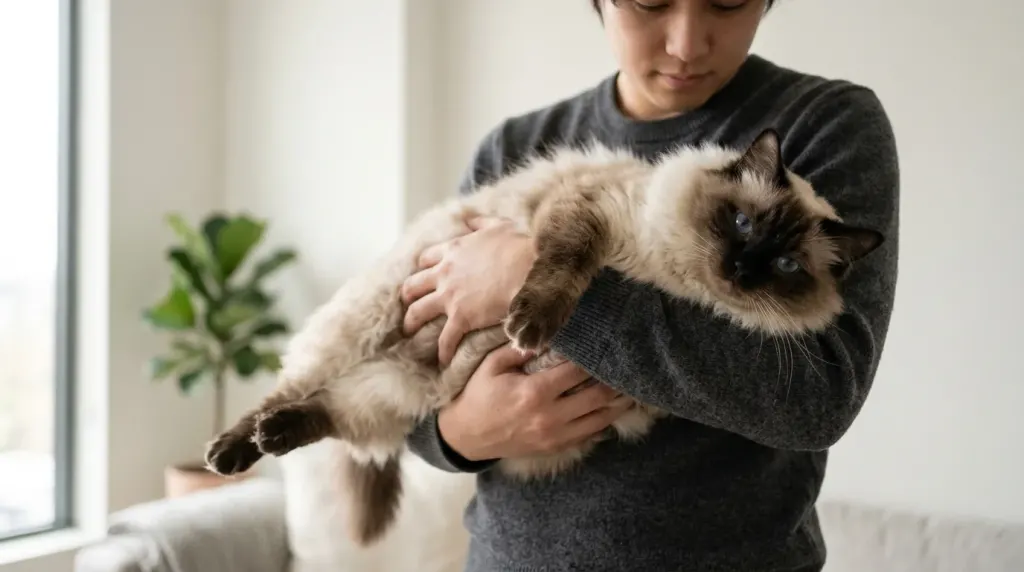
The signature trait that gave the breed its name is the tendency to go limp when picked up. When cradled securely in gentle arms, a relaxed Ragdoll releases muscle tension throughout their neck, torso, and limbs, resembling a soft cloth doll.
This floppy reflex is a voluntary behavioral release triggered by complete emotional safety and physical comfort. However, this charming characteristic has given rise to dangerous urban legends, including myths that Ragdolls cannot feel physical pain, lack fear, or possess abnormal nerve pathways.
Veterinary science clearly refutes these myths. Ragdolls possess full mammalian nervous systems with normal nociceptors and pain pathways. The misconception of pain immunity arose because Ragdolls display stoic behavioral responses; when hurt, they rarely hiss, bite, or scratch, choosing instead to withdraw quietly.
| Breed Myth | Veterinary Reality | Practical Owner Guidance |
|---|---|---|
| Myth: Ragdolls are immune to physical pain | Fact: Nervous systems and pain receptors are identical to all domestic cats | Monitor subtle pain cues such as reduced grooming, squinting, and hiding |
| Myth: Ragdolls have no fear or defensive instincts | Fact: They experience fear and stress but exhibit passive freeze responses | Never expose Ragdolls to aggressive animals or dangerous outdoor hazards |
| Myth: Every Ragdoll cat goes limp every time | Fact: Limpness requires trust, secure support, and a calm setting | Support both chest and hindquarters; never force a cat into limpness |
Important Note: Because Ragdolls often suffer in silence rather than vocalizing, underlying health issues such as hypertrophic cardiomyopathy or joint discomfort can go unnoticed without regular annual veterinary examinations.
Muscular Relaxation: Why Ragdolls Go Limp in Safe Arms
When learning how to identify a Ragdoll cat, enthusiasts notice that muscular relaxation occurs when the cat feels physically stable and emotionally secure. When lifting a Ragdoll, place one hand firmly under the ribcage behind the front legs and use your other arm to cradle the entire rear hindquarters. Bring the cat’s body close to your chest so their spine remains level and supported.
When supported this way, the cat releases abdominal and shoulder tension. Conversely, holding a 15-pound Ragdoll dangling by the armpits causes discomfort and strain on their thoracic joints, preventing relaxation and causing distress.
Debunking the Stoicism Myth: Recognizing Subtle Signs of Pain and Stress
Because Ragdolls rarely display overt defensive aggression when experiencing illness or discomfort, identifying common Ragdoll cat health problems requires close attention to subtle behavioral shifts. Proactive genetic screening through the UC Davis Veterinary Genetics Laboratory for the MYBPC3 R820W mutation helps detect cardiac risks early. In daily life, owners must watch for physical warning signs:
- Hunched body posture with forepaws tucked tightly beneath the chest.
- Squinted, flattened eyes or persistent third-eyelid protrusion.
- Reluctance to jump onto low sofa cushions or difficulty stepping into high-sided litter boxes.
- Sudden matting around the hindquarters caused by decreased self-grooming.
- Seeking dark, quiet seclusion beneath beds or inside closets.
When any of these subtle shifts emerge, schedule a prompt veterinary consultation rather than assuming the cat is simply having a quiet day.
Social Cohabitation: Ragdolls with Children, Dogs, and Other Pets
Ragdolls are among the most adaptable feline breeds for busy households with children, dogs, and companion cats. Their low territorial reactivity and preference for gentle social contact make them ideal partners for respectful household members.
However, their non-confrontational demeanor also makes them vulnerable. Because a Ragdoll will often endure rough handling or harassment without retaliating with claws, owners must supervise interactions and safeguard their cat’s comfort.
| Household Member | Compatibility Rating | Key Management Strategy |
|---|---|---|
| Gentle, Respectful Children | High | Teach two-handed lifting; forbid cornering or disturbing sleeping cats |
| Cat-Friendly Dogs | High | Establish a 4-stage introduction; provide elevated dog-free retreat zones |
| Calm Companion Cats | High | Use gradual scent-swapping guided by each cat’s comfort; maintain separate food stations |
| High-Prey-Drive Animals | Low / Unsafe | Keep completely separated; Ragdolls do not possess fast escape reflexes |
When introducing pets, checking whether do Ragdoll cats get along with dogs helps owners establish calm coexistence routines. Similarly, comparing personalities to see whether are Maine Coon cats aggressive confirms that large, placid cat breeds often pair wonderfully together in quiet indoor spaces.
Interactions with Children: Gentle Boundaries and Handling Protocols
Ragdolls make wonderful companions for young children, often participating patiently in tea parties and floor games. To ensure mutual safety, establish clear household rules:
- Always support the rear legs: Children should sit on the carpet when holding a Ragdoll so the cat never risks falling from standing height.
- Never pull ears, tail, or whiskers: Show children how to use flat, open palms along the cat’s back.
- Respect quiet retreat zones: When the cat rests inside a covered bed or on a low window perch, children must leave the cat undisturbed.
Canine Companionship: Step-by-Step Introduction Protocol
Integrating a Ragdoll with a dog succeeds when following a phased introduction that manages scent, sight, and proximity:
- Phase 1 (Scent Swapping): Keep the pets in separate rooms divided by a closed solid door until both animals show calm, relaxed body language. Swap bedding, blankets, and towel rubs so each animal learns the other’s scent without visual stress, adjusting the pacing to each pet’s comfort level.
- Phase 2 (Visual Barrier): Place a sturdy baby gate between rooms during feeding times. Feed the dog on one side and the Ragdoll on the other, associating the sight of each other with tasty meals.
- Phase 3 (Controlled Leash Meetings): Bring the dog into the living room on a short, loose leash. Allow the Ragdoll to explore freely while rewarding the dog with treats for calm, non-reactive behavior.
- Phase 4 (Supervised Free Roaming): Allow both pets into shared family spaces under direct human supervision. Ensure the Ragdoll has easy access to dog-free safe zones behind baby gates with pet doors.
Vocalization and Communication: Decoding Ragdoll Body Language
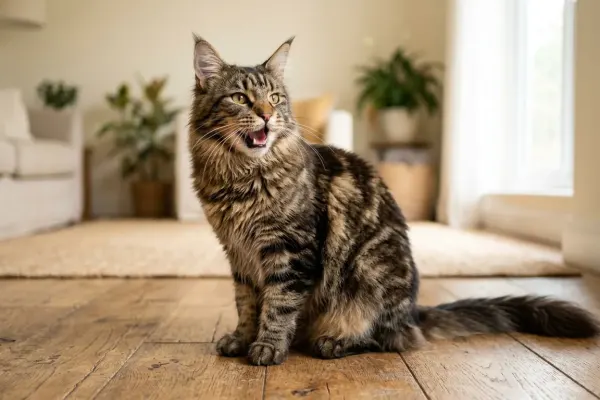
Ragdolls are generally quiet cats that communicate with low-decibel vocalizations and expressive body postures. Instead of loud, demanding caterwauls, they produce soft chirps, musical trills, and gentle squeaks to greet family members and express contentment.
Understanding their communication style helps owners distinguish between happy, affiliative conversations and signs of environmental stress. When taking care of a Ragdoll cat, listening to these gentle acoustic signals makes daily care intuitive and rewarding.
| Vocal or Visual Cue | Context | Meaning & Recommended Owner Action |
|---|---|---|
| Soft Melodic Chirp / Trill | Greeting owners in hallway or near food preparation area | Friendly greeting or invitation to play; respond with calm speech and affection |
| Upright Tail with Curved Tip | Walking toward family members | High contentment and social confidence; engage in gentle head-stroking |
| Slow Eye Blinking | Resting across sofa or observing from across the room | Sign of deep emotional trust; blink back slowly to reinforce bonding |
| Persistent Low-Pitched Meow | Standing near litter box or empty food bowl | Communication of unmet need; check water freshness, box cleanliness, or meal timing |
| Flattened Ears & Low Tail | Encountering unfamiliar loud noise or visiting animal | Fear or acute stress; remove the stressor and provide quiet shelter |
Key Insight: Ragdolls rarely vocalize without a clear purpose. While Siamese and Oriental breeds vocalize as continuous commentary, a sudden increase in meowing from a normally quiet Ragdoll usually points directly to an uncleaned litter box, an empty water bowl, or physical discomfort.
Auditory Repertoire: Chirps, Trills, and Soft Meows
Feline ethologists categorize chirps and trills as affiliative vocalizations. Mother cats use trills to call kittens, and adult Ragdolls retain this friendly sound to maintain positive contact with their human caregivers. These gentle vocalizations also occur during daily coat maintenance. Learning do Ragdoll cats shed helps owners pair regular brushing sessions with soft, reassuring verbal praise to keep the cat relaxed. When your Ragdoll chirps as you walk into the kitchen, they are expressing cheerful greeting and welcoming your presence.
Addressing Behavioral Challenges: Anxiety, Scratching, and Indoor Safety
While Ragdolls possess an exceptionally gentle temperament, their high social dependence and lack of street instincts create specific behavioral considerations that owners must actively manage.
The American Association of Feline Practitioners (AAFP) outlines five core pillars for a healthy feline environment: dedicated safe spaces, multiple separate resource stations, opportunities for predatory play, positive human social interaction, and respect for the feline olfactory sense.
| Behavioral Challenge | Root Cause | Evidence-Based Intervention |
|---|---|---|
| Separation Anxiety & Distress | High social dependence; long solitary periods exceeding 8 hours | Use puzzle feeders, synthetic pheromone diffusers, and predictable departure routines |
| Destructive Sofa Scratching | Natural claw conditioning paired with undersized scratching posts | Provide 32-inch vertical sisal posts and wide horizontal cardboard scratchers |
| Inappropriate Elimination | Small or covered litter boxes; dirty substrate | Provide large, uncovered boxes measuring at least 1.5 times the cat’s length |
| Outdoor Vulnerability | Absence of territorial suspicion and slow defensive reflexes | Maintain strict 100% indoor living; build secure outdoor catios for fresh air |
Understanding how do Ragdoll cats scratch furniture ensures you supply proper scratching substrates. Additionally, many owners discover that do Ragdoll cats like water, often playing with running bathroom faucets or dipping paws into water bowls, making recirculating pet fountains an excellent enrichment tool.
Mitigating Separation Anxiety: Strategies for Busy Owners
Because Ragdolls thrive on companionship, spending 10 to 12 hours alone every day can trigger separation distress. Symptoms include excessive vocalization at departure doors, overgrooming on the belly, and decreased appetite.
To support your Ragdoll during work hours:
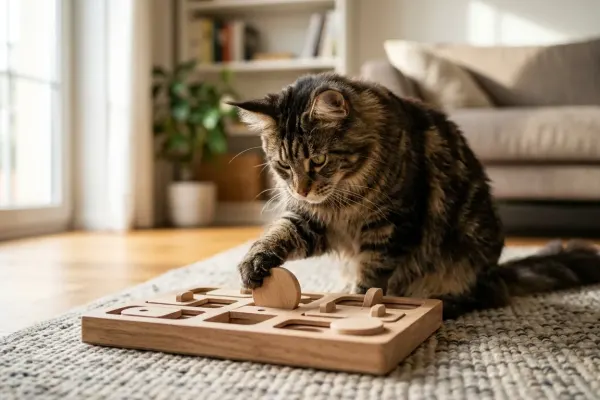
- Distribute food puzzles and automated treat mazes across the floor before leaving.
- Install a wide, padded window seat overlooking bird feeders or garden trees.
- Plug in synthetic feline facial pheromone diffusers (such as Feliway Classic) in primary sleeping areas.
- Leave a worn t-shirt carrying your scent in the cat’s favorite resting basket.
- Consider adopting a bonded pair of kittens or a second gentle companion pet.
Furniture Scratching Redirection: Substrates and Placement
All domestic felines must scratch to shed outer claw husks, stretch back muscles, and mark territory with interdigital scent glands. According to the Cornell Feline Health Center, preventing unwanted furniture scratching requires providing suitable alternative substrates:
- Height matters: Because adult Ragdolls are long-bodied cats, vertical scratching posts must stand at least 32 to 36 inches tall so the cat can stretch to their full length without the post wobbling.
- Texture variety: Supply woven sisal rope posts and dense corrugated cardboard flat scratchers.
- Location: Position scratchers directly next to the couch corners where the cat has previously shown interest, rewarding post usage with high-value treats.
Daily Routine, Nutrition, and Long-Term Behavioral Well-Being
A Ragdoll’s day-to-day behavioral stability is closely tied to predictable routines, engaging play cycles, and proper nutrition. Felines operate on internal biological clocks, and establishing consistent meal and play schedules reduces stress and prevents unwanted nocturnal activity.
| Timeframe | Recommended Activity | Behavioral & Emotional Benefit |
|---|---|---|
| Morning (7:00 AM) | Fresh protein meal, water refresh, and 5 minutes of gentle chin scratching | Reinforces security and sets a calm tone for the day ahead |
| Midday (12:00 PM) | Self-directed play with puzzle feeders and sunbathing on low window perches | Encourages cognitive engagement during solitary hours |
| Early Evening (6:00 PM) | 15 minutes of vigorous wand toy play followed by evening dinner | Completes the predatory sequence, leaving the cat deeply satisfied |
| Night (9:30 PM) | 10 minutes of gentle brushing and coat grooming before bedtime | Strengthens bonding, removes loose fur, and ensures quiet, restful sleep |
Understanding what Ragdoll cats eat helps owners maintain lean muscle mass while avoiding obesity. In addition, understanding how long Ragdoll cats live allows owners to thoughtfully adapt daily care across every life stage, adjusting enrichment and providing accessible comforts as cats age into their senior years.
The Predatory Play Cycle: Structured Exercise for Calm Nights
Many cat owners struggle with nighttime zoomies or crying at the bedroom door. This behavior occurs when natural predatory energy remains unspent during the day.
Ethologists recommend using the “Hunt-Catch-Kill-Eat-Groom-Sleep” sequence each evening:
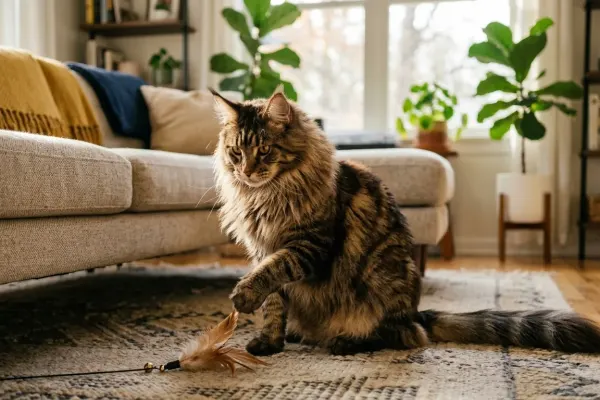
- Hunt & Catch: Use an interactive feather wand or laser pointer to engage your Ragdoll in active stalking, pouncing, and chasing for 15 minutes.
- Kill: Allow the cat to catch and hold a plush kicker toy with their paws and teeth at the end of the session to deliver a sense of accomplishment.
- Eat: Serve the main evening meal immediately following the play session.
- Groom & Sleep: Digesting the meal naturally triggers self-grooming and deep, uninterrupted nighttime slumber.
Frequently Asked Questions About Ragdoll Cat Behavior
Are Ragdoll cats aggressive toward humans or other animals?
Ragdoll cats are among the least aggressive domestic cat breeds. Peer-reviewed behavioral studies confirm they score exceptionally low in territorial and fear-induced aggression. Aggression in a Ragdoll is rare and almost always indicates acute pain, illness, or severe trauma requiring immediate veterinary assessment.
Why does my Ragdoll cat follow me everywhere?
Ragdolls follow their owners because they are selectively bred for high social affiliation and human bonding. They view their human caregivers as a secure base, enjoying quiet companionship and observation as you move throughout the house.
Can Ragdoll cats be left alone while I go to work?
Ragdolls can manage standard 6 to 8 hour workdays if their home is enriched with puzzle toys, fresh water fountains, and window perches. However, they struggle with prolonged isolation beyond 8 hours, and busy households benefit from adopting a bonded pair.
Do Ragdoll cats get along well with dogs?
Ragdolls generally get along very well with cat-friendly dogs due to their calm, non-flighty demeanor. Because Ragdolls rarely bolt in panic, they avoid triggering a dog’s predatory chase instinct, facilitating peaceful cohabitation after structured introductions.
Why do Ragdoll cats go limp when you pick them up?
Ragdolls go limp due to a voluntary neuromuscular relaxation response that occurs when they feel completely safe and securely supported under both the chest and hindquarters. It reflects emotional trust rather than a neurological abnormality or lack of pain perception.
Leave a Reply