
Table of Contents
For prospective owners asking is it hard to take care of a Ragdoll cat, daily maintenance requires moderate, consistent effort overall. While their silky single coat does not mat as easily as a Persian's, they require weekly brushing, strict dietary control to prevent obesity, and frequent companionship because they crave human attention. Routine veterinary screening for genetic heart and kidney conditions is essential.
- Grooming requires 5 to 10 minutes of brushing once or twice weekly thanks to the absence of a dense undercoat.
- Ragdolls are highly social and indoor-oriented cats that should not be left alone for long periods.
- Genetic screening and annual vet visits help catch breed risks like hypertrophic cardiomyopathy (HCM) and polycystic kidney disease (PKD) early.
- Feeding requires measured portions to manage weight, as their docile temperament makes them prone to obesity.
- Ongoing annual care costs range between $1,100 and $2,100 covering premium nutrition, routine veterinary care, and grooming essentials.
Effort Level for Taking Care of a Ragdoll Cat Across Key Categories
Evaluating whether a Ragdoll cat is hard to care for depends on specific daily maintenance tasks. The table below breaks down the care requirements across key categories:
| Care Category | Effort Level | Key Requirement | Frequency |
|---|---|---|---|
| Coat Grooming | Moderate | Stainless steel comb brushing | 1-2 times weekly |
| Health Screening | Moderate to High | HCM and PKD genetic test / Echocardiogram | Annual vet check |
| Dietary Control | Moderate | Portion-controlled high-protein cat food | Daily (2 meals) |
| Attention & Social | High | Interactive play and human presence | Daily (indoor) |
| Dental & Hygiene | Moderate | Tooth brushing & nail trimming | Weekly to bi-weekly |
Is Ragdoll Grooming Hard to Manage?
According to PDSA Ragdoll care advice, Ragdoll grooming is surprisingly manageable for a longhaired breed. Unlike Persians or Maine Coons, Ragdolls possess a soft single coat without a thick, woolly undercoat. This structural difference significantly reduces tangling and matting.
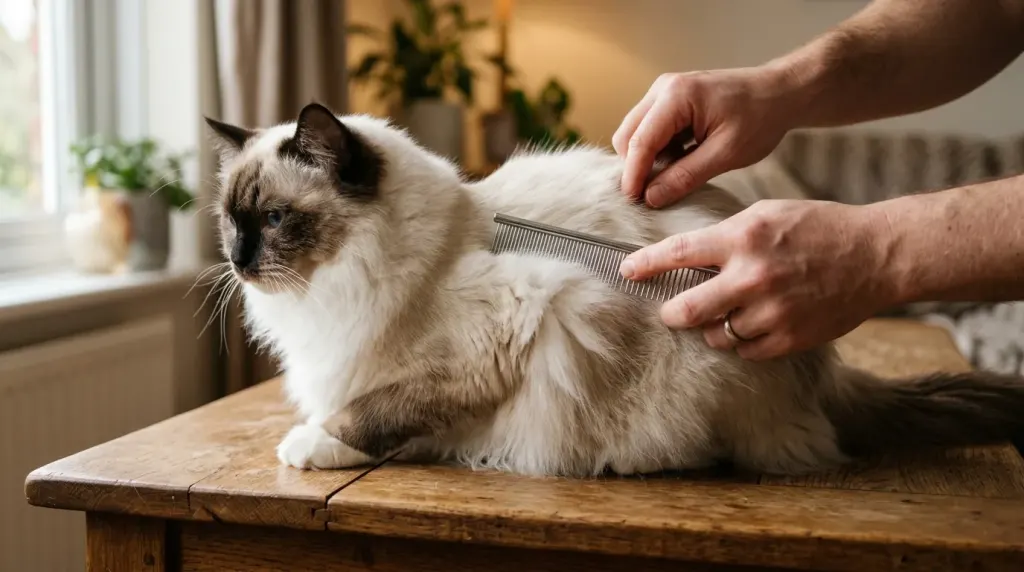
Owner maintenance focuses primarily on loose hair removal rather than detangling mats. If you are concerned about hair around the home, reviewing how much Ragdoll cats shed provides a clear picture of seasonal coat changes.
Brushing Frequency Requirements
Brushing a Ragdoll requires about 5 to 10 minutes once or twice a week. A stainless steel comb or slicker brush works best to gently remove loose fur around the neck ruff and under the armpits, where friction can cause light tangles.
During seasonal shedding transitions in spring and autumn, increasing brushing to three times a week prevents hairballs and keeps the coat smooth.
Do Ragdoll Cats Need Frequent Baths?
Ragdolls do not require frequent bathing. Because they clean themselves efficiently and lack an oily undercoat, a bath is only necessary once every two to three months or if their fur gets soiled.
When bathing is needed, using a lukewarm water temperature and a mild cat-formulated shampoo protects their skin barrier. Thorough drying with a towel and a low-heat blow dryer prevents chilling.
Health Issues to Monitor in Ragdolls
While daily maintenance is straightforward, health care requires vigilant monitoring. Prospective owners should understand common Ragdoll cat health problems before bringing a kitten home.
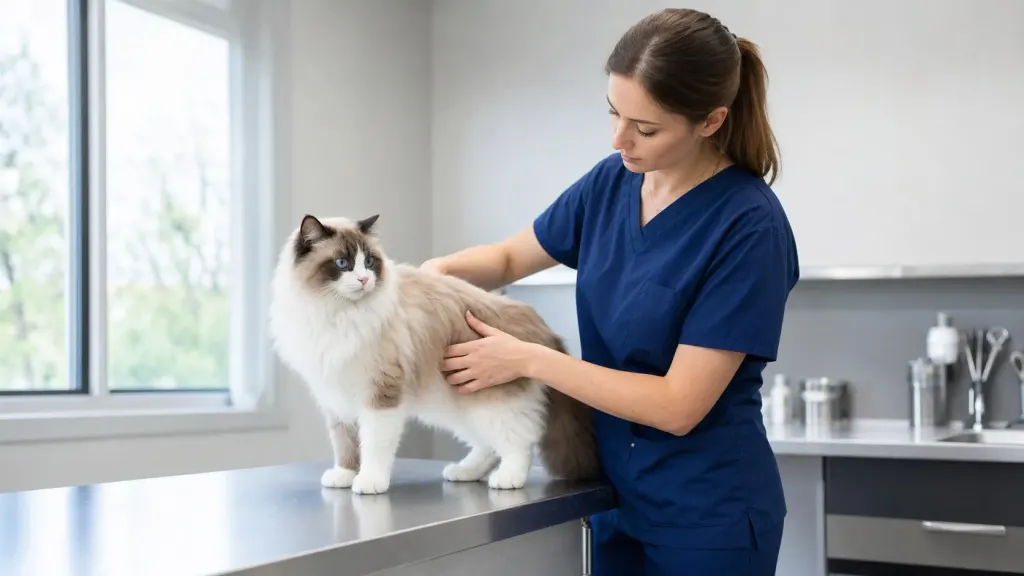
A 2025 Royal Veterinary College VetCompass study published in Companion Animal Health and Genetics analyzing UK primary-care veterinary records revealed that 61.28% of Ragdoll cats had at least one recorded disorder in a single year. The study identified periodontal disease (8.84%), diarrhoea (7.11%), obesity (6.91%), and overgrown nails (5.68%) as the most frequent conditions. Furthermore, kidney disorders represented the single largest group-level cause of mortality in Ragdolls, accounting for 21.18% of deaths among deceased cats in the cohort, with an overall population median lifespan of 12.85 years.
Note: Genetic testing for breeding parents drastically reduces the incidence of inherited heart and kidney conditions. Always request documentation of clear DNA tests from reputable breeders.
Hypertrophic Cardiomyopathy (HCM) and Polycystic Kidney Disease (PKD)
Hypertrophic cardiomyopathy (HCM) is an inherited heart condition causing thickening of the heart muscle wall. Polycystic kidney disease (PKD) leads to cyst formation and eventual kidney failure.
Both conditions can be detected through genetic DNA testing and annual veterinary ultrasound screenings. Responsible care involves establishing a relationship with a veterinarian who monitors cardiac and renal function throughout the cat’s life. Understanding average Ragdoll cat lifespan factors helps owners plan long-term wellness routines.
Obesity and Joint Strain
Because Ragdolls are placid and low-energy, they are predisposed to excess weight gain. The demographic veterinary dataset recorded a median adult weight of 4.46 kg across mixed-age populations, though fully grown males often reach 6 to 9 kg.
Carrying excess weight places severe stress on hip and knee joints. Routine weigh-ins and interactive floor play help prevent weight-related arthritis and diabetes.
Feeding Requirements and Weight Management
Managing a Ragdoll’s diet requires strict portion control rather than free-feeding kibble. High-protein wet food combined with measured dry kibble maintains muscle mass without adding unnecessary calories.
Providing balanced nutrition tailored to their size supports healthy joint cartilage and coat shine. Detailed guidance on food selection is outlined in our breakdown of what Ragdoll cats eat.
Because Ragdolls mature slowly over 3 to 4 years, adjusting food intake to match growth stages prevents early-onset obesity. Monitoring growth milestones against standard full grown Ragdoll size benchmarks ensures your cat stays within a healthy body condition score.
How Ragdoll Temperament Affects Daily Care
Ragdolls are famous for their docile, trusting personality. They naturally seek human companionship, often following family members from room to room and flopping relaxed in your arms.
Their gentle nature makes handling and nail trimming easy compared to more fiery breeds. Evaluating overall Ragdoll friendliness and family fit reveals why they adapt so well to homes with children.
However, their high social need means they do not tolerate isolation well. Leaving a Ragdoll alone for long workdays without mental stimulation can trigger separation anxiety. For multi-pet households, introducing a companion dog often succeeds, as detailed in our guide on whether Ragdolls get along with dogs.
Financial Cost Relative to Care Effort
The ongoing cost of caring for a Ragdoll is moderate to high, primarily driven by high-quality food, routine veterinary care, and pet insurance. Initial investment varies significantly depending on pet or show quality, as detailed in our guide on how much Ragdoll cats cost.
Annual upkeep includes:
- High-protein diet and wet food: $400 – $700 per year
- Annual vet exams, vaccines, and dental care: $250 – $500 per year
- Pet insurance covering genetic conditions: $300 – $600 per year
- Grooming tools, litter, and scratching posts: $150 – $300 per year
Budgeting for potential medical expenses early avoids financial stress if renal or cardiac conditions arise later in life.
How Ragdoll Care Compares to Other Longhaired Breeds
Compared to other popular longhaired cats, Ragdolls fall in the middle of the care spectrum:
| Breed | Grooming Effort | Energy Level | Matting Risk | Health Complexity |
|---|---|---|---|---|
| Ragdoll | Moderate (1-2x/week) | Low to Moderate | Low (single coat) | Moderate (HCM/PKD risk) |
| Persian | High (Daily) | Low | High (dense undercoat) | High (brachycephalic & PKD) |
| Maine Coon | Moderate to High (2-3x/week) | High | Moderate (heavy undercoat) | Moderate (HCM & hip dysplasia) |
| British Longhair | High (2-3x/week) | Low | Moderate | Moderate |
Ragdolls require less grooming time than Persians while possessing a calmer indoor disposition than Maine Coons, making them one of the easiest longhaired cat breeds for busy households.
Are Ragdoll Cats Good for First-Time Owners?
Yes. Ragdolls are an excellent choice for first-time cat owners due to their gentle temperament, forgiving nature, and low-matting coat. As long as owners commit to weekly brushing and regular companionship, daily care is straightforward.
Do Ragdoll Cats Shed a Lot?
Ragdolls shed moderately year-round, with increased shedding during seasonal transitions in spring and fall. Because they lack a dense undercoat, their shed fur forms loose tufts that are easy to pick up or brush away.
How Long Do Ragdoll Cats Live on Average?
Ragdoll cats have a median lifespan of roughly 12 to 13 years according to veterinary studies, with healthy indoor cats often reaching 15 years or more when protected from genetic diseases and obesity.
Leave a Reply