
Table of Contents
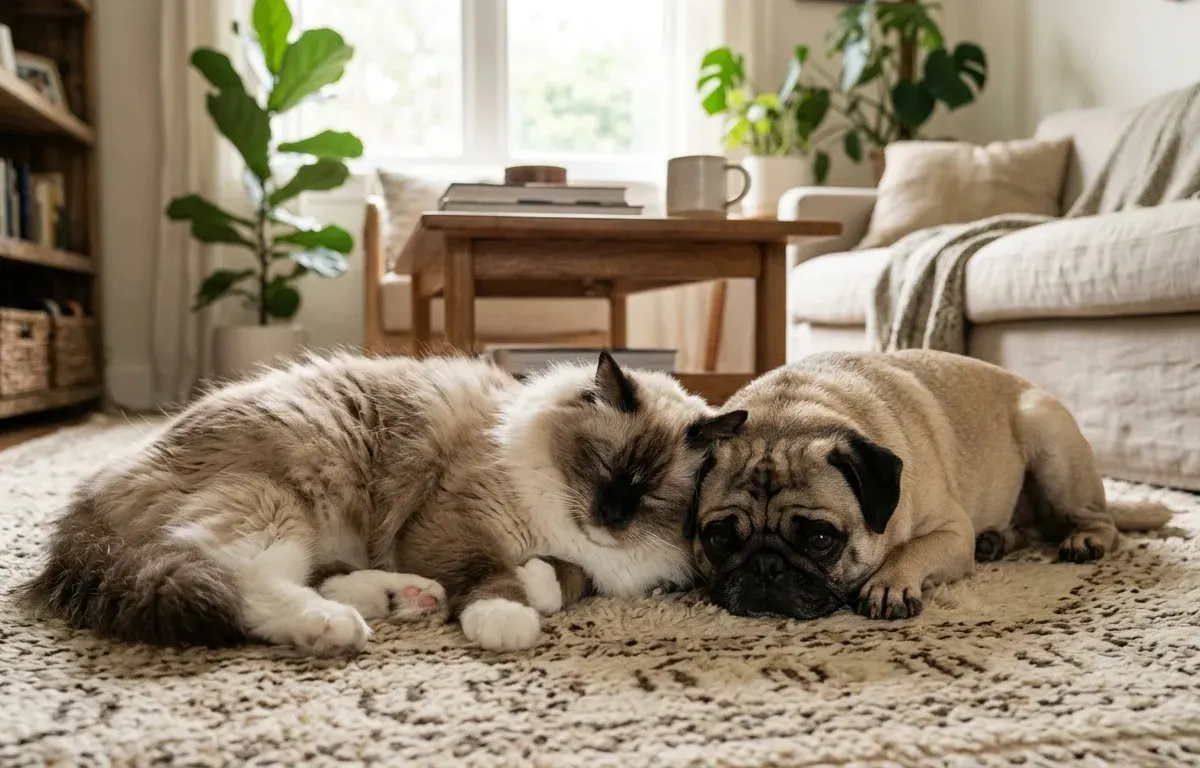
People often ask, do ragdoll cats get along with dogs? They can often live peacefully with dogs because the breed is generally gentle, calm, and sociable. However, successful coexistence is never guaranteed. Whether a Ragdoll gets along with a dog depends mostly on the individual dog's impulse control, the cat's confidence, and how gradually the owner introduces them.
- A dog must be able to sit and disengage without chasing the cat.
- Introductions begin with scent swapping before the pets ever see each other.
- Cats need elevated perches and separated food stations to feel secure.
- True friendship is optional; calm tolerance is a successful outcome.
Do Ragdolls Usually Get Along With Dogs?
The Cat Fanciers’ Association describes Ragdolls as loving without being demanding, gentle, calm, and sociable. These traits can make peaceful cohabitation more achievable. A relaxed cat is less likely to trigger a dog’s prey drive by sprinting across the room. Yet there is no guarantee a Ragdoll will get along with a given dog. The outcome depends heavily on the cat’s individual personality and the dog in question.
You can read more about Ragdoll friendliness, affection and family fit to understand their overall social nature. Ultimately, a calm cat still needs agency and escape routes to feel comfortable sharing a home.
What “getting along” realistically means
A successful introduction does not mean the cat and dog have to play or sleep together. A gradual introduction may end with pets who become friends or simply accept each other’s presence. Success means both animals move through the home, eat, rest, and seek attention without fear, chasing, or conflict. Calm coexistence is a perfectly fine result.
Why a laid-back Ragdoll still needs protection
A dog must never be allowed to chase a cat. Chasing upsets the relationship and can quickly become dangerous. The owner must control the dog and give the cat a clear route away. There must be no chance for either pet to be trapped or have its retreat blocked.
What Determines Whether They Are a Good Match?
Compatibility depends chiefly on the dog’s arousal levels and ability not to chase. Both pets’ past experiences, the cat’s ability to retreat, resource management, and a slow introduction process matter more than breed labels. A dog that can respond to basic cues such as “sit,” “come,” and “look at me” is far easier to keep calm around a cat.
Understanding Ragdoll cat breed characteristics, temperament and care gives you a baseline, but you must evaluate the specific animals involved. Do not introduce a dog to a cat when either pet is ill or highly stressed. Management and patience always beat forced interaction.
Dog traits that improve the odds
A safer canine candidate can settle down, respond to cues around mild distractions, and disengage from a moving animal instead of chasing. According to International Cat Care, basic commands help manage arousal and stop the dog from staring at the cat. Green flags include:
- Ignoring outdoor wildlife or cats on walks.
- Responding to their name immediately.
- Dropping toys or items when asked.
- Settling on a mat or bed on command.
Factors that require extra caution
Pause the introduction if the dog fixates, lunges, or cannot stop trying to chase. You should also step back if the cat hides persistently and cannot reach its food or litter. The best approach to fear-driven behavior is to identify and avoid the situations that trigger it. Never punish either pet for showing fear or anxiety. Create distance and seek professional help when safety is in doubt.
Set Up the Home Before Any Meeting
Start with total separation. Divide the space so the pets cannot touch except under strict supervision. Give each animal its own safe place with all necessary resources. For the cat, this means food, water, litter trays, scratching posts, perches, and hiding places.
Preparing these areas correctly prevents territorial disputes and reduces how hard it is to take care of a Ragdoll cat in a multi-pet home. Give the dog its own calm space as well, and remove any tight corners where an animal could be ambushed.
Build a true cat-only retreat
The American Association of Feline Practitioners notes that cats need a safe place plus multiple, separated key resources. A proper retreat includes:
- A litter box placed away from food and water bowls.
- Food and water stations kept in separate locations.
- A comfortable bed or enclosed hiding spot.
- High perches the dog cannot reach or block.
Protect food, litter, and resting spaces
Keep the dog from blocking or challenging the cat at any of these spots. The cat must have private, competition-free access to its essentials. Setting up a proper scratching station is also part of this process. You can check our Ragdoll scratching behavior and prevention guide for details on placing sturdy posts where the cat feels secure.
How to Introduce a Ragdoll Cat to a Dog Safely
Use a gradual sequence of separation, scent swapping, and protected visual contact behind a barrier before moving to short supervised sessions. Advance only as both pets stay relaxed. The first meeting is a scent swap, not a face-to-face encounter.
If you are still researching what a Ragdoll cat is and whether its breed profile suits your household, remember that introductions require time and cannot be rushed. Keep the dog on a lead, reward calmness, and stop before either pet is overwhelmed.
Step 1: Separate, settle, and swap scents
Keep them completely separated for days or even a week. Once both are eating and acting normally, start swapping scents.
- Place a clean blanket in the dog’s bed for a few days.
- Move that blanket to the cat’s area, keeping it away from food and litter.
- Place a blanket from the cat in the dog’s resting area.
- Repeat this process while both animals remain relaxed.
Step 2: Let them see each other through a barrier
Use a baby gate partly draped with a towel for the first visual contact.
- Keep the distance wide and the sessions short.
- Keep the dog on a lead and ask it to sit quietly.
- Give both pets something enjoyable, like high-value food or gentle play.
- Reward the dog for calm behavior and looking away from the cat.
- End the session before either pet becomes tense.
Step 3: Begin brief, supervised contact
Move to this step only after both animals are completely relaxed at the barrier.
- Choose a room where the cat can escape behind furniture, jump up high, or hide.
- Keep the dog on a lead so it cannot chase.
- Never corner the cat or force it to approach.
- Use food or toy lures to create space if tension appears, rather than grabbing a pet.
Step 4: Increase freedom only after repeated calm sessions
Do not leave them alone after a single good meeting. Once you are sure they will not fight or chase, let them use the whole house while you continue to supervise. When you feel ready, drop the dog’s lead so it trails on the floor and can be picked up if needed. Never leave the dog and cat together unattended until you are entirely confident they are safe.
Read Their Behavior and Know When to Step Back
Stop the session and add distance when either pet shows sustained fear or tries to chase or corner the other. Knowing how to read their body language prevents dangerous escalations. Recognizing early signs of discomfort is better than breaking up a fight.
If your cat seems unusually irritable, rule out medical issues first. Reviewing common Ragdoll health problems that can raise irritability can help you decide if a sudden behavior change warrants a veterinary check.
Cat signals that mean “give me space”
Watch for early feline discomfort. The best response is to avoid the trigger and give the cat more distance and control. Look for:
- A crouched body position.
- Flattened ears held outward.
- Whiskers pulled back against the face.
- A tucked or tightly wrapped tail.
- Dilated pupils.
- Loud meowing, growling, or hissing.
Dog signals that mean “stop now”
End the session if the dog stares intensely, stalks, or tries to chase the cat. Basic cues like asking the dog to look at you help interrupt staring before it escalates. If you cannot get the dog’s attention, separate the pets and try again later at a greater distance. Chasing is highly rewarding for many dogs and must be stopped immediately.
When professional help is the right next step
Note: Seek veterinary advice after any injury, repeated threatening behavior, persistent hiding, loss of access to food or litter, or a sudden behavior change. Pain and illness can raise irritability and aggression. An individual history is needed to assess aggression safely.
Keep the Peace After the Introduction
Keep resources separated indefinitely and protect the cat’s high resting spots and escape routes. The pets will settle into places and routines that let them live peacefully.
Figuring out what Ragdoll cats eat and how to plan separate feeding means the dog does not steal the cat’s meals. Do not leave them unattended until you have seen weeks of consistent, calm behavior.
Give each pet protected daily routines
Cats need a safe place and multiple, separated resources even in a settled home. Keep the dog from blocking litter access or disrupting sleep. Provide sturdy elevated perches so the cat can always choose to get away. Knowing how large adult Ragdolls get when sizing cat trees and elevated retreats helps you choose furniture that won’t tip over when a heavy cat jumps on it.
Reassess after changes in the household
A new pet, a renovation, or rearranged furniture alters scent maps and can raise anxiety. Pain or illness can also increase irritability. If the pets suddenly stop getting along, reassess the environment rather than assuming they are misbehaving. Separate them as needed and arrange a veterinary check when the change is sudden.
Frequently Asked Questions About Ragdoll Cats and Dogs
Are Ragdolls good with dogs?
They can be. The Cat Fanciers’ Association describes the breed as gentle, calm, and sociable, which supports peaceful cohabitation. However, there is no guarantee for a specific pairing. The dog’s behavior and a gradual, managed introduction decide whether the home is actually safe and comfortable.
Can a Ragdoll kitten live with a dog?
Yes, if the dog is calm and safely managed. The kitten must have a protected safe room, and contact must progress gradually. Do not rely on a kitten’s small size or boldness to protect it. Keep the dog on a lead during early sessions and let the kitten choose whether to approach.
How long does it take for a Ragdoll and dog to get along?
There is no reliable universal timeline. Progress depends on repeated calm behavior at each stage, from scent swapping to barrier viewing to supervised contact. It is not measured by days elapsed. If a stage goes badly, step back and retry after a few days.
Should I let my dog chase my Ragdoll “just to play”?
No. Never allow chasing. It upsets the relationship and can quickly become dangerous even if the dog looks playful. Keep the dog on a lead, give the cat a clear escape route, and reward the dog for calm disengagement instead.
Leave a Reply