
Table of Contents
For prospective owners asking, "Do Ragdoll cats have health problems?" the answer is that while Ragdolls are generally robust companion cats with sound overall longevity, they carry documented hereditary risks for hypertrophic cardiomyopathy (HCM) and polycystic kidney disease (PKD). Epidemiological findings show that routine conditions such as dental disease, gastrointestinal upset, and obesity are far more frequent in clinical practice than severe genetic disorders. Genetic DNA screening and regular veterinary checkups manage most risks effectively.
- Hypertrophic cardiomyopathy (HCM) is the main hereditary heart disease in Ragdolls, linked to the MYBPC3 mutation.
- Polycystic kidney disease (PKD) causes progressive renal cysts but can be detected early through genetic testing.
- Cross-eyed alignment (convergent strabismus) is uncommon in pedigree Ragdolls compared to ancestral Siamese lines.
- Periodontal disease and excess weight represent the most frequent reasons Ragdolls require primary veterinary care.
Are Ragdoll Cats Prone to Genetic Health Problems?
Ragdoll cats are not inherently delicate or sickly animals, but purebred heritage creates specific hereditary vulnerabilities. Unlike mixed-breed domestic cats with diverse gene pools, pedigree lines can inherit targeted gene mutations. The primary genetic concerns in Ragdolls involve cardiac tissue structure and kidney cyst formation.
According to veterinary genetic research from the UC Davis Veterinary Genetics Laboratory, breed-specific screening has identified precise genetic variants in Ragdoll lines. Responsible breeding programs use DNA testing to screen breeding pairs, which significantly reduces the transmission of inherited diseases to kittens. Understanding these conditions helps owners seek timely preventative care.
When learning about Ragdoll Cat Breed: Characteristics, Temperament and Care, prospective owners should understand both the breed’s docile nature and its specific health profile.
Hypertrophic Cardiomyopathy (HCM) in Ragdolls
Hypertrophic cardiomyopathy is the most frequently diagnosed heart disease in cats. In affected Ragdolls, the muscular walls of the heart thicken over time, reducing the ventricles’ capacity to pump blood efficiently. This structural change can eventually lead to heart failure, irregular heart rhythms, or blood clot formation (thromboembolism).
Research published in veterinary genetics literature shows that Ragdoll HCM is strongly associated with a specific mutation in the cardiac myosin-binding protein C gene (MYBPC3-R820W). Cats inheriting two copies of this mutated gene (homozygous) often develop severe heart disease at a young age, while cats with a single copy (heterozygous) may show milder changes later in life or remain asymptomatic carriers.
Clinical screening involves annual veterinary auscultation to check for heart murmurs, followed by echocardiography (cardiac ultrasound) and cardiac biomarker blood tests (proBNP) to evaluate heart wall thickness and muscle strain. Genetic testing for the MYBPC3 mutation identifies hereditary risk before breeding, but cardiac ultrasound remains essential because non-genetic or undiscovered variants can also cause heart muscle thickening.
Note: A negative DNA test rules out the known MYBPC3-R820W mutation, but annual veterinary checkups are still recommended throughout a cat’s adult life.
Polycystic Kidney Disease (PKD) in Ragdolls
Polycystic kidney disease is an inherited disorder in which fluid-filled cysts form within the renal parenchyma. These cysts are present at birth in microscopic sizes and gradually enlarge over several years, displacing healthy functional tissue and leading to chronic kidney disease.
While PKD is most prevalent in Persian and Exotic Shorthair breeds, outcrossing during early breed development introduced the PKD1 gene mutation into certain Ragdoll lineages. Diagnostic screening relies on DNA testing via cheek swab or blood sample, as well as abdominal ultrasonography to detect structural cysts in cats older than six months. Early identification allows veterinarians to recommend dietary modifications and hydration strategies that support kidney function.
Feline Infectious Peritonitis (FIP) and Infectious Risks
Feline Infectious Peritonitis (FIP) is a severe viral disease caused by specific mutated strains of feline coronavirus (FCoV). FIP is not a direct genetic condition inherited from parent to offspring. However, purebred cats housed in multi-cat environments or catteries face higher exposure rates to systemic viral infections.
Young Ragdolls under two years of age undergo immune system maturation, making stress management and proper hygiene critical during kittenhood. Prospective owners evaluating the overall commitment can review our guide on Is It Hard to Take Care of a Ragdoll Cat to establish appropriate daily routines. Modern veterinary medicine also offers targeted antiviral treatments for FIP, dramatically improving survival rates compared to historical outcomes.
Are Ragdoll Cats Cross-Eyed?
A common question among cat enthusiasts is whether Ragdoll cats are cross-eyed. The medical term for misaligned eyes is convergent strabismus, a condition where one or both eyes point inward toward the nose.
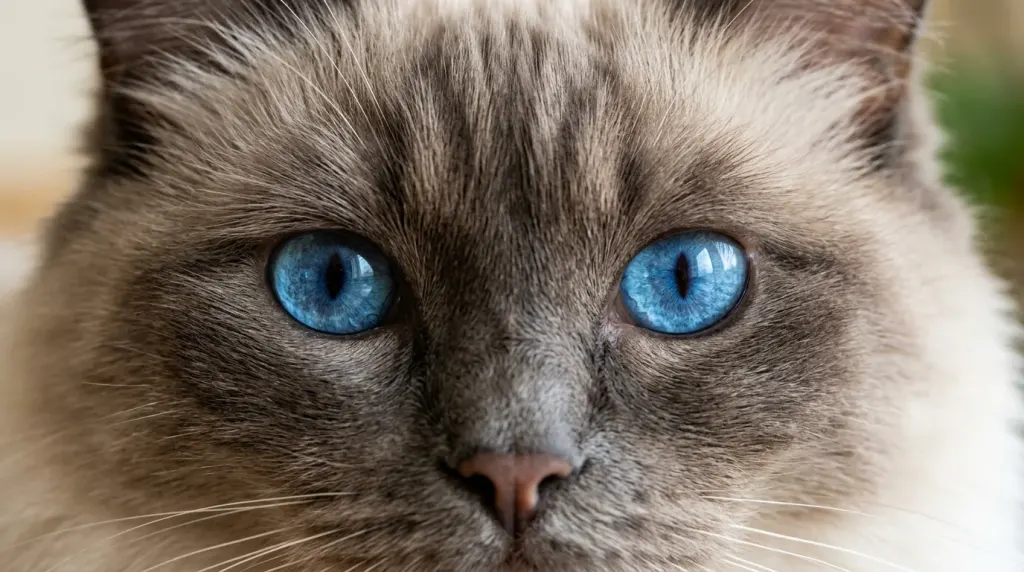
Ragdoll cats are rarely cross-eyed. While strabismus occurs frequently in traditional Siamese cats due to abnormal optic nerve wiring associated with the temperature-sensitive colorpoint gene, Ragdoll breeding standards emphasize large, oval, well-set blue eyes without structural alignment flaws.
In rare instances where a Ragdoll kitten exhibits mild cross-eyedness, it is typically a cosmetic optical trait inherited from distant pointed ancestors. However, if an adult Ragdoll suddenly develops misaligned eyes, uncoordinated movement, or rapid eye flickering (nystagmus), immediate veterinary attention is required to rule out middle ear infections, trauma, or neurological issues.
Owners curious about colorpoint eye traits can read more in our guide on Do All Ragdoll Cats Have Blue Eyes?.
Common Health Issues in Ragdolls (VetCompass Epidemiological Data)
While severe genetic conditions receive significant attention, everyday health disorders represent the majority of veterinary visits for Ragdoll owners. Large-scale epidemiological research provides a realistic picture of Ragdoll health in home environments.
According to data compiled by the Royal Veterinary College (RVC) VetCompass program, which analyzed primary care veterinary records across thousands of Ragdoll cats, over 60 percent of Ragdolls were diagnosed with at least one health disorder during routine monitoring. The study revealed that gastrointestinal, oral, and metabolic issues occur far more frequently than hereditary cardiac or renal failure.
| Health Disorder | Prevalence Rate (%) | Primary Management Strategy |
|---|---|---|
| Dental / Periodontal Disease | 8.84% | Daily tooth brushing, dental diets, professional scaling |
| Gastrointestinal Disorders / Diarrhea | 7.11% | High-quality diet, probiotics, parasite screening |
| Weight Gain / Obesity | 6.91% | Portion control, active play, interactive feeders |
| Overgrown Claws | 5.68% | Regular claw trimming, scratching posts |
| Hairballs / Vomiting | 5.02% | Frequent grooming, fiber-supplemented foods |
Epidemiological records also show that the median lifespan for Ragdoll cats reaches approximately 12.85 years under regular veterinary care. Renal disorders and chronic kidney changes represent a leading cause of mortality in senior cats, emphasizing the value of routine blood and urine testing starting around seven years of age.
Because coat management directly impacts hairball frequency and digestive health, owners dealing with routine shedding can read Do Ragdoll Cats Shed? How Much and Why for practical preventative advice. For detailed information regarding longevity and life stages, consult our resource on How Long Do Ragdoll Cats Live? Average Lifespan & Health Factors.
How to Monitor and Reduce Health Risks for Your Ragdoll
Preventative care and proactive home monitoring significantly reduce the impact of potential health problems in Ragdoll cats. Owners can take concrete steps to support long-term wellness:
- Verify Breeder DNA Health Testing: Request official DNA test results for both parent cats before purchasing a kitten. Reputable breeders clear their breeding stock for MYBPC3 (HCM) and PKD1 mutations.
- Schedule Annual Cardiac and Renal Screenings: Ask your veterinarian to evaluate heart sounds during annual checkups. For mature cats, periodic echocardiograms and abdominal ultrasounds provide definitive structural assessments.
- Maintain Strict Weight Management: Ragdolls are large-bodied, heavy-boned cats that mature slowly over three to four years. However, excess body fat strains joints and increases diabetes risk. Learn proper feeding guidelines in What Do Ragdoll Cats Eat?.
- Track Growth and Body Condition: Differentiate healthy muscle growth from fat accumulation. Review ideal body proportions in How Big Do Ragdoll Cats Get? Full Grown Size & Weight Guide.
- Establish Daily Dental Care: Brush your cat’s teeth with pet-safe toothpaste to prevent plaque accumulation and secondary oral inflammation.
Daily Care Habits for Maintaining Ragdoll Health
Daily management plays an essential role in keeping Ragdoll cats healthy and energetic. Because Ragdolls have soft, semi-long coats with minimal undercoat, regular grooming prevents painful mats and reduces hairball ingestion.
Integrating routine care routines helps owners identify physical changes early:
- Coat and Skin Maintenance: Regular brushing distributes natural skin oils, removes loose fur, and prevents painful coat matting throughout the year.
- Environmental Stress Reduction: Ragdolls thrive in peaceful, predictable environments. If living alongside other household pets, ensure stress-free interactions as detailed in Do Ragdoll Cats Get Along With Dogs? Temperament & Coexistence Guide.
- Bathing and Hygiene: While Ragdolls are meticulous self-groomers, occasional baths keep coat hair clean; explore preferences in Do Ragdoll Cats Like Water?.
- Routine Wellness Monitoring: Checking ears, eyes, and paws during weekly grooming sessions allows owners to detect minor skin or coat issues before they escalate.
Structured daily grooming and consistent routine checkups provide early detection of physical changes before mild issues develop into chronic conditions.
Combining structured veterinary screening with consistent home care ensures Ragdoll cats live full, healthy lives as affectionate companions.
Frequently Asked Questions
Do Ragdoll cats have a shorter lifespan than other cats?
No. Epidemiological studies from the Royal Veterinary College show that Ragdoll cats have a median lifespan of nearly 13 years, which is comparable to domestic shorthair cats receiving primary veterinary care. Well-cared-for indoor Ragdolls frequently live 15 years or longer.
Can hypertrophic cardiomyopathy (HCM) in Ragdolls be cured?
HCM cannot be cured once structural muscle thickening occurs, but veterinary treatments can control symptoms and slow disease progression. Veterinarians prescribe medications such as beta-blockers, ACE inhibitors, and antithrombotic therapies to regulate heart rate and lower blood clot risks.
Are all pointed cat breeds prone to being cross-eyed?
Colorpoint breeds carrying the temperature-sensitive coat mutation have a higher statistical incidence of optical nerve variation than non-pointed breeds. However, selective breeding in Ragdolls has largely eliminated cross-eyed traits, making strabismus uncommon in purebred Ragdoll lines.
Leave a Reply