
Table of Contents
Many cat owners wonder: do Ragdoll cats like water? Ragdoll cats are often curious about water and tolerate it better than many other domestic felines, but genuine enjoyment varies by individual. Their friendly personality makes them intrigued by dripping faucets or shallow basins. However, they do not inherently crave swimming, and their thick semi-longhair coat can make heavy water exposure tiring.
- Curiosity does not mean swimming interest: Ragdolls enjoy watching running water, but being submerged is a different experience.
- Heavy coats create drag: A wet Ragdoll coat absorbs significant water, making swimming physically exhausting and potentially unsafe.
- Individual temperament rules: Early exposure and personal experience dictate water comfort more than breed genetics.
- Gentle bathing techniques: Using lukewarm water, non-slip mats, and gradual introductions prevents stress during routine grooming.
Why Ragdolls Are Often Perceived as Water-Curious
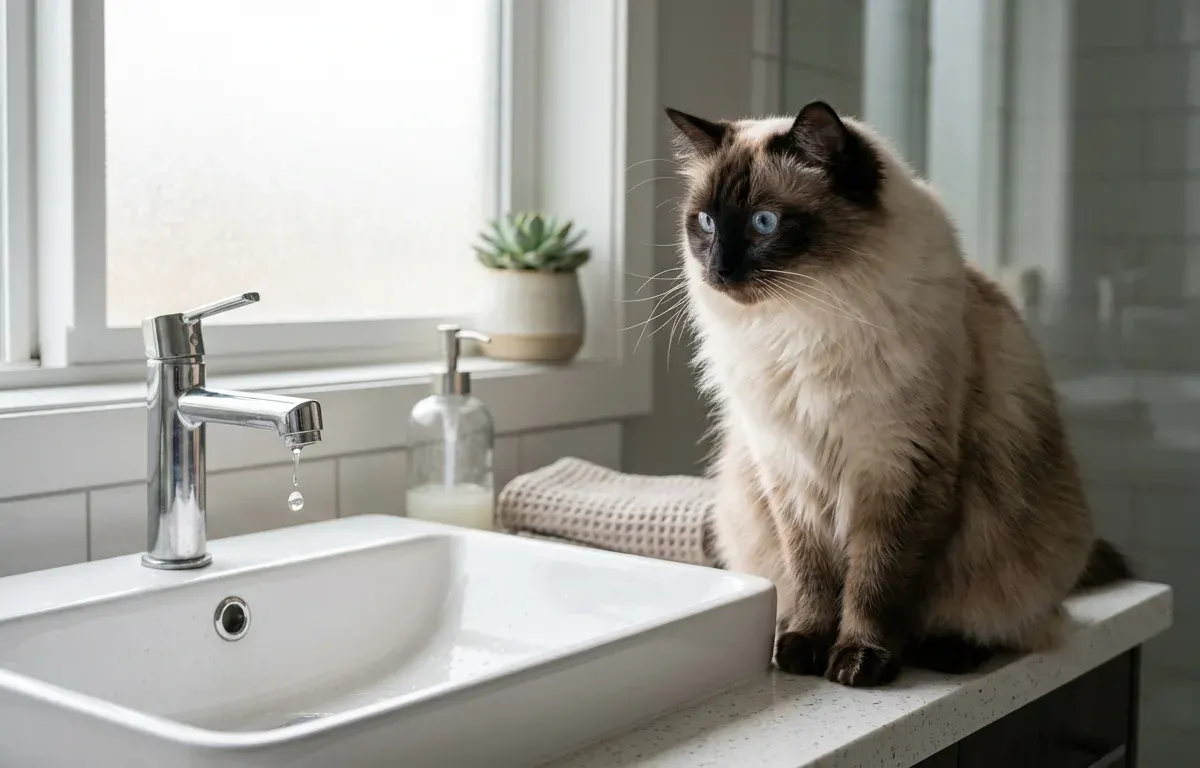
Many cat owners observe Ragdolls following them into the bathroom or dipping a paw into a bathtub. This water curiosity stems largely from their distinctive temperament. Ragdolls are famously people-oriented, calm, and inquisitive. When an owner turns on a sink faucet, a Ragdoll often investigates simply to participate in the activity rather than out of a specific love for swimming.
According to Dr. Pamela Perry, a veterinary behaviorist at Cornell University College of Veterinary Medicine, running water naturally entices cats because its motion and acoustic cues trigger investigative predatory instincts, whereas still water in a bowl offers far less sensory stimulation. For a full perspective on breed traits, exploring a Ragdoll cat breed overview highlights how their human-centric nature influences daily interactions.
According to the official CFA Ragdoll Breed Profile, Ragdolls are noted for their docile and relaxed disposition. Their semi-longhair coat features abundant plush guard hairs and a light undercoat, giving them a soft texture that stays manageable with regular grooming. This soft fur handles light moisture reasonably well, meaning a few water droplets on their back rarely trigger the immediate distress seen in shorter-coated or more anxious breeds.
Individual Personality vs. Breed-Wide Trait
Water preference in Ragdolls is an individual trait rather than a guaranteed genetic instinct. Two kittens from the same litter can display contrasting reactions when exposed to water:
- The Inquisitive Explorer: Dips paws into water bowls, swats at running sink streams, and sits on the tub edge during showers.
- The Cautious Observer: Watches water movement from a safe distance of several feet and prefers to stay dry.
- The Water-Averse Individual: Retreats immediately when hearing running faucets or splashing sounds.
Early positive experiences during kittenhood shape these reactions far more than breed genetics. A kitten introduced to calm, lukewarm water in a reassuring environment usually retains a tolerant attitude as an adult.
Breed Temperament and Behavioral Fit
The relaxed nature of the breed plays a central role in how Ragdolls respond to novel situations, including water encounters. While some breeds react to sudden splashing with immediate panic, Ragdolls generally process new stimuli with greater composure. Their trusting personality allows owners to manage routine care with minimal friction.
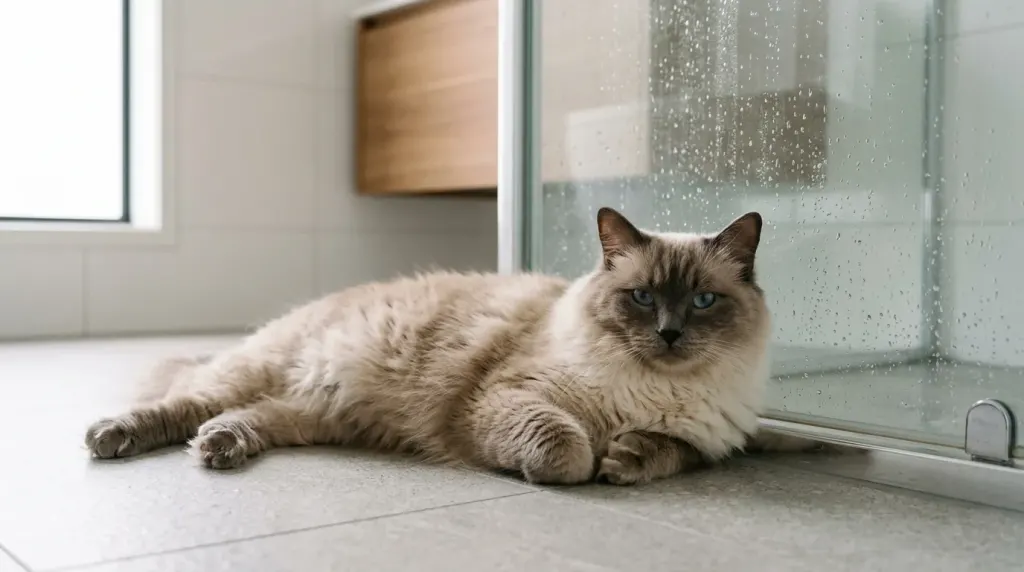
Understanding Ragdoll cat temperament and affection helps explain why these felines adapt well to household routines. Because they form strong bonds with family members, a Ragdoll may sit near an occupied bathtub simply to remain near their owner. This behavior represents social attachment rather than an urge to submerge in water.
Can Ragdoll Cats Swim Safely?
Ragdolls possess the innate paddling reflex shared by virtually all domestic cats. If placed in water, a Ragdoll will instinctively move its legs to keep its head above the surface. However, swimming is neither natural exercise nor safe recreation for this breed.
A primary physical concern is coat weight. The semi-longhair coat of a Ragdoll absorbs water quickly, becoming heavy and creating substantial hydrodynamic drag. Considering a full-grown Ragdoll weight ranges from 10 to 15 pounds for females and 15 to 20 pounds for mature males, adding several pounds of saturated fur creates rapid physical exhaustion.
In addition, swimming places intense physical exertion on the cardiovascular system. Owners aware of potential Ragdoll heart health issues should avoid placing their pets in stressful or physically demanding situations like swimming pools. Unsupervised access to deep water poses a severe drowning risk. While Ragdolls can paddle instinctively, their thick coat acts like a wet sponge, adding weight and draining energy quickly. Deep water should always be treated as a safety hazard rather than an entertainment zone.
Why Some Ragdolls Are Fascinated by Running Water
Observing a Ragdoll interact with a bathroom tap is one of the most entertaining aspects of living with the breed. Several natural factors drive this fascination:
- Visual and Auditory Stimulation: Dripping water reflects light and creates rhythmic sounds, providing immediate mental enrichment.
- Freshness Perception: Instinct inclines felines toward moving water, which in nature is cleaner and fresher than standing pools.
- Interactive Play: Water droplets moving across a surface mimic small prey, encouraging playful paw swatting.
- Companion Escort: Ragdolls frequently escort owners into bathrooms as part of their routine social check-ins.
If your Ragdoll insists on drinking from running taps, installing a pet water fountain offers continuous filtration while satisfying their preference for moving streams.
Why Some Ragdolls Develop Fear of Water
Despite their general tolerance, individual Ragdolls can develop a strong aversion to water. Common triggers for water fear include:
- Sudden Submersion: Being dropped into a full tub creates panic and instills lasting fear.
- Temperature Extremes: Water that is too hot or too cold causes discomfort and negative associations.
- Slippery Surfaces: Slipping on smooth porcelain tub floors creates a feeling of lost physical control.
- Loud Spray Sounds: High-pressure showerheads generate harsh noise that startles sensitive ears.
Overcoming an established fear requires patient desensitization using positive reinforcement, small water amounts, and high-value treats over several weeks.
How to Safely Introduce a Ragdoll to Water
When routine bathing becomes necessary due to coat soilage, following a calm procedure ensures a stress-free experience for both owner and cat. Reviewing Ragdoll shedding and coat care helps determine how frequently your cat needs grooming support.
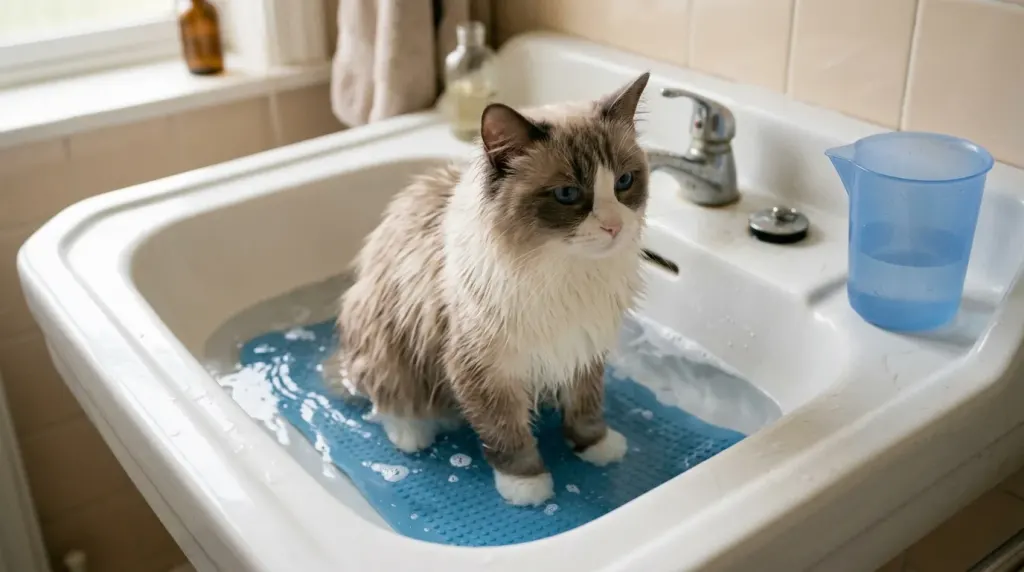
Follow these steps for a safe bath:
- Prepare the Area: Place a non-slip rubber mat inside the sink or tub to provide secure footing.
- Fill with Shallow Water: Add 2 to 3 inches of lukewarm water before bringing the cat into the room to avoid loud running water sounds.
- Use a Pouring Cup: Use a plastic pitcher or cup to gently pour warm water over the body, keeping the head completely dry.
- Apply Cat-Safe Shampoo: Use a mild formula designed for feline skin pH, working it gently through the fur.
- Rinse Thoroughly: Ensure all soap residue is rinsed away to prevent skin irritation during self-grooming.
- Towel Dry Immediately: Wrap the cat in a large, warm towel and gently pat dry in a draft-free room.
For owners evaluating overall grooming commitment, understanding the nuances of caring for a Ragdoll cat provides helpful context for long-term maintenance. Further practical bathing tips are available in the ASPCA Cat Grooming Guidelines.
What Not to Do When Introducing Water
- Never use human shampoo or body wash, which disrupts the natural skin acid mantle.
- Never spray water directly into the face, eyes, or ears, as moisture in ear canals can cause infection.
- Never leave a cat unattended near standing water in bathtubs or sinks.
- Never rush the process or use force, which escalates anxiety and damages trust.
Note: Routine full-body baths are rarely needed if a Ragdoll is combed regularly. Spot-cleaning soiled areas with a damp cloth is usually sufficient for daily upkeep.
Frequently Asked Questions
Do Ragdoll cats like baths?
Most Ragdolls do not actively enjoy baths, though their calm nature allows them to tolerate gentle bathing better than many breeds. Keeping water shallow, warm, and quiet minimizes stress.
Are Ragdoll cats scared of water more than other breeds?
No, Ragdolls are generally less fearful of water than higher-strung breeds due to their laid-back temperament. However, traumatic past experiences can cause any individual cat to develop water aversion.
Is it safe to leave a Ragdoll near a pool unsupervised?
No, leaving a Ragdoll near a swimming pool without supervision is dangerous. If a cat falls in, its heavy fur coat quickly becomes saturated, making it difficult to climb out without assistance.
Leave a Reply