
Table of Contents
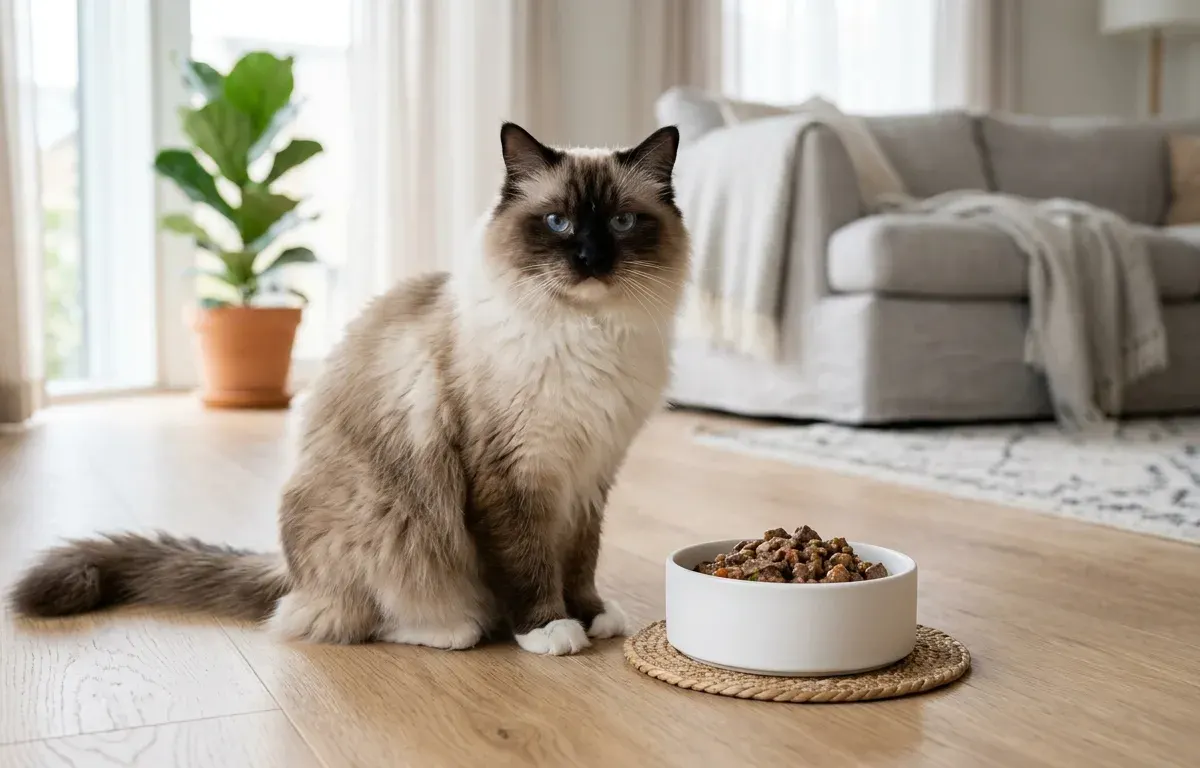
When cat owners ask what do ragdoll cats eat, the answer is that Ragdoll cats require a complete and balanced diet rich in high quality animal protein, moderate fat, and low carbohydrates tailored to their specific life stage, with adult maintenance foods containing at least 26 percent crude protein on a dry matter basis. Feeding canned wet food is strongly recommended to maintain optimal hydration and prevent urinary tract issues, while daily treats should never exceed 10 percent of their total daily caloric intake.
- Animal protein from chicken, turkey, or fish is essential because Ragdolls are obligate carnivores needing taurine and arachidonic acid.
- An adult Ragdoll weighing 10 to 15 pounds typically requires between 250 and 380 calories per day based on activity level.
- Wet food containing at least 75 percent moisture supports kidney and urinary health better than exclusive dry kibble diets.
- Toxic items such as onions, garlic, chocolate, grapes, raisins, xylitol, and cow milk must be kept away from Ragdolls.
Ragdoll cats have the same core nutritional needs as other cats
Ragdoll cats are magnificent, large framed felines known for their affectionate nature and plush coats, but at a biological level, their digestive systems are identical to those of all domesticated cats. Cats belong to the order Carnivora and are classified as obligate carnivores. This biological status means their bodies are specialized to derive essential nutrients almost exclusively from animal tissue, as documented by the Cornell Feline Health Center. Unlike omnivorous animals, cats cannot manufacture certain crucial amino acids and fatty acids within their own metabolic pathways and must consume them directly through meat.
To maintain physical health, a Ragdoll requires daily dietary intake of animal protein, healthy fats, vitamins, and minerals meeting feline health guidelines established by the Cornell Feline Health Center. Key nutrients include taurine, an amino acid vital for heart function and vision, and arachidonic acid, an essential fatty acid found only in animal fats. A complete feeding program should align closely with a general care routine for ragdolls to ensure long-term vitality. According to the Cornell Feline Health Center, cats require specific nutrients such as taurine, preformed Vitamin A, and arachidonic acid that exist naturally only in animal-based ingredients. Plant-based protein substitutes fail to provide the complete amino acid profile required for feline metabolic stability.
Note: Feeding a cat a vegetarian or vegan diet leads to severe nutritional deficiencies, including dilated cardiomyopathy and vision loss (Cornell Feline Health Center). Always choose foods formulated specifically for obligate carnivores.
How much protein, fat, and carbohydrates ragdolls need
Understanding macronutrient ratios is fundamental to building a healthy diet for a Ragdoll. Cats utilize protein and fat as primary energy sources rather than carbohydrates, according to guidelines from the Cornell Feline Health Center. A balanced commercial diet mirrors the dietary proportions of natural feline prey, emphasizing high protein, moderate fat, and minimal carbohydrate content.
AAFCO minimum nutrient standards for adult cats
The Association of American Feed Control Officials (AAFCO) establishes baseline nutritional standards for commercial pet foods in North America. For adult cat maintenance, AAFCO standards require a minimum crude protein content of 26 percent on a dry matter basis. For growth and reproduction, such as during kittenhood or pregnancy, the AAFCO crude protein minimum increases to 30 percent. Crude fat minimums are set at 9 percent for both adult maintenance and growth phases.
| Life Stage | Minimum Crude Protein (Dry Matter) | Minimum Crude Fat (Dry Matter) | Recommended Carbohydrate Limit |
|---|---|---|---|
| Kitten / Growth | 30% | 9% | Under 10% |
| Adult Maintenance | 26% | 9% | Under 10% to 15% |
| Senior (7+ Years) | 28% to 32% | 10% to 12% | Under 10% |
Why low-carbohydrate, high-protein diets suit an obligate carnivore
Feline digestive anatomy lacks the high enzyme activity necessary to process large quantities of dietary starches. Cats produce minimal salivary amylase and have lower levels of pancreatic amylase compared to dogs or humans. When fed diets high in soluble carbohydrates, cats store the excess energy as body fat rather than burning it efficiently. Keeping carbohydrates under 10 percent of total daily calories helps maintain lean muscle mass and lowers the risk of metabolic issues like feline diabetes, following recommendations from the Cornell Feline Health Center.
How many calories a ragdoll needs per day
Ragdolls are among the largest domestic cat breeds, with adult females typically weighing 10 to 15 pounds and adult males reaching 15 to 20 pounds or more. Because energy requirements correlate with body mass, understanding your ragdoll’s large adult size helps in determining accurate daily food portions.
Daily energy expenditure for cats relies on Resting Energy Requirement (RER), calculated using the metabolic formula RER = 70 x (weight in kilograms)^0.75 published by feline health authorities including the Cornell Feline Health Center. For an average indoor cat, daily caloric intake equals roughly 1.2 times RER for weight maintenance.
Calorie needs by weight for adult ragdolls
Calorie needs vary based on age, neuter status, and activity level. Below is an estimated daily calorie intake breakdown for adult indoor Ragdolls per day based on activity level and AAFCO maintenance energy guidelines:
| Body Weight (lbs) | Body Weight (kg) | Estimated Maintenance Calories (kcal/day) |
|---|---|---|
| 10 lbs | 4.5 kg | 200 – 230 kcal |
| 12 lbs | 5.4 kg | 230 – 260 kcal |
| 15 lbs | 6.8 kg | 280 – 320 kcal |
| 18 lbs | 8.2 kg | 320 – 360 kcal |
| 20 lbs | 9.1 kg | 350 – 400 kcal |
Calorie needs for ragdoll kittens
Because Ragdolls mature slowly and continue growing up to 3 or 4 years of age, kittens require significantly more energy per pound of body weight than adults. During rapid early development, kitten calorie needs can reach two to three times the adult maintenance level per unit of weight, according to growth data from the Cornell Feline Health Center. Supporting proper skeletal development during early ragdoll kitten growth lays the groundwork for a long, healthy life.
Adjusting calories for senior or less active ragdolls
As Ragdolls reach 7 to 10 years of age, their metabolic rate slows down and voluntary physical activity decreases. Senior cats should be monitored closely to prevent age-related weight gain or muscle wasting. Caloric density may need to be adjusted downward while keeping protein levels elevated to protect muscle mass, aligned with senior care guidelines from the Cornell Feline Health Center.
Wet food, dry food, or a mixed diet
Cat owners often wonder whether wet canned food or dry kibble is better for their Ragdoll. Both commercial formats offer distinct advantages, and combining them into a mixed diet is a popular approach. Evaluating daily food choices helps manage the ongoing cost of feeding a ragdoll while preserving health. According to veterinary nutritionists at the ASPCA and Cornell Feline Health Center, feeding canned wet food as at least half of a cat’s daily diet provides vital hydration that kibble cannot supply. Cats naturally have a low thirst drive, relying on food moisture to meet water needs.
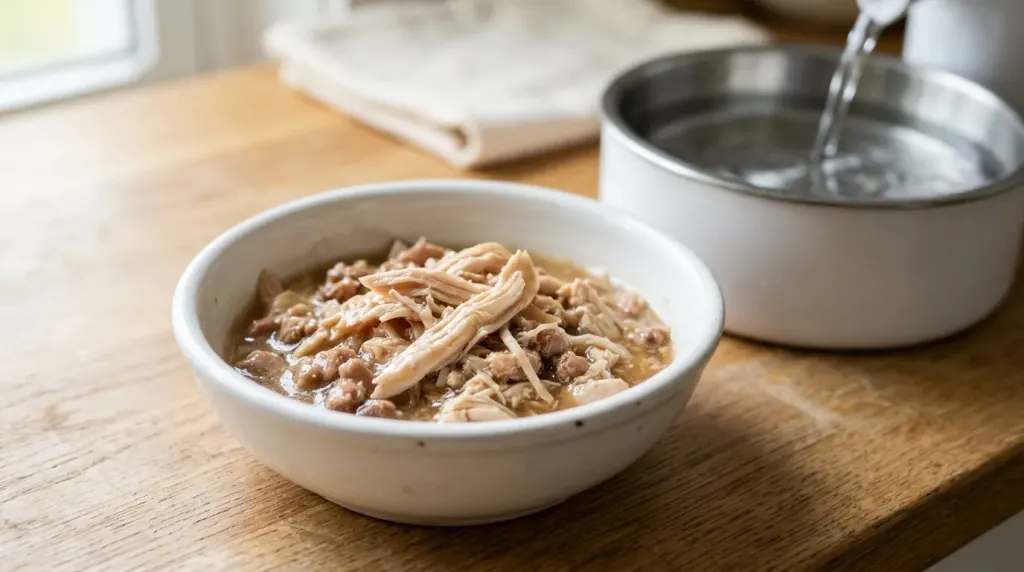
Note: Dry kibble alone contains only 6 to 10 percent moisture, which can leave cats in a state of mild, chronic dehydration if they do not drink extra water frequently (Cornell Feline Health Center).
Why wet food supports hydration and urinary health
Canned wet food typically consists of 75 to 82 percent moisture, supporting kidney function as noted by the Cornell Feline Health Center. High moisture intake expands urinary volume and dilutes urine concentration, reducing the risk of bladder stones, urinary crystals, and Feline Lower Urinary Tract Disease (FLUTD). Wet food also allows cats to eat a larger physical volume for fewer calories, aiding weight management.
When dry food still has a role
Dry kibble is convenient, cost effective, and can remain in a bowl for several hours without spoiling. High quality dry foods formulated with low carbohydrate levels meeting AAFCO standards can supplement wet food meals. If kibble is part of the routine, ensure fresh water is available nearby at all times.
Feeding schedule by life stage
A consistent feeding schedule prevents overeating and establishes healthy digestive patterns. Free feeding dry food continuously often leads to obesity in calm indoor Ragdolls.
Kittens under 6 months
- Age 8 to 12 weeks: 4 small meals per day of kitten formula wet food.
- Age 3 to 6 months: 3 scheduled meals per day.
- High energy demands require nutrient dense kitten formulas rich in DHA and essential minerals meeting AAFCO growth profiles.
Adults and seniors
- Age 1 to 7 years: 2 portion-controlled meals per day (morning and evening).
- Age 7+ years: 2 meals per day tailored to senior kidney and joint health.
Water intake requirements
Cats require approximately 3.5 to 4.5 fluid ounces of water per 5 pounds of body weight daily from food and drinking combined, according to research by the Cornell Feline Health Center. For a 12-pound Ragdoll, total daily fluid requirement is roughly 8.5 to 11 fluid ounces (250 to 325 ml).
To encourage hydration:
- Place multiple water bowls away from litter boxes and food bowls.
- Use stainless steel, ceramic, or glass bowls rather than plastic.
- Consider a circulating pet fountain, as many cats prefer moving water.
- Serve wet canned food daily to automatically deliver moisture.
Foods and ingredients ragdolls should avoid
Emergency Directive: If your cat ingests or is suspected of ingesting any toxic food or chemical, contact your veterinarian or the ASPCA Animal Poison Control Center IMMEDIATELY. Do not wait for symptoms to develop, as delay can lose the critical emergency treatment window. Never attempt to induce vomiting at home unless explicitly instructed to do so by a licensed veterinarian.
According to the ASPCA Animal Poison Control Center, certain common household items and ingredients are toxic to cats and must never be fed to your Ragdoll:
- Onions, Garlic, Shallots, Chives: Contain sulfoxides that destroy feline red blood cells, causing hemolytic anemia, as warned by ASPCA Animal Poison Control.
- Chocolate and Caffeine: Contain theobromine and caffeine, which trigger cardiac arrhythmias, tremors, and seizures (ASPCA Animal Poison Control).
- Grapes and Raisins: Can induce acute, severe kidney failure in felines (ASPCA Animal Poison Control).
- Xylitol: An artificial sweetener found in sugar-free products that causes rapid insulin release and liver failure (ASPCA Animal Poison Control).
- Raw Fish and Raw Eggs: Raw fish contains thiaminase, an enzyme that destroys Vitamin B1 (thiamine); raw eggs carry Salmonella risks and avidin, which blocks biotin absorption (Cornell Feline Health Center).
- Cow Milk and Cream: Most adult cats are lactose intolerant and lack lactase enzymes, leading to diarrhea and stomach cramps (Cornell Feline Health Center).
Diet’s role in weight and health monitoring
Monitoring your Ragdoll’s weight and body condition score (BCS) is a key aspect of routine care. Because of their dense coat and loose abdominal skin pad (primordial pouch), visual inspection alone can be deceiving. Hands-on palpation of the ribs and waistline is necessary to assess whether your cat is at a healthy weight. Understanding how their easygoing ragdoll temperament and appetite influence daily energy expenditure makes regular tracking essential. Detecting changes early prevents underlying health problems in ragdolls.

Use a 1-to-9 Body Condition Score chart where a score of 4 to 5 represents ideal body condition, as established by veterinary bodies including the Cornell Feline Health Center. Ribs should be easily felt under a thin layer of fat without excess pressure.
Special considerations tied to the ragdoll breed
While nutritional fundamentals apply across all cats, specific characteristics of the Ragdoll breed require tailored diet management.
Coat, fur health, and grooming needs
Ragdolls feature a plush, semi-longhair coat that requires structural protein and dietary fatty acids to stay soft and reduce matting. Incorporating Omega-3 (EPA and DHA) and Omega-6 fatty acids supports skin barrier function and coat shine. Maintaining coat health reduces shedding and hairball formation, especially when managing ragdoll coat and shedding alongside unique coat patterns like the mink ragdoll coat type.
Weight-related health risks in a large-bodied breed
Ragdolls possess an extraordinarily docile, relaxed temperament. Their gentle nature means they may engage in less spontaneous intense exercise compared to higher energy breeds. Pairing their easygoing temperament and appetite with unmonitored feeding increases the risk of rapid weight gain, putting strain on hips and joints.
Signs of common health issues linked to diet
If your cat displays acute distress, severe vomiting, or suspected poisoning, contact a veterinarian or the ASPCA Animal Poison Control Center IMMEDIATELY rather than waiting to monitor symptoms. For routine health tracking, consult your veterinarian if you observe:
- Frequent vomiting or hairball regurgitation.
- Unexplained weight loss or rapid weight gain.
- Soft stools, diarrhea, or constipation.
- Dull, dry coat with excessive flaking or itching.
- Lethargy and reduced interest in interaction.
Frequently Asked Questions
Do Ragdoll cats need a breed-specific diet?
No, Ragdoll cats do not require a specialized breed-branded commercial diet. They require high quality cat food that meets AAFCO nutritional standards for their current life stage, emphasizing real meat protein and moisture.
How many times a day should a Ragdoll cat eat?
Adult Ragdolls do best with two measured meals per day. Kittens under six months of age should eat three to four smaller meals daily to match their rapid growth rate.
Can Ragdoll cats eat raw food diets?
Raw diets carry risks of bacterial contamination such as Salmonella and E. coli, as well as potential nutritional imbalances. If considering raw food, consult a board certified veterinary nutritionist to ensure safety and completeness.
Are dairy products safe for Ragdoll cats?
No, dairy products like cow milk, cheese, and cream are not recommended. Most adult cats lack the lactase enzyme needed to digest lactose, which leads to gastrointestinal distress.

Leave a Reply