
Table of Contents
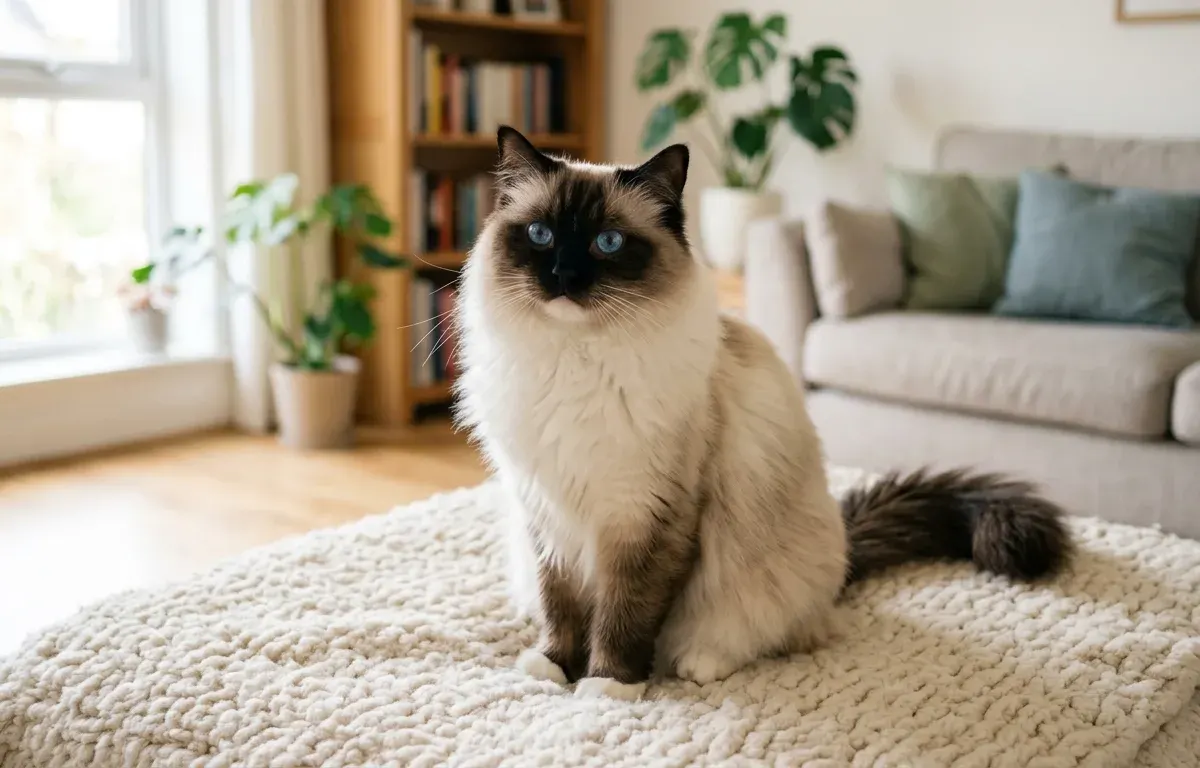
Anyone asking what is a Ragdoll cat will find a large, muscular, semi-longhaired domestic feline breed characterized by vivid oval blue eyes, temperature-sensitive pointed coat patterns, and a remarkably calm, affectionate personality. Developed in California during the 1960s, the breed earned its name from its distinct habit of relaxing completely and going limp when cradled in human arms.
- Developed in Riverside, California in the 1960s by Ann Baker and recognized globally by major registries such as TICA and CFA.
- Displays a sturdy body frame, semi-long coat with minimal undercoat, intense blue eyes, and classic pointed color patterns.
- Renowned for a quiet, gentle, and companionable disposition often likened to that of a devoted puppy.
Origin of the Ragdoll breed
The Ragdoll cat breed originated in Riverside, California, during the early 1960s. Breeder Ann Baker developed the founding stock from free-roaming domestic cats. The primary matriarch was a white domestic longhaired cat named Josephine, known for an unusually serene temperament. By breeding Josephine’s offspring with other selective longhaired felines displaying quiet dispositions, Baker established the core physical and behavioral traits of the modern Ragdoll. Early breeding programs also established specialized coat lines, including Mink Ragdoll coat line origins, which display richer coloration and distinct eye variations.
Formal registration by international feline organizations followed in subsequent decades. The International Cat Association (TICA) accepted the breed for registration in 1979 and granted full championship status in 1993. The Cat Fanciers’ Association (CFA) recognized the breed for registration in 1993, followed by full championship status in 2000. Readers exploring where Ragdoll cats originate from can discover additional details regarding early breeding lines and historical milestones.
Physical characteristics that define the breed
The combination of substantial body size, expressive oval blue eyes, and a plush semi-long coat creates the breed’s unmistakable appearance. Ragdolls rank among the largest domesticated feline breeds. They possess broad chests, strong necks, and solid bone structures beneath their soft fur.
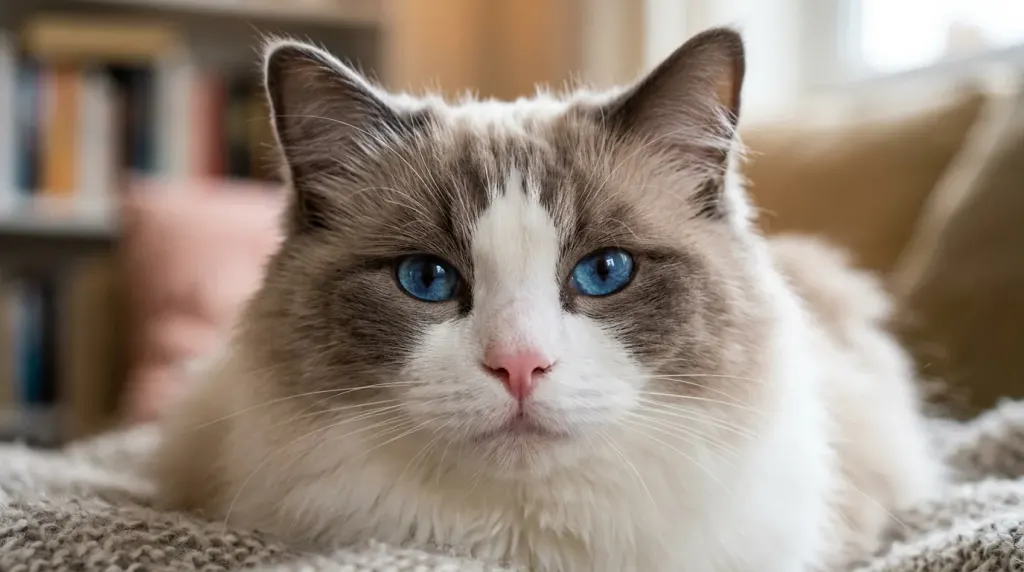
Unlike double-coated breeds with heavy undercoats, the coat consists primarily of silky guard hairs with very little undercoat. This plush texture feels soft to the touch and resists severe tangling compared to other longhaired breeds. Owners monitoring full-grown Ragdoll size and weight should note that these cats mature slowly, often taking 3 to 4 years to reach full physical size and coat density. Adult males generally weigh between 15 and 20 pounds (6.8 to 9.1 kg), while adult females typically weigh between 10 and 15 pounds (4.5 to 6.8 kg).
Coat colors and patterns
All purebred Ragdolls feature point coloration, meaning body fur remains lighter in tone than the cooler extremities on the face, ears, paws, and tail. Kittens are born entirely white, with color points gradually developing over their first few weeks and darkening as they mature. Standard point colors include seal, blue, chocolate, lilac, red, and cream.
According to the Cat Fanciers’ Association breed standard, purebred pointed Ragdolls must possess blue eyes. Owners investigating blue eye color requirements in Ragdolls will find that vivid blue eyes remain mandatory for traditional pointed show cats. The breed standard recognizes three main coat patterns:
- Colorpoint: Classic dark points on the ears, face, paws, and tail contrasting against a lighter torso without white markings.
- Mitted: Dark points accompanied by white paws on the front legs, white boots on the hind legs, a white chin, and a white belly stripe.
- Bicolor: Dark points on the ears and tail with an inverted white V on the face, white chest, white legs, and white stomach.
In addition to traditional pointed varieties, enthusiasts studying Mink Ragdoll coat and eye variations often compare specialized coat lines that display richer body coloration and varied eye shades.
Temperament: why Ragdolls are called “puppy cats”
For pet owners wondering what Ragdoll cats are like to live with, personality serves as a hallmark trait. Often described as puppy-like, these gentle felines frequently greet family members at the door, follow human companions from room to room, and seek out interactive play. Their affectionate disposition makes them exceptionally well suited for domestic living.
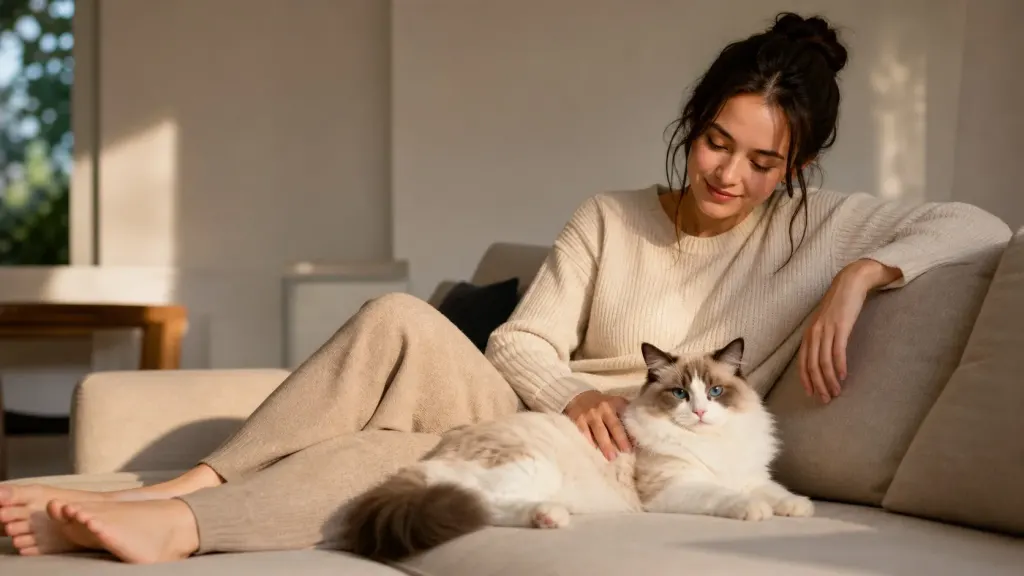
The breed earned its distinctive name because many individuals relax their muscles completely when picked up, cradled, or petted. They possess soft, low voices and rarely vocalize excessively. Research on Ragdoll friendliness and family fit demonstrates that their calm nature makes them excellent additions to households with children and seniors. Furthermore, owners considering Ragdoll coexistence with dogs will find that their patient attitude allows them to adapt well to peaceful canine companions when introduced properly. The tranquil nature of the Ragdoll makes it an ideal indoor companion, though its trusting character requires protective indoor care rather than unsupervised outdoor roaming.
General health considerations
These cats are generally healthy and robust felines. According to feline lifespan findings documented in Wikipedia’s breed overview and Royal Veterinary College VetCompass study data, the median lifespan for the breed stands at 12.85 years, with many well-cared-for indoor cats living 15 years or longer. Responsible breeders screen breeding stock for hypertrophic cardiomyopathy (HCM), a primary genetic heart condition associated with the breed.
Maintaining a balanced diet and regular exercise routine helps prevent obesity, as heavy-bodied breeds can gain excess weight if overfed. Prospective owners reviewing common Ragdoll health problems and researching average Ragdoll lifespan can establish proactive veterinary care schedules to support long-term wellness.
Note: Annual veterinary examinations, preventive dental care, and routine parasite control remain essential for maintaining optimal health throughout all life stages.
How a Ragdoll differs from other longhaired cats
First-time owners often evaluate how Ragdolls compare to similar semi-longhaired breeds like the Birman or Maine Coon. While sharing plush coats and gentle demeanors, key physical differences separate these breeds:
- Birman Comparison: Mitted Ragdolls display a distinct white chin, whereas Birmans feature a colored chin. Ragdolls also possess a noticeably larger, heavier bone structure.
- Maine Coon Comparison: Maine Coons possess a shaggier double coat, prominent ear tufts, and square muzzles, whereas Ragdolls feature a silkier single-layer coat and wedge-shaped heads.
Learning how to identify a Ragdoll cat helps cat lovers verify true breed markers through coat texture, body shape, and eye characteristics.
Understanding the Ragdoll cat breed
When evaluating official breed standards, owners soon discover what’s special about a Ragdoll cat: its unique balance of impressive physical size and remarkably soft, affectionate behavior. Cat owners seeking to confirm authentic traits can learn how to identify a Ragdoll cat through specific physical markers and coat patterns. Whether admired for vivid blue eyes or docile companionship, these felines stand out as extraordinary household pets. Exploring a comprehensive Ragdoll cat breed guide offers further insights into daily care, feeding routines, and breed heritage.
Frequently Asked Questions
How long do Ragdoll cats live?
Ragdoll cats typically live between 12 and 15 years when provided with proper indoor housing, balanced nutrition, regular grooming, and routine veterinary checkups.
Do Ragdoll cats require special grooming?
Ragdoll coats lack a heavy undercoat, making them less prone to severe matting than double-coated breeds. Brushing 2 to 3 times per week with a stainless steel comb effectively removes loose hair and maintains coat smoothness.
Are Ragdoll cats strictly indoor pets?
Yes, Ragdolls should be kept strictly indoors. Their relaxed, non-aggressive temperament makes them poorly equipped to defend themselves against outdoor hazards, stray animals, or traffic.
Leave a Reply