
Table of Contents
Learning how to potty train a French Bulldog requires a consistent daily routine, frequent outdoor breaks, immediate positive reinforcement, and thorough enzymatic cleaning of accidents. Because Frenchies have small bladders and an independent temperament, successful housebreaking typically takes 4 to 6 months of patient effort, depending on the individual puppy.
- Establish a fixed schedule by taking your puppy out every 1 to 2 hours, immediately after waking, eating, or playing.
- Use a properly fitted crate to draw on your dog's natural instinct not to soil their sleeping space.
- Reward correct potty behavior within 3 seconds using small treats and praise rather than punishing indoor accidents.
- Clean accidents thoroughly with an enzymatic cleaner to remove scent cues that trigger repeat soiling.
Why French Bulldogs Can Be Harder to Potty Train
Potty training a French Bulldog presents unique challenges compared to many other breeds. Understanding these physiological and behavioral traits helps set realistic expectations for your puppy’s progress.
First, French Bulldogs have a compact body size and small bladder capacity. Young Frenchie puppies under 12 weeks old simply cannot hold their urine for long periods. Their digestive systems process food rapidly, creating a frequent need to eliminate throughout the day.
Second, the breed’s independent nature can make consistency more demanding. According to Dr. Mary Burch, AKC Family Dog Director and Certified Applied Animal Behaviorist, French Bulldogs respond exceptionally well to positive, reward-based methods but can resist rigid or harsh conditioning. Their willingness to cooperate increases when training feels like a rewarding game rather than a forced chore.
Finally, their strong attachment to their owners means routine disruptions or separation stress can impact housebreaking progress. If you are curious about their natural social tendencies, exploring Why Are French Bulldogs So Clingy? provides useful context on how their temperament affects daily training routines. Understanding general breed characteristics in the French Bulldog Dog Breed guide helps owners align expectations with their pet’s natural habits. French Bulldogs are not unintelligent, but their stubborn streak requires handlers to be more patient and consistent than with eagerness-to-please breeds like Retrievers.
Note: Young puppies under 16 weeks usually require at least one middle-of-the-night potty trip until their bladder muscle control matures.
Step 1: Essential Setup Before Housebreaking Your Frenchie
Before introducing your puppy to a housebreaking schedule, prepare the necessary tools and designated areas to make training smooth and effective.
- Designated Outdoor Potty Spot: Choose a quiet, low-distraction grass or yard area. Taking your puppy to the exact same location allows lingering scents to trigger their natural elimination instinct.
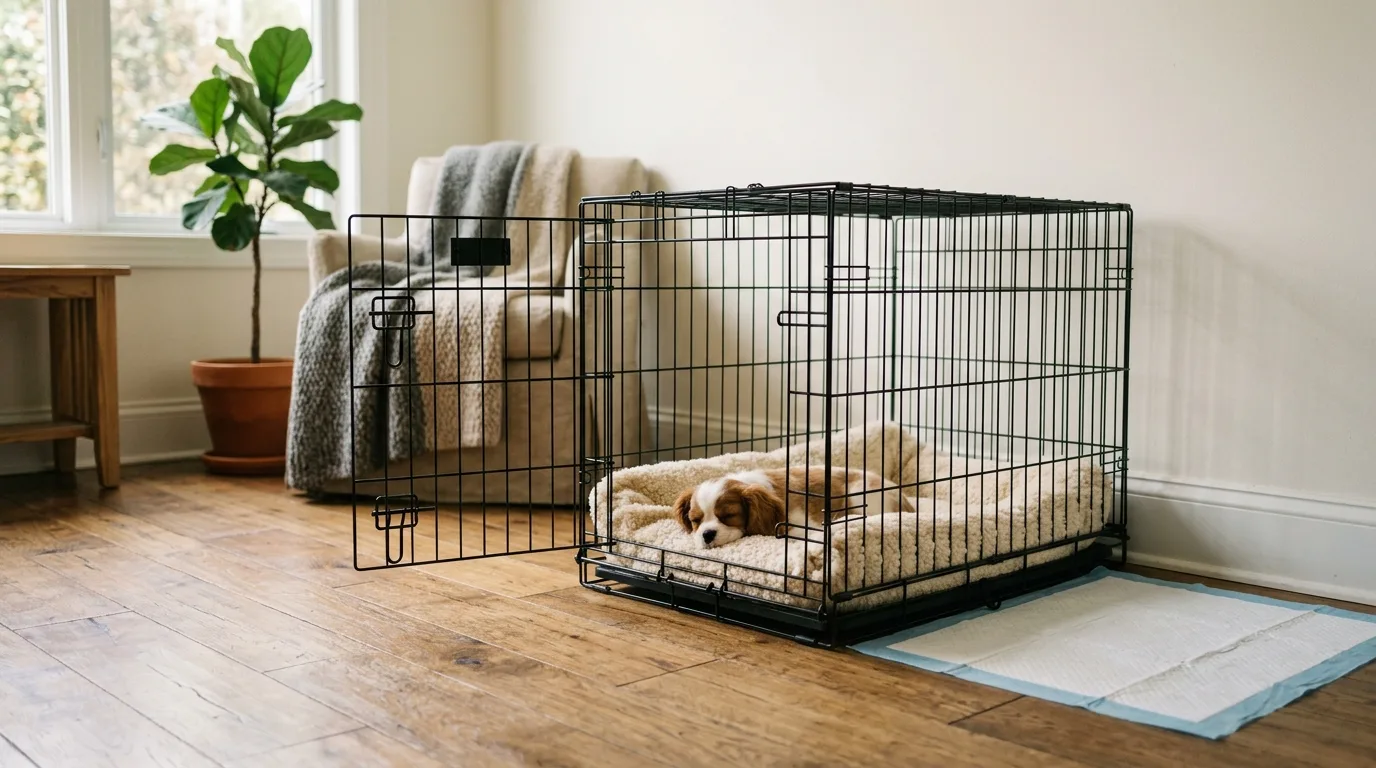
- Properly Sized Crate: A crate acts as a safe den that encourages bladder control, as dogs naturally avoid soiling where they sleep. Choosing the correct enclosure dimensions is essential to prevent your puppy from turning one side into a bathroom. For detailed guidance on picking the right dimensions, read What Size Crate for a French Bulldog.
- Enzymatic Cleaning Spray: Standard household cleaners contain ammonia or fragrance that masks smells for humans but leaves behind chemical markers dogs can sniff out. Enzymatic sprays break down organic proteins completely.
- High-Value Training Treats: Keep small, soft treats readily accessible so you can reward your Frenchie immediately upon finishing outdoor pottying.
Step 2: Follow a Daily French Bulldog Potty Schedule
Consistency is the single most effective element when housebreaking a French Bulldog. Establishing a predictable routine prevents indoor accidents before they occur.
Recommended Hourly Outing Frequency by Age
Age of Frenchie
Maximum Time Between Outings
Typical Daily Schedule Focus
8 to 12 Weeks
Every 30 to 60 Minutes
Immediately after sleeping, eating, drinking, and play sessions
12 to 16 Weeks
Every 1 to 2 Hours
Introduction of consistent mealtime intervals and nap trips
4 to 6 Months
Every 2 to 3 Hours
Routine consolidation; solid bladder control during daytime naps
6+ Months
Every 4 to 6 Hours
Standard adult routine with morning, midday, evening, and bedtime trips
A practical rule of thumb recommended by veterinary behavioral guidelines is that a puppy can reliably hold their bladder for a number of hours equal to their age in months plus one hour. For example, a 3-month-old puppy can hold urine for roughly 4 hours under calm, resting conditions, though active or post-meal times require much more frequent breaks.
Maintaining steady digestion is equally important for a predictable potty schedule. Safe dietary options like Can French Bulldogs Eat Chicken? explain how lean proteins support gentle digestion during early housebreaking.
Step 3: Implement Positive Reinforcement and Spot Potty Cues
Rewarding desired behavior builds long-term habits much faster than scolding mistakes. Learning to read your puppy’s physical signals allows you to intercept accidents early.
Recognizing Pre-Potty Behavioral Signals
French Bulldogs display distinct physical cues right before they need to eliminate:
- Sudden sniffing of the floor while moving in tight circles.
- Abruptly pacing away from play activities toward corners or doors.
- Whining, restlessness, or sitting by the exterior door.
- Squatting or arching the back slightly while walking.
Execution of Positive Reinforcement
When you recognize these cues, quickly take your puppy to their designated outdoor spot on a leash. Stand quietly and allow them up to 5 minutes to sniff and eliminate.
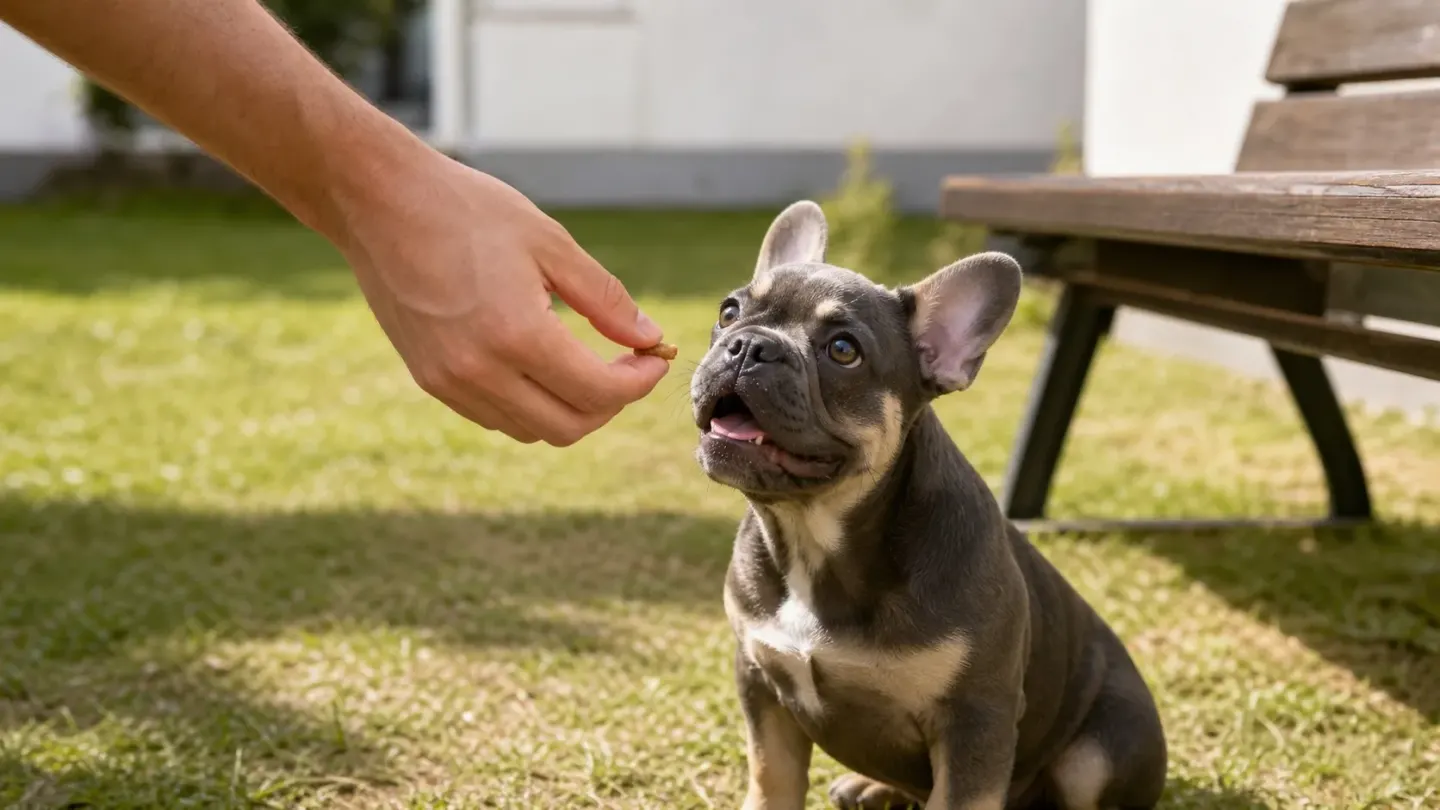
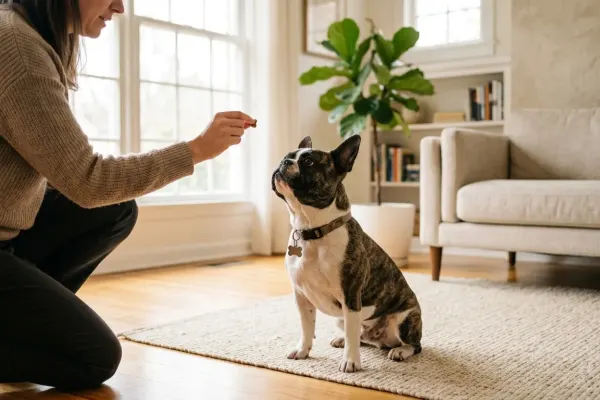
The moment your Frenchie finishes pottying, deliver praise in an upbeat voice and offer a treat within 3 seconds. Timing matters most because dogs associate rewards with whatever action they performed in the immediate second prior. Never give the treat inside the house after walking back in, as the puppy will associate the reward with entering the building rather than eliminating outside. Understanding how their cognitive traits influence learning speed in Are French Bulldogs Smart? helps owners calibrate reward timing effectively. Immediate reward timing creates a clear mental connection between outdoor elimination and positive outcomes. According to ASPCA house training guidelines, you must praise and reward your dog immediately after they finish eliminating, because delayed praise loses its direct association with the potty act itself.
Step 4: Handle Housebreaking Accidents Correctly
Accidents are a normal part of housebreaking a puppy. How you react to indoor messes directly impacts your Frenchie’s confidence and trust.
If you catch your puppy in the middle of an indoor accident, interrupt them calmly with a light word like “outside” and carry them straight to their outdoor potty spot. If they finish outside, reward them warmly.
If you find a clean-up mess after it happened, simply clean it up without scolding or acknowledging the puppy. Dogs live in the present moment; reacting to a past accident only teaches your pet to fear your presence or hide in secluded rooms when eliminating.
- Do: Clean the area thoroughly with an enzymatic cleaner to remove urine scent markers.
- Do: Keep a simple log of accident times to adjust your outing schedule.
- Don’t: Yell, clap aggressively, or rub your puppy’s nose in a mess. Punitive tactics cause fear-based behaviors like submissive urination or secretive soiling behind furniture.
- Don’t: Use ammonia-based cleaners, as ammonia smells similar to urine breakdown products and can attract the dog back to the same spot.
In some cases, behavioral tension can complicate housebreaking. Differentiating stress or anxiety from defensive aggression is helpful when troubleshooting training friction; read Are French Bulldogs Aggressive? to understand stress indicators in young dogs.
Note: Never discipline a puppy for an indoor accident. Punishment damages the human-canine bond and makes housebreaking take significantly longer.
Why French Bulldogs Might Suffer Potty Training Regression
Sometimes a Frenchie who seemed fully housebroken suddenly starts having accidents indoors. Understanding the root causes of regression helps resolve the issue promptly.
First, sudden environmental shifts such as moving houses, changing work hours, or introducing a new family member can cause temporary stress regression.
Second, medical issues frequently mimic behavioral setbacks. Urinary tract infections (UTIs), bladder stones, or intestinal parasites can make holding urine physically impossible for a young dog. Excessive drooling or lethargy can also indicate underlying discomfort; if you notice drooling along with sudden accidents, check Do French Bulldogs Drool? to distinguish normal slobber from distress signs. If your previously trained Frenchie begins straining or urinating frequently in tiny amounts, consult a licensed veterinarian to rule out medical conditions before modifying your training plan.
Expected Potty Training Timeline by Age
Setting accurate timeline expectations prevents owner frustration and ensures consistent training application over several months. As your Frenchie progresses through these developmental stages, keeping their digestive routine steady prevents unexpected setbacks. Avoiding hazardous snacks by reviewing guides like Can French Bulldogs Eat Cherries? ensures toxic foods do not cause gastrointestinal upset during key milestone periods.
| Milestone Age | Expected Housebreaking Progress | Owner Actions Required |
|---|---|---|
| 8 to 12 Weeks | High accident frequency; dependent on owner vigilant supervision | Take puppy out every 30-60 min; use crate when unsupervised |
| 3 to 4 Months | Developing bladder muscle control; fewer daytime accidents | Maintain strict schedule; continue heavy positive reinforcement |
| 5 to 6 Months | Reliable daytime housebreaking; signals need to go outdoors | Monitor for stress regression; enforce consistent routine |
| 7 to 12 Months | Fully housebroken adult capacity; holds bladder 6+ hours | Maintain regular daily exercise and outing schedule |
Frequently Asked Questions
How long does it take to potty train a French Bulldog?
Potty training a French Bulldog generally takes 4 to 6 months of consistent daily effort. Some individual puppies achieve full indoor reliability by 6 months, while stubborn individuals or those with past routine disruptions may require up to 8 to 12 months for complete housebreaking consistency.
Are French bulldogs hard to potty train compared to other breeds?
Yes, French Bulldogs can be somewhat harder to potty train than many other dog breeds due to their small bladder capacity and independent temperament. However, using positive reinforcement, a structured crate routine, and an enzymatic cleaner makes housebreaking straightforward and fully achievable.
Why is my French bulldog not potty trained yet at 6 months?
If your Frenchie is not potty trained by 6 months, common reasons include inconsistent outing schedules, uncleaned indoor scent markers, or giving rewards too late. It is also important to consult your veterinarian to check for urinary tract infections or digestive issues that may cause involuntary accidents.

Leave a Reply