
Table of Contents
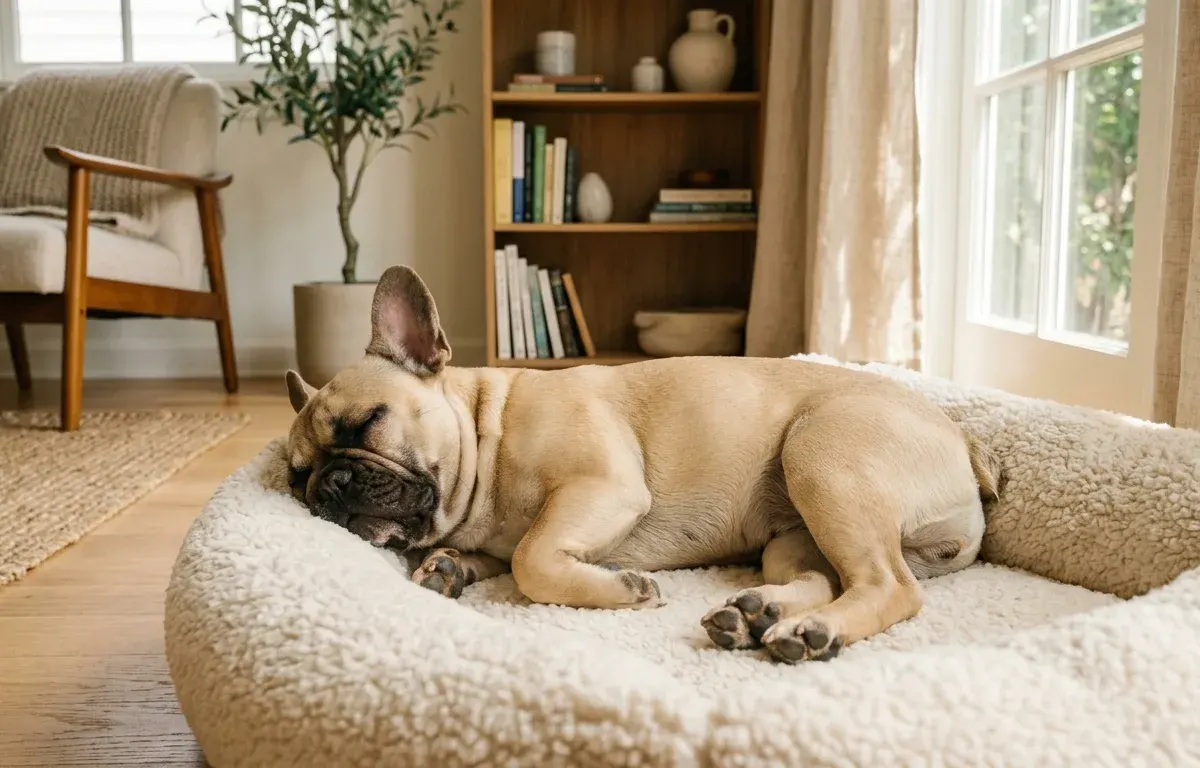
Do French Bulldogs sleep a lot? Yes, adult French Bulldogs sleep between 12 and 14 hours a day on average. Their brachycephalic airway structure requires more physical effort to breathe and regulate body temperature, which leads to quicker fatigue during activity and a natural need for frequent daytime naps.
- Adult French Bulldogs typically rest 12 to 14 hours daily, while growing puppies require up to 20 hours.
- Brachycephalic anatomy creates higher respiratory resistance, causing Frenchies to expend extra energy during ordinary activities.
- Dogs are polyphasic sleepers who spend only about 10% of their sleep in REM, requiring multiple daytime naps.
- Loud snoring accompanied by choking, gasping, or pauses in breathing signals obstructive sleep apnea rather than normal rest.
Sleep in dogs vs. humans: what is normal for dogs?
Unlike humans, who generally follow a monophasic sleep cycle by resting in one continuous eight-hour block at night, dogs are polyphasic sleepers. They divide their rest into multiple naps throughout a 24-hour period. Canine sleep architecture also differs in composition. While humans spend roughly 25% of their sleep cycle in deep, restorative Rapid Eye Movement (REM) sleep, dogs spend only about 10% of their sleep in REM. Because their deep sleep phases are relatively short, dogs need more total hours of rest each day to achieve full mental and physical recovery.
Understanding daily French Bulldog behavior patterns helps put these daytime naps into perspective. A healthy dog moves flexibly between light wakefulness, drowsiness, and brief REM sleep cycles. During light sleep, a Frenchie remains alert to household sounds like an opening refrigerator door or footsteps near the entryway. When they enter REM sleep, owners may observe twitching paws, soft whimpers, or rapid eye movements beneath closed eyelids. While sleep twitches are completely harmless, distinguishing normal dreaming from tremors or shaking in a French Bulldog while awake helps owners monitor overall physical comfort. This cycle repeats naturally throughout the morning, afternoon, and evening.
Do French Bulldogs sleep more than other breeds?
French Bulldogs often seem to sleep so much compared to other canines, though their total daily hours fall within standard canine baselines. A primary reason why French Bulldogs sleep so much during the day is their relaxed companion temperament. When considering what French Bulldogs were originally bred for, they were developed as indoor companion pets rather than high-drive working or herding breeds. They lack the instinctual urge to patrol large properties or perform sustained physical tasks, making them content to rest near their owners for most of the day.
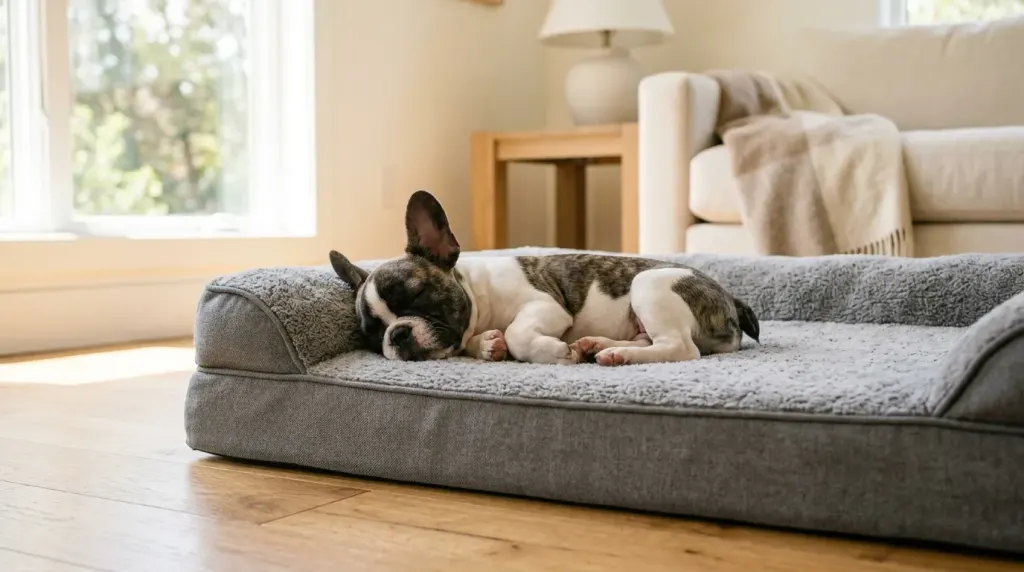
Another fundamental factor is their flat-faced anatomy. French Bulldogs are brachycephalic, possessing shortened facial bones and compact nasal passages. Even during quiet indoor activities, their respiratory system works harder to draw in oxygen and expel heat than the respiratory system of a long-snouted breed. This constant baseline exertion means Frenchies expend a higher percentage of their daily energy simply maintaining normal respiration, leading to earlier fatigue and more frequent naps.
How many hours do French Bulldogs sleep on average?
An adult French Bulldog sleeps an average of 12 to 14 hours per day. However, daily sleep duration shifts across different stages of development and aging.
| Life Stage | Typical Daily Sleep Duration | Primary Characteristics |
|---|---|---|
| Puppy (2 to 12 months) | 18 to 20 hours | High bursts of play followed by immediate, deep developmental naps |
| Adult (1 to 7 years) | 12 to 14 hours | Polyphasic rest consisting of overnight sleep plus 4 to 6 daytime naps |
| Senior (8+ years) | 14 to 18 hours | Increased rest due to slower metabolism, joint stiffness, and recovery needs |
According to the American Kennel Club guidelines on canine sleep, puppies need substantial sleep because growth hormone release, central nervous system maturation, and immune system building occur primarily during rest cycles. As dogs transition into their senior years, gradual decreases in muscle mass and mild arthritic discomfort cause them to spend more time resting on supportive surfaces.
What factors influence sleep quality and duration in French Bulldogs?
Several physiological and environmental variables influence how well and how long a French Bulldog rests:
- Ambient temperature: French Bulldogs cannot cool themselves efficiently through panting due to their restricted nasal passages. Warm rooms cause rapid panting, elevated heart rates, and restless tossing.
- Physical exertion: Because of their compact airway, exceeding running and exercise limits for French Bulldogs causes physical exhaustion that requires extended recovery naps.
- Body condition: Excess weight places direct mechanical pressure on the chest wall and trachea, worsening airway resistance and fragmenting sleep.
- Sleep surface support: Inadequate cushioning can aggravate joint stiffness in mature Frenchies, causing frequent repositioning during the night.
Sleep quantity does not always equal sleep quality. A French Bulldog that rests for 15 hours in a warm room with poor airflow may still experience daytime fatigue because airway resistance prevents deep, uninterrupted REM cycles.
Health signals: when sleep changes matter
While heavy sleeping is normal for French Bulldogs, a sudden or marked departure from your dog’s regular routine can indicate an underlying medical condition.
According to Dr. Jerry Klein, Chief Veterinary Officer at the American Kennel Club (AKC), while age and breed establish general sleep baselines, the most critical signal for owners is any noticeable shift in a dog’s established routine. A dog that suddenly transitions from moderate activity to persistent lethargy or struggles to awaken requires prompt veterinary evaluation.
Key warning signs that distinguish healthy sleep from illness include:
- Unresponsiveness: The dog is unusually difficult to rouse or seems disoriented after waking.
- Concurrent digestive symptoms: Excessive sleep accompanied by loss of appetite, abdominal discomfort, or frequent vomiting episodes.
- Pain and mobility changes: Reluctance to get up, vocalizing when moving, or stiffness when rising from bed.
- Labored respiration: Heavy abdominal breathing, extended neck posture while resting, or pale gums.
Note: If sudden lethargy appears alongside pale gums, persistent vomiting, or difficulty breathing, contact a veterinarian immediately for an urgent evaluation.
Special considerations for French Bulldogs
The primary health condition affecting French Bulldog rest is Brachycephalic Obstructive Airway Syndrome (BOAS). Because French Bulldogs frequently experience breathing problems due to their compressed skull structure, anatomical traits such as stenotic nares (narrow nostrils), an elongated soft palate, and an undersized windpipe contribute to airway obstruction during sleep.
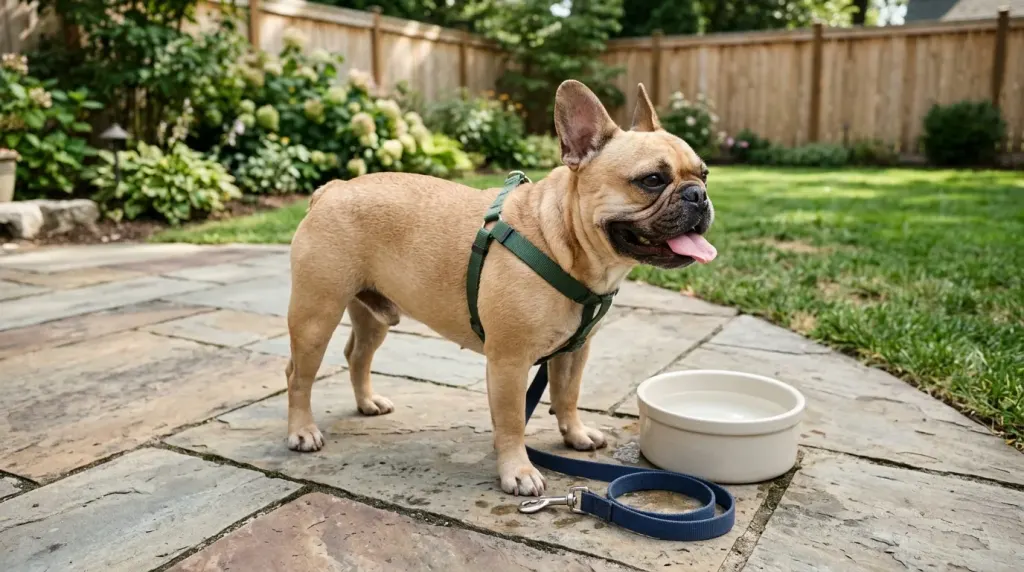
When a Frenchie lies down and relaxes, the soft tissues in the back of the throat can partially collapse over the airway. In mild cases, this produces harmless soft snoring. In severe cases, it leads to obstructive sleep apnea. Based on Sleep Foundation research on sleep apnea in dogs, dogs with sleep apnea experience brief pauses in breathing that cause sudden drops in blood oxygen levels. The brain responds with a micro-awakening, jolting the dog awake with a snort or gasp. These repeated disruptions prevent deep restorative sleep, leaving the dog perpetually fatigued during the day.
In addition to airway issues, French Bulldogs are genetically susceptible to spinal conditions like IVDD in French Bulldogs. Intervertebral Disc Disease can cause significant back or neck pain, making it uncomfortable for a dog to curl into their preferred sleeping positions and resulting in fragmented rest.
Practical tips for better sleep for French Bulldogs
Owners can implement several practical measures to improve sleep quality and protect their French Bulldog’s airway:
- Maintain a cool sleeping environment: Keep the room temperature between 68°F and 72°F (20°C to 22°C). Knowing how to cool down a French Bulldog using fans, air conditioning, or gel-infused cooling pads during warmer seasons prevents overheating and respiratory strain.
- Provide an orthopedic bed with bolster support: Memory foam beds relieve pressure on compact joints, while raised bolster edges allow Frenchies to rest their heads elevated, helping to keep their upper airway open.
- Manage daily body weight: Feed a balanced, portion-controlled diet to prevent obesity, which reduces excess fatty tissue around the neck and larynx.
- Establish consistent daytime hygiene: Address physical discomforts before bedtime, such as wiping facial skin folds and conducting regular French Bulldog ear cleanings to prevent itching from disrupting nighttime rest.
- Create a quiet, dark sleeping zone: Place the dog’s bed in a low-traffic corner free from drafts and abrupt household noises to support uninterrupted sleep cycles.
Frequently asked questions about French Bulldog sleep
How many hours should a French Bulldog sleep per day?
An adult French Bulldog typically sleeps 12 to 14 hours in a 24-hour period. Puppies generally sleep 18 to 20 hours each day to support physical growth and brain development, while senior French Bulldogs often sleep 14 to 18 hours due to declining energy levels and physical recovery needs.
Is it normal for a Frenchie to snore loudly while sleeping?
Mild, rhythmic snoring is common in French Bulldogs due to their shortened facial structure and elongated soft palate. However, loud snoring accompanied by choking sounds, gasping for air, or visible pauses in breathing indicates airway obstruction and potential sleep apnea that should be evaluated by a veterinarian.
Can excessive sleep signal narcolepsy in dogs?
Canine narcolepsy is a rare neurological disorder characterized by sudden daytime sleep attacks and cataplexy (sudden muscle collapse). While possible, narcolepsy is genetically linked primarily to breeds such as Doberman Pinschers and Labrador Retrievers. In French Bulldogs, excessive sleepiness is far more commonly caused by airway fatigue from BOAS, age-related slowing, or standard systemic illnesses.
What environmental factors help a French Bulldog sleep better?
A cool room temperature between 68°F and 72°F, good ventilation, a supportive orthopedic bed with raised edges to elevate the head, and a quiet, dark sleeping area provide the ideal environment for restorative rest in brachycephalic dogs.


Leave a Reply