

Table of Contents
When asked what is IVDD in French Bulldogs, veterinarians explain it is a genetic spinal condition where the cushioning discs between the vertebrae prematurely harden and rupture. This extruded disc material compresses the spinal cord, causing acute back pain, mobility issues, and potentially paralysis.
- Approximately 18% of French Bulldogs develop clinical IVDD during their lifetime.
- The disease is driven by a genetic mutation that causes early disc calcification.
- Symptoms range from mild back pain and shaking to sudden hind limb paralysis.
- Surgery typically costs $4,000 to $8,000 in the US, rising to $10,000-$15,000 at specialist neurology centres.
- Prevention involves weight management and strictly limiting activities like jumping and using stairs.
What IVDD is and why it matters for French Bulldogs
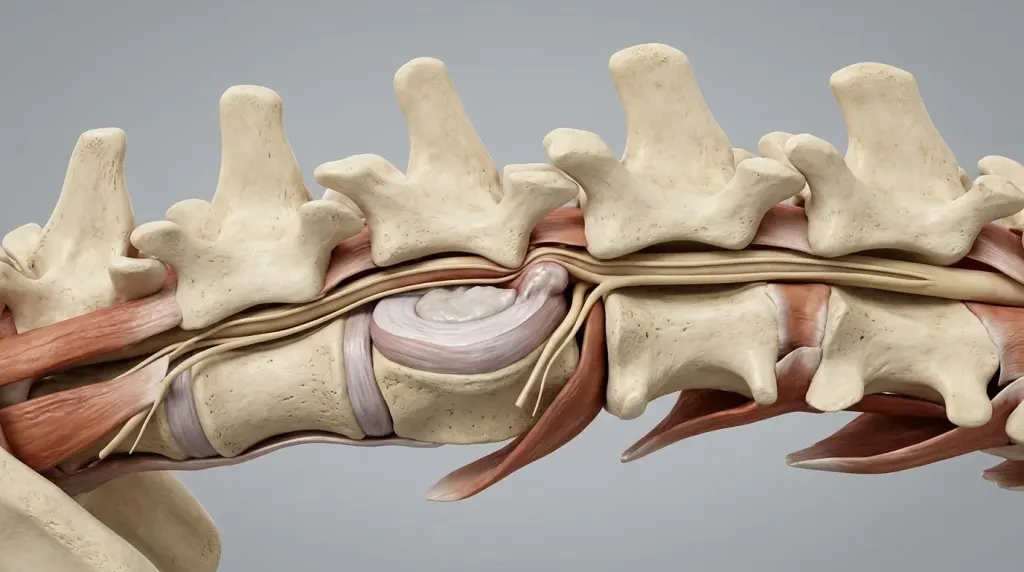
Intervertebral disc disease occurs when the shock-absorbing discs between the spinal vertebrae degenerate and fail. In chondrodystrophic breeds, the inner jelly-like nucleus pulposus undergoes chondroid metaplasia – a process where it loses water and calcifies early in the dog’s life. This hardened, brittle material can tear through the fibrous outer ring and compress the spinal cord.
The anatomical traits that define what a French Bulldog is make them particularly vulnerable. Historically, French Bulldogs were bred for a distinct compact, heavy body shape with a shortened back, which places immense mechanical stress and load on stacked vertebrae, directly contributing to spinal instability.
Causes and risk factors of IVDD in French Bulldogs
The primary cause of IVDD in French Bulldogs is Hansen Type I degeneration, an acute condition driven directly by a genetic mutation known as CDDY (chondrodystrophy). According to UC Davis veterinary researchers, this mutation links to the FGF4 retrogene insertion on chromosome 12 (CFA12). A vast majority of French Bulldogs carry two copies of this mutation, which dictates their dwarf-like limbs but critically guarantees early disc calcification. Instead of maintaining a gel-like, shock-absorbing interior, their discs lose water content and mineralize early in their development. The short-legged, stocky appearance of what a French Bulldog looks like is directly linked to this chondrodystrophic trait.
There are two forms of the disease, but Frenchies predominantly suffer from Hansen Type I. When the dog engages in physical activity, the hardened, brittle disc material exerts intense pressure on the weakened outer fibrous ring (annulus fibrosus). A sudden mechanical force, such as jumping off a couch or twisting abruptly, can cause the disc to rupture instantly. This shoots the calcified core upward into the spinal canal, violently bruising and compressing the spinal cord.
Obesity and high-impact activities act as significant secondary risk factors that accelerate this degenerative process. Because their spines are already compromised, implementing strict physical boundaries during early training for a French Bulldog – specifically teaching them to use ramps and avoiding erratic jumping – is essential to mitigate mechanical risks.
How common is IVDD in French Bulldogs?
IVDD is exceptionally prevalent in the breed, ranking as the leading cause of spinal cord disease and paralysis. Veterinary studies from the National Institutes of Health show that approximately 18% of the French Bulldog population will develop clinically diagnosed IVDD, while clinical veterinary data suggests the lifetime risk of a spinal disc episode can reach up to 30% in chondrodystrophic breeds.
The surging popularity of French Bulldogs over the last decade has led to an explosion of IVDD cases in emergency veterinary clinics worldwide, as the CDDY mutation remains widespread across the gene pool. They have a significantly higher risk of developing the condition compared to almost all other purebred dogs. While French Bulldogs can run for short bursts, vigorous running or leaping significantly increases the concussive load on their fragile spinal structures. Furthermore, French Bulldogs typically experience their first acute IVDD episode early in their prime adult years, with a median age of onset of 4.0 years old.
How IVDD presents in French Bulldogs
The symptoms of IVDD often appear suddenly. Because the extruded disc material causes immediate inflammation and nerve compression, veterinarians classify the severity using a 5-point clinical grading scale:
- Grade 1: Spinal pain only, with no neurological deficits. The dog may vocalize when picked up, pant heavily, or show a hunched posture. Unexplained shaking or trembling is often the first visible sign of acute spinal pain.
- Grade 2: Ambulatory paraparesis. The dog is weak, wobbly, and may drag its back paws (scuffing the nails), but can still bear weight and walk.
- Grade 3: Non-ambulatory paraparesis. The dog can still move its legs voluntarily but cannot stand or support its own body weight.
- Grade 4: Paraplegia. Complete paralysis of the hind limbs and loss of bowel or bladder control, but deep pain perception (feeling a strong toe pinch) remains intact.
- Grade 5: Paraplegia with loss of deep pain perception. This is a critical surgical emergency.
Diagnosis: what to expect at the vet
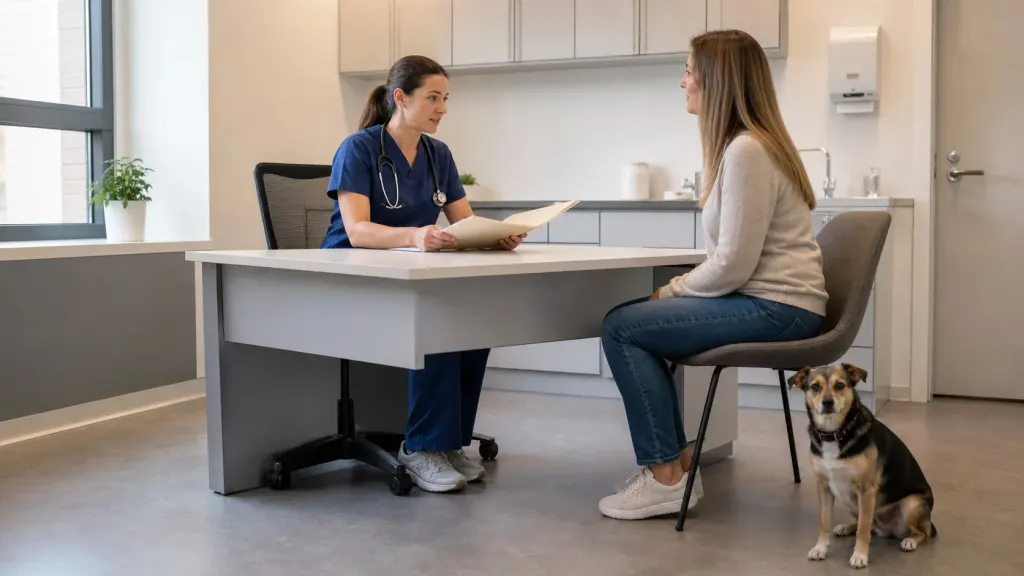
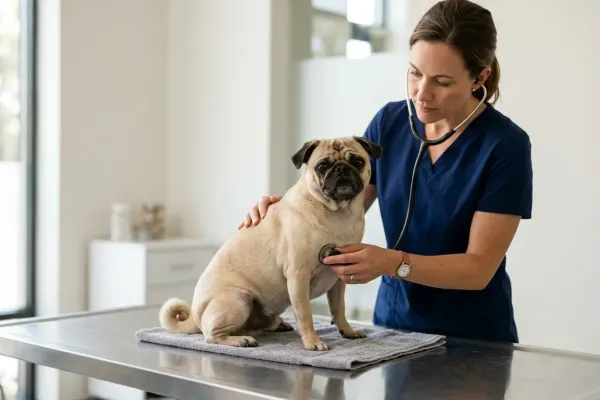
A veterinarian will first perform a thorough neurological exam to locate the exact source of the pain and assign a clinical grade. This involves checking reflexes, observing their gait, and performing a conscious proprioception test (flipping the paw upside down to see how quickly the dog corrects it – a delayed “knuckling” response is often the first clinical red flag of spinal cord compression). Handling a dog in this state requires extreme caution; even routine tasks at home like cleaning a French Bulldog’s ears should be paused or done with zero cervical manipulation until the vet clears them.
Additionally, because many French Bulldogs have breathing problems associated with brachycephalic obstructive airway syndrome, veterinary teams must carefully manage airways and oxygenation during sedation or anesthesia for imaging procedures.
To confirm the diagnosis and plan treatment, advanced imaging is mandatory:
- X-ray: Standard radiographs have low accuracy for diagnosing IVDD (detecting calcification in only 50-60% of cases) because they cannot visualize the spinal cord, nerves, or soft tissue compression. They are primarily used to rule out fractures or bone tumors.
- CT Scan: Computed tomography is much more effective, offering roughly 80-90% accuracy for identifying calcified disc extrusions. It is faster, more accessible, and often sufficient for surgical planning, though it lacks intricate soft tissue detail.
- MRI: Magnetic Resonance Imaging is the gold standard for diagnosing IVDD. It provides >95% accuracy by visualizing the spinal cord, nerve roots, and surrounding soft tissue edema. This allows neurologists to pinpoint the exact location, lateralization, and severity of the compression before opening the spine.
What are IVDD treatment options
Treatment for IVDD falls into two distinct categories: conservative management (medical) and surgical intervention. The choice depends entirely on the clinical grade of the injury and the speed of progression.
Note: Veterinary guidance is required to determine the appropriate treatment. This information is educational and does not replace a professional veterinary diagnosis.
Conservative management is typically reserved for mild cases (Grade 1 and 2) where the dog can still walk. This involves strict, uninterrupted crate rest for an extended period that varies depending on the individual dog. Veterinarians will prescribe a multi-modal drug approach: strong anti-inflammatories (NSAIDs like Carprofen or Corticosteroids like Prednisone – never both together), nerve pain medications like Gabapentin, and muscle relaxants like Methocarbamol. While conservative care has a 50-70% initial success rate for mild cases, the recurrence rate later in life is notably high (30-50%) because the calcified disc material remains in the canal.
Surgical intervention is strictly required for dogs with non-ambulatory paraparesis (Grade 3) or paralysis (Grade 4 and 5), rapidly losing motor function, or experiencing medically uncontrollable pain. The standard procedure is a hemilaminectomy, where a board-certified surgeon drills a window into the vertebra to extract the ruptured disc material and physically decompress the spinal cord. During surgery, they often perform “fenestration” – a preventative technique where they scoop out the nucleus of adjacent healthy-looking discs to drastically lower the risk of future ruptures in those spots. Surgery offers an 85-95% chance of returning to normal function for Grades 1-4. However, if a dog reaches Grade 5 (loss of deep pain) and surgery is delayed beyond 24 to 48 hours, the success rate plummets below 50%.
Post-surgery, due to the intensive recovery, all elective procedures must be shelved. For example, while owners often ask when to neuter a French Bulldog, any non-essential surgery will be postponed for months following a spinal operation. Once cleared, physical rehabilitation is crucial; while natural swimming is inherently dangerous for their body type, controlled underwater treadmill therapy in a clinic is an excellent, safe rehabilitation method.
How much is IVDD surgery for a French Bulldog
Most owners in the US pay between $4,000 and $8,000 for IVDD surgery, while specialist neurology centres quote $10,000 to $15,000 all-in for consultation, MRI, surgery and three to four days of hospitalisation. However, when factoring in the entire diagnostic and recovery process, the total out-of-pocket expense can easily reach $10,000 to $12,000 depending on the facility, geographic location, and whether it is a weekend emergency.
When requesting an estimate, owners must ask for the total comprehensive cost, which breaks down into several phases:
- Initial ER Consultation & Bloodwork: $150 to $400.
- Advanced Imaging (MRI/CT): The required pre-surgical MRI alone typically costs between $2,500 and $3,500.
- The Surgical Procedure: The hemilaminectomy itself usually costs $3,000 to $5,000.
- Hospitalization & Meds: Post-operative ICU care (typically 3 to 7 days), IV fluids, and heavy pain management add another $1,000 to $2,000.
Veterinary university teaching hospitals sometimes offer slightly lower rates compared to private specialty clinics, though emergency after-hours surgeries always carry a significant premium. Pet insurance can offset up to 90% of these costs, but policies must be active – and past their 14 to 30-day waiting periods – before any clinical signs of back pain appear. IVDD is universally excluded as a pre-existing condition if diagnosed or documented in the dog’s medical chart before coverage fully begins.
Recovery and post-operative care
Recovery from IVDD surgery requires intensive, round-the-clock home care. The length of the hospital stay post-surgery varies depending on the dog’s specific condition. They are only discharged when their pain is manageable on oral medications and when they regain the ability to urinate independently (or when owners are taught how to manually express their bladder).
Once home, the dog must undergo absolute, strict crate rest for an extended period, which varies depending on the severity of the injury and the individual dog’s healing rate. “Strict” means the dog is not allowed to take even five steps freely; they are only allowed out of the crate for short, strictly leash-walked, supported potty breaks. You will need to manage their environment meticulously. Re-teaching your dog to use indoor potty pads temporarily can help minimize outdoor movement, while a support sling under their belly will keep their spine level.
Physical rehabilitation is just as important as the surgery itself. Professional modalities like Class IV cold laser therapy, veterinary acupuncture, and underwater treadmill sessions significantly accelerate nerve regeneration and muscle mass retention. At home, you will likely be instructed to perform Passive Range of Motion (PROM) exercises – gently bicycling their legs – three to four times a day. However, rest remains paramount; heavy pain medications and muscle relaxants will cause profound lethargy, so increased sleep is a normal, necessary, and expected part of the healing process.
How to prevent IVDD in French Bulldogs
Because IVDD in this breed is heavily influenced by their baseline genetics (the FGF4 mutation), it cannot be entirely prevented. However, owners can aggressively manage environmental factors to delay onset, reduce mechanical stress, and lower the risk of a catastrophic acute rupture.
Weight management is the single most critical preventative measure you can control. Every extra ounce of body fat places exponentially more concussive stress on the lumbar spine. You must keep your dog at a Body Condition Score (BCS) of 4 or 5 out of 9, meaning you should be able to easily feel their ribs without pressing through a layer of fat, and they should have a visible waist tuck. Feeding a high-quality, measured diet is mandatory. Incorporating lean, fresh proteins like lamb or salmon can provide essential muscle-building nutrients without the unnecessary empty calories that contribute to obesity, while offering hydrating low-calorie snacks like fresh watermelon for French Bulldogs or nutrient-dense steamed broccoli for French Bulldogs helps maintain satiety and prevent excess weight gain.
Physical activity must be strictly modified from puppyhood by enforcing the “Four Paws Down” rule:
- Never let your dog stand on their hind legs to beg or look out a window.
- Block access to stairs completely using baby gates; the up-and-down motion severely compresses the vertebrae.
- Provide ramps for getting on and off all furniture, and train the dog to use them 100% of the time. Jumping down forces the heavy front end to absorb the shock, whipping the spine.
- Always use a well-fitted, Y-shaped harness instead of a neck collar to avoid cervical disc strain.
- Avoid high-impact sports like agility, tug-of-war, or fetch with heavy jumping.
Note: A French Bulldog that has recovered from a conservative IVDD treatment has a recurrence rate of 30-50% in other discs. Lifelong lifestyle modifications are mandatory to protect the rest of the spine.
FAQ about IVDD in French Bulldogs
Can a Frenchie recover from IVDD without surgery?
Dogs with mild symptoms, such as pain without neurological deficits, can often recover through strict conservative management. This involves an extended period of absolute crate rest, the length of which depends on the dog’s healing progress, along with veterinary-prescribed pain medication. However, conservative management does not remove the calcified disc material, leaving the dog at high risk for future ruptures.
What age do Frenchies get IVDD?
The median age of onset for a first IVDD episode in French Bulldogs is 4 years old. Because the genetic factors cause early disc calcification, they often present with the disease at a younger age than many other susceptible breeds.
How common is IVDD in French Bulldogs?
It is a highly prevalent condition. Veterinary studies show that approximately 18% of French Bulldogs will develop clinical IVDD in their lifetime, making them one of the most high-risk breeds globally.

Leave a Reply