
Table of Contents
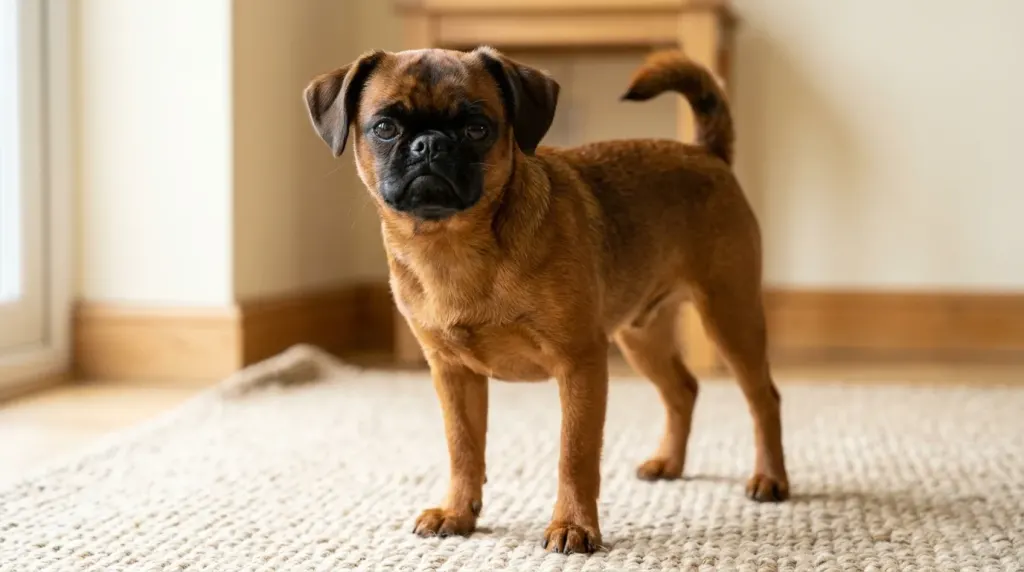
If you are looking for a dog that looks like a pug, the Petit Brabançon (the smooth-coated variety of the Brussels Griffon) is the closest visual twin. It shares the Pug's compressed muzzle, dark facial mask, folded ears, and compact frame in a smaller 8 to 12 pound body. Other purebred dogs with flat facial features include the French Bulldog, Boston Terrier, Pekingese, Japanese Chin, Shih Tzu, English Bulldog, and the rough-coated Brussels Griffon. Genetically, DNA sequencing proves that the Pug's closest biological sister breeds are the Pekingese and Shih Tzu from the ancient Asian toy dog clade, while similarities to European bull breeds arose through independent selective breeding.
- The Petit Brabançon is the closest visual twin to the Pug because Belgian breeders directly crossed native stable terriers with Pugs during the nineteenth century.
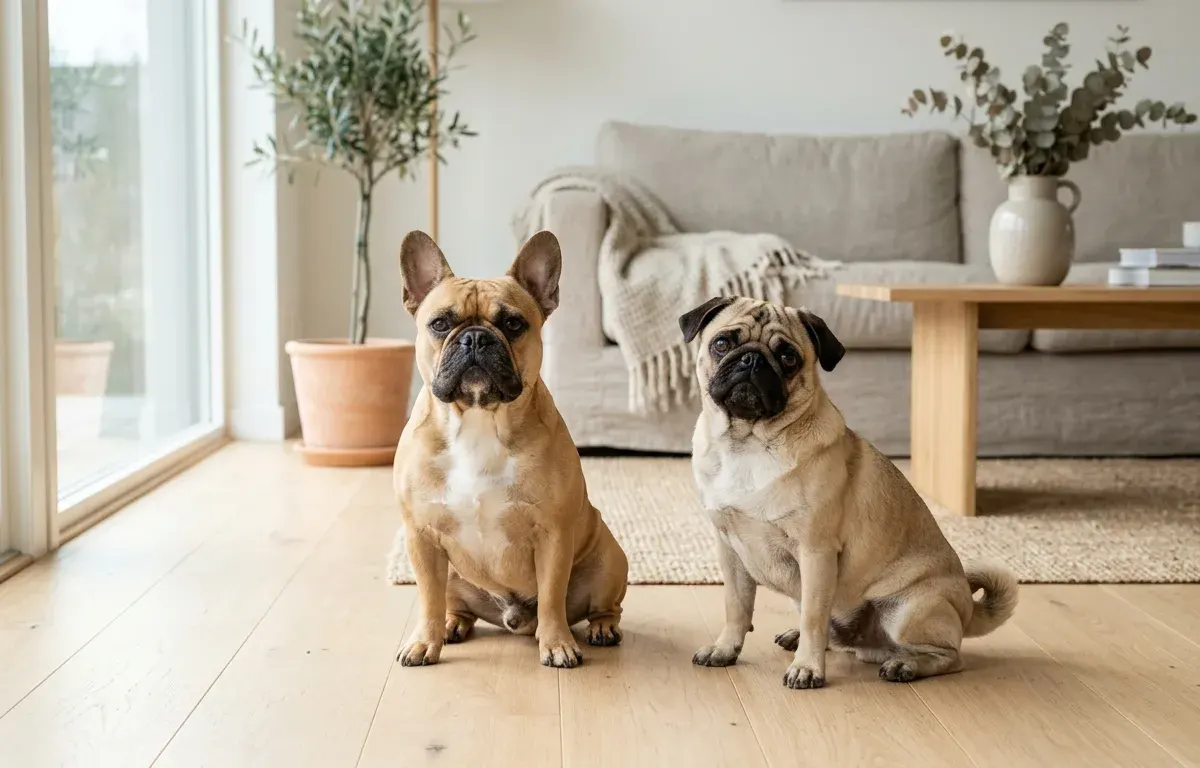
- French Bulldogs and Boston Terriers share compressed facial planes with Pugs but feature distinct erect ears, heavier bone density, and different tail structures.
- Genetic research confirms Pugs, Pekingese, and Shih Tzus cluster together within an ancient Chinese companion dog clade.
- The phrase mop pug combines a language confusion with Hungarian corded herding breeds like the Puli, or refers to modern outcross projects like the Retro-Mops.
- All flat-faced companion breeds require daily facial fold hygiene, heat management, and careful weight monitoring to protect respiratory health.
Finding a dog that looks like a pug often leads prospective owners through a fascinating mix of canine history, genetics, and conformation standards. Whether you are searching for a toy companion with identical facial wrinkles, a smaller version of the breed, or a flat-faced dog with distinct physical quirks, several purebreds and designer hybrids share these recognizable traits.
What Makes a Dog Look Like a Pug? Defining the Morphological Standard
When people identify a dog as looking like a Pug, they are recognizing a specific combination of anatomical traits created by centuries of selective breeding. Canine morphology classifies these physical traits across skull shape, facial folding, bone structure, and tail carriage.
The primary feature shared by these breeds is brachycephaly, a condition where the bones of the skull and facial skeleton are compressed. According to the AKC Pug Breed Standard, the baseline standard for what a Pug dog looks like requires a large, massive, round skull, a short blunt square muzzle, deep forehead wrinkles, large dark globular eyes, and thin folded ears.
Beyond the head, the Pug possesses a square, cobby body with a broad chest, straight strong legs, and a tightly curled tail carried over the hip. Evaluating the official standard of how big Pug dogs get (14 to 18 pounds) gives owners a dependable size benchmark. Look-alike breeds generally deviate in weight, ear carriage, coat length, or body proportions while retaining the unmistakable pushed-in face.
- Craniofacial Structure: Shortened maxillary bones, prominent brow folds, wide-set circular eyes, and a slight undershot jaw.
- Ear Carriage: Folded button or rose ears rather than upright or pricked ears.
- Body Proportions: Compact, muscular cobby build with equal height at the withers and length from shoulder to pelvis.
- Tail Formation: Curled tightly over the back (single or double curl) rather than straight, docked, or screw-tail.
Purebred Dogs That Look Like Pugs: The Top Look-Alikes Compared
Eight purebred dogs share facial profiles, body shapes, or historical roots with the Pug. These breeds range from lightweight toy dogs under 10 pounds to powerful 50-pound bulldogs.
| Dog Breed | Adult Weight (lbs) | Coat Type | Ear Carriage | Facial Resemblance | Primary Distinguishing Trait |
|---|---|---|---|---|---|
| Pug (Baseline) | 14-18 lbs | Short, smooth double coat | Folded (Button or Rose) | — (Reference) | Curled tail, fawn or black coat with dark mask |
| Petit Brabançon | 8-12 lbs | Short, smooth single coat | Semi-erect or drop | Very High (Closest) | Lighter toy bone frame, upturned lower jaw |
| French Bulldog | 16-28 lbs | Short, smooth coat | Erect (Bat ears) | High | Upright bat ears, heavy muscular bone, short straight tail |
| Boston Terrier | 12-25 lbs | Short, sleek single coat | Erect pointed | Moderate | Tuxedo pattern, longer limbs, refined muzzle |
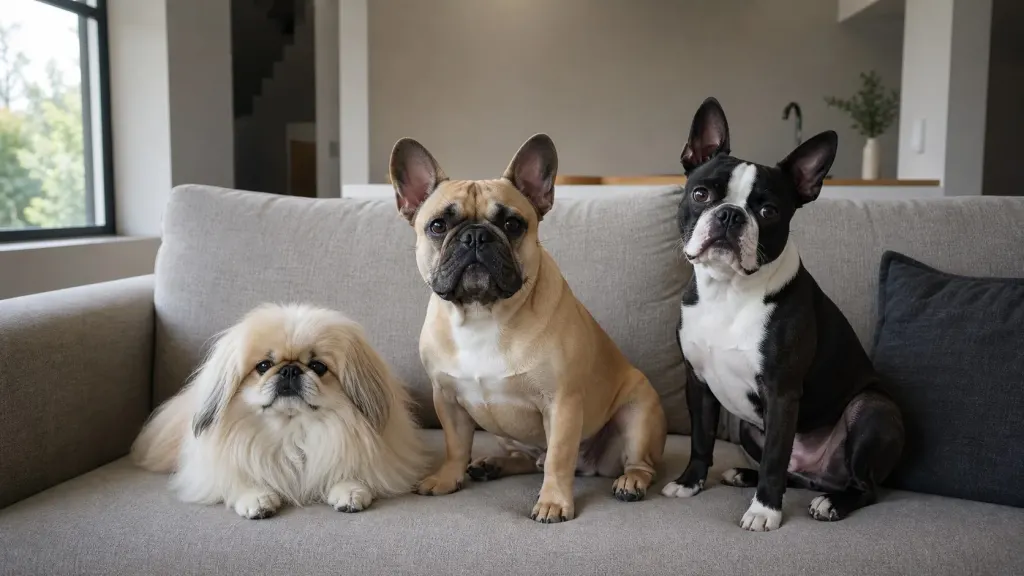
| Pekingese | 7-14 lbs | Long, dense double coat | Drooping feathered | High (Bone structure) | Flowing lion-like mane, bow-legged rolling gait |
| Japanese Chin | 7-11 lbs | Silky, single coat | Plumed V-shaped | Moderate | Feathered ears and legs, refined toy muzzle |
| Shih Tzu | 9-16 lbs | Long, continuous double coat | Drooping heavily coated | Moderate | Chrysanthemum facial hair, longer back |
| English Bulldog | 40-50 lbs | Short, smooth coat | Rose ears | Moderate (Heavyweight) | Massive wide jaw, rolling heavy build (40-50 lbs) |
| Brussels Griffon (Rough) | 8-12 lbs | Harsh, wiry double coat | Semi-erect or drop | Moderate | Prominent beard and mustache furnishings |
Row 1 shows the Pug itself as a reference baseline; the 8 rows below it are the look-alike breeds compared in this article.
Petit Brabançon: The Closest Living Twin to the Pug
The Petit Brabançon is the smooth-coated variety of the Brussels Griffon and represents the closest physical match to a Pug in the canine world. Weighing between 8 and 12 pounds, it features a glossy short coat, a pushed-in nose, deep facial folds, and large expressive dark eyes.
Unlike its rough-coated Griffon siblings that sport thick beards, the Petit Brabançon has a clean, smooth face that showcases its black mask. Many dog lovers refer to this Belgian toy breed as a miniature Pug. It possesses a slightly more agile, leggy frame and an upturned lower jaw that gives it a comical, human-like pout.
French Bulldog and Boston Terrier: Erect Ears and Muscular Frames
French Bulldogs and Boston Terriers share flat facial profiles with Pugs but display upright ears and distinct body frames. The French Bulldog weighs 16 to 28 pounds and carries iconic, rounded bat ears on a heavy, muscular frame. Its chest is noticeably broader than a Pug’s, and its tail is naturally short and straight or screwed rather than curled.
Boston Terriers, often nicknamed the American Gentleman, weigh 12 to 25 pounds and feature clean black-and-white or brindle tuxedo markings. They have longer legs and greater athletic agility than Pugs, with pointed upright ears and a slightly longer nasal bridge that allows for easier airflow.
Pekingese, Japanese Chin and Shih Tzu: Long-Haired Flat-Faced Companions
Underneath their long coats, the Pekingese, Japanese Chin, and Shih Tzu share identical cranial proportions with the Pug. When clipped into a short summer or puppy cut, their flat facial planes, wide nostrils, and round dark eyes become immediately visible.
The Pekingese weighs under 14 pounds according to the AKC Pekingese Standard and features a heavy front build with a rolling gait. The Japanese Chin is lighter (7 to 11 pounds) with a cat-like demeanor, while the Shih Tzu (9 to 16 pounds) has a slightly longer back and sweet, outgoing companion disposition.
English Bulldog: The Heavyweight Morphological Cousin
The English Bulldog shares the deep forehead wrinkles, wide undershot jaw, and short coat of the Pug on a much heavier scale. Weighing 40 to 50 pounds, Bulldogs are classified as Non-Sporting dogs rather than Toy companions.
Prospective owners comparing these breeds often look into training dynamics. Reviewing a structured approach on how to train a Pug Bull Dog puppy shows that both breeds respond well to positive reinforcement, though the Bulldog’s physical power requires early leash manners. Understanding how Pugs get along with other dogs also helps multi-pet households introduce toy and medium flat-faced breeds safely.
Designer Crossbreeds: Popular Pug Mixes That Inherit the Look
First-generation crossbreeds deliberately combine Pug morphology with traits from other established breeds. These designer dogs inherit varying degrees of facial wrinkles, coat textures, and body sizes.
- The Puggle (Pug × Beagle): The Puggle combines the wrinkled brow and compact body of a Pug with the longer muzzle and floppy drop ears of a Beagle. A comprehensive overview of the Pug and Beagle mix dog highlights that this mix usually weighs 15 to 30 pounds and frequently enjoys improved respiratory function due to its elongated nasal bridge.
- The Chug (Pug × Chihuahua): The Chug is a compact toy hybrid weighing 10 to 15 pounds. A dedicated guide to the Pug Chihuahua mix explains how it retains expressive dark eyes and facial wrinkles while displaying semi-erect ears and a feisty, alert terrier-like attitude.
- The Bullpug (Pug × English Bulldog / French Bulldog): Often called the Miniature Bulldog, this cross produces a stocky, heavily wrinkled dog weighing 20 to 35 pounds with a broad chest and calm, couch-loving temperament.
Genetics and History: Why Do These Breeds Look Like Pugs?
The physical similarities between Pugs and other companion dogs come from two distinct historical pathways: direct nineteenth-century crossbreeding and shared ancient evolutionary clades.
Why Do Petit Bruxellois (Petit Brabançon) Dogs Look Like Pugs?
The smooth-coated Petit Brabançon looks like a Pug because it directly descends from Pug bloodlines. According to historical breed records from the AKC Brussels Griffon Breed Standard, nineteenth-century Belgian breeders working with native stable terriers (called the Smousje) intentionally crossed their dogs with imported Pugs and English Toy Spaniels.
This Pug infusion introduced the short smooth coat gene, the compact black mask, the rounded skull shape, and the shortened muzzle that transformed the wiry street ratter into an elegant royal companion dog.
What Dogs Are Pugs Most Closely Related To? The Ancient Asian Clade
While many assume Pugs are closely related to European Bulldogs due to their shared wrinkles, canine genomics reveals a very different lineage. In a landmark genomic study published in Cell Reports, researchers led by Dr. Heidi G. Parker (Parker et al., 2017) analyzed DNA across 161 modern dog breeds and mapped their evolutionary tree.
The genetic data proves that Pugs are most closely related to the Pekingese and Shih Tzu. These three breeds cluster together within the ancient Asian toy phylogenetic clade, having developed side-by-side in imperial China centuries before European kennel clubs formed. Tracing the historical roots of where do Pug dogs originate from and the ancestral foundation behind what dogs make a Pug shows that flat facial features in Asian toy dogs evolved independently from European bull-baiting breeds.
What Is a Mop Dog Pug? Clearing Up Breed and Language Confusion
The search phrase mop pug dog causes frequent confusion for pet lovers. It does not describe an officially recognized corded pug breed, but rather stems from linguistic mistranslations and specialized breeding initiatives.
- Linguistic origins (German Mops): In German, Dutch, and Russian, the official word for a Pug is Mops. According to the Duden German Dictionary, the German noun Mops has the standard plural form Möpse. English speakers encountering European kennel sources or automated translations frequently mistake the word Mops for a household cleaning mop.
- True corded mop dogs: Genuine corded dogs are Hungarian pastoral breeds such as the Puli and Komondor. According to the AKC Puli Breed Standard, these working herding dogs grow dense, corded dreadlocks designed to protect them from harsh weather and predators. They have no genetic or conformational connection to the Toy Pug.
- The Retro-Mops breeding initiative: In Germany and the Netherlands, breeders established the Retro-Mops (or Retro Pug) project. This program outcrosses Pugs with Jack Russell Terriers or Parson Russell Terriers to breed back a functional 3 to 4 centimeter muzzle. While prospective owners often evaluate whether Pugs are lap dogs suited for calm indoor living, Retro-Mops introduce active working-terrier stamina. The resulting dogs retain the classic Pug coloring and curled tail while significantly improving airway clearance, leading many to search why do Pug dogs snort when comparing traditional brachycephalic breathing to these longer-snouted varieties.
Choosing Between a Pug and a Similar Breed: Care, Health, and Temperament
While look-alike breeds share charming facial wrinkles, their daily grooming requirements, energy levels, and health profiles vary considerably. When choosing between a purebred Pug and an alternative flat-faced breed, prospective owners must evaluate coat maintenance against temperament. A Petit Brabançon offers a lighter, lower-shedding companion with higher watchdog alertness, whereas a Boston Terrier provides greater exercise stamina for active households.
Note: All brachycephalic dogs require special environmental precautions. Because their compressed airways make cooling through panting less efficient, avoid strenuous outdoor exercise when ambient temperatures exceed 80°F (27°C) and clean facial skin folds two to three times weekly with a damp cloth to prevent bacterial dermatitis.
- Grooming Commitments: Pugs possess a dense double coat that sheds continuously year-round. In contrast, the Petit Brabançon and Boston Terrier have smooth single coats with minimal shedding, while the Pekingese and Shih Tzu demand daily brushing to prevent severe mats.
- Temperament and Activity: Pugs are world-renowned companion dogs with gentle, humorous dispositions. Their stable, affectionate temperament confirms their clingy, human-centric nature. Boston Terriers and Chugs exhibit higher terrier drive, while Bulldogs display calm independence.
- Health and Respiratory Care: Managing common Pug health problems requires monitoring for stenotic nares, elongated soft palates, and eye injuries. Establishing a daily routine for how to take care of a Pug dog ensures proper weight control, keeping excess pressure off the respiratory tract across all look-alike breeds.
Frequently Asked Questions About Dogs That Look Like Pugs
Which dog breed looks most like a mini pug?
The Petit Brabançon (smooth-coated Brussels Griffon) is the purebred dog that looks most like a miniature Pug. Weighing between 8 and 12 pounds with a short glossy coat, black mask, pushed-in nose, and folded ears, it closely resembles a permanent Pug puppy.
Are French Bulldogs related to Pugs?
French Bulldogs and Pugs share historical companion traits, but they belong to different genetic branches. French Bulldogs descend from European bulldog and terrier crosses, whereas genomic sequencing confirms Pugs belong to the ancient Asian toy dog clade alongside the Pekingese.
What is a Retro Pug (Retro-Mops)?
A Retro Pug is a modern European breeding project that crosses purebred Pugs with small working terriers to produce dogs with longer muzzles, open nostrils, and fewer breathing difficulties while preserving the beloved Pug coloration and personality.
Do any long-haired dogs look like Pugs?
Yes. The Pekingese, Shih Tzu, and Japanese Chin possess the flat facial planes, wide-set circular eyes, and short muzzles of the Pug. When groomed in a short puppy trim, their facial resemblance to Pugs is unmistakable.
Leave a Reply