
Table of Contents
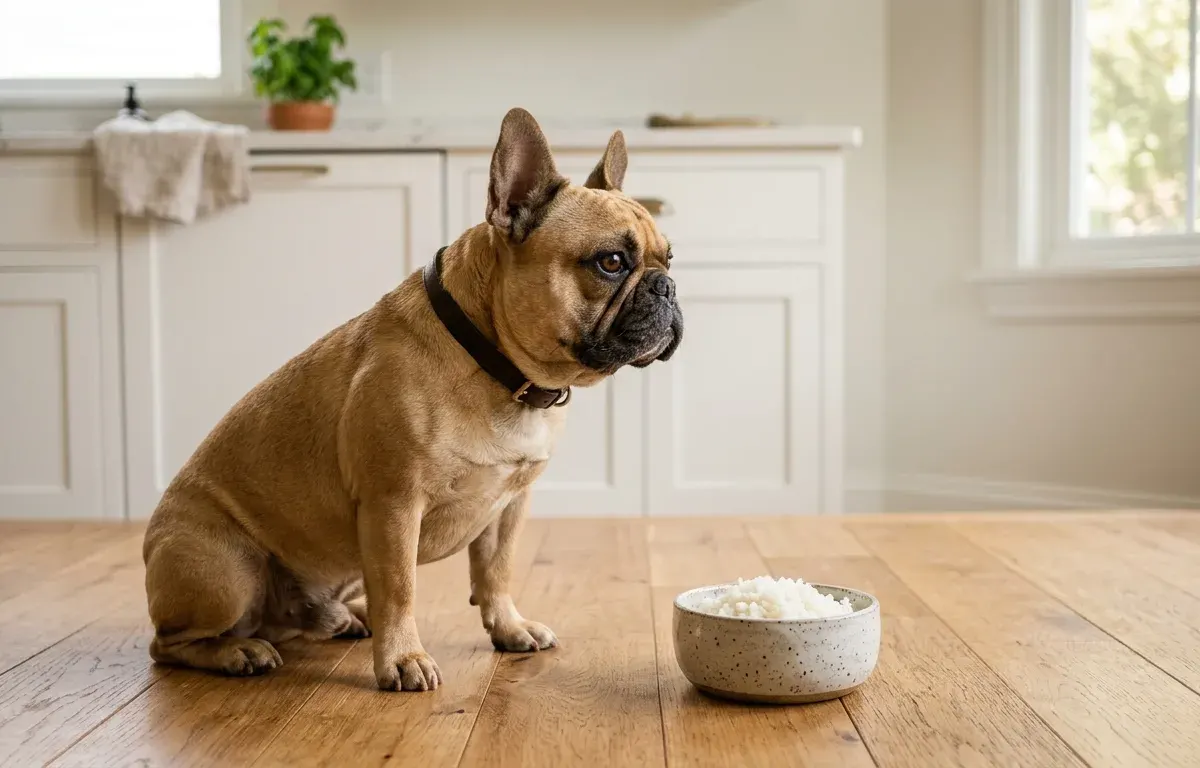
Plain, fully cooked rice is safe for French Bulldogs in small portions. It is a carbohydrate source that can serve as an occasional treat or part of a temporary bland diet for mild stomach upset. It should never replace a complete and balanced daily dog food. Keep all rice unseasoned and avoid cooking it with onion, garlic, butter, salt, or oil.
- White rice is highly digestible and frequently used in short-term veterinary bland diets.
- Extras like rice must stay within 10 percent of a Frenchie's daily calories to prevent weight gain.
- Fried rice, pilaf, and takeout dishes often contain toxic ingredients like onion or garlic.
- Persistent diarrhea or vomiting requires a veterinarian, not a home-cooked rice meal.
Many owners ask, can French Bulldogs eat rice? Yes, they can usually eat small amounts of plain, fully cooked rice. Use it as an occasional topper or, when a veterinarian considers it appropriate, as part of a brief bland diet for mild digestive upset. Rice must not replace complete and balanced dog food, and seasoned or fatty rice dishes are unsafe.
Why rice can fit a French Bulldog’s diet
Rice supplies digestible carbohydrate energy, but adult dogs do not require dietary carbohydrate as an essential nutrient. Its usefulness is contextual: a small plain serving is tolerated by many dogs, while the complete food remains the nutritional foundation.
According to the Merck Veterinary Manual, carbohydrates provide energy, but dogs can thrive on protein and fat alone. Adding rice simply offers a safe, easily digested calorie source. A healthy French Bulldog does not inherently need rice, but a spoonful can add variety. As with any extra, you must account for the calories to maintain a healthy body condition. Vets advise keeping all treats and table foods below 10 percent of a dog’s total daily calorie intake. Note that the protein choice matters as much as the carbohydrate when balancing meals; you can learn more by checking is lamb good for French Bulldogs.
| What rice does | What rice does not do |
|---|---|
| Provides easily digestible energy | Does not provide complete daily nutrition |
| Helps bind stool during mild upset | Does not cure underlying gastrointestinal disease |
| Adds low-fat calories | Does not replace a balanced commercial or prescribed diet |
White rice vs. brown rice: Which is better?
Both must be plain and fully cooked. White rice is the type named in short-term bland diets because veterinarians cite it as easy to digest, while brown rice is less processed and may not suit every dog during an upset stomach. Neither is automatically better for every Frenchie.
| Feature | White Rice | Brown Rice |
|---|---|---|
| Processing | Husk and bran removed | Retains the bran and germ |
| Typical use | Short-term bland diets | Occasional fiber source for healthy dogs |
| Preparation | Boil in water until very soft | Requires longer cooking time |
| When to ask a vet | Diarrhea lasting more than 24-48 hours | If your dog struggles to digest fiber |
Rice is not a complete everyday diet
Rice appears in complete commercial diets, but plain rice, or plain chicken and rice, does not provide a complete long-term nutrient profile. If a Frenchie repeatedly seems to need a bland diet, the underlying problem needs veterinary assessment, not an ongoing homemade workaround.
| Diet Type | Purpose | Duration |
|---|---|---|
| Occasional topper | Adding texture or variety | Infrequent |
| Short-term bland diet | Resting the digestive tract | A few days (under vet guidance) |
| Regular complete diet | Providing all essential nutrients | Daily, long-term |
How to prepare rice safely
Cook rice in plain water until soft, cool it, and serve it plain. Do not use leftovers or flavored packets, because dogs should not be given food prepared with seasonings, salt, sugar, oil, butter, onion, or garlic.
- Choose plain grains: Use dry white or brown rice without added flavorings or spices.
- Boil in water: Skip the chicken broth or stock, which often contains high sodium or hidden onions.
- Cook fully: Make sure the rice is soft and entirely cooked to prevent choking and aid digestion.
- Cool completely: Let the rice cool to room temperature before offering it to your dog.
- Keep it separate: If you are eating salty processed meats, do not mix those drippings into the dog’s bowl. Check out Can French Bulldogs Eat Ham? Safety, Risks, and Alternatives for more on processed meat risks. Similarly, check all mixed ingredients for hidden hazards like xylitol, as discussed in our guide Can French Bulldogs Eat Peanut Butter?.
Ingredients that make rice unsafe for dogs
No. Fried rice, takeout rice, pilaf, curry, and many broth-based dishes contain fat, sodium, seasoning, onion, or garlic. Onion and garlic are toxic to dogs, including when cooked into foods or used as powders.
| Safe | Avoid |
|---|---|
| Plain boiled white rice | Fried rice or takeout dishes |
| Plain boiled brown rice | Rice pilaf or seasoned mixes |
| Rice cooked in plain water | Rice cooked with butter, oil, or bouillon |
| Plain steamed rice | Dishes containing onion or garlic |
Contact a veterinarian or pet poison control center IMMEDIATELY if you suspect your dog ate onion, garlic, or xylitol, before taking any other action. Do not wait for symptoms to appear, and do not induce vomiting unless specifically instructed by the veterinarian. Keep the ingredient list or packaging to show the vet. Signs of onion or garlic toxicity may be delayed for days.
How much rice can a French Bulldog have?
There is no single correct spoonful for every Frenchie. Start with a small amount of plain cooked rice mixed into their usual food, count it within the day’s treat and table-food allowance, and stop if their stool, skin, appetite, or gas worsens. Vets advise keeping treats to about 10 percent of daily calories.
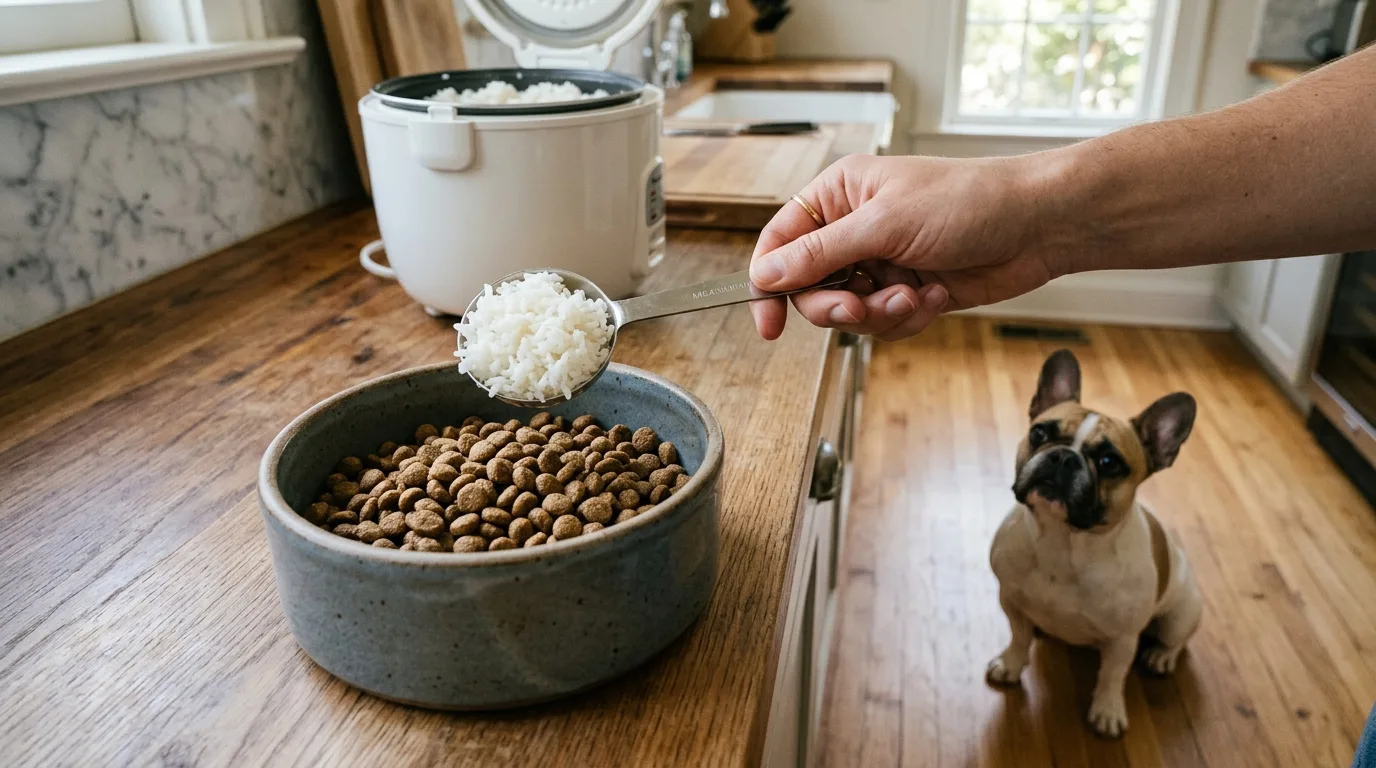
Individual calorie needs differ based on a French Bulldog’s age, activity level, and neuter status. Because rice displaces calories from their complete food, overfeeding it can lead to nutritional imbalances or weight gain. Monitor your dog’s body condition and adjust other extras accordingly. If you notice an increase in flatulence after adding new foods, read Why Do French Bulldogs Fart So Much? to understand digestive symptom context. For owners already giving many extras who need a lower-calorie snack path, consider Can French Bulldogs Have Cucumbers?.
A practical first-serving approach
Add only a small plain amount to the normal food first. Do not introduce rice during a veterinary elimination diet or while the dog is on a prescribed therapeutic food unless the vet approves it.
- Start small: Add just a teaspoon or two to a regular meal.
- Hold off on other new foods: Introduce only one new item at a time to identify any issues.
Rice for diarrhea or an upset stomach
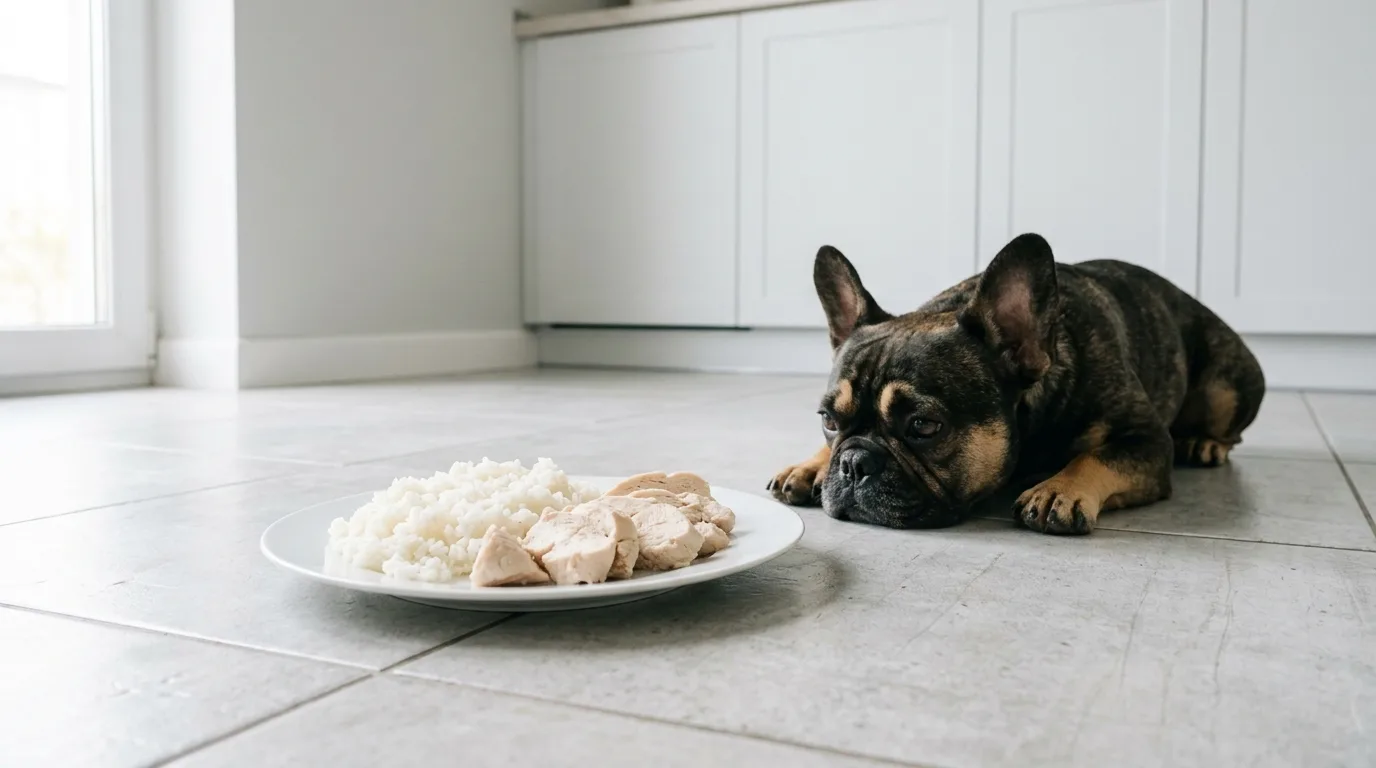
Veterinarians may use a bland, digestible diet of white rice with lean protein for some mild, short-lived digestive upsets. It is temporary, not a cure or a balanced long-term diet; persistent diarrhea, vomiting, black or bloody stool, lethargy, poor appetite, or pain needs veterinary care.
Note: Seek advice promptly if diarrhea lasts more than a day or two, or sooner with vomiting, black/tarry stool, fresh blood, no appetite, marked lethargy, abdominal pain, fever, or collapse. Rice should never delay evaluation of these signs.
When a dog is vomiting or shaking, the urgency changes. For vomiting causes, see Why Does My French Bulldog Keep Throwing Up?; for weakness or collapse, check Why Is My French Bulldog Shaking?.
When a chicken-and-rice meal may be reasonable
A vet may recommend cooked white rice with lean, unseasoned chicken or turkey for a brief mild episode, but not as a long-term diet. Veterinary nutrition guidelines stress these ingredients alone are not complete and balanced, and longer home-cooked feeding needs a recipe from a board-certified veterinary nutritionist.
According to the Cornell Riney Canine Health Center, plain white rice is commonly used in a temporary bland diet to help manage mild diarrhea. However, do not continue feeding this without veterinary instruction.
Red flags: Skip rice and contact a veterinarian
Seek advice promptly if diarrhea lasts more than a day or two, or sooner with vomiting, black/tarry stool, fresh blood, no appetite, marked lethargy, abdominal pain, fever, or collapse. Rice should never delay evaluation of these signs.
- Diarrhea persisting beyond 24 to 48 hours
- Vomiting, especially if repeated or unable to hold down water
- Black, tarry, or bloody stool
- Loss of appetite or marked lethargy
- Signs of abdominal pain or fever
Puppies, allergies, and special diets
Puppies and dogs with a prescribed diet, suspected food allergy, chronic digestive signs, obesity concerns, or another medical condition need individualized veterinary advice before rice is added. Rice is a less common canine food allergen, but individual reactions can occur, and elimination trials must stay strict.
Puppy nutrition must stay complete to support growth. Suspected reactions or recurrent symptoms require a professional diagnosis. If your dog is on an elimination diet or a hydrolyzed protein diet, do not offer unapproved extras. As a related symptom guide for other issues, see Why Are My French Bulldogs’ Eyes Red?. For broader puppy care, check How Many Puppies Do French Bulldogs Have?.
Could rice cause an allergy or intolerance?
Rice can be involved in food reactions but is a less common allergen in dogs. Itching, recurring skin or ear disease, vomiting, or diarrhea need veterinary evaluation; an elimination diet with controlled reintroduction, not an at-home guess, is the reliable approach.
- Itching or scratching (pruritus)
- Recurring ear infections
- Chronic vomiting or loose stool
- Next action: Consult a veterinarian for a proper dietary trial.
Common questions about French Bulldogs and rice
Can French Bulldogs eat white rice?
Yes, plain fully cooked white rice is generally acceptable in modest amounts and is the type named in veterinary bland-diet examples, but it should not replace a complete and balanced food long term.
Can French Bulldogs eat brown rice?
Brown rice can also be served plain and fully cooked, but it is not automatically best for an upset stomach; for a sick dog, follow the vet’s diet recommendation rather than switching grains on a general rule.
Can French Bulldog puppies eat rice?
A small amount of plain cooked rice may be tolerated, but puppies need a complete growth diet and can decline quickly with digestive symptoms; ask a vet before using bland food, especially with vomiting, diarrhea, poor appetite, or low energy.
Can my Frenchie eat leftover rice?
Only if it is truly plain, with no onion, garlic, sauces, butter, oil, stock, or salt. Most restaurant and family-meal leftovers fail that standard, so freshly prepared plain rice is safer.
French Bulldogs can eat a small amount of plain, cooked rice, but it is an occasional topper or a short-term vet-guided bland-diet component, not a complete everyday meal. The crucial distinction is not simply white versus brown; it is plain preparation, calorie moderation, medical context, and prompt care for red-flag symptoms. Use the safe-preparation checklist before sharing rice, and contact your vet if digestive symptoms persist or recur. Read Can French Bulldogs Eat Parsnips? Safety, Benefits & Serving Guide for another ingredient-specific feeding decision.



Leave a Reply