
Table of Contents
When learning how to make dog food for a pug, combine 40-50% lean protein (like 93% lean ground turkey), 30-40% complex carbohydrates (like sweet potatoes), and 10-15% vegetables and healthy fats. You must add essential supplements, particularly calcium and omega-3s, because 95% of unformulated homemade dog food recipes lack sufficient essential nutrients.
- Pugs have an obesity odds ratio of 3.12 (95% CI: 2.31-4.20), making precise portion control by weight critical to prevent airway and cardiovascular strain.
- A balanced meal requires lean protein, complex carbs, healthy fats, and vet-approved calcium and vitamin supplements.
- Ingredients must be cooked and cooled completely before adding heat-sensitive vitamins and omega-3 oils.
- Never include toxic ingredients like onions, garlic, grapes, xylitol, or cooked bones.
Why Homemade Dog Food Needs a Custom Approach for Pugs
Preparing home-cooked dog food allows pet owners to choose whole ingredients, but short-nosed toy breeds demand a custom nutritional plan. Pugs have distinct physical characteristics, including a compact muscular frame, low relative calorie requirements, and airway vulnerabilities linked to brachycephalic obstructive airway syndrome (BOAS). When a Pug accumulates excess body fat, the extra tissue compresses the neck structures, increasing respiratory effort and straining the cardiovascular system.
According to veterinary research published in the Journal of Small Animal Practice, Pugs have an obesity odds ratio of 3.12 (95% CI: 2.31-4.20) compared to crossbred dogs. Managing body weight through precise home-cooked meal formulation directly supports normal respiratory function in brachycephalic dogs.
Commercial kibble often caters to general canine populations, which might not suit Pugs prone to food sensitivities or weight gain. However, cooking at home without a structured recipe carries significant health risks. A benchmark study conducted by researchers at the UC Davis School of Veterinary Medicine evaluated 200 home-cooked dog food recipes from books and websites. The study revealed that 95% of the recipes lacked sufficient levels of at least one essential nutrient, and 84% fell short in multiple nutrient categories. Understanding your Pug’s short-nosed, compact body shape helps align daily nutrition with physical needs. Following guidelines established by the Association of American Feed Control Officials (AAFCO) ensures your home-cooked meals support long-term organ and joint health within a structured daily Pug care routine.
Nutritional Requirements for a Homemade Pug Diet
A complete canine diet relies on balanced proportions of protein, fats, carbohydrates, vitamins, and minerals. Dogs require specific amounts of essential amino acids, fatty acids, and trace elements every day to maintain lean muscle mass, skin barrier function, and internal health. Pet owners should review standard guidance on what Pugs eat day to day before selecting ingredients.
Note: The Association of American Feed Control Officials (AAFCO) establishes baseline nutrient profiles for complete and balanced canine diets, which the U.S. Food and Drug Administration (FDA) references for pet food safety standards.
Target Ratios for Protein, Fat, and Carbohydrates
For an adult Pug maintaining a healthy weight, dietary calories should emphasize lean protein to preserve muscle tissue while keeping fat levels moderate. Complex carbohydrates deliver dietary fiber for digestive regularity along with steady energy.
| Nutrient Category | Recommended Caloric Share | Ideal Food Sources for Pugs |
|---|---|---|
| Lean Protein | 40% to 50% | Skinless turkey breast, 93% lean ground turkey, lean beef, cod, tilapia |
| Complex Carbohydrates | 30% to 40% | Cooked sweet potatoes (peeled), pumpkin puree, brown rice, rolled oats |
| Healthy Fats | 10% to 15% | Wild Alaskan salmon oil, flaxseed oil, small amounts of olive oil |
| Vegetables & Fiber | 10% to 15% | Steamed green beans, diced carrots, zucchini, baby spinach |
Essential Vitamins and Minerals Often Missing in Home-Cooked Meals
Meat and vegetables alone do not supply complete nutrition for a dog. Muscle meats contain high phosphorus levels but almost no calcium. Feeding unsupplemented meat causes the body to draw calcium from the bones, leading to nutritional secondary hyperparathyroidism over time.
Key micronutrients required in a home-cooked Pug diet include:
- Calcium: Essential for balancing the calcium-to-phosphorus ratio between 1.2:1 and 1.4:1. Suitable sources include veterinary-grade calcium carbonate powder or pulverized eggshell powder.
- Omega-3 Fatty Acids: EPA and DHA from wild fish oil reduce systemic inflammation and support healthy skin folds.
- Zinc and Iodine: Required for skin integrity and thyroid function, typically supplied through kelp powder or specialized canine mineral mixes.
- Vitamins D3 and E: Critical for bone mineralization and immune defense, best delivered through a veterinary-formulated supplement powder.
How to Cook Homemade Dog Food for a Pug: Step-by-Step Recipe
Learning how to make dog food for a pug involves simple cooking techniques that preserve nutrient availability while eliminating harmful pathogens. This single-pot stovetop recipe yields approximately 4 to 5 days of food for a 15-pound adult Pug.
Ingredients and Equipment Needed
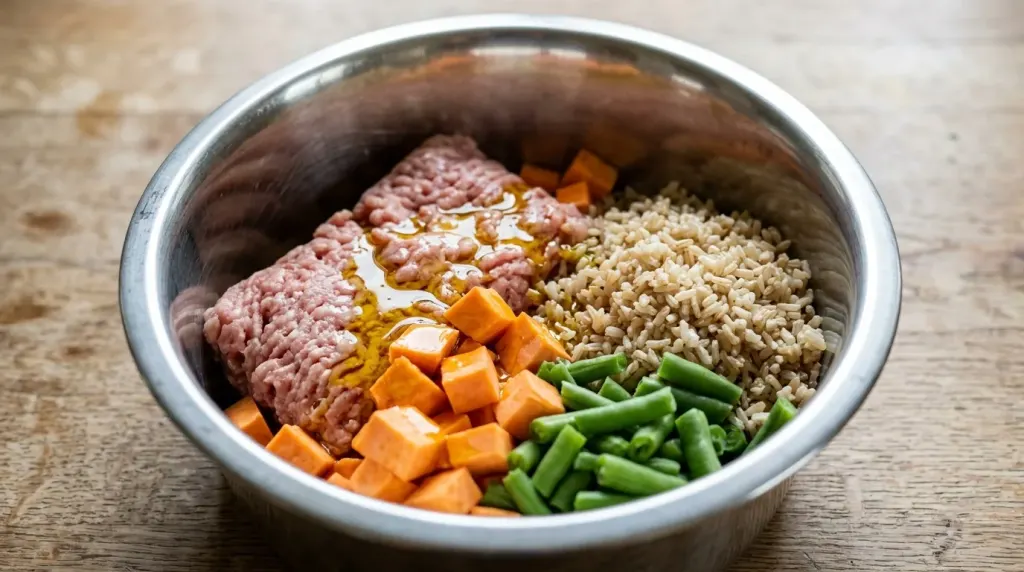
Gather these fresh ingredients and tools before starting:
- 2 pounds lean ground turkey (93% lean / 7% fat)
- 1 cup cooked sweet potato (peeled, boiled, and mashed)
- 1 cup cooked brown rice
- 1/2 cup finely chopped green beans (steamed)
- 1/2 cup finely shredded carrots (steamed)
- 1 tablespoon wild Alaskan salmon oil
- 1 teaspoon veterinary calcium carbonate powder (or complete canine supplement mix)
- Large stainless steel stockpot
- Digital kitchen scale
Cooking Instructions (One-Pot Stove-Top Method)
Applying proper food safety guidelines makes learning how to make home made dog food for a pug straightforward and clean.
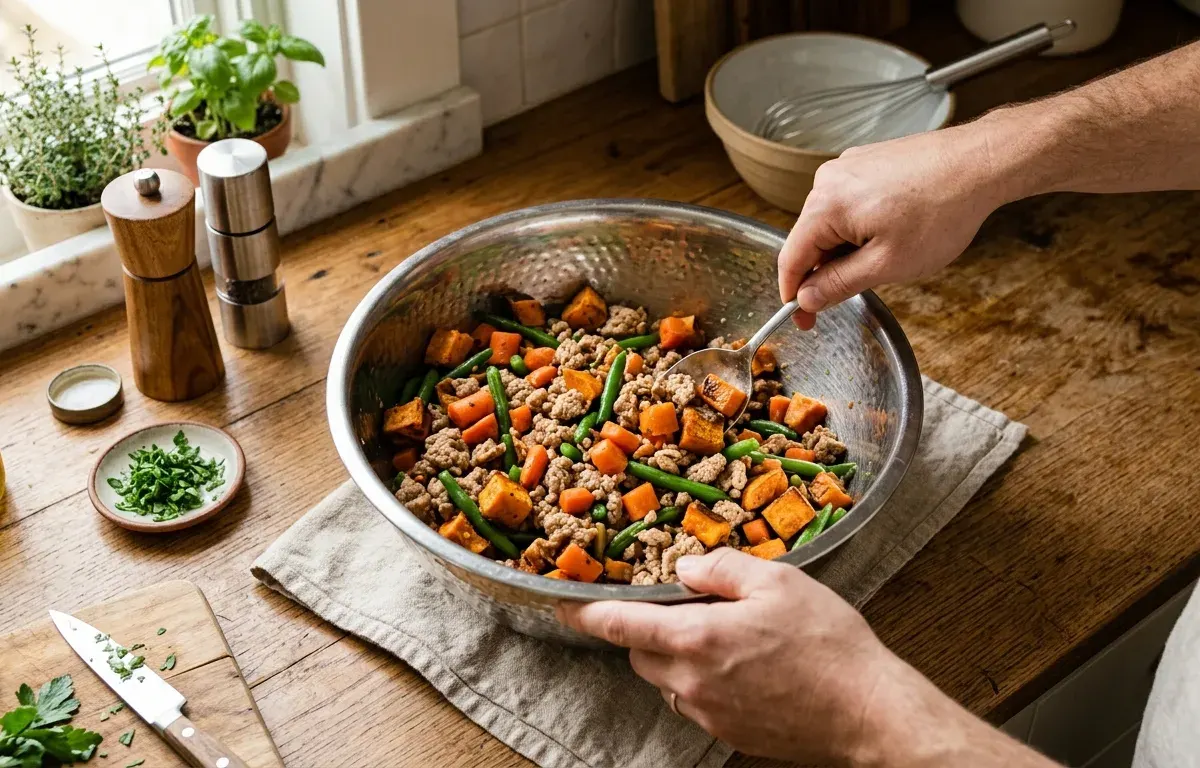
- Cook the Lean Protein: Place the ground turkey into the stockpot over medium heat. Brown the meat thoroughly for 8 to 10 minutes until cooked through. Drain off any rendered fat to manage your Pug’s tendency to gain weight quickly.
- Prepare Carbohydrates: Boil peeled sweet potatoes in a separate pot until soft, then mash finely. Cook brown rice according to package directions until tender.
- Steam the Vegetables: Lightly steam green beans and shredded carrots for 5 minutes. Softening vegetable fiber aids absorption in short digestive tracts while accommodating your Pug’s slow-digesting fat sensitivity.
- Combine the Batch: Add mashed sweet potato, brown rice, green beans, and carrots to the pot with the cooked turkey. Stir over low heat for 2 to 3 minutes until warm and well mixed.
- Add Heat-Sensitive Supplements: Remove the pot from the stove and cool the food completely to room temperature. Stir in the salmon oil and calcium carbonate powder. Never add vitamins to hot food, as heat degrades heat-sensitive compounds like vitamin E and fatty acids.
Cooling, Portioning, and Safe Storage
Pet owners exploring how to make homemade dog food for pugs must handle fresh food safely to prevent bacterial growth.
- Refrigeration: Store up to 3 days of cooked food in airtight glass containers in the refrigerator.
- Freezing: Divide remaining food into single-day portions in freezer bags. Frozen batches remain fresh for up to 60 days. Thaw frozen portions in the refrigerator overnight before serving.
Recipe Variations and Ingredient Substitutions for Pugs
Knowing how to make pug dog food includes understanding acceptable ingredient swaps when dealing with food allergies or seasonal availability.
Alternate Protein Options (Turkey, Beef, Fish)
If your Pug shows sensitivity to turkey or chicken, consider these alternative lean proteins:
- Lean Ground Beef (90/10 or 95/5): Supplies bioavailable heme iron and zinc.
- Deboned Cod or Tilapia: Exceptionally low in fat and easily digested by sensitive stomachs.
- Lean Pork Trim: Provides B vitamins once all external fat has been trimmed away.
Healthy Carbohydrate and Vegetable Swaps
- Quinoa or Rolled Oats instead of Brown Rice: Quinoa offers essential amino acids, while oats supply soluble fiber for firm stool quality.
- Plain Pumpkin Puree instead of Sweet Potato: Canned pumpkin without added sugar is low in calories and aids digestive transit.
- Zucchini or Yellow Squash instead of Green Beans: Summer squash delivers hydration and fiber with minimal caloric impact, matching the low energy expenditure tied to your Pug’s origins as a companion breed.
Daily Serving Sizes and Portion Control by Pug Weight
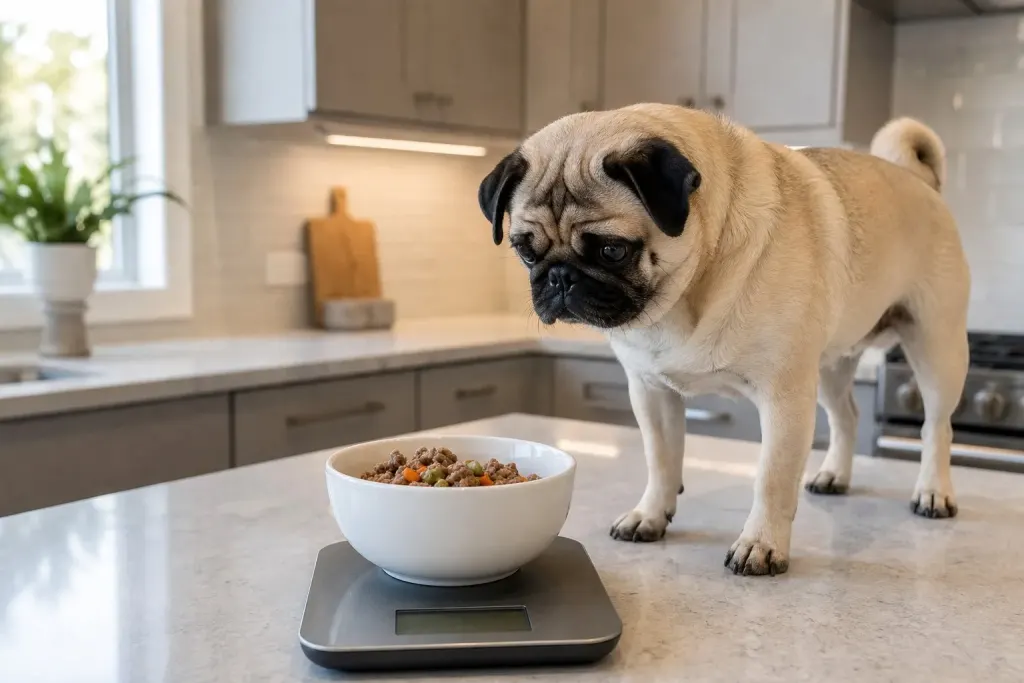
Because fresh food contains higher moisture and calorie density than dry kibble, precise measurement using a digital scale is necessary to prevent weight gain.
Caloric Needs Based on Weight and Activity Level
An adult Pug requires approximately 35 to 40 calories per pound of body weight daily for maintenance. Less active dogs or seniors require lower caloric intake.
| Pug Weight (lbs) | Activity Level | Daily Caloric Requirement (kcal) | Approximate Daily Fresh Food (grams) |
|---|---|---|---|
| 13 lbs | Inactive / Senior | 390 kcal | 260 g |
| 14 lbs | Moderate Activity | 490 kcal | 325 g |
| 15 lbs | Moderate Activity | 525 kcal | 350 g |
| 16 lbs | Moderate Activity | 560 kcal | 370 g |
| 18 lbs | High Activity / Young | 630 kcal | 420 g |
| 20 lbs | Moderate Activity | 700 kcal | 465 g |
Using a Calculator to Verify Daily Intake
Measuring meals by weight rather than volume prevents inadvertent overfeeding. Factors like age and neuter status influence metabolism. Remembering that Pug puppies, adults, and seniors have different feeding schedules helps adjust daily food intake over time. Assessing how active your Pug really is allows you to fine-tune daily calories, and checking a Pug-specific feeding portion chart provides extra reference points.
Toxic Ingredients Pugs Must Never Eat
If you suspect your Pug has ingested any toxic food or dangerous item, contact a veterinarian or an emergency animal poison control center immediately before taking any other action. Never attempt to induce vomiting at home except under direct veterinary supervision. Seek emergency veterinary care right away without delay.
When preparing home-cooked dog food, avoid these ingredients that cause severe toxicity in dogs:
- Onions, Garlic, Chives, and Leeks: Contain thiosulfates that damage red blood cells, causing hemolytic anemia.
- Grapes and Raisins: Can cause acute kidney injury even in small quantities.
- Xylitol / Birch Sugar: Triggers rapid insulin release, leading to severe hypoglycemia and liver failure.
- Chocolate and Caffeine: Contain methylxanthines that cause cardiac arrhythmias and seizures.
- Cooked Bones: Splinter easily during chewing, posing perforation risks to the stomach or intestine while aggravating your Pug’s tendency to snort or wheeze after eating.
- Macadamia Nuts and Avocado: Cause weakness, vomiting, and pancreatic distress.
Common Mistakes to Avoid When Cooking for Your Pug
Steer clear of these common pitfalls when transitioning your dog to home-cooked meals:
- Omitting Calcium Supplements: Feeding meat and rice without added calcium causes metabolic bone disease over time.
- Estimating Portions by Eye: Measuring by cup volume rather than weight on a digital scale leads to gradual weight gain.
- Adding Extra Cooking Oils: Pugs absorb fats efficiently; excessive fat triggers pancreatitis and digestive issues.
- Skipping Weight Monitoring: Weigh your Pug every two weeks on a scale. Keeping your pet fit supports mobility and reflects how long Pugs typically live when kept at a healthy weight.
Frequently Asked Questions About Homemade Pug Food
Can I cook for my Pug without a formal recipe?
No. Cooking without a veterinarian-approved or computer-formulated recipe leads to nutritional deficits. While dogs enjoy plain meat and rice short term, long-term feeding without trace minerals, calcium, and vitamins impairs skeletal and organ health.
Can Pug puppies eat this adult homemade recipe?
No. Growing puppies need higher concentrations of protein, calcium, and phosphorus per pound of body weight to support skeletal development. Feeding an adult recipe to a Pug puppy can cause irreversible joint and bone deformities.
How often should I rotate ingredients in a Pug’s diet?
Ingredient rotation can occur every 4 to 8 weeks, provided replacement ingredients match the macro and micro profile of the original recipe. Introduce new foods gradually over 5 to 7 days to prevent gastrointestinal upset.
Leave a Reply