
Table of Contents
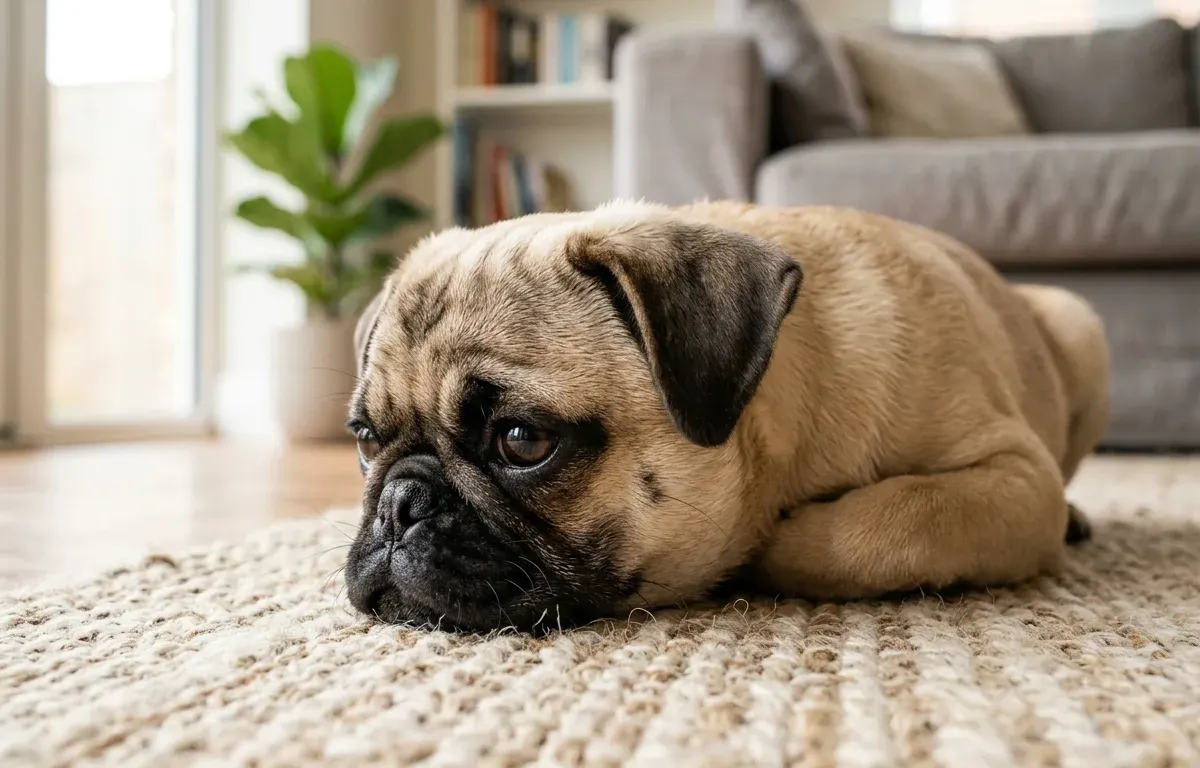
Many pet owners wonder whether a pug's ears are healthy or pose medical risks. Although these folded flaps conform to official breed standards, their downward shape reduces airflow and traps heat, moisture, and natural wax inside the auditory canal. While not inherently defective, this anatomical trait makes the breed more susceptible to outer canal inflammation (otitis externa) than upright-eared dogs. Maintaining auditory health requires regular weekly inspections and routine gentle cleaning.
- Pugs naturally feature folded button or rose flaps that cover the auditory canal entrance.
- Restricted ventilation under the fold creates a moist environment where yeast and bacteria thrive.
- Warning signs of localized trouble include frequent head shaking, scratching, dark discharge, and foul odor.
- Weekly checks and veterinary-approved cleansing solutions help prevent painful bacterial growth.
- Recurrent canal irritation often links to underlying skin or food allergies, requiring professional diagnosis.
Pug Ear Anatomy: Button and Rose Variations
Pugs possess a distinctive flap structure defined by official breed standards. The physical tissue is thin, soft, and velvety to the touch, displaying two distinct fold variations: button and rose shapes.
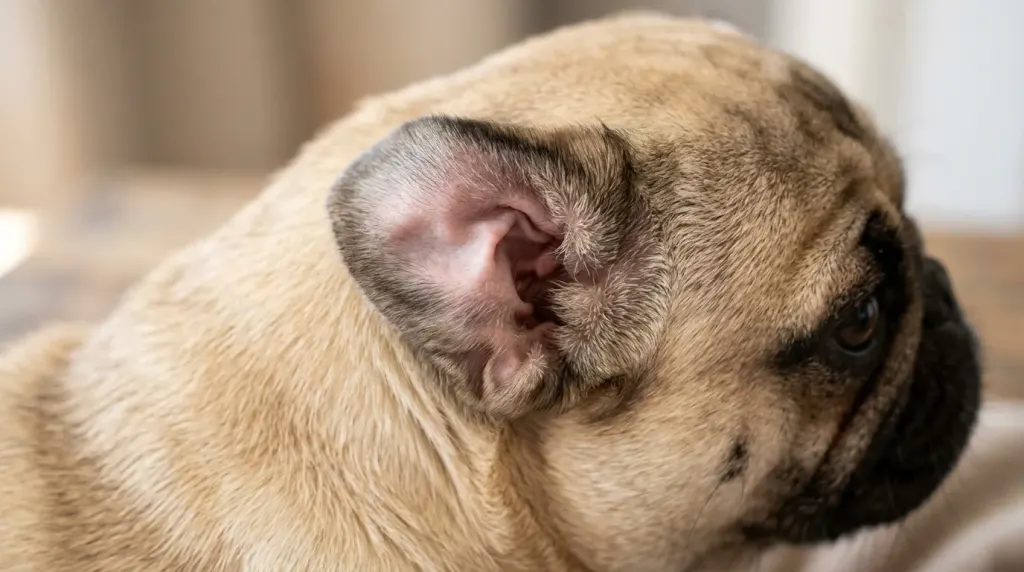
According to the AKC Official Pug Breed Standard, the button fold is preferred for show dogs. This shape folds forward with the top fold line parallel to the skull, pointing down toward the eyes to cover the auditory entrance. Rose folds are smaller, curving inward and backward to expose a portion of the inner burr.
| Flap Style | Fold Direction | Canal Coverage | AKC Standard Status |
|---|---|---|---|
| Button | Folds forward toward the eyes | Completely covers canal entrance | Preferred standard |
| Rose | Folds backward and inward | Partially exposes inner burr | Accepted standard |
From a biological standpoint, drooping flaps historically provided physical protection against debris and insects. However, unlike canine breeds with erect pinnae such as German Shepherds or Chihuahuas, a pug’s folded tissue creates a dark, enclosed pocket directly over the auditory passage.
Why Folded Flaps Increase Infection Risk
The physical structure of a pug’s drooping tissue directly influences its vulnerability to health complications. Outer canal inflammation, known clinically as otitis externa, occurs more frequently in dogs with pendulous or folded pinnae.
According to Dr. Dan O’Neill and veterinary epidemiology researchers at the Royal Veterinary College in a 2021 Vet Record epidemiological study, dogs with pendulous or folded flaps face a significantly higher risk of developing otitis externa compared to erect-eared breeds. The anatomical fold acts as a barrier, preventing normal air circulation. When air cannot flow freely into the passage, natural moisture from bathing, swimming, or humidity becomes trapped. Combined with body heat, this dark, humid space creates ideal growth conditions for Malassezia pachydermatis yeast and bacterial species.
In addition, canines possess an L-shaped auditory canal. As explained by clinical guidelines from the American College of Veterinary Surgeons (ACVS), the passage travels vertically downward before turning horizontally toward the eardrum. This L-shaped bend makes it difficult for trapped fluids and wax to escape naturally.
When localized discomfort develops, pets often display behavioral signs. If you notice your pug frequently rubbing its face or head on carpet, review why pugs lick excessively to understand related skin and body discomfort signals. Similarly, pugs experiencing upper airway congestion or head pressure often make distinct breathing sounds, which connects with why pugs snort during daily activity.
Warning Signs of Infection and Irritation
Recognizing early signs of canal distress prevents mild irritation from developing into severe infection. Healthy tissue appears pale pink inside, smells neutral, and contains minimal clear or light yellow wax.
Veterinary clinical guidance from the People’s Dispensary for Sick Animals (PDSA) identifies several key indicators of canal trouble in folded breeds:
- Frequent Head Shaking: Violent or repeated shaking of the head to relieve internal pressure or itchiness.
- Persistent Scratching: Pawing frantically at the base of the skull or rubbing the head against furniture.
- Abnormal Discharge: Dark brown, yellow, or black waxy buildup resembling coffee grounds.
- Foul Odor: A distinct sour or musty smell coming directly from the canal entrance.
- Redness and Swelling: Inflammation, warmth, or visible swelling along the inner flap lining.
- Sensitivity to Touch: Whining, flinching, or pulling away when the head area is touched.
Physical discomfort around the head area can alter a dog’s posture. Observing your pug putting ears back helps distinguish emotional stress or pain signals from normal head positions. Furthermore, when auditory passages or surrounding nasal airways become congested, you may notice changes in sleep habits similar to pug dog snoring patterns.
How Often Should You Inspect the Canals?
Examine your pet’s auditory canals once every week. Lift the flap gently under good lighting to check for redness, excess wax, or odor. Hygiene procedures should happen only when dirt or wax is visible, or as advised by your veterinarian. Cleansing healthy tissue too frequently can cause mechanical irritation and disrupt natural skin barrier lipids.
Routine Hygiene and Care Guide
Maintaining hygiene at home is straightforward when done with proper technique. Use only liquid cleansers specifically formulated for dogs. Never use plain water, alcohol, hydrogen peroxide, or vinegar solutions, as these cause severe stinging and tissue breakdown.
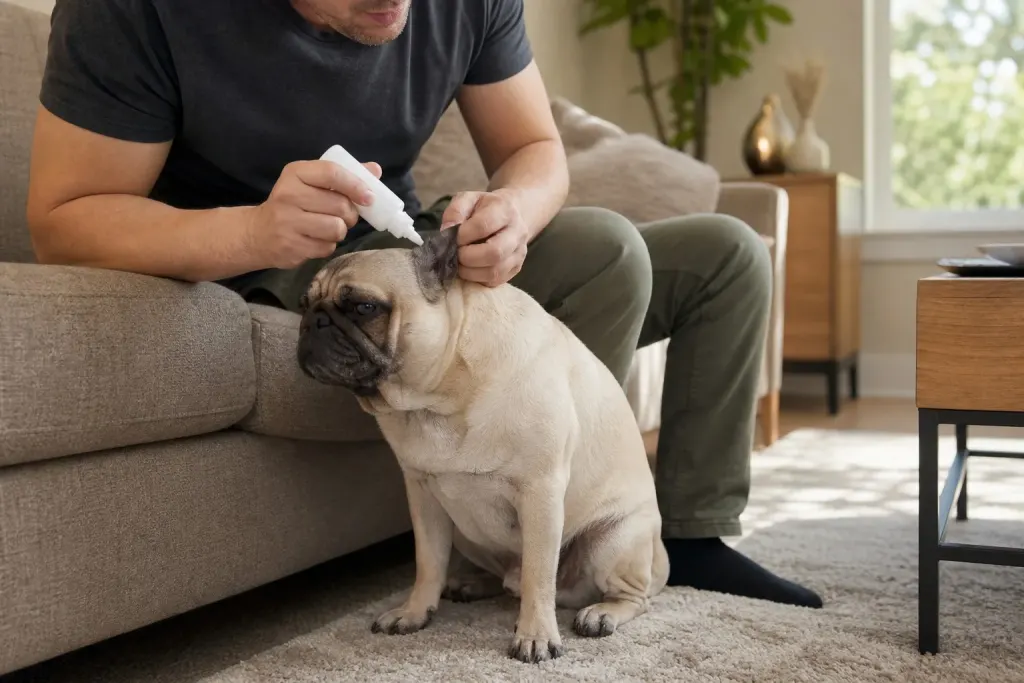
Clinical care protocols published in PMC Veterinary Dermatology research outline a safe step-by-step procedure:
- Gently Lift the Flap: Hold the tip of the flap upward to expose and straighten the vertical passage.
- Apply Cleanser: Fill the canal with a vet-approved liquid cleaning solution until the fluid is visible. Do not insert the bottle tip directly into the opening.
- Massage the Canal Base: Gently massage the base of the cartilage for 20 to 30 seconds. You should hear a squishing sound as the liquid breaks down trapped wax and debris.
- Allow Head Shaking: Step back and let your pug shake its head freely. This movement forces loosened wax and excess fluid up out of the deeper passage.
- Wipe Clean: Use a soft cotton pad or gauze wrapped around your index finger to wipe away dissolved wax from the outer opening and inner flap lining.
Never insert cotton swabs (Q-tips) deep into the auditory passage. Swabs push accumulated wax further down against the eardrum and risk rupturing the delicate tympanic membrane.
When to Seek Veterinary Care
Home hygiene is a preventive measure, not a treatment for active medical issues. If your pet exhibits severe redness, strong odor, thick discharge, or obvious pain, schedule a veterinary examination promptly.
A clinician will use an otoscope to inspect the horizontal passage and eardrum, check for foreign material or parasites, and take a swab sample for microscopic evaluation. Prescribing targeted antibiotic or antifungal medication is necessary to eliminate the specific organism involved.
Note: Recurrent canal inflammation in pugs often stem from underlying food or environmental allergies. Evaluating your dog’s daily menu alongside guidance on pug diet and nutrition helps identify potential dietary allergens. Older dogs also require closer monitoring, as detailed in senior pug care guides.
Frequently Asked Questions
Do Pugs Need Cleaning Every Week?
Weekly inspection is recommended, but actual cleaning is needed only when visible wax or debris builds up. Routine washing of clean, healthy canals can strip natural protective oils and irritate the delicate skin lining.
Can Untreated Canal Infections Cause Hearing Loss?
Yes. Chronic or severe outer canal inflammation can rupture the eardrum and spread to the middle and inner auditory structures (otitis media and otitis interna). This deep inflammation can lead to permanent hearing loss, vestibular balance issues, and facial nerve paralysis.

Leave a Reply