
Table of Contents
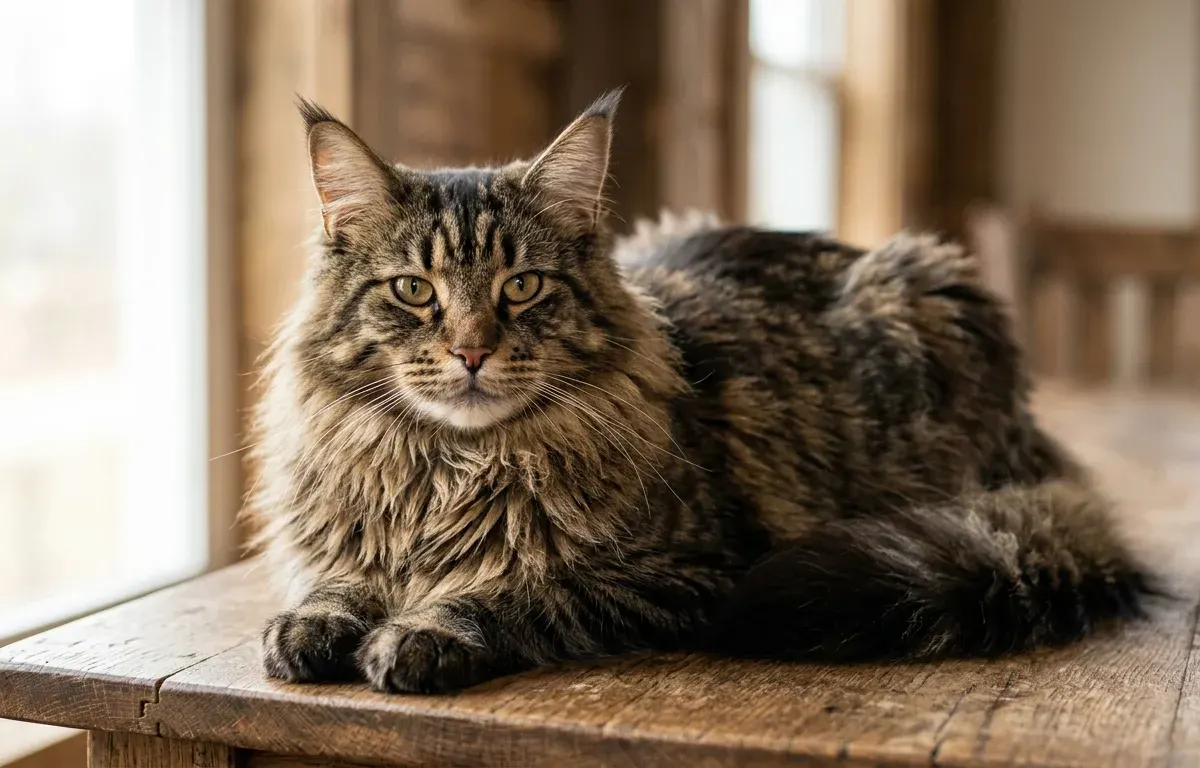
Do Maine Coon cats shed? Yes, Maine Coon cats do shed loose hairs continuously throughout the year. As a large, semi-longhaired breed with a dense double coat, Maine Coons experience noticeable seasonal shedding surges during spring and autumn. While their large physical frame produces a substantial volume of loose fur, their silky guard hairs resist severe matting far better than the dense, woolly coats of Persian cats. Regular weekly line combing and proper hydration keep shedding manageable in any household.
- Maine Coons possess a weather-resistant double coat composed of smooth guard hairs and a soft, insulating undercoat.
- Hair turnover occurs through four physiological phases: anagen, catagen, telogen, and exogen.
- Indoor living dampens outdoor photoperiod cues, creating a steady, year-round shedding baseline rather than extreme molts.
- Line combing two to three times weekly with a stainless steel comb removes dead undercoat fur and prevents hairballs.
- Sudden bald spots, red skin lesions, or intense scratching indicate medical alopecia rather than normal physiological shedding.
Maine Coon cats are celebrated worldwide for their impressive physical stature, tufted ears, and majestic lion-like ruffs. Prospective owners and new adopters frequently wonder about the reality of living with this semi-longhaired giant and whether loose fur will overwhelm their living spaces. Understanding the biological mechanisms behind Maine Coon shedding allows owners to establish proactive grooming routines that keep their cat comfortable and their furniture clean.
The Biology Behind Maine Coon Shedding: Coat Structure and Hair Growth Cycles
Maine Coons developed their distinct fur structure through centuries of natural selection in the rugged climate of New England. According to the official breed standards published by the Cat Fanciers’ Association, the Maine Coon possesses an all-weather, semi-long double coat that is shorter on the shoulders and longer along the stomach and hindquarters. This layered design provided historical working cats with essential protection against freezing temperatures, snow, and dense underbrush.
Genetically, every hair on a feline body follows a continuous life cycle governed by follicular activity. Understanding this growth mechanism clarifies why shedding is a necessary biological process rather than a coat defect. Genetic coat variations in the breed are closely tied to short hair Maine Coon coat genetics, reflecting how ancestral traits interact with standard semi-long coat phenotypes. Furthermore, these historical outdoor adaptations developed alongside rugged anatomical traits such as extra digits, detailed in research on polydactyl Maine Coon toe counts.
Anatomical Layers of the Semi-Long Double Coat
The Maine Coon coat consists of three distinct textural components working together:
- Outer Guard Coat: Long, smooth, water-repellent guard hairs form the top layer. These glossy hairs create a protective shield that deflects rain, snow, and surface dirt away from the delicate skin.
- Insulating Undercoat: Beneath the guard hairs lies a fine, soft undercoat. This downy layer traps air close to the epidermis, maintaining core body heat during winter and buffering ambient heat during summer.
- Regional Accent Fur: The breed features specialized fur structures, including a prominent frontal ruff around the neck, dense britches along the thighs, tufted paw pads acting as natural snowshoes, and a heavily furred, plume-like tail.
Because the guard hairs are silky and lay flat across the body, Maine Coon fur is naturally less prone to felting than the cottony coats of certain other longhaired breeds.
The Four Phases of Feline Hair Follicle Turnover
Every individual hair follicle on a cat progresses through a four-stage cycle that regulates growth and replacement:
- Anagen Phase: The active growth stage during which follicular cells divide rapidly to synthesize a new hair shaft.
- Catagen Phase: A brief transitional period where the hair follicle regresses, cell division ceases, and the base of the hair forms a club structure.
- Telogen Phase: The resting stage where the mature club hair remains anchored in the dormant follicle while new dermal papilla signals prepare for the next cycle.
- Exogen Phase: The active shedding phase where the mature hair shaft releases from the follicle and detaches from the skin.
Daily shedding represents thousands of individual follicles entering the exogen phase simultaneously. Rather than shedding all hairs at once, a healthy cat maintains a mosaic pattern where adjacent follicles sit in different stages of the growth cycle.
Do Maine Coon Cats Shed a Lot? Realistic Volume Expectations and Comparisons
Whether a Maine Coon sheds a large amount depends on your baseline of comparison. Compared to short-haired domestic breeds, a Maine Coon produces a significantly greater volume of visible loose fur simply because each individual hair shaft is three to four times longer. However, compared to flat-faced longhaired breeds like Persians, Maine Coons shed fur that is far easier to collect and groom.
A key factor in overall shedding volume is physical surface area. Because mature Maine Coon males commonly weigh between 15 and 25 pounds, examining how big Maine Coon cats get explains why their substantial body mass hosts a greater total number of hair follicles than an average eight-pound domestic cat. When shedding occurs, the sheer surface area results in noticeable fur accumulation on carpets and upholstery. This loose fur behavior closely mirrors Ragdoll cat shedding dynamics, where semi-long coats release soft tufts that rest on fabric surfaces rather than weaving deeply into weave fibers.
Breed Comparison: Maine Coon vs Other Common Breeds
To provide realistic context for prospective adopters, the following table compares coat characteristics, shedding volume, and maintenance requirements across popular feline breeds:
| Breed | Coat Type & Texture | Shedding Volume Profile | Matting Susceptibility | Grooming Frequency |
|---|---|---|---|---|
| Maine Coon | Semi-long double coat with silky guard hairs | Moderate year-round with seasonal peaks | Low to moderate | 2 to 3 times weekly |
| Ragdoll | Semi-long single/plush coat with minimal undercoat | Moderate year-round with light shifts | Low | 1 to 2 times weekly |
| Persian | Long, dense, cottony double coat | High year-round fallout | High (prone to severe felting) | Daily line combing |
| Domestic Shorthair | Short single or light double coat | Steady low-to-moderate daily turnover | Extremely low | Once weekly |
While Persians require intensive daily detangling to prevent painful felted mats, a Maine Coon coat remains manageable with a consistent schedule of several weekly combing sessions.
Seasonal Molting Cycles: Spring and Autumn Coat Transitions
Maine Coons experience natural surges in hair shedding known as seasonal molting. These seasonal shifts represent biological adaptations to changing external environments, daylight length, and ambient temperatures.
In natural outdoor conditions, daylight duration (photoperiod) triggers hormonal signals that dictate coat density. Studies documented by VCA Animal Hospitals confirm that semi-longhaired breeds undergo pronounced coat transitions during seasonal climate shifts. The breed’s historical hardiness in varying weather conditions aligns with their legendary vitality, which is explored in comprehensive guides on lifespan and vitality in Maine Coons. Furthermore, comparing water affinity across breeds, such as whether Ragdoll cats like water, illustrates how different coat textures and densities affect feline interactions with moisture.
The Spring Blowout vs the Autumn Transition
- The Spring Molt (Coat Blow): As spring arrives and daylight hours lengthen, the feline endocrine system prompts the body to shed its thick winter undercoat. During this period, loose undercoat fur detaches rapidly, often coming away in visible tufts. Daily combing is essential during spring to capture dead hair before it forms mats.
- The Autumn Transition: In early autumn, the cat sheds lighter summer fur to stimulate the emergence of a dense, plush undercoat and a thicker chest ruff for cold weather insulation. This autumn shed is generally less voluminous than the spring blowout but still requires extra grooming attention.
How Indoor Living Modifies Natural Shedding Patterns
Modern domestic Maine Coons living strictly indoors experience altered shedding patterns. Indoor environments feature consistent artificial lighting, central heating during winter, and air conditioning during summer.
Because indoor cats are shielded from dramatic photoperiod changes and temperature drops, their hair follicles do not receive sharp seasonal molting signals. Consequently, indoor Maine Coons experience a steady, moderate baseline of shedding spread evenly across all twelve months of the year. While indoor owners avoid dramatic spring coat blows, they must manage consistent daily hair turnover. While daily shedding remains consistent in indoor environments, the physical volume collected during brushing fluctuates based on seasonal ambient lighting and air circulation. Maintaining a dedicated line-combing habit prevents loose undercoat hairs from weaving into tight friction mats around the britches and armpits.
Essential Grooming Routine and Tools for Managing Maine Coon Fur
A structured grooming routine is the single most effective method for controlling Maine Coon shedding. Regular brushing removes dead hair directly from the coat, preventing it from settling on household surfaces or being ingested during daily self-cleaning.
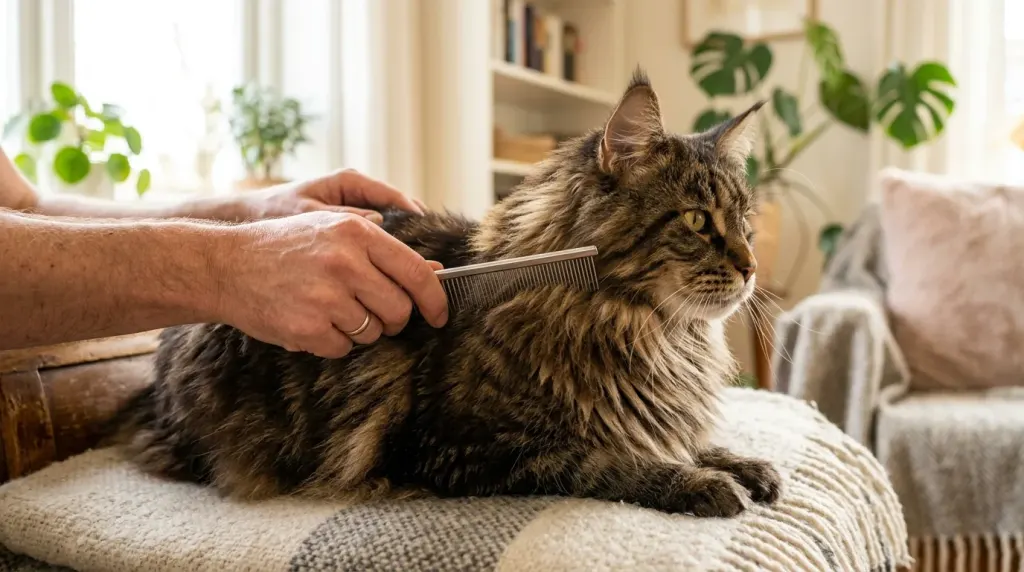
Because Maine Coons possess a calm, dog-like temperament, grooming sessions can become an enjoyable bonding ritual. The breed’s gentle disposition is documented in discussions of Maine Coon aggression and temperament, demonstrating their cooperative nature during handling. This relaxed demeanor also facilitates peaceful household integration when managing Maine Coons and dogs alongside a shared pet care schedule.
The Essential Grooming Toolkit
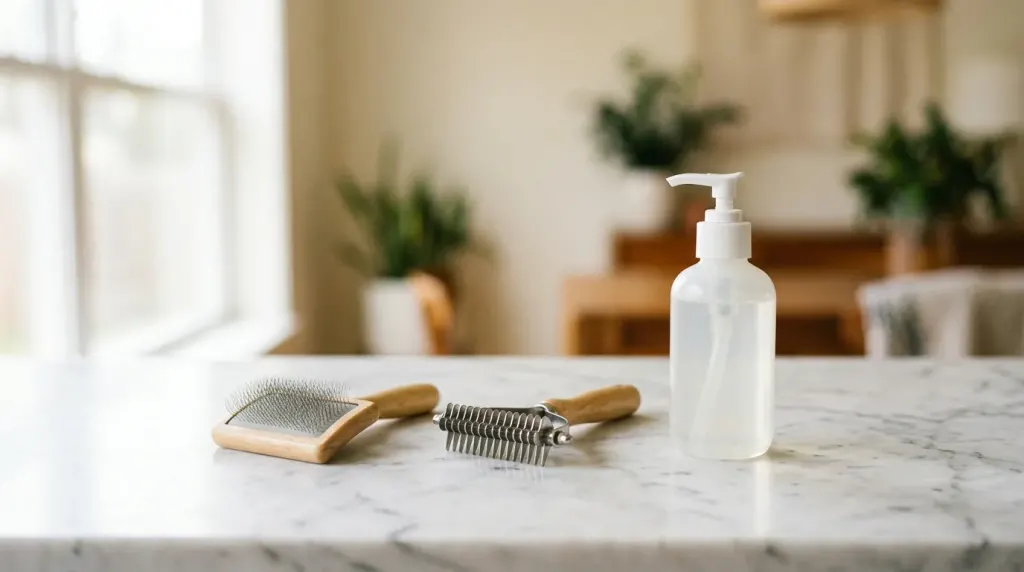
Effective coat care requires specific tools designed to reach the undercoat without scraping the skin:
- Dual-Density Stainless Steel Greyhound Comb: The most critical tool for semi-long double coats. The wide teeth detangle outer guard hairs, while the narrow teeth lift loose undercoat fur.
- Soft-Pin Slicker Brush: Features fine, angled wires with protected tips to gently collect loose surface hairs and smooth the topcoat after combing.
- Undercoat De-Shedding Rake: Equipped with smooth, rotating metal pins designed to penetrate the outer coat and remove dead undercoat fibers during peak spring molts.
- Blunt-Tipped Grooming Scissors: Used exclusively for carefully trimming minor mats or performing hygienic sanitary trims around the rear britches.
Step-by-Step Line-Combing Technique
Using a brush solely on the surface of a Maine Coon coat will leave dead undercoat trapped beneath, where friction quickly causes dense matting. Groomers recommend the line-combing technique:
- Part the Coat: Gently part the fur horizontally with your non-dominant hand until the skin is clearly visible.
- Comb from Root to Tip: Using your stainless steel comb, gently work through a small section of fur from the base near the skin outward to the hair tips.
- Work in Systematic Sections: Begin at the lower abdomen and work upward toward the spine, paying special attention to high-friction areas: armpits, groin, behind the ears, and the rear britches.
- Finish with the Slicker: After combing through all sections, use light strokes with the slicker brush to collect free-floating hairs and distribute natural skin oils.
- Reward Cooperative Behavior: Conclude each 5 to 10-minute session with high-value treats and affectionate praise to ensure grooming remains a positive experience.
Nutrition, Hydration, and Skin Health: Reducing Excessive Shedding from Within
External brushing manages loose hair, but internal nutrition determines coat strength, follicle vitality, and the rate of shedding. A cat fed an incomplete or unbalanced diet will experience dry, brittle hair shafts that break and shed prematurely.
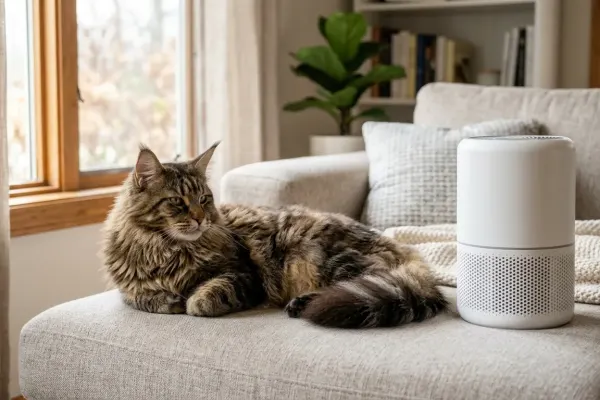
Dietary principles for maintaining a glossy, resilient coat align with standard feline nutritional guidelines, which prioritize high-protein animal sources over filler carbohydrates. Furthermore, proper skin hydration supports the epidermal barrier, reducing dry dander particles that are relevant to hypoallergenic cat considerations.
Key Nutrients for Follicle Strength and Coat Resilience
To maintain optimal coat health and minimize excess hair turnover, ensure your Maine Coon receives:
- High-Quality Animal Protein: Feline fur is composed of roughly 95 percent protein, primarily keratin. High-digestibility poultry, rabbit, or fish provides the essential amino acids (methionine and cysteine) required for healthy hair shaft synthesis.
- Omega-3 and Omega-6 Fatty Acids: Marine-sourced Omega-3 fatty acids (EPA and DHA) reduce cutaneous inflammation, while Omega-6 linoleic acid maintains the epidermal lipid barrier. Adding a veterinary-approved salmon oil supplement supports coat luster.
- Zinc and B-Complex Vitamins: Zinc supports cellular repair in the hair follicle, while biotin promotes keratin infrastructure.
- Abundant Hydration: Cats have a low natural thirst drive. Providing recirculating water fountains and feeding moisture-rich wet or raw food prevents dehydrated, flaky skin that accelerates shedding.
Normal Shedding vs Clinical Hair Loss: When to Consult a Veterinarian
Cat owners must distinguish between normal physiological shedding and pathological hair loss (alopecia). While shedding is a healthy, diffuse process, alopecia is a clinical symptom of an underlying dermatological or systemic disorder.
According to veterinary dermatological reference materials in the Merck Veterinary Manual, true alopecia involves distinct bald patches, broken hair stubble, or cutaneous inflammation. General wellness evaluations should be cross-referenced with common breed health issues to monitor systemic vitality. In addition, prospective owners evaluating pedigree health across rare cat varieties and pedigree health should prioritize breeders who screen parent stock for inherited dermatological and metabolic stability.
Diagnostic Red Flags: Identifying Signs of Feline Alopecia
The following comparison outlines the critical differences between healthy shedding and clinical dermatological disease:
| Characteristic | Normal Physiological Shedding | Abnormal Hair Loss (Clinical Alopecia) |
|---|---|---|
| Coat Pattern | Uniform density across the entire body | Distinct bald spots, thinning patches, or uneven stubble |
| Skin Condition | Pale pink, supple, smooth, and free of scabs | Redness, flaking scales, hot spots, sores, or crusts |
| Grooming Behavior | Calm, routine self-cleaning after meals or sleep | Frantic scratching, chewing skin, or obsessive licking |
| Hair Detachment | Loose hairs lift away cleanly with a comb | Clumps pull out leaving raw, weeping, or bleeding skin |
| Systemic Health | Energetic, normal appetite, and stable weight | Lethargy, vomiting, weight loss, or pain during handling |
Common clinical causes of excessive hair loss include flea allergy dermatitis, fungal ringworm (Microsporum canis), psychogenic overgrooming triggered by environmental stress, and endocrine disorders such as feline hyperthyroidism. If you observe any abnormal skin lesions or behavioral distress, seek a prompt veterinary evaluation. Clinical diagnostics for inflammatory skin conditions detailed in the Merck Veterinary Manual highlight the importance of skin scrapings and fungal cultures to target root causes.
Note: This breed grooming and coat biology guide provides educational insights for pet owners. Any sudden bilateral hair loss, open skin lesions, or intense pruritus requires a diagnostic examination from a licensed veterinarian rather than home grooming adjustments.
Frequently Asked Questions About Maine Coon Shedding
How often should I brush my Maine Coon cat?
Brushing frequency varies based on individual coat density, activity level, and the current shedding season. For most adult Maine Coons, regular line combing several times each week using a dual-density stainless steel greyhound comb and a soft-pin slicker brush keeps the undercoat free of tangles. During heavier spring and autumn seasonal molts, brief daily combing sessions help capture loose fur before dense mats develop.
Are Maine Coon cats hypoallergenic?
No, Maine Coon cats are not hypoallergenic. Cat allergies in humans are triggered primarily by the Fel d 1 protein found in feline saliva, sebaceous skin glands, and dander. Because Maine Coons produce standard levels of Fel d 1 and possess an extensive double coat that distributes dander, they can trigger allergic responses.
Why is my Maine Coon shedding in large clumps?
Shedding in noticeable clumps typically occurs during the spring seasonal molt as the thick winter undercoat releases rapidly. However, if the fur clumps pull away leaving bare, inflamed, or scabby skin underneath, it indicates a medical issue such as a fungal infection, flea allergy, or nutritional deficiency requiring veterinary attention.
Do Maine Coon kittens shed as much as adult cats?
No, Maine Coon kittens shed very little because they possess a short, single-layer juvenile coat. As kittens mature, their dense adult undercoat, outer guard hairs, and full chest ruff gradually develop over their first few years of growth, making kittenhood the ideal period to establish a cooperative grooming routine.
Leave a Reply