
Table of Contents
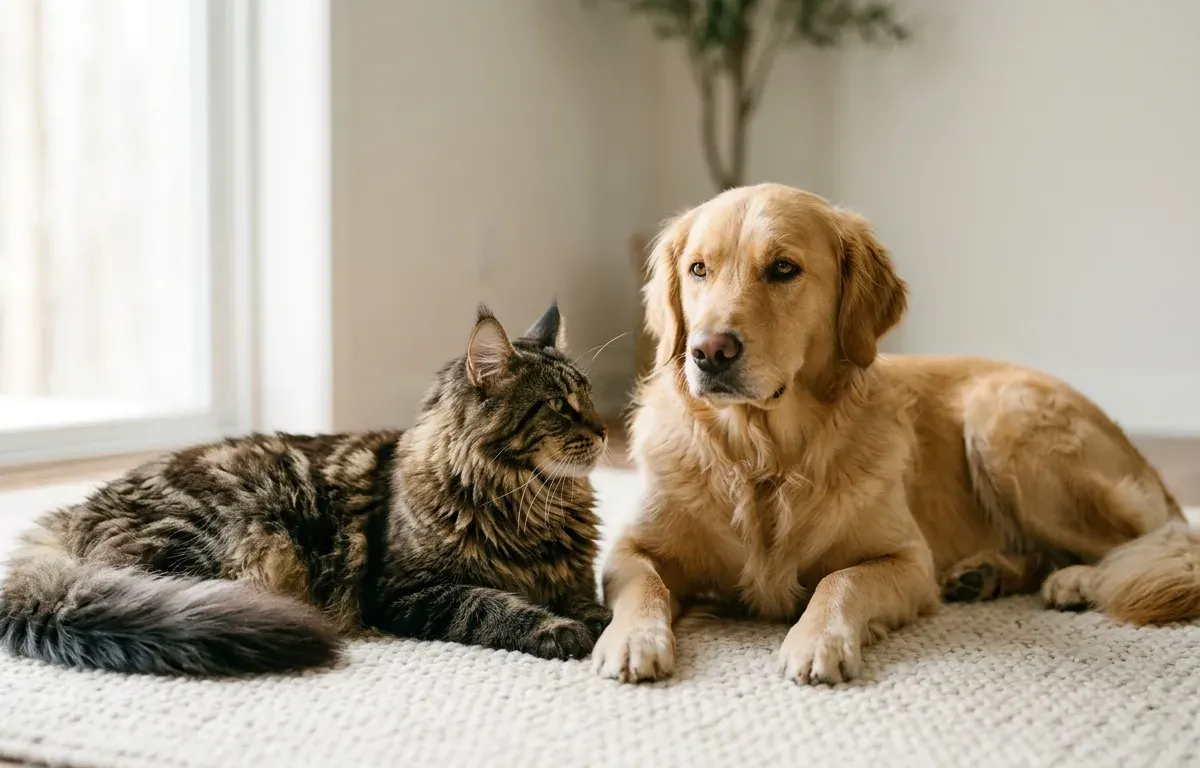
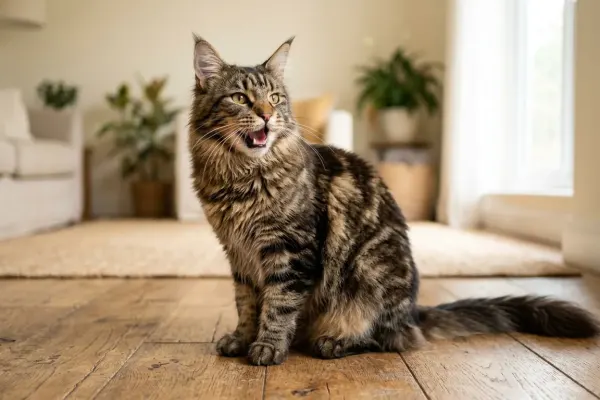
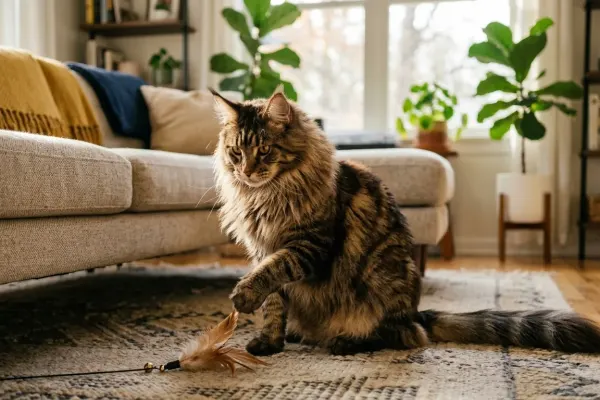
When pet owners ask, do Maine Coon cats get along with dogs, the answer is an emphatic yes. Maine Coons adapt exceptionally well to canine companions due to their confident temperament, substantial physical mass (males reach 15 to 25 pounds), and low-flight instincts. Unlike smaller or skittish cats that trigger a dog's predatory chase reflex by bolting, a Maine Coon typically observes calmly or holds its ground. When integrated through a structured 4-stage introduction protocol tailored to each pet's pacing, Maine Coons form peaceful, enduring bonds with companion dogs.
- Adult male Maine Coons weigh 15 to 25 pounds and females weigh 8 to 14 pounds, creating physical parity with small to medium companion dogs.
- Confident, non-flight behavior interrupts the canine predatory chase sequence before high arousal begins.
- A structured 4-stage introduction process tailored to individual pet comfort ensures safe olfactory, visual, and physical integration.
- Vertical perches, dog-proof litter areas, and elevated feeding stations prevent territorial competition and resource guarding.
- Maine Coons thrive equally well in multi-cat households when provided with distributed resources and vertical territory.
Maine Coon cats are exceptionally good with dogs, earning widespread recognition as one of the most dog-friendly feline breeds in the world. Their relaxed disposition, sturdy physical build, and interactive personality allow them to navigate multi-pet households with remarkable ease. Whether you currently own a dog and plan to adopt a Maine Coon kitten, or wish to bring a new canine companion into a home with an adult cat, understanding the behavioral dynamics between these two species ensures a safe, smooth transition.
Why Maine Coon Cats and Dogs Form Strong Cohabitation Bonds
The remarkable compatibility between Maine Coon cats and domestic dogs stems from a combination of evolutionary traits, physical stature, and communicative temperament. Known widely in feline registries as the gentle giants of the cat fancy, Maine Coons approach their environment with inquisitive confidence rather than nervous apprehension.
According to official breed standards published by the Cat Fanciers’ Association (CFA), the Maine Coon developed naturally as a rugged working cat in New England farmsteads. This working background produced an adaptable, highly social animal that readily accepts other household pets as part of its family unit. Their slow maturation schedule, taking three to five years to reach full physical and behavioral maturity, results in an easy-going demeanor that matches the companionable energy of family dogs.
Physical parity plays a decisive role in cross-species harmony. Breed documentation from PetMD notes that adult male Maine Coons consistently reach weights of 15 to 25 pounds, while females average 8 to 14 pounds. When a cat shares similar physical dimensions with toy and companion canines, such as evaluating small companion dog adult size, the dynamic shifts from a predator-prey relationship to one of mutual respect between equal housemates.
| Trait | Maine Coon Characteristic | Impact on Canine Cohabitation |
|---|---|---|
| Body Mass | 15 to 25 lbs (males), 8 to 14 lbs (females) | Establishes physical parity with small to medium dogs |
| Temperament | Confident, inquisitive, laid-back | Eliminates sudden panic and defensive hysteria |
| Acoustic Profile | Soft chirps, trills, quiet meows | Prevents high-pitched vocal triggers that agitate dogs |
| Social Drive | Pack-oriented, follows human routines | Integrates smoothly into shared family activities |
| Activity Pattern | Moderate bursts of play, relaxed resting | Matches typical companion dog energy cycles |
The Role of Size and Confidence in Defusing Canine Prey Drive
Canine predatory drive operates along an instinctual motor sequence: orient, eye-stalk, chase, grab-bite, and kill-bite. In domestic dogs, this sequence is activated primarily by rapid, erratic movement and sudden flight. When a small, fearful cat panics and sprints across a room, the visual stimulus trips the dog’s predatory chase reflex before cognitive inhibition can take over.
Maine Coons interrupt this chain reaction at the source. Because of their substantial body mass and innate self-assurance, adult Maine Coons rarely flee when approached by an inquisitive dog. Instead, they stand their ground, observe with steady posture, or approach with mild curiosity. By withholding the fleeing prey trigger, the cat allows the dog’s arousal to settle into standard social exploration rather than predatory pursuit. Understanding exercise limits when French Bulldogs run helps owners channel canine energy into structured outdoor workouts rather than impulsive indoor sprint sessions around resting cats.
Vocalization and Acoustic Communication Differences
Auditory cues strongly influence canine arousal levels. Sharp feline shrieks, intense hissing, and high-pitched distress yowls can startle dogs, triggering defensive reactivity or predatory excitation.
Maine Coons possess a distinctive acoustic profile. Rather than relying on loud, piercing cries, they communicate through gentle trills, soft chirps, and quiet vocalizations. This calm acoustic signature prevents overstimulation in sensitive dogs during early cohabitation stages, keeping the household environment quiet and predictable.
Do Maine Coons Get Along With Other Cats in Multi-Pet Homes?
Prospective owners frequently ask whether a Maine Coon will get along with other cats as easily as with family dogs. Feline ethology confirms that Maine Coons integrate smoothly into multi-cat households when resources and territory are properly managed.
Domestic cats possess facultative sociality, meaning their ability to live in groups depends heavily on positive early socialization and resource abundance. Because Maine Coons descend from communal farm cat colonies, they carry a high tolerance for shared territory. They frequently engage in allogrooming (mutual grooming), parallel resting, and gentle play bouts with other feline companions.
Managing a multi-cat household alongside dogs requires proactive environmental maintenance. When sharing your home with multiple pets, keeping up with daily grooming routines helps manage heavy dog shedding patterns and dense feline undercoats simultaneously. To prevent friction among multiple cats in a dog-friendly home, apply the standard veterinary resource formula: provide one litter box per cat plus one additional box, distributed across distinct rooms so no single animal can guard access.
What Scientific Research Says About Cat-Dog Cohabitation
Popular culture often depicts cats and dogs as natural enemies, but empirical animal behavior research paints a far more cooperative picture. Multi-species household dynamics have been examined closely in peer-reviewed veterinary literature.
A landmark behavioral study by Feuerstein and Terkel (2008), published in Applied Animal Behaviour Science, analyzed interactions in multi-pet homes. The researchers discovered that 66% of households reported amicable cat-dog relationships, 25% maintained neutral indifference, and only 10% experienced persistent aggression. The study highlighted that early age of introduction (under six months for cats and under one year for dogs) significantly increased long-term amicability.
A comprehensive survey by Thomson, Hall, and Mills (2018) from the University of Lincoln, published in the Journal of Veterinary Behavior, surveyed 748 multi-pet owners. Their findings revealed that feline comfort serves as the primary mediator of household peace. When cats feel safe and in control of their space, dogs adapt quickly to their presence. Understanding instinctual behaviors and companion dog breeding history helps owners identify whether a dog was historically selected for cooperative family companionship or intense hunting tasks.
| Study & Authors | Publication | Sample Size | Key Finding |
|---|---|---|---|
| Feuerstein & Terkel (2008) | Applied Animal Behaviour Science | Multi-pet survey | 66% amicable, 25% neutral; early cross-species exposure enhances friendship |
| Thomson, Hall, & Mills (2018) | Journal of Veterinary Behavior | 748 households | Feline comfort and cat-directed pacing dictate overall household peace |
Step-by-Step Guide: How to Introduce a Maine Coon to a Dog
Introducing a Maine Coon to a resident dog must never be rushed. Forcing direct contact on the first day can trigger panic or predatory chasing, creating negative associations that take months to reverse. Following a systematic 4-stage protocol based on veterinary desensitization guidelines from VCA Animal Hospitals ensures a safe transition.
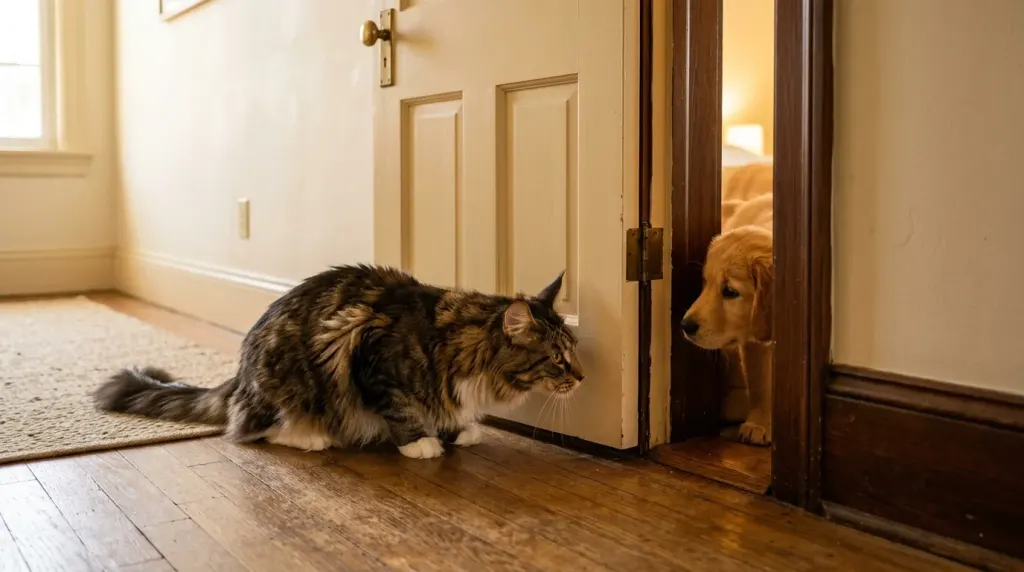
High-value food rewards accelerate the conditioning process. Using healthy protein snacks such as cooked salmon treats for dogs allows owners to reward calm canine focus during early scent and visual sessions.
Stage 1: Scent Swapping and Olfactory Desensitization (Days 1 to 4)
Set up a fully equipped sanctuary room for your Maine Coon containing food, fresh water, a litter box, scratching posts, and elevated bedding. The resident dog must have no visual or physical access to this room.
After forty-eight hours, begin exchanging scent items. Gently stroke a clean towel over the cat’s scent glands along its cheeks and neck, then place that towel near the dog’s resting bed. Take an unwashed blanket carrying the dog’s scent and place it in the cat’s sanctuary room. Feed both pets on opposite sides of the closed door. This pairs the unfamiliar scent with the positive emotional reward of eating.
Stage 2: Visual Contact Through Sturdy Barriers (Days 5 to 9)
Once both pets eat calmly on opposite sides of the solid door, replace or open the door behind a tall, sturdy baby gate or secure mesh screen.
Position food bowls five to six feet back from the gate on both sides. Over successive feedings, move the bowls closer to the barrier. If the dog fixates, whines, or paws at the gate, immediately call its name and reward it with a treat for turning its head away. If the cat displays flattened ears or a swishing tail, increase the distance between them. The goal is relaxed, neutral observation while eating.
Stage 3: Controlled Leashed Encounters (Days 10 to 18)
When barrier sessions proceed without tension, move to direct, in-person interactions in a spacious, neutral room.
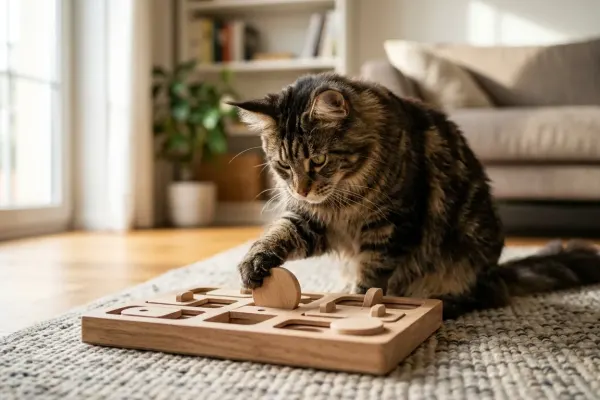
Fit the dog with a secure collar or harness and a six-foot loose leash. Have an adult handler sit with the dog in a stationary position. Allow the Maine Coon to enter the room freely and explore at its own pace. Never hold the cat in your arms or force it toward the dog, as physical restraint eliminates escape options and induces panic. Distribute interactive puzzle toys loaded with dog-safe peanut butter for enrichment to keep the dog calmly occupied while the cat roams. Keep initial sessions to five or ten minutes, ending each meeting on a calm note.
Stage 4: Supervised Cohabitation and Shared Freedom (Day 19 Onward)
Advance to off-leash freedom only after multiple consecutive leashed sessions pass with zero lunging, barking, or feline fear responses.
Unclip the dog’s leash while keeping an adult present in the room to observe. Ensure all interior doors to feline sanctuary areas and vertical climbing routes remain open. Allow both animals to move naturally without forced interaction. When both pets independently rest, groom, or sleep at least three to five feet apart without monitoring each other’s movements, mutual comfort is established. Continue daytime supervision for several weeks before leaving them alone together.
| Stage | Timeline | Primary Objective | Completion Indicator |
|---|---|---|---|
| Stage 1: Scent Swapping | Days 1 to 4 | Olfactory habituation | Calm feeding next to swapped blankets at closed door |
| Stage 2: Visual Barrier | Days 5 to 9 | Visual desensitization | Relaxed posture and eating within 3 feet of baby gate |
| Stage 3: Leashed Encounters | Days 10 to 18 | Controlled direct exposure | Dog disengages on cue; cat explores room confidently |
| Stage 4: Shared Freedom | Day 19+ | Supervised off-leash living | Mutual resting and grooming with 3+ feet of distance |
Reading Cross-Species Body Language: Harmony vs. Warning Signs
Accurately interpreting feline and canine body language allows owners to intervene well before minor tension escalates into conflict. Dogs and cats use contrasting physical signals: a wagging tail in a dog often indicates excitement or social intent, whereas a rapidly swishing tail in a cat signals mounting irritation.
When observing interactions, watch for subtle physical cues. Healthy play involves loose, bouncy canine movements and soft eye contact, paired with an upright feline tail with a curved tip. Conversely, stiff forward posturing, fixed staring, or facial tension requires swift redirection. Monitoring physical comfort also includes checking for ocular health issues, as pets dealing with canine eye redness and irritation may experience lowered patience and heightened reactivity. Using crisp, low-calorie cucumber dog treats offers an easy way to reward dogs for looking away from the cat during training.
| Behavioral State | Feline Indicators | Canine Indicators | Recommended Owner Action |
|---|---|---|---|
| Relaxed Harmony | Loose body posture, slow blinking, upright tail with hooked tip | Soft gaze, loose tail wag, relaxed open mouth, easy breathing | Praise calmly, maintain quiet environment |
| Mild Inquisitiveness | Forward ears, slow deliberate walking, gentle sniffing from distance | Play bow, turning head toward owner on cue, slow tail carriage | Supervise closely, reward dog for calm disengagement |
| Rising Arousal | Flattened ears, twitching tail tip, crouched posture, wide pupils | Unblinking eye contact, rigid body, closed mouth, high tail | Break line of sight, redirect dog with basic cues |
| Acute Distress | Hissing, spitting, arched spine, piloerection (puffed fur), low growl | Lunging, high-pitched barking, stiff trembling, stalking freeze | Separate immediately, step back to barrier phase |
Behavioral field observations demonstrate that the Maine Coon’s lack of flight response removes the primary visual trigger for predatory chase sequences. In multi-pet households, keeping initial interactions quiet and unhurried allows both species to calibrate their social boundaries without defensive escalation.
Note: If a resident dog displays unblinking predatory fixation, stiff whole-body posture, or lunging that cannot be redirected with high-value food rewards, pause physical introductions immediately. Separate the animals behind solid doors and consult a certified veterinary behaviorist or animal behavior consultant.
Designing a Safe Multi-Pet Home Environment
A harmonious household relies on smart environmental architecture. Designing your living space to accommodate both species’ natural instincts prevents accidental conflict and eliminates resource guarding.
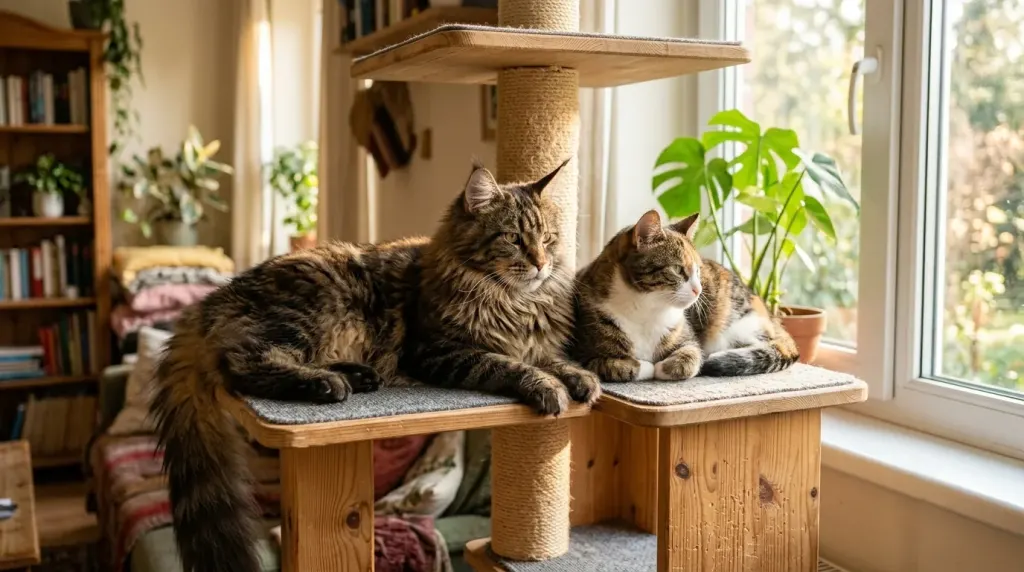
Vertical territory represents the most critical environmental asset for a Maine Coon. Heavy-duty cat trees, sturdy window perches, and wall-mounted walkways allow a 20-pound cat to move across rooms entirely above canine reach. Elevated perches give cats total autonomy over their proximity to the dog.
Litter box security is equally vital. Dogs frequently attempt to investigate litter boxes, which creates acute stress for cats and can lead to house-soiling problems. Protect the litter box by placing it behind a baby gate with a small cat pass-through door or installing a door strap latch that allows only the cat to enter.
Dietary separation prevents both nutritional theft and behavioral guarding. Dogs will eagerly devour high-protein cat food, which can cause canine digestive flatulence and gastrointestinal upset. Place feline food and water dishes on elevated countertops or sturdy wall-mounted feeding stations out of canine reach. Balancing household exercise routines alongside daily companion dog sleep patterns ensures both pets enjoy quiet, uninterrupted resting zones throughout the day.
Dog Breed Compatibility: Which Breeds Pair Best With Maine Coons?
While individual personality and training history matter most, certain canine breed groups naturally integrate with large cats more smoothly than others.
Companion breeds and sporting dogs with gentle dispositions make outstanding partners for Maine Coons. Breeds such as Golden Retrievers, Labrador Retrievers, Cavalier King Charles Spaniels, Pugs, and popular companion dog breeds share a sociable, low-reactivity temperament that meshes comfortably with feline housemates.
In contrast, breeds with deeply ingrained predatory drives require intensive management. Sighthounds (such as Whippets and Greyhounds), terriers bred for vermin eradication, and working herding dogs with compulsive nipping habits demand experienced handling, strong obedience foundations, and continuous supervision around cats. Before starting introductions, ensure resident dogs are evaluated for underlying canine health problems, as chronic discomfort or musculoskeletal pain can lower a dog’s frustration tolerance and trigger irritable reactions.
| Breed Group | Suitability Rating | Common Breeds | Management Considerations |
|---|---|---|---|
| Companion Breeds | High | Cavalier King Charles Spaniel, Pug, French Bulldog | Gentle energy, minimal chase instinct, easy integration |
| Sporting Retrievers | High | Golden Retriever, Labrador Retriever | Highly trainable, eager to please, responsive to cues |
| Herding Breeds | Moderate | Border Collie, Australian Shepherd | May attempt to herd running cats; requires strong impulse control |
| Terriers | Moderate to Low | Jack Russell Terrier, Rat Terrier | Innate prey drive; requires close supervision and barrier control |
| Sighthounds | Low to High Risk | Greyhound, Whippet, Saluki | Powerful visual chase instinct; requires specialized behaviorist guidance |
Frequently Asked Questions About Maine Coons and Dogs
Can a Maine Coon hurt a dog?
An adult Maine Coon possesses sharp claws and substantial weight, but healthy cats rarely initiate unprovoked attacks on dogs. A Maine Coon will only strike defensively if cornered, physically trapped, or harassed by an overzealous dog. Providing high vertical escape routes allows the cat to retreat calmly without needing to use its claws.
How long does it take for a Maine Coon and a dog to become friends?
Most Maine Coons and dogs achieve comfortable, peaceful cohabitation within two to four weeks when introduced through a structured gradual protocol. Developing active friendship, such as mutual grooming or sleeping side by side, typically takes two to six months depending on individual temperaments and previous socialization.
Are male or female Maine Coons better with dogs?
Individual personality, early socialization, and neuter status matter far more than sex. Both neutered males and spayed females integrate successfully with dogs. Neutered males are often described by breeders as slightly more outgoing and playful, while spayed females tend to be observant and independent, but both sexes thrive in multi-pet homes.
What should I do if my dog fixates on my Maine Coon?
If your dog freezes, stares unblinkingly at the cat, and ignores verbal commands, immediately break their line of sight using a piece of cardboard, blanket, or physical barrier. Step back to an earlier introduction phase, increase the dog’s daily physical exercise, and reward calm focus away from the cat with high-value treats.
Leave a Reply