
Table of Contents
When prospective cat parents ask, "Are Maine Coons hypoallergenic?", the scientific answer is no. Like all domestic felines, they produce the primary cat allergen protein Fel d 1 in their saliva, sebaceous skin glands, and urine. Because Maine Coons possess large physical bodies and dense double coats, they shed substantial volumes of dander-carrying hair, making them a common trigger for sensitive immune systems.
- No domestic cat breed is 100% hypoallergenic or completely allergen-free.
- Fel d 1 is the primary allergen protein responsible for up to 95% of human reactions to cats.
- Dried saliva on shed fur and airborne dander flakes drive household allergy symptoms.
- Adult Maine Coons weigh up to 25 pounds, creating a larger cutaneous surface area for dander production.
- Combining anti-Fel d 1 feline diets, true HEPA filtration, and medical immunotherapy enables many allergic owners to live comfortably with a cat.
When prospective cat parents ask, “Are Maine Coons hypoallergenic?”, the scientific answer is no. Like all domestic felines, they produce the primary cat allergen protein Fel d 1 in their saliva, sebaceous skin glands, and urine. Because Maine Coons possess large physical bodies and dense double coats, they shed substantial volumes of dander-carrying hair, making them a common trigger for sensitive immune systems.
Quick Answer: Are Maine Coons Truly Hypoallergenic?
The short scientific answer is no. Maine Coons are not hypoallergenic in any medical sense. All domestic felines produce allergenic proteins regardless of pedigree, lineage, or coat type. While prospective cat parents frequently evaluate whether Maine Coons make good pets for families with sensitivities, clinical data shows that Maine Coons generate standard concentrations of feline allergens.
The term hypoallergenic is frequently misused in commercial pet marketing. In a biological context, it means producing fewer allergens than normal, not zero allergens. In practice, Maine Coons do not secrete lower baseline levels of salivary or cutaneous proteins compared to typical domestic short hair cats.
Prospective owners often ask whether Maine Coon cats are hypoallergenic due to misconceptions about their silky fur. In reality, their large body mass and extensive coat hold and distribute a considerable volume of allergenic particles throughout the home environment.
The Biological Root of Cat Allergies: Understanding Fel d 1
Cat allergies are driven by specific biochemical proteins rather than the hair shaft itself. According to research published by NCBI / PMC (Satyaraj et al., 2019), the primary culprit is Fel d 1, a secretoglobulin protein that accounts for 90 to 95% of human Immunoglobulin E (IgE) responses to domestic cats.
Felines produce Fel d 1 predominantly in their sebaceous skin glands, saliva, perianal glands, and lachrymal glands. When an individual with an allergy encounters these microscopic protein particles, their immune system identifies them as harmful invaders, releasing histamine and leukotrienes that cause respiratory and dermatological distress.
People evaluating household pet sensitivities often compare multiple companion animals, assessing whether French Bulldogs are hypoallergenic alongside felines. However, feline Fel d 1 particles are uniquely aerodynamic, measuring under 2.5 to 10 microns, allowing them to remain suspended in stagnant indoor air for hours.
According to data from the Asthma and Allergy Foundation of America (AAFA), pet allergies affect 10 to 20% of the population worldwide. These microscopic particles possess sticky outer properties that adhere firmly to furniture upholstery, clothing, carpets, and air ducts for up to 6 months after a cat leaves the space.
How Saliva and Grooming Disperse Dander Throughout the Home
Cats spend approximately 30 to 50% of their waking hours grooming their fur. During every grooming session, saliva containing high concentrations of Fel d 1 coats the guard hairs and undercoat.
As the moisture evaporates, the protein dries and forms microscopic crystals on the hair shafts and epithelial skin flakes. When the cat sheds hair or sloughs off dead skin cells, this allergen-loaded dander detaches and becomes airborne with ordinary movement.
Why Maine Coon Breed Traits Amplify Allergen Exposure
Maine Coons do not possess a more toxic form of Fel d 1, but their physical characteristics create a larger aggregate allergen load than average housecats.
| Biological & Physical Factor | Standard Domestic Cat | Maine Coon Cat | Household Impact |
|---|---|---|---|
| Average Adult Weight | 7 to 10 lbs (3.2 to 4.5 kg) | 10 to 25 lbs (4.5 to 11.3 kg) | Up to 2x larger body surface area |
| Coat Structure | Single or light double coat | Heavy, water-repellent double coat | Higher reservoir for dried salivary proteins |
| Dander Shedding Volume | Moderate | High, continuous with seasonal peaks | Increased airborne allergen density |
| Seasonal Molting | Minor to moderate seasonal shed | Heavy bi-annual undercoat blow | Significant spring and autumn allergy spikes |
As confirmed in the PetMD Guide to Hypoallergenic Cat Breeds, individual protein production varies widely among cats, but physical coat volume strongly influences environmental dander accumulation.
Body Size, Skin Surface Area, and Total Dander Output
The sheer physical size of a Maine Coon is a primary factor in household allergen concentration. According to the PetMD Maine Coon Breed Profile, adult male Maine Coons regularly weigh between 15 and 25 pounds, with females averaging 10 to 14 pounds.
A cat weighing 20 pounds has substantially more skin surface area than a 7-pound domestic cat. More surface area means higher total epithelial cell turnover, resulting in a higher daily output of microscopic skin flakes even when baseline protein production per square inch remains average.
Enthusiasts noting that Maine Coon cats are rare in rescue shelters often seek purebred kittens without realizing that larger feline bodies naturally yield higher total dander output.
Heavy Double Coats and Bi-Annual Seasonal Shedding Cycles
Maine Coons developed in cold northern climates, evolving a rugged, semi-long double coat consisting of a dense undercoat and longer protective guard hairs. While owners sometimes ask whether short hair Maine Coon cats exist, standard breed genetics produce an extensive coat designed for thermal insulation.
This thick coat traps shed dander until seasonal molting occurs. During bi-annual shedding cycles in spring and autumn, Maine Coons shed massive amounts of undercoat. Without disciplined brushing routines, these loose hair clumps carry dried salivary Fel d 1 across carpets, bedding, and living room furniture.
Practical Strategies to Reduce Maine Coon Allergens at Home
Living comfortably with a Maine Coon while managing mild to moderate pet sensitivities requires a structured, multi-tiered approach that addresses allergens at the source and in the environment.
- Neutralize at the Source: Feed specialized feline diets formulated with egg-derived antibodies to bind active salivary proteins.
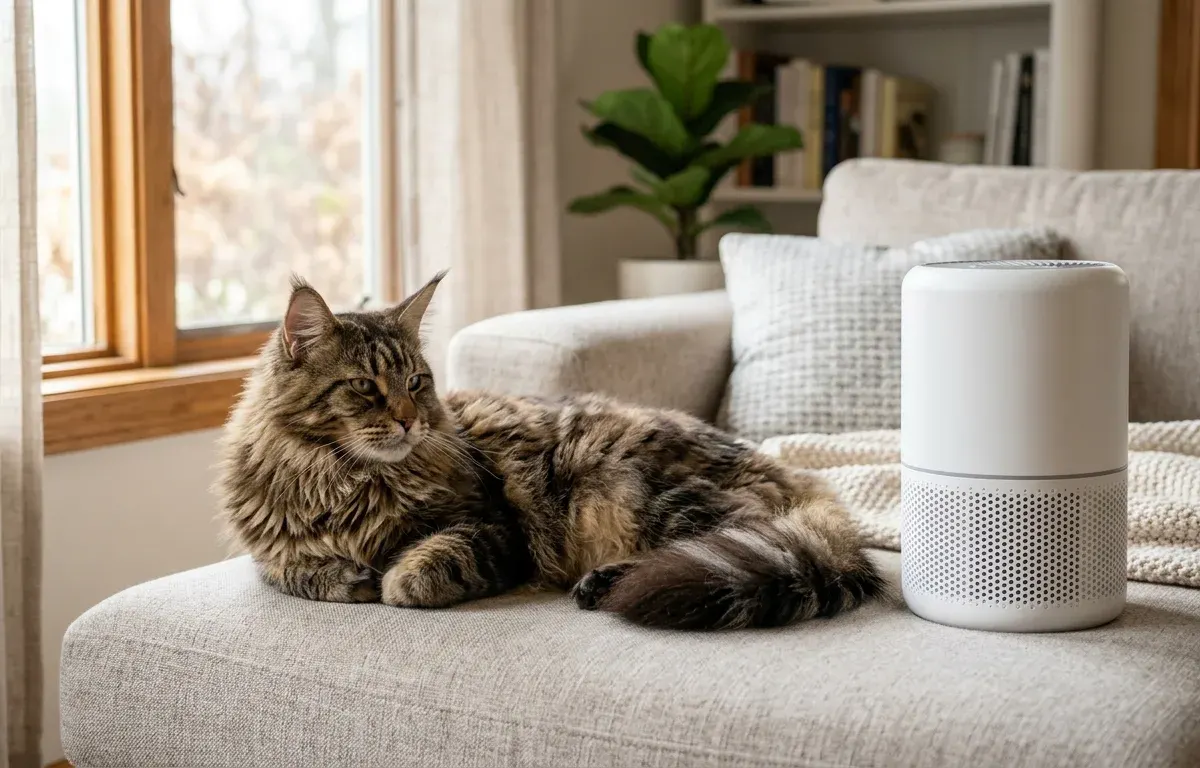
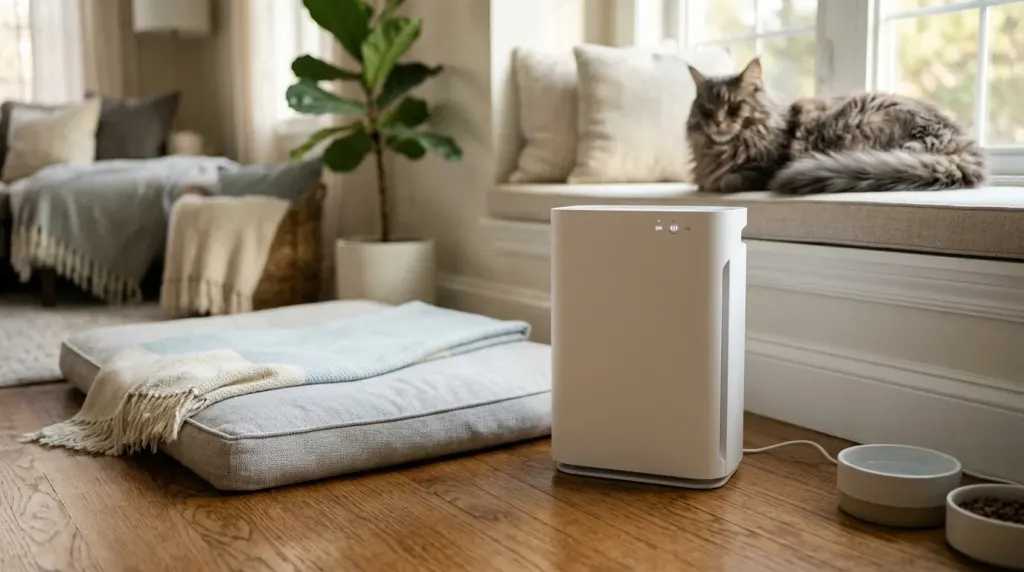
- Purify Living Air: Run certified HEPA purifiers continuously in key living spaces and sleeping quarters.
- Regular Exterior Grooming: Comb the coat multiple times weekly and use allergen-neutralizing wipes.
- Maintain Clean Sanctuaries: Keep the master bedroom strictly pet-free to provide an uninterrupted recovery zone during sleep.
These environmental controls also benefit households keeping other long-coated breeds, including families evaluating if Ragdoll cats are friendly or if Ragdoll cats are hypoallergenic.
Nutrition Innovation: Diets That Neutralize Salivary Fel d 1
Recent advances in animal nutrition offer an effective way to lower allergen output without affecting feline health. Specialized diets use egg product containing anti-Fel d 1 immunoglobulin Y (IgY) antibodies.
According to clinical research by Satyaraj and colleagues, feeding an egg-IgY enriched diet reduces active Fel d 1 in cat saliva by an average of 47% starting by the third week of consistent feeding. When the cat grooms, less active allergen is spread across the coat, leading to a marked decrease in airborne dander. Neutralizing salivary Fel d 1 through targeted nutrition works at the biological source. Because it leaves the feline endocrine system and natural protein production intact while simply binding the allergen in the mouth, it provides a safe method for sensitive households.
Environmental Controls: HEPA Filtration and Dander-Free Zones
Environmental management prevents microscopic dander from accumulating in living zones:
- True HEPA Air Purifiers: Place purifiers with true HEPA filters in bedrooms and living rooms to continuously capture airborne pet dander and loose hair.
- HEPA-Sealed Vacuuming: Clean carpets and upholstered furniture at least twice weekly using a vacuum equipped with a sealed HEPA filtration system.
- Hard Surface Wiping: Wipe hard floors and baseboards with damp microfiber cloths weekly to prevent settled particles from being stirred back into the air.
- Textile Washing: Launder cat blankets, bedding, and throw pillows every two weeks in hot water at 130 degrees Fahrenheit (54 degrees Celsius) to break down protein residues.
Grooming Routines, Wiping, and Safe Bathing Practices
Coat maintenance reduces the volume of loose, saliva-coated hair circulating in the home:
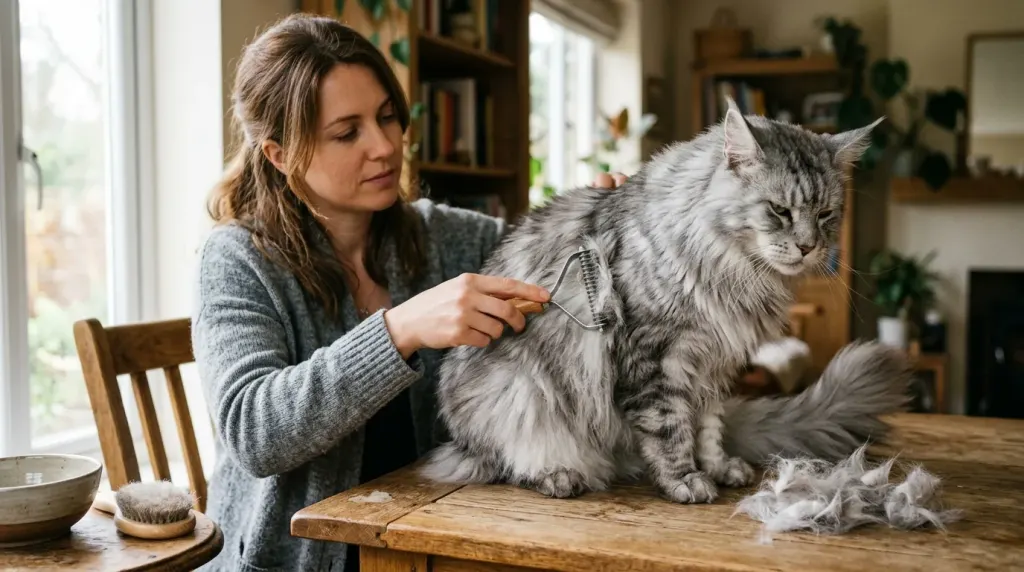
- Routine Line Combing: Brush your Maine Coon 2 to 3 times weekly using a stainless steel comb and a de-shedding rake, ideally outdoors or near an exhaust window by a non-allergic family member.
- Allergen-Reducing Wipes: Daily wipedowns with pet-safe dander neutralizing wipes trap loose proteins without drying out the cat’s skin.
- Limit Water Baths: Frequent water bathing can dry the skin, causing increased flaking and higher dander output. Bathing once every 6 to 8 weeks with a moisturizing feline shampoo is sufficient.
Medical Treatments and Immunotherapy for Cat Owners
Human medical treatments can help reduce allergic symptoms when environmental controls alone do not provide complete relief.
| Treatment Category | Common Examples | Mechanism of Action | Intended Use |
|---|---|---|---|
| Second-Generation Antihistamines | Cetirizine, Fexofenadine, Loratadine | Blocks H1 histamine receptors to reduce sneezing and itching | Daily symptom prevention and maintenance |
| Intranasal Corticosteroid Sprays | Fluticasone, Budesonide, Triamcinolone | Reduces nasal airway inflammation and mucosal swelling | Long-term relief of nasal congestion and rhinitis |
| Allergen Immunotherapy (AIT) | Subcutaneous allergy shots, Sublingual drops | Gradually desensitizes immune system to feline Fel d 1 proteins | Long-term immune tolerance over 3 to 5 years |
Because Maine Coons are friendly and Maine Coons are cuddly, owners often engage in close physical contact and lap-sitting. Implementing effective medical therapies allows sensitive owners to enjoy these affectionate behaviors without chronic respiratory irritation.
Caution: Individuals with moderate to severe allergic asthma, wheezing, or chest tightness should consult a board-certified allergist or pulmonologist before bringing a Maine Coon into the household. Pet allergies can exacerbate underlying airway hyperreactivity if unmanaged.
Comparing Maine Coons to Purportedly Hypoallergenic Cat Breeds
When exploring whether a Maine Coon cat is hypoallergenic, many prospective owners compare them to breeds marketed as allergy-friendly.
| Cat Breed | Coat Type | Fel d 1 Secretion Level | Shedding Profile | General Allergy Suitability |
|---|---|---|---|---|
| Maine Coon | Long, dense double coat | Standard biological baseline | High, seasonal spikes | Low to Moderate (requires management) |
| Siberian | Semi-long dense coat | Documented lower Fel d 1 in select lines | Moderate to High | Moderate to High |
| Balinese | Semi-long silky single coat | Lower average Fel d 1 protein levels | Low to Moderate | Moderate to High |
| Cornish / Devon Rex | Short, curly or fine coat | Standard baseline, less hair retention | Very Low | Moderate |
| Sphynx | Hairless (fine fuzz) | Standard baseline secreted onto skin | Minimal hair, direct skin dander | Moderate (requires weekly skin bathing) |
Prospective multi-pet households often weigh breed temperament alongside allergy traits, noting that Maine Coon cats are aggressive only rarely and that French Bulldogs make good pets for indoor living.
Frequently Asked Questions About Maine Coons and Allergies
Can you live with a Maine Coon if you have cat allergies?
Yes, many individuals with mild to moderate cat sensitivities successfully live with a Maine Coon by applying consistent environmental controls. Effective management involves using true HEPA air purifiers, feeding anti-Fel d 1 neutralizing diets, establishing pet-free bedrooms, brushing the coat regularly, and using targeted allergy medications recommended by a physician.
Do female Maine Coons produce less allergens than males?
Yes, intact male cats generally secrete higher concentrations of Fel d 1 than female cats because testosterone stimulates protein production in sebaceous glands. Neutering a male cat reduces his Fel d 1 output to levels comparable to females. Spayed females and neutered males produce similar baseline allergen amounts.
Does shaving a Maine Coon stop allergy symptoms?
No, shaving a Maine Coon does not eliminate allergies and can damage their insulating double coat. Because Fel d 1 originates in saliva, sebaceous glands, and urine, shaving simply exposes the skin, allowing dander flakes to shed directly into the air. Frequent combing and dander wipes are much safer and more effective.
How do I test if I am allergic to a Maine Coon before adopting?
The most practical test is to visit a registered Maine Coon cattery or a foster home with adult Maine Coons and spend 1 to 2 hours interacting directly with the cats. Because individual felines produce different baseline levels of Fel d 1, direct exposure helps determine your real-world immune threshold before bringing a cat home.
Leave a Reply