
Table of Contents
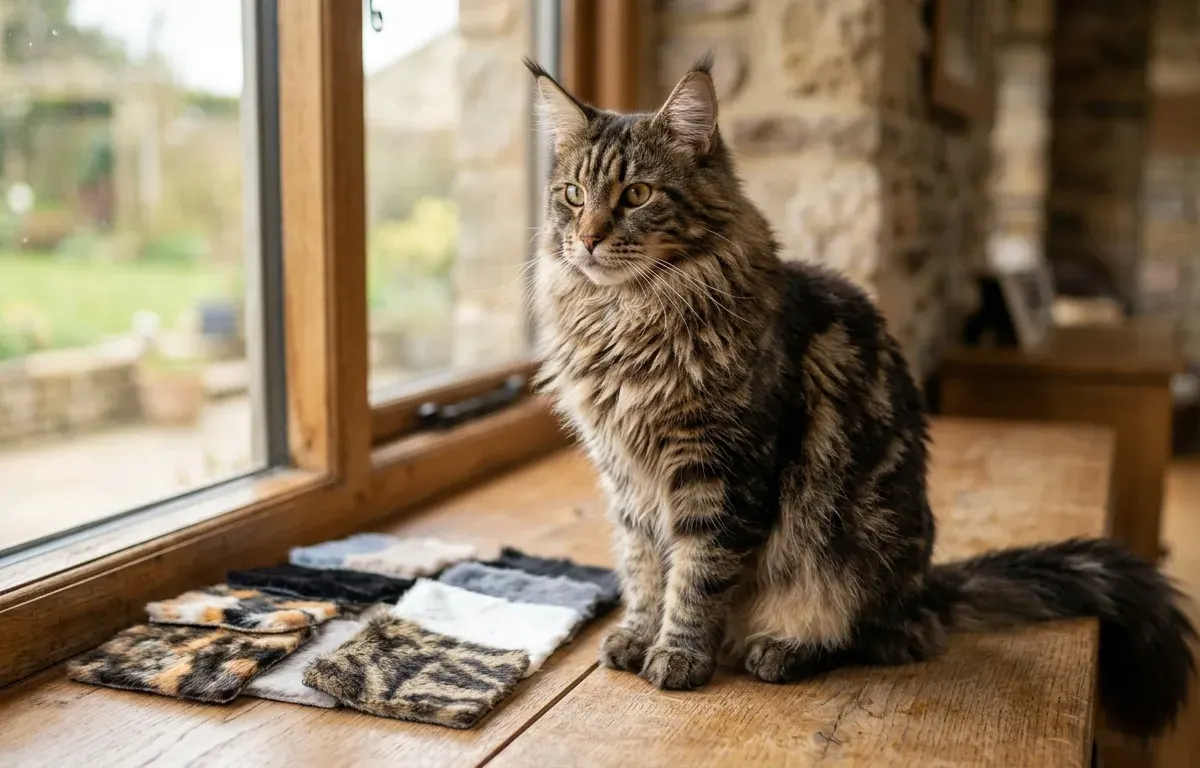
Maine Coon cats come in over 75 recognized color and pattern combinations, spanning solid coats (black, white, blue, red, and cream), classic and mackerel tabbies, smokes, shaded silvers, calicos, and tortoiseshells. When prospective owners ask what color are maine coon cats, official registries like the Cat Fanciers' Association (CFA) and The International Cat Association (TICA) accept virtually all natural feline coat varieties, excluding only those that indicate hybridization, such as chocolate, lilac, cinnamon, fawn, and colorpoint patterns.
- Maine Coons display over 75 accepted coat combinations grouped into five official CFA classes: Solid, Tabby, Tabby with White, Parti-Color, and Other Colors.
- Brown classic tabby and solid black are among the most common colors, while shaded silver and chinchilla patterns remain rare.
- Ginger or orange Maine Coons are officially registered as red, with roughly 80% being male due to sex-linked genetics on the X chromosome.
- Official show standards disqualify hybrid-derived colors and patterns, specifically chocolate, lilac, cinnamon, fawn, and pointed markings.
- Eye colors range from green to gold and copper, whereas blue or odd eyes are permitted exclusively in white or high-white cats.
What Color Is a Maine Coon Cat? The Spectrum of Accepted Colors
Maine Coon cats display an exceptionally wide spectrum of colors because the breed developed naturally in the rugged, cold climate of New England. In that environment, diverse coat colorations and thick, water-repellent fur helped these working farm cats survive harsh winters. While many people associate the breed exclusively with the shaggy brown classic tabby, purebred Maine Coons appear in almost every natural feline coat shade.
Understanding feline coat coloration requires distinguishing between base pigmentation and coat pattern. Every cat’s coloration begins with two primary pigment types: eumelanin, which produces black and its diluted shades like blue (slate grey), and phaeomelanin, which produces red (orange) and its diluted shade, cream. How these pigments express across the body depends on distinct genetic switches that govern banding, white spotting, and color distribution.
Under official cat fancy standards, Maine Coon colors fall into five broad visual groupings:
- Solid Coats: Uniform, single-shade pigmentation across the entire hair shaft from root to tip.
- Tabby Patterns: Agouti-banded hairs creating classic swirled, mackerel striped, or ticked markings.
- Parti-Color Variations: Distinct combinations of two colors, such as black and red (tortoiseshell) or blue and cream.
- Bi-Color and Calico Patterns: Any approved base color or parti-color combined with crisp white patches.
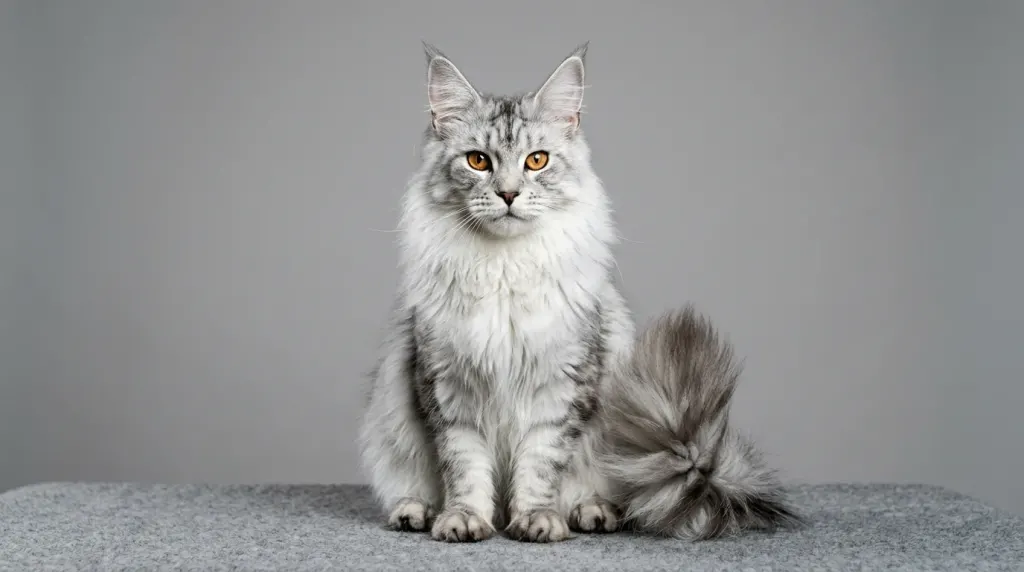
- Silver and Smoke Shading: Pigmentation concentrated on the hair tips over a sparkling silvery-white undercoat.
According to the CFA Maine Coon breed profile, the breed is recognized in more than 75 distinct color and pattern variations. Many pet owners raise these gentle giants alongside calm, friendly pugs in multi-pet homes, finding that the cat’s hearty woodland background and sociable disposition make them as adaptable to active family life as proven good family pugs.
The 5 Official Maine Coon Color Classes and Pattern Breakdown
To establish clear judging standards at cat shows, major pedigree registries organize the extensive color spectrum into structured classes. The Cat Fanciers’ Association divides the breed into five primary color classes, each with specific requirements for coat uniformity, ground color, and marking clarity.
| Color Class | Recognized Colors | Common Patterns | Key Markings & Distribution | Registering Association Standards |
|---|---|---|---|---|
| Solid Color | Black, White, Blue, Red, Cream | Uniform solid coat | Sound color from root to tip, free from ticking or rust | CFA & TICA Championship |
| Tabby Color | Brown, Blue, Red, Cream, Silver, Cameo | Classic, Mackerel, Ticked | Dense markings with clear “M” on forehead and unbroken necklaces | CFA & TICA Championship |
| Tabby with White | Any approved tabby base shade | Classic or Mackerel with White | White bib, chest, belly, and four paws paired with tabby mantle | CFA & TICA Championship |
| Parti-Color | Tortoiseshell, Blue-Cream, Calico, Dilute Calico | Mottled or Patched with White | Intermingled red and black patches; white required for Calico | CFA & TICA Championship |
| Other Colors | Black Smoke, Blue Smoke, Shaded Silver, Shell Cameo | Smoke, Shaded, Chinchilla | White undercoat with pigment tipping on the outer hair length | CFA & TICA Championship |
Solid Color Class
Solid Maine Coons carry complete, uninterrupted pigmentation across their body. A solid black Maine Coon features dense, lustrous coal-black fur down to the roots, paired with black paw pads and a black nose leather. Solid white cats possess pure, pristine coats without yellowing or stray colored hairs. Solid blue represents the genetic dilute of black, producing a soft slate-grey hue, while solid cream represents the dilute of red. True solid reds are uniquely rare because non-agouti genetics do not fully mask underlying tabby striping.
Tabby Color Class
The tabby pattern is the original agouti coat of the domestic cat’s wild ancestors. In Maine Coons, the classic (blotched) pattern is especially prominent, featuring wide, swirling whorls that create a distinctive “butterfly” marking across the shoulders and a target or “bullseye” on each flank. The mackerel pattern consists of continuous, narrow parallel stripes running down the sides, resembling a fish skeleton. Ticked tabbies exhibit multiple bands of color along each individual hair shaft with minimal body striping. Tabby colors include brown, blue, red, cream, and silver.
Tabby with White Class
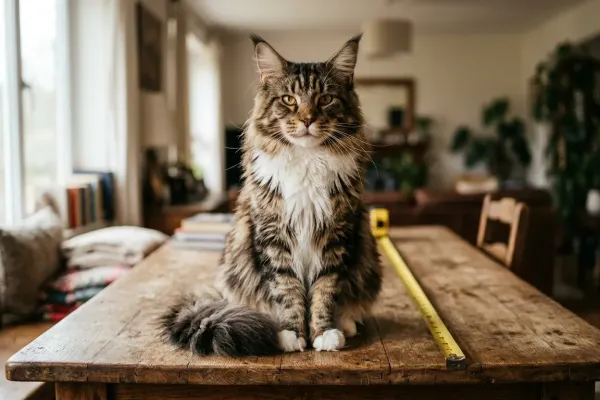
This class pairs any approved tabby coloration with crisp white markings. Show standards specify that the white should appear on the paws, chest, and belly, with an inverted “V” blaze on the face considered especially desirable. The contrast between rich brown or silver tabby swirls and snow-white bibs creates one of the most popular looks among pet owners.
Parti-Color Class
Parti-color coats consist of two distinct colors displayed across the body. The classic tortoiseshell (often called “tortie”) features black fur interspersed with patches of red. When diluted, this becomes blue-cream. When white spotting genetics are added, a tortoiseshell becomes a calico, featuring well-defined black and red patches on a predominantly white coat. Dilute calicos display soft slate-blue and pastel cream patches over white.
Shaded and Smoke Class (Other Colors)
Smoke and shaded Maine Coons possess a silvery-white undercoat beneath deeply pigmented hair tips. In a black smoke, the cat appears solid black while resting, but when the cat moves or fur is parted, a sparkling white undercoat becomes visible. In shaded silvers and chinchillas, the dark tipping covers only the outer fraction of each hair shaft, giving the coat an ethereal, shimmering quality.
Young Maine Coons across every color class display energetic playfulness that rivals active pugs during indoor exercise sessions. Their lush double coat adapts well to living spaces of all sizes, making them comfortable companions alongside apartment pugs as long as regular brushing routines are maintained.
Can Maine Coons Be Orange? Genetics of Red and Ginger Tabbies
Yes, Maine Coons can certainly be orange. In everyday conversation, pet owners frequently describe these warm, vibrant felines as orange, ginger, marmalade, or yellow. However, official pedigree standards and cat registries designate this entire color spectrum as “red.”
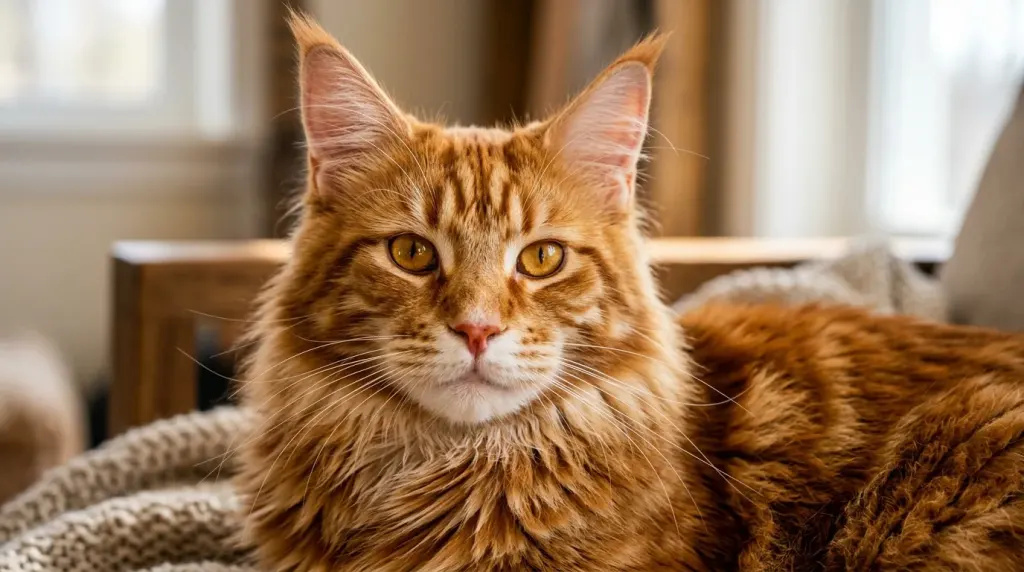
The genetics behind red Maine Coons involve a unique sex-linked inheritance mechanism. The gene responsible for red pigmentation (the O allele, which produces phaeomelanin) is located exclusively on the X chromosome. Because male cats possess one X chromosome and one Y chromosome (XY), they require only a single copy of the O gene from their mother to express a full red coat. Female cats possess two X chromosomes (XX) and must inherit the O gene from both their mother and their father to be solid red.
| Parent Combination | Expected Male Kittens | Expected Female Kittens |
|---|---|---|
| Red Sire x Red Dam | 100% Red Males | 100% Red Females |
| Non-Red Sire x Red Dam | 100% Red Males | 100% Tortoiseshell / Calico Females |
| Red Sire x Non-Red Dam | 100% Non-Red Males | 100% Tortoiseshell / Calico Females |
| Non-Red Sire x Tortoiseshell Dam | 50% Red Males, 50% Non-Red Males | 50% Tortoiseshell Females, 50% Non-Red Females |
| Red Sire x Tortoiseshell Dam | 50% Red Males, 50% Non-Red Males | 50% Red Females, 50% Tortoiseshell Females |
This sex-linked distribution means that approximately 80% of all red Maine Coon cats are male, while red females make up only about 20% of the red population. If a female cat inherits the red gene on only one of her two X chromosomes (genotype Oo), she will develop a tortoiseshell or calico coat rather than an all-red coat.
Another interesting genetic trait of red Maine Coons is the presence of “ghost markings.” In black-based cats, the non-agouti gene (aa) turns off tabby striping, resulting in a solid black coat. However, the non-agouti gene does not fully suppress red phaeomelanin pigment. As a result, virtually all red Maine Coons display visible tabby stripes, rings on their tails, and “M” markings on their foreheads, even when registered genetically as solid red.
Feline embryonic development unfolds over a typical gestation period, a maternal timeline comparable to mammalian schedules like pug dog pregnancy periods. Once grown, male red Maine Coons frequently become affectionate household companions that happily curl up like devoted lap pugs seeking warm family contact.
Prohibited and Disqualified Colors: What Disqualifies a Maine Coon?
While major registries celebrate the wide range of natural Maine Coon colors, show standards strictly disqualify specific colors and patterns. These disqualifications do not stem from cosmetic bias; they exist to protect the breed’s authentic genetic lineage as an indigenous North American working cat.
Official registries, including CFA and TICA, disqualify any Maine Coon showing clear evidence of hybridization (outcrossing) with other domestic breeds such as the Siamese, Burmese, or Chocolate Persian.
| Disqualified Trait | Visual Appearance | Underlying Genetic Factor | Breed Registry Policy |
|---|---|---|---|
| Chocolate | Rich warm brown or milk-chocolate coat | Recessive b allele (outcrossing to oriental breeds) | Immediate Show Disqualification |
| Lavender / Lilac | Pale frosty grey with warm pinkish undertones | Dilute of chocolate (bb + dd genotype) | Immediate Show Disqualification |
| Cinnamon | Warm reddish-brown or rust hue | Recessive b’ allele from oriental hybridization | Immediate Show Disqualification |
| Fawn | Soft warm beige or pale buff | Dilute of cinnamon (b’b’ + dd genotype) | Immediate Show Disqualification |
| Pointed Pattern | Darker face, ears, paws, and tail over pale body | Himalayan / Siamese temperature-sensitive cs allele | Immediate Show Disqualification |
| Sepia / Mink | Intermediate contrast shading across body | Burmese (cb) or Tonkinese hybridization alleles | Immediate Show Disqualification |
The Maine Coon developed through natural selection in northeastern North America, where the chocolate, cinnamon, and colorpoint mutations were historically absent. When these colors appear in a modern cat advertised as a Maine Coon, they indicate recent crossbreeding. Breeders charging premium prices for non-standard designer coats market crossbred lines rather than recognized pedigrees. Major feline registries treat these non-indigenous traits as conclusive evidence of outcrossing.
Buyer trends in the pet market often mirror canine designer fads where rare colorations inflate French bulldog prices beyond standard rates. Ethical Maine Coon buyers should expect pricing and pedigree clarity aligned with standard pedigree guidelines, similar to baseline Ragdoll cat costs established under TICA breed standards.
Eye Colors in Maine Coons: How Coat Color Relates to Eye Pigment
A Maine Coon’s expressive, large, slightly oval eyes are one of its most striking features. Under breed standards, eye colors are evaluated independently from coat color in most color classes, though specific combinations follow strict genetic rules.
Standard adult eye shades include:
- Green: Ranging from vibrant emerald to soft mint green.
- Gold: Ranging from pale yellow-gold to rich amber.
- Greenish-Gold: A luminous blend of green and amber tones.
- Copper: Deep, warm bronze or reddish-gold hues.
| Coat Color Group | Allowable Adult Eye Colors | Special Requirements & Notes |
|---|---|---|
| Brown & Black Tabbies | Green, Gold, Green-Gold, Copper | Green and gold shades are most prevalent |
| Red & Cream Tabbies | Gold, Copper, Green-Gold | Copper and rich amber provide high contrast |
| Solid Black & Blue | Green, Gold, Copper | Deep copper eyes are traditional in solid black show cats |
| Shaded & Chinchilla Silver | Green, Blue-Green | Pure green with dark eye-liner rim is prized |
| Solid White | Green, Gold, Copper, Blue, Odd-Eyed | Blue and odd eyes are permitted exclusively in white coats |
| Bicolor & Calico (High White) | Green, Gold, Copper, Blue, Odd-Eyed | Blue or odd eyes allowed when substantial facial white is present |
Blue eyes and odd eyes (heterochromia, where one eye is blue and the other is gold or green) are strictly restricted. In cats, blue eye color results from a lack of melanin in the iris. The gene for dominant white (W) or high-grade white spotting (S) physically prevents pigment cells from reaching the eye during embryonic development. Consequently, official standards permit blue or odd eyes exclusively in solid white Maine Coons or particolor cats with substantial white facial markings. A solid black or brown tabby Maine Coon with blue eyes indicates outcrossing or genetic anomalies not accepted in standard pedigrees.
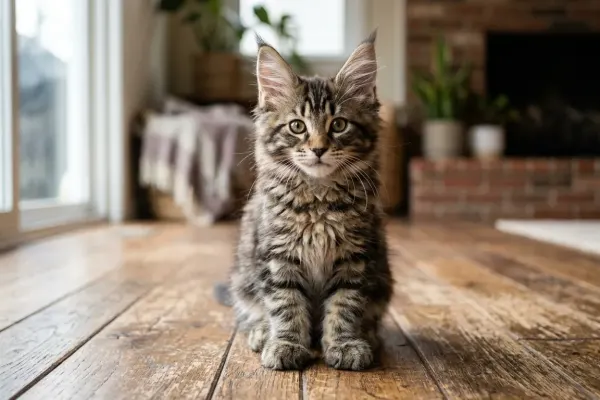
All Maine Coon kittens are born with blue eyes because their iris pigment cells have not yet developed. This initial blue hue gradually transitions as melanin deposits over subsequent weeks, settling into a permanent adult shade as the young cat matures. Caring for their large eyes and tufted ears requires gentle regular maintenance, much like routine pug ear care prevents debris buildup in canine breeds. These alert cats use their keen vision to observe household activity with sharp curiosity, sharing the problem-solving focus seen in smart French bulldogs.
Unique Perspective: Coat Color Myths vs. Genetic Realities in Maine Coons
Pet culture is filled with enduring beliefs about how coat color influences feline behavior, size, and health. Separating folklore from feline genetics helps owners form realistic expectations about their pets.
Personality and Coat Color
A widespread myth suggests that tortoiseshell cats exhibit fiery, stubborn behavior (often called “tortitude”) or that orange tabbies are uniquely laid-back and affectionate. Scientific behavioral studies demonstrate that coat pigmentation genes do not control temperament. A cat’s personality is shaped primarily by genetic temperament inherited from its parents, early handling by breeders, and ongoing socialization. The famously gentle, outgoing Maine Coon temperament is a consistent breed hallmark across every accepted coat color, paralleling the reliable companion traits celebrated in friendly Ragdoll cats.
Size and Skeletal Frame
Another common misconception is that certain colors, particularly brown classic tabbies or black smokes, grow noticeably larger than lighter-colored cats. Skeletal frame, muscle mass, and growth velocity are polygenic traits unrelated to the melanin pathways that dictate fur color. A cream tabby Maine Coon male from large bloodlines has the exact same genetic potential for massive size as a brown tabby male.
Health Realities and White Coat Genetics
While coat color does not affect personality or skeletal size, specific coat genetics do carry genuine medical considerations. The dominant white gene (W) suppresses melanocyte migration, which can affect the development of the delicate acoustic stria vascularis in the inner ear. As a result, solid white Maine Coons, particularly those with blue eyes, carry an increased statistical risk of congenital sensorineural deafness. White cats with two blue eyes carry the highest risk, odd-eyed white cats carry moderate risk (often deaf on the side of the blue eye), and white cats with green or gold eyes carry lower risk. Pigmented cats (tabbies, solids, calicos) are entirely unaffected by this genetic mechanism.
Note: Prospective owners considering a solid white kitten with blue or odd eyes should request a BAER hearing test from their breeder to ensure normal auditory health.
Prospective owners seeking allergy-friendly pets should also note that coat color does not reduce allergen output. Like other longhaired breeds, Maine Coons produce the Fel d 1 protein in their saliva and sebaceous glands regardless of color, differing from specific hypoallergenic Ragdoll cat claims that require careful evaluation by sensitive individuals.
Frequently Asked Questions About Maine Coon Colors
What is the most common color for a Maine Coon cat?
The brown classic tabby is widely regarded as the most iconic and common color pattern in Maine Coons. Genetically, black-based agouti coats represent the largest segment of both historical working populations and modern registered bloodlines, followed closely by solid black and brown mackerel tabbies.
What is the rarest color of a Maine Coon cat?
Solid white with odd eyes, shaded silver, chinchilla silver, and shell cameo are among the rarest recognized Maine Coon varieties. Producing these colors requires specific combinations of recessive inhibitor genes and precise polygenic tipping that few breeding programs specialize in.
Can a purebred Maine Coon have blue eyes?
Yes, but official breed standards permit blue eyes only in solid white Maine Coons or particolor cats with substantial white facial markings. In solid-colored, tabby, or dark-coated adult cats, blue eyes indicate non-standard breeding or outcrossing with pointed breeds.
Does coat color affect a Maine Coon’s personality or size?
No. Scientific research confirms that coat pigmentation alleles operate independently from genes governing skeletal growth, adult body weight, and behavioral temperament. A Maine Coon’s outgoing, gentle disposition is a breed-wide characteristic shaped by lineage and early socialization.
Are calico and tortoiseshell Maine Coons always female?
Over 99.9% of calico and tortoiseshell Maine Coons are female. Displaying both black-based and red-based fur simultaneously requires two X chromosomes (XX), each carrying a different color allele. Male calicos occur exclusively through rare genetic anomalies such as Klinefelter syndrome (XXY).
Leave a Reply