

Table of Contents
To answer how long are pug dogs pregnant, the average canine gestation period is 63 days from the day of ovulation, with a normal physiological range of 58 to 68 days. When calculating from a single mating event, the timeframe is typically 56 to 72 days.
- Canine gestation is universally 63 days from ovulation, but a Pug's compact structure creates unique pregnancy challenges.
- Confirmation of pregnancy is typically done via veterinary ultrasound around 28 days post-ovulation.
- Fetopelvic disproportion and uterine inertia are common, leading many vets to recommend elective C-sections.
- Close veterinary monitoring is critical, especially around the 57-day mark, to ensure timely intervention.
How Long Is a Pug’s Gestation Period?
Understanding how long is a pug dog pregnancy helps breeders and owners prepare for whelping and veterinary care. According to the American Kennel Club (AKC), the average canine gestation period is 63 days from the day of ovulation, with a normal physiological range spanning 58 to 68 days. If you are asking how long is a pug dog pregnant for when counting from a single mating event, the timeframe appears wider (56 to 72 days) because canine sperm can survive inside the female reproductive tract for several days before fertilization occurs.
Tracking ovulation via serum progesterone tests gives owners and veterinarians the exact baseline needed to predict delivery within a 24-hour window. While gestation occupies only a brief phase of the average pug lifespan, knowing this precise timeline helps ensure medical assistance is ready if complications arise in brachycephalic mothers.
Why Vets Measure From Ovulation, Not Mating Day
Veterinarians measure canine pregnancy from the ovulation date rather than the breeding date to eliminate calculation errors. Female dogs release immature eggs during estrus that take approximately 48 hours to mature and become fertilizable. Because live sperm can remain viable in the uterus for up to 11 days while waiting for mature ova, breeding date calculations often create false alarms about premature or overdue litters.
Blood progesterone testing measures serum hormone concentration in nanograms per milliliter (ng/mL). When progesterone levels reach 5.0 ng/mL, ovulation has occurred. Adding 63 days to this date provides an accurate due date estimate.
How a Pug’s Pregnancy Compares to Other Breeds
Physiologically, all domestic dog breeds share the same average 63-day gestation length. However, the physical experience of carrying a litter differs significantly for a Pug compared to longer-bodied breeds. A Pug’s distinct anatomy creates specific physical pressures during pregnancy:
- Compact Abdominal Space: A Pug’s short torso offers less internal volume for expanding uterine horns, causing mother dogs to show visible abdominal enlargement earlier in gestation.
- Brachycephalic Respiratory System: The compressed upper airway of a Pug makes oxygen exchange less efficient, especially when a full uterine load presses against the diaphragm in late pregnancy. Understanding what a pug looks like clarifies how their short muzzle and compact frame affect physical stamina.
- Fetopelvic Disproportion: Pug puppies inherit broad, square skulls relative to the mother’s pelvic canal opening. Learning about the breeds behind a pug’s origins shows how centuries of selective breeding for compact features created this anatomical mismatch.
Week-by-Week Pug Pregnancy Timeline
Canine gestation divides into three three-week trimesters. Each stage brings distinct developmental milestones for the embryos and physical changes in the pregnant female.
Weeks 1-3 – Early Signs and Implantation
During the first three weeks, fertilised eggs travel down the oviducts and enter the uterine horns. Embryo implantation into the uterine wall occurs between day 18 and day 23. Outward physical changes are minimal during this initial trimester, though some female Pugs experience mild morning sickness, transient appetite loss, or subtle behavioral shifts caused by rising progesterone.
Week 4 – Veterinary Confirmation
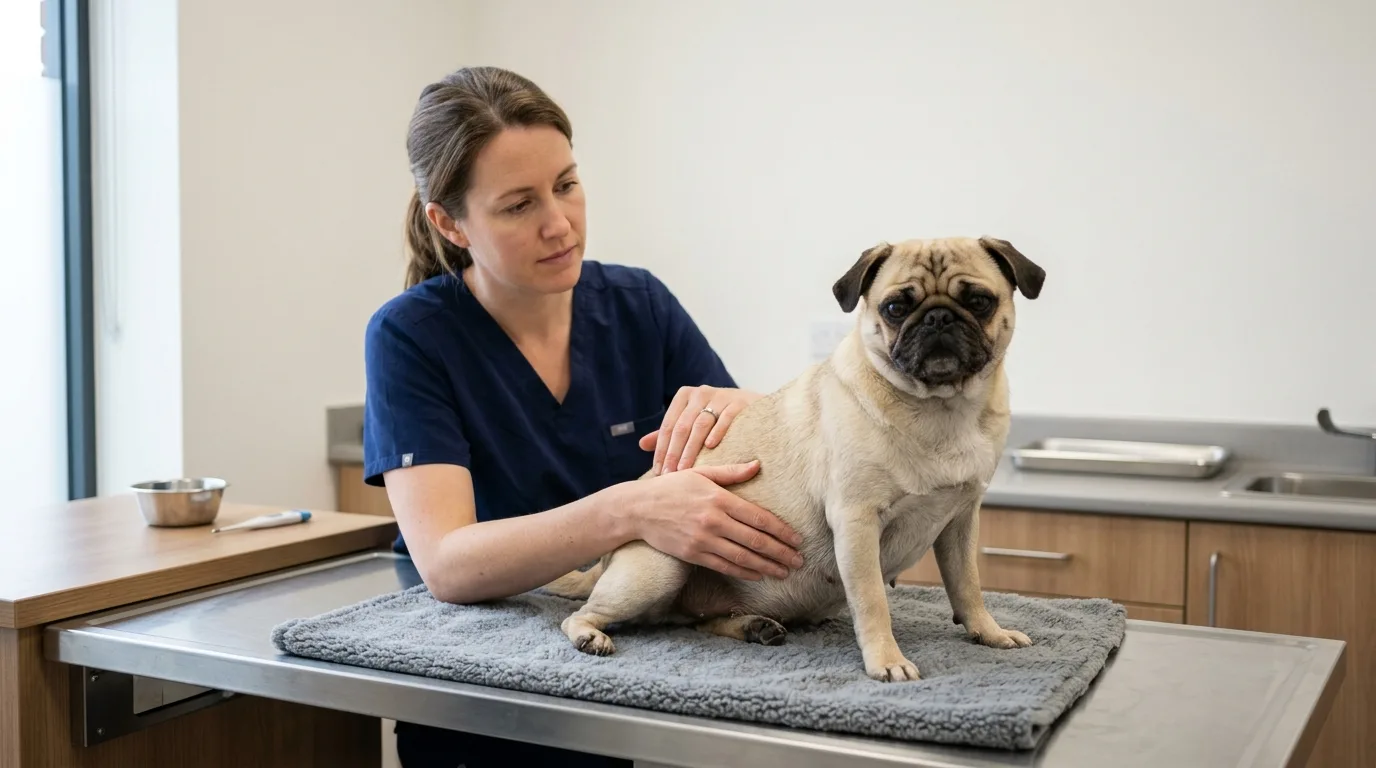
Veterinary confirmation becomes reliable around day 28 to 30 post-ovulation. A veterinarian can confirm pregnancy using diagnostic ultrasound, which detects gestational sacs and fetal heartbeats. Abdominal palpation by an experienced practitioner can also identify individual uterine swellings about the size of a walnut between days 28 and 32.
Weeks 5-6 – Visible Growth
By week 5, fetal organogenesis is complete, and the embryos enter the fetal development phase. Fetal skeletons begin calcifying around day 45. The mother Pug’s abdomen widens visibly, her body weight increases, and her caloric requirements rise. Abdominal X-rays (radiographs) performed around day 55 allow veterinarians to count calcified puppy skulls and spines to determine exact litter size before labor begins.
Weeks 7-9 – Final Preparation and Nesting
During the final two weeks, puppies gain the majority of their birth weight and develop fur. By day 58, puppies are fully developed and viable for birth. In the final days of week 9, the mother Pug displays instinctual nesting behaviors. She may scratch at bedding, pace restlessly, or seek secluded areas in the home. Understanding why pugs dig in blankets helps owners distinguish routine comfort digging from pre-labor nesting activity. Careful monitoring during week 9 allows owners to identify the transition from stage-one labor to active delivery, which is vital for scheduling timely veterinary intervention if dystocia occurs.
Note: If a Pug reaches day 65 post-ovulation without showing labor signs, or if active contractions last over 30 minutes without producing a puppy, contact a veterinarian immediately.
Signs a Pug Is Pregnant
Physical and behavioral changes develop progressively throughout gestation. While early signs indicate potential pregnancy, clinical testing remains the only definitive method to distinguish true pregnancy from canine pseudopregnancy (false pregnancy), a condition where non-pregnant females exhibit pregnancy symptoms due to elevated progesterone levels following estrus, as noted by PetMD.
| Gestation Window | Observable Physical & Behavioral Signs | Confirmation Method |
|---|---|---|
| Weeks 1-3 (Days 1-21) | Mild lethargy, subtle mood changes, brief appetite dip around day 14 to 21 | Serum progesterone baseline tracking |
| Weeks 4-5 (Days 22-35) | Enlarged, pinker nipples (“pinking up”), clear vaginal discharge, abdominal firming | Veterinary ultrasound (Day 28-30) or relaxin blood test |
| Weeks 6-7 (Days 36-49) | Visible abdominal swelling, increased appetite, reduced stamina during walks | Abdominal palpation by veterinarian |
| Weeks 8-9 (Days 50-63) | Mammary gland development, colostrum production, visible puppy movement | Diagnostic X-ray (Day 55+) for exact puppy count |
Changes in respiratory rate and panting can also occur as abdominal pressure increases. Learning why pug dogs snort helps owners separate normal brachycephalic airway noise from pregnancy-related respiratory exertion.
Signs a Pug Is About to Give Birth
Recognizing labor indicators ensures owners can prepare the whelping box and notify their veterinarian. Stage-one labor typically presents through specific physiological markers:

- Rectal Temperature Drop: A dog’s normal body temperature ranges from 101°F to 102.5°F. Approximately 12 to 24 hours before active labor begins, a sudden drop in progesterone causes her rectal temperature to plummet below 100°F (37.8°C).
- Loss of Appetite and Vomiting: Many female Pugs refuse food entirely within 24 hours of whelping, and mild shivering or nausea is common.
- Panting and Restlessness: The mother will pace, pant heavily, lick her vulva frequently, and rearrange blankets in her whelping area. Understanding why a pug keeps moving and will not lay down helps owners recognize early pre-labor pacing versus general anxiety.
- Mucous Plug Passage: A clear or light pink mucus discharge indicates the cervix is dilating.
Emergency Warning: If dark green or black vaginal discharge appears before the first puppy is born, this indicates placental separation and requires immediate emergency veterinary intervention.
How to Calculate a Pug’s Due Date
To calculate a Pug’s estimated due date, identify the date of ovulation confirmed by blood progesterone testing (reaching 5.0 ng/mL) and add 63 days.
If progesterone testing was not performed, estimate the due date by adding 63 days to the median date of successful matings. Because delivery naturally occurs between 58 and 68 days from fertilization, maintain close contact with your veterinarian starting on day 57.
Why Pugs Often Need a C-Section
Pugs have a significantly higher incidence of dystocia (difficult labor) compared to mesocephalic dog breeds. Two main factors contribute to delivery complications in this breed:
- Fetopelvic Disproportion: Pug puppies have large, brachycephalic skulls and broad shoulders that struggle to pass through the mother’s relatively narrow pelvic structure.
- Uterine Inertia: The physical fatigue associated with short-muzzled breathing, combined with small litter sizes that fail to produce sufficient hormonal signals to stimulate uterine contractions, can cause labor to stall.
Because of these structural risks, many veterinarians recommend scheduling an elective cesarean section (C-section) for pregnant Pugs, particularly when an X-ray confirms a single-puppy litter or oversized heads. Heavy snoring and respiratory strain during sleep are common in the breed; reviewing whether do pug dogs snore provides insight into how airway restrictions impact overall physical stamina during labor.
How Many Puppies Do Pugs Have?
An average Pug litter contains 4 to 6 puppies. First-time mothers or smaller females may deliver smaller litters of 1 to 3 puppies, while mature, healthy females can occasionally give birth to 7 or 8. Single-puppy litters carry a higher risk of dystocia because single fetuses often grow excessively large inside the uterus.
Caring for a Pregnant Pug
Supporting a pregnant Pug requires appropriate nutrition, gentle exercise, and stress reduction throughout the 63-day gestation period.
During the first four to five weeks of pregnancy, maintain the dog’s normal feeding routine with high-quality adult dog food. Avoid overfeeding early in pregnancy, as excess weight gain strains the joints and complicates delivery. Starting in week 5, gradually transition her diet to a nutrient-dense puppy formula or specialized gestation diet to support growing fetuses and upcoming lactation. Exploring how to make dog food for a pug provides helpful context on balanced canine nutrition and portion management.
Keep physical exercise light to moderate. Short daily walks maintain muscle tone without overheating or exhausting the dog. Integrating pregnancy care into a broader understanding of how to take care of a pug dog ensures optimal health before, during, and after whelping.
Frequently Asked Questions about Pug Pregnancy
How to tell if a pug is pregnant without a vet?
Early physical signs include pinker, enlarged nipples around week 4, mild lethargy, and gradual abdominal enlargement by week 6. However, physical signs alone cannot distinguish true pregnancy from false pregnancy. A veterinary ultrasound around day 28 is the only reliable way to confirm pregnancy.
Can a pug give birth naturally?
Some Pugs give birth naturally without complications, but the breed carries a high risk of dystocia due to large puppy skulls and narrow maternal pelvic canals. Whelping should always take place under veterinary supervision, with emergency C-section services readily available.
What should you feed a pregnant pug?
Feed a balanced adult dog food for the first month. Around week 5, gradually introduce a high-calorie, protein-rich puppy food to provide essential calcium and nutrients required for fetal bone development and milk production.
How many puppies do pugs have in their first litter?
First litters in Pugs are often smaller than subsequent litters, typically ranging from 2 to 4 puppies.



Leave a Reply