
Table of Contents
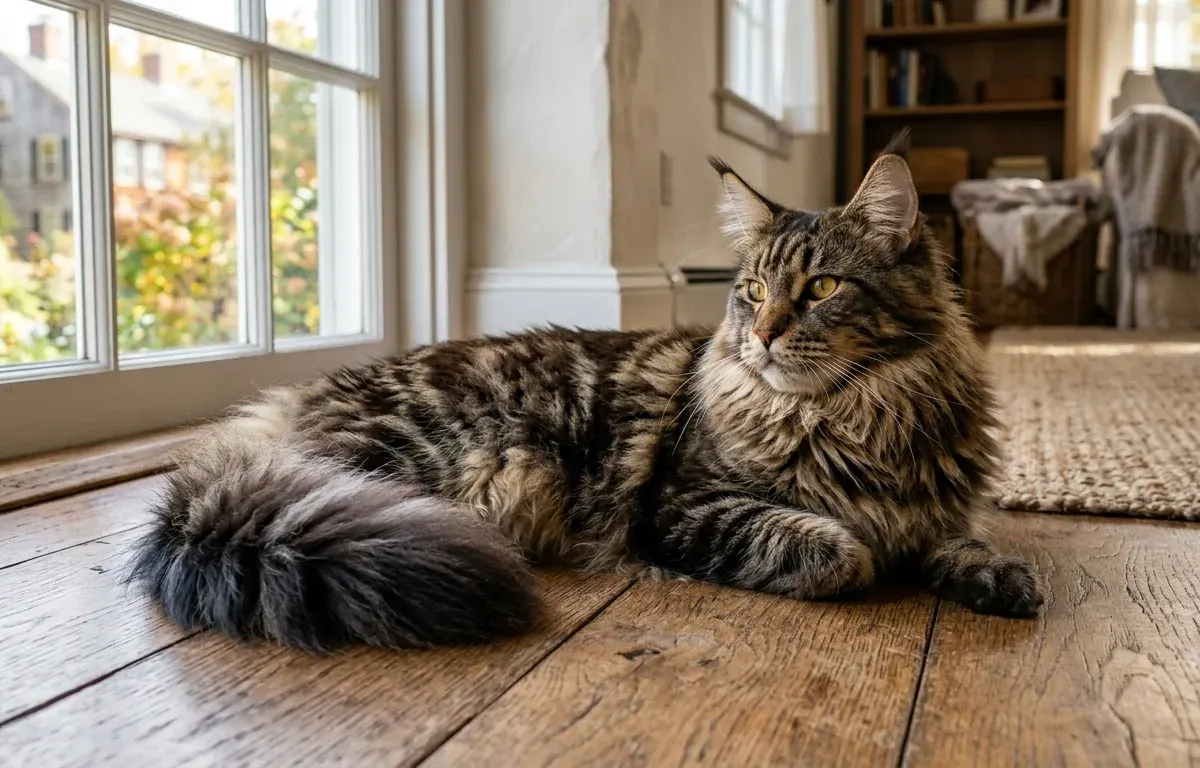
When asking what's a Maine Coon cat, the answer is a large, rugged native North American longhaired cat breed that originated in the state of Maine. Famous for their friendly "gentle giant" disposition, tufted lynx-like ears, and bushy plumed tails, they are one of the largest domesticated feline breeds in the world. Adult males typically weigh between 18 and 22 pounds, while females range from 12 to 15 pounds. Unlike average domestic cats that finish growing around their first year, Maine Coons develop slowly over several years before reaching full physical maturity.
- Native North American working breed recognized as Maine's official state cat since 1985.
- Distinctive physical traits include a water-resistant double coat, tufted lynx ears, and a long plume tail.
- Males reach 18-22 lbs and females 12-15 lbs, maturing gradually over several years.
- Known as "gentle giants" with sociable, dog-like personalities that thrive in multi-pet homes.
- Care requires regular coat brushing, sturdy furniture, and balanced nutrition for large-frame growth.
What Is a Maine Coon Cat? Understanding the Breed and History
If you have ever wondered what’s a Maine Coon cat, the answer begins with North American agricultural history. The Maine Coon is recognized as one of the oldest natural breeds on the continent, having adapted through harsh New England winters into a muscular, highly capable working mouser.
Where Is a Maine Coon Cat From and How Did the Breed Originate?
The breed developed naturally in the northeastern United States, specifically in Maine, where it served as a trusted barn cat and ship companion throughout the nineteenth century. In 1985, the state of Maine officially designated the Maine Coon as its official state cat.
Numerous folklore legends surround the cat’s early ancestry. One popular myth claimed the breed resulted from crossbreeding semi-wild domestic cats with raccoons, an impossible genetic pairing that nonetheless gave the breed the second half of its name. Another tale suggested that longhaired cats belonging to Marie Antoinette were shipped to New England ahead of her planned escape during the French Revolution. In reality, modern feline genetics confirms that the breed descended from European domestic cats brought over by early seafaring settlers and Norse explorers, which subsequently adapted to the cold northeastern climate through generations of natural selection.
When exploring the breed name, prospective owners sometimes ask how do you spell Maine Coon or mistakenly search for phonetic variants such as “Main Coon”. The standard spelling pairs the capital state name “Maine” with “Coon”, reflecting its formal registry designation.
What Is the Official Maine Coon Breed Classification?
Both major feline registries, including The International Cat Association (TICA) Maine Coon breed overview and the Cat Fanciers’ Association (CFA), classify the Maine Coon as a natural longhaired championship breed. Unlike synthetic breeds created through modern laboratory outcrossing programs, the Maine Coon preserved its core working conformation for more than a century.
When pet owners explore companion animals, they often evaluate how distinct breeds develop unique structural profiles. Comparing natural working felines with human-developed companion breeds like the Ragdoll cat profile highlights the Maine Coon’s distinctively rugged, square-jawed architecture. Furthermore, examining working mouser origins alongside historical companion animals, such as what Pug dogs were bred for in imperial courts, demonstrates how original functional roles continue to shape modern animal temperaments.
What Does a Maine Coon Cat Look Like? Physical Characteristics and Size
The physical presentation of a Maine Coon is unmistakable. Everything about the breed reflects adaptation to snow, ice, and demanding outdoor environments.
Body Structure, Lynx-Like Ears, and Plumed Tail
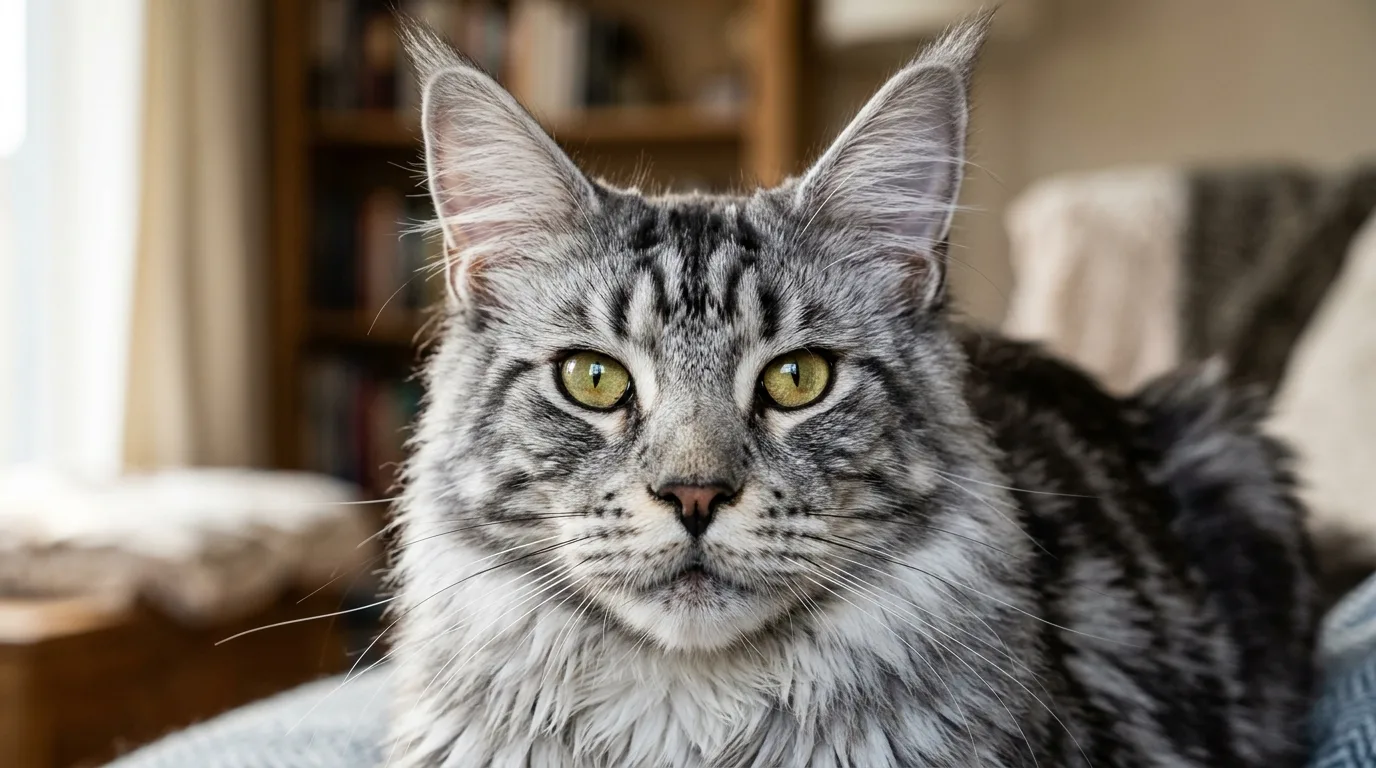
According to the official Cat Fanciers’ Association (CFA) Maine Coon breed standard, the ideal specimen is a solid, muscular cat with a broad chest and a long, rectangular body profile.
The head is medium in width with high cheekbones and a distinctive square muzzle that allows efficient prey capture. Large, well-tufted ears sit high on the head, often crowned with lynx tips that protect delicate ear canals from freezing drafts. Large, expressive eyes are set at a slightly oblique angle.
The paws are exceptionally large and round, functioning like built-in snowshoes. Heavy tufts of hair extend between the toes to provide traction on ice. The tail is long, tapering, and covered in flowing fur, measuring long enough to wrap completely around the cat’s face and paws when curling up against the cold.
Coat Layers, Colors, and Visual Variations
The Maine Coon coat is an all-weather marvel. It consists of a dense undercoat protected by a longer, water-repellent guard coat. The fur falls naturally shorter over the neck and shoulders before lengthening along the back, flanks, and belly into full “britches.” A dense frontal ruff frames the chest.
While the brown classic tabby pattern is the traditional image of the breed, Maine Coons are accepted in dozens of color patterns, including solid black, white, red, cream, blue, tortoiseshell, and silver. Their solid and tabby color distribution differs substantially from pointed coat genetics seen in mink Ragdoll coat variations.
Weight Benchmarks and Growth Timeline
Prospective owners are often amazed by the physical scale of a mature Maine Coon. While ordinary domestic cats reach adult weight around their first birthday, Maine Coons develop gradually over several years before completing their full skeletal growth and coat maturity.
| Life Stage | Age Span | Typical Male Weight | Typical Female Weight | Growth Milestones |
|---|---|---|---|---|
| Kitten | 0 to 6 months | 3 – 8 lbs | 2.5 – 6 lbs | Rapid skeletal elongation and frame establishment |
| Juvenile | 6 to 18 months | 8 – 15 lbs | 6 – 11 lbs | Development of initial winter ruff and ear lynx tips |
| Young Adult | 18 to 36 months | 14 – 19 lbs | 10 – 13 lbs | Broadening chest, deepening muzzle, thickening undercoat |
| Full Maturity | 48 to 60 months | 18 – 22 lbs | 12 – 15 lbs | Complete bone density, full frontal ruff, maximum coat length |
Because of their immense frame, people often compare their size to compact dog breeds, noting how a 20-pound Maine Coon occupies similar sofa space to what a Pug dog looks like.
What to Know About Maine Coon Cats: Temperament, Living with Them, and Care
Beyond their imposing appearance, Maine Coons are renowned worldwide for their gentle, approachable temperament.
Temperament: The “Gentle Giant” Personality
Maine Coons are frequently described as the dogs of the cat world. They enjoy following family members from room to room, supervising daily activities without becoming overly demanding. Rather than demanding constant lap time, they prefer resting comfortably beside their owners.
They are famous for their unique vocalizations. Instead of a standard loud meow, a Maine Coon speaks in soft chirps, trills, and purrs, using varied vocal inflections to greet companions. Their calm, adaptable demeanor makes them fantastic family pets, coexisting peacefully with polite children and displaying an easygoing attitude similar to sociable canine companions like the French Bulldog breed profile.
Daily Nutrition and Large-Breed Dietary Needs
Maintaining a large-framed carnivore requires high-quality animal protein, healthy fatty acids, and controlled mineral balance. Free-feeding high-carbohydrate dry kibble can lead to unwanted weight gain, placing undue stress on heavy skeletal joints.
Active adult Maine Coons benefit from a structured diet incorporating high-moisture wet food and premium dry formulas designed for large cat breeds. When tailoring caloric intake, owners often study cross-species and feline dietary strategies, comparing general feeding approaches to what Ragdoll cats eat. Fresh, clean water must always be accessible, especially since many Maine Coons enjoy playing with water bowls and dipping their paws into running fountains.
Grooming, Shedding, and Health Considerations
Despite their long, shaggy coat, Maine Coons have a silky topcoat that resists severe matting better than Persian fur. Regular weekly brushing sessions with a stainless steel comb and a slicker brush help remove loose undercoat hair and prevent friction knots in friction-prone areas like the armpits and britches, adjusting grooming routines to match individual coat density and seasonal shedding cycles.
Like all purebred companion animals, Maine Coons have known genetic health predispositions that responsible breeding programs screen for diligently:
- Hypertrophic Cardiomyopathy (HCM): The most common heart disease in felines, characterized by thickening of the heart muscle walls. Certified breeders perform routine echocardiograms and DNA tests for the known MYBPC3 gene mutation.
- Hip Dysplasia: Due to their heavy frame, Maine Coons can develop joint laxity leading to arthritis. X-ray screening of breeding stock minimizes this risk.
- Spinal Muscular Atrophy (SMA): An inherited neuromuscular disorder causing muscle weakness in the hindquarters, detectable via simple genetic DNA swabs.
Note: Prospective pet owners should always request written proof of parentage DNA screening for HCM, SMA, and hip evaluations before reserving a kitten from any cattery.
Owning a Maine Coon requires sizing up all household supplies. Standard commercial litter boxes, cat trees, and transport carriers are too cramped for a twenty-pound cat. Investing in heavy-duty solid wood cat trees and jumbo storage-tote litter boxes ensures your cat remains comfortable and prevents litter box aversion.
How to Get a Maine Coon Cat: Finding Breeders, Adoption, and Costs
Acquiring a healthy Maine Coon requires careful research and patience, as demand for well-bred kittens remains high across the country.
Finding Ethical Breeders vs. Breed-Specific Rescue Centers
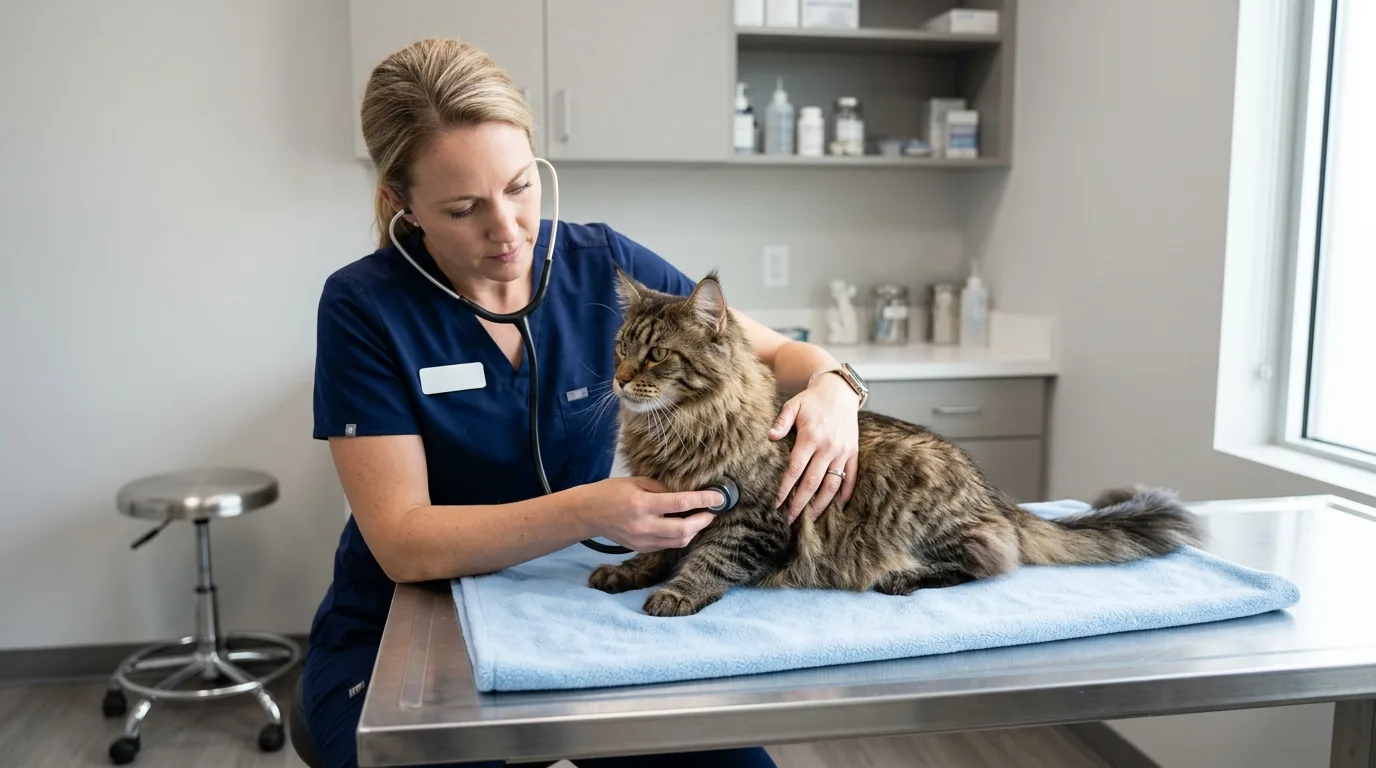
When searching for a purebred kitten, always connect with breeders registered with recognized cat registries such as the CFA or TICA. Ethical catteries raise kittens inside the home, perform mandatory health screenings on all breeding adults, provide veterinary health guarantees, and keep kittens with their mothers until they are fully weaned and socialized around three months of age.
Evaluating pedigree authenticity follows the same rigorous verification principles seen when researching purebred canine backgrounds, such as investigating the ancestral lineages that make a Pug or understanding the foundation breeds that make a French Bulldog.
If you prefer adoption, breed-specific rescue organizations and local shelters occasionally care for adult Maine Coons or Maine Coon mixes in need of loving permanent homes.
Budgeting for Ownership and Initial Supplies
Pet-quality Maine Coon kittens from verified, health-testing breeders typically cost between $1,500 and $3,000, depending on lineage and geographical region. Show-quality kittens or rare colorations may cost more.
Initial setup costs should account for oversized scratching posts, large litter pans, durable grooming combs, high-protein nutrition, and routine wellness visits.
How to Draw a Maine Coon Cat: Step-by-Step Artistic Guide
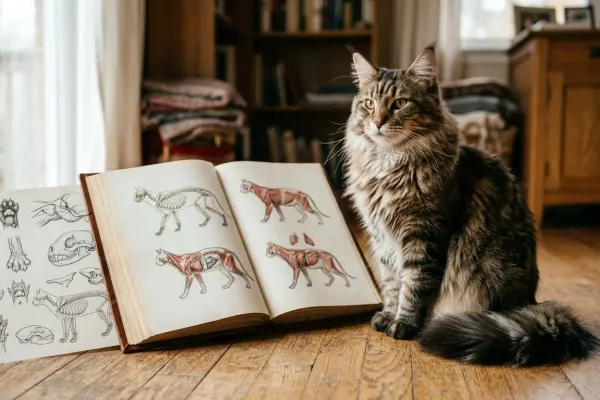
Artists and cat lovers frequently enjoy sketching the breed’s dramatic silhouette. Capturing a Maine Coon on paper relies on emphasizing their square proportions and shaggy coat textures.
Visual Proportions and Expressive Anatomy
Before applying pencil to paper, analyzing anatomical proportions helps create an accurate likeness. Illustrating a Maine Coon involves contrasting its elongated, muscular body and shaggy coat against the compact, smooth contours seen when studying what a French Bulldog looks like.
Furthermore, rendering authentic feline emotion requires careful observation of ear placement. Unlike canine posture changes, such as understanding what it means when dogs put their ears back during stress, a Maine Coon’s large, tufted ears stand tall and swivel independently to capture sound and convey alert curiosity.
Step-by-Step Sketching Instructions
- Establish the Framework: Lightly draw a long horizontal rectangle for the torso, connected to a sturdy square block for the head. Add angled guidelines for the broad chest and thick, sturdy legs.
- Define the Facial Features: Sketch large, upright triangular ears on top of the head corners, adding distinct pointed lynx tufts at the tips. Place large, slightly oval eyes at a gentle upward tilt and outline the characteristic blunt, square muzzle.
- Layer the Fur and Tail: Use quick, feathery pencil strokes to draw the dense frontal neck ruff, the shaggy belly fur, and the long, sweeping plume of the tail. Finish by shading the coat markings and defining the wide whiskers.
Frequently Asked Questions About Maine Coon Cats
Do Maine Coon cats shed heavily?
Yes, Maine Coons shed moderately year-round, with heavier shedding cycles occurring during seasonal spring and autumn coat transitions. Regular brushing several times weekly removes loose undercoat hair, significantly reducing shedding on furniture and preventing hairballs.
How big does a full-grown Maine Coon cat get?
A full-grown male Maine Coon typically weighs 18 to 22 pounds and measures 30 to 40 inches in total length from nose to tail tip. Females are slightly smaller, averaging 12 to 15 pounds. Unlike standard domestic breeds, they develop across an extended multi-year growth period before reaching full adult size.
Are Maine Coon cats good with dogs and young children?
Yes, Maine Coons are famous for their patient, confident, and laid-back personalities. Their sturdy physical size and social nature make them well-suited for households with gentle dogs, other cats, and respectful children.
Why do Maine Coon cats chirp and make trilling sounds?
Maine Coons use soft chirps and melodic trills as friendly greetings and expressions of curiosity. This communicative vocal behavior is an innate breed trait used to express interest without the louder, demanding pitch of standard domestic meows.
Can a Maine Coon cat be left alone during the work day?
While Maine Coons are independent enough to rest quietly while their owners work, they are highly social animals that dislike prolonged isolation. Providing interactive toys, sturdy window perches, or companion pets ensures they remain mentally stimulated throughout the day.
Leave a Reply