
Table of Contents
Learning how to train a pug dog at home requires consistent positive reinforcement, high-value food rewards, and brief practice sessions lasting 5 to 10 minutes. Because Pugs are sensitive companion dogs with short attention spans, harsh corrections cause them to shut down, while high-value treats keep them eager to learn. A predictable daily routine, crate-supported house training, and airway-safe gear like a chest harness form the foundation of successful home training.
- Keep training sessions short, practicing for 5 to 10 minutes two or three times each day to avoid mental fatigue.
- Use tiny, high-value treats such as plain boiled chicken to keep your dog motivated without adding excess calories.
- House train with a strict schedule, taking puppies outside immediately after meals, naps, and play sessions.
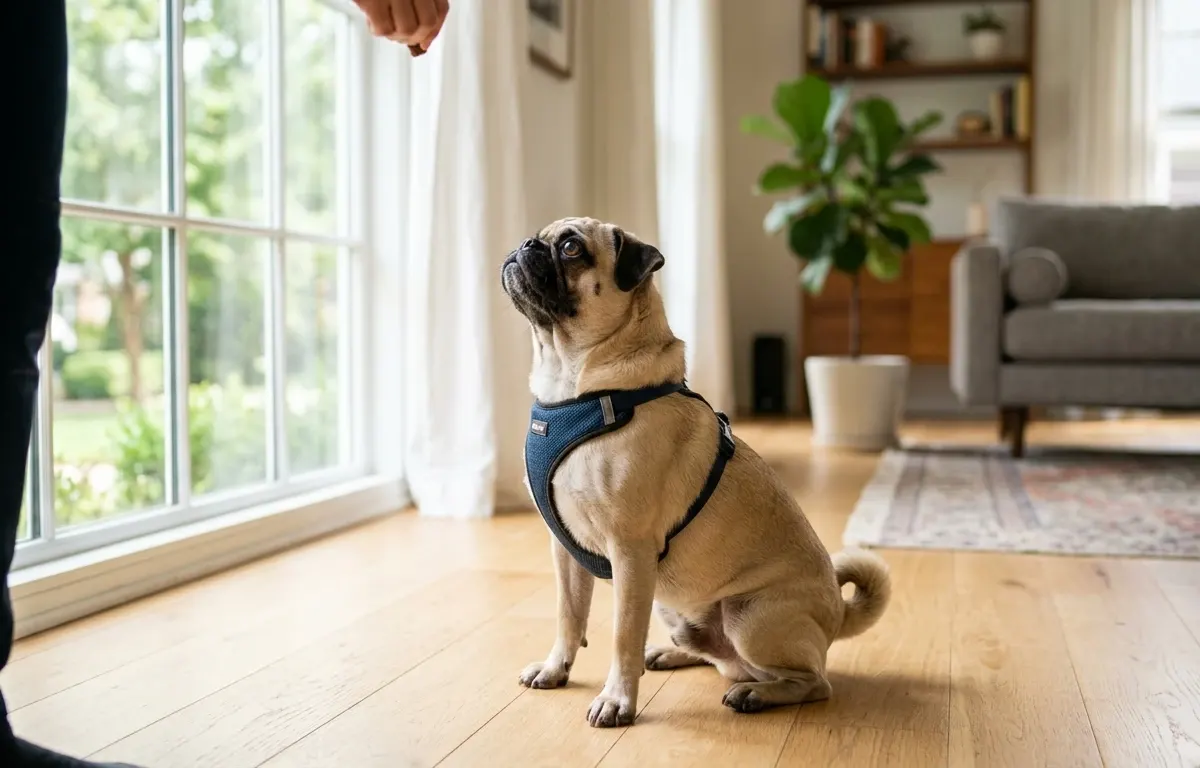
- Attach your leash to a chest harness rather than a neck collar to protect sensitive brachycephalic airways from tracheal pressure.
- Start early with name recognition and gentle handling, introducing basic obedience cues as your puppy matures and settles into a household routine.
Understanding the Pug’s Temperament and Learning Style
Pugs approach training with a distinct mix of eager affection and independent thinking. Because Pugs were bred as royal lap dogs for centuries, their primary drive is human closeness rather than physical labor or herding tasks. They want to be near their owners, but they lack the compulsive work drive of sporting or working breeds.
When a Pug appears slow to respond to a cue, the underlying cause is rarely low intelligence. In most cases, the dog either finds the current reward uninteresting or feels overwhelmed by repetitive drills. Pugs respond poorly to raised voices and physical corrections, which often cause them to withdraw or ignore commands entirely.
Careful observation of body language provides immediate insight into your dog’s emotional state. When a Pug dog pulls their ears back during practice, it often signals confusion or mild stress, indicating that you should lower the difficulty or offer a simpler win. Building trust through praise and immediate food rewards creates an environment where your Pug stays curious and willing to participate.
Foundations of Training: Tools, Environment, and Schedule
Setting up a structured environment before teaching individual cues prevents frustration for both you and your dog. When preparing how to give training to a Pug dog at home, keep external distractions low and gather the right supplies.
Selecting Rewards and Managing Weight
Food motivation is the strongest tool when you train a Pug dog at home. Standard dry kibble often fails to hold their attention during new exercises, making fragrant, high-value rewards necessary.
- High-value training treats: Use pea-sized bits of plain boiled chicken breast, lean turkey, or tiny cubes of low-moisture mozzarella.
- Calorie control: Treats should never exceed 10 percent of your dog’s daily caloric intake. Factor all training treats into your calculation of daily Pug diet portions to prevent unwanted weight gain.
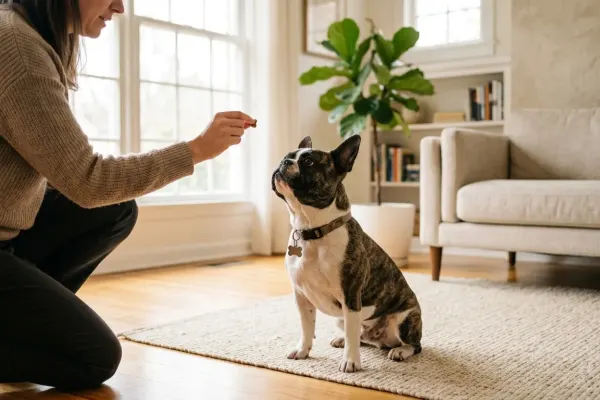
- Reward timing: Deliver the treat within two seconds of the correct behavior, pairing it with a distinct marker word such as “Yes!” or a mechanical clicker.
Airway Safety and Equipment Setup
Because Pugs have compressed facial bones and elongated soft palates, standard neck collars can put dangerous pressure on the windpipe when dogs pull. Incorporating a well-fitted chest harness into your daily Pug care routine protects the trachea during leash practice.
| Equipment Item | Purpose in Pug Training | Safety Recommendation |
|---|---|---|
| Y-shaped chest harness | Distributes leash pressure across the chest | Avoid neck-tightening choke chains or prong collars |
| 6-foot nylon leash | Provides controlled handling during indoor and yard drills | Avoid retractable leashes that encourage uncontrolled pulling |
| Treat pouch | Allows instant access to rewards | Keeps hands free for hand signals and luring |
| Flat training mat | Establishes a designated “place” boundary | Use non-slip backing on tile or hardwood floors |
Training efficiency increases when you split a dog’s daily meal into practice portions. Setting aside one-third of their standard kibble for morning obedience drills ensures they stay hungry and attentive without requiring extra commercial treats.
Step-by-Step Potty Training for Pugs
Learning how to potty train a Pug dog requires consistency, close supervision, and patience. Because young toy puppies have small bladders and rapid metabolisms, establishing a strict outdoor routine prevents accidents from becoming habits.
Create a Routine Schedule
A predictable timetable helps your puppy learn when and where elimination is expected. When you house train a Pug dog, take them to the same outdoor spot on every trip so familiar scent markers stimulate natural elimination.
- Morning wake-up: Carry your puppy outside immediately upon opening their crate in the morning.
- Post-meal trips: Take your dog to the potty spot 10 to 15 minutes after each meal.
- Activity transitions: Head outside right after play sessions, training drills, or naps.
- Immediate reward: Praise calmly and offer a treat the exact moment elimination finishes outdoors.
Some young Pugs pee when excited during greetings or outdoor arrivals. To address this, keep arrivals low-key and avoid high-pitched vocal excitement until the puppy finishes going potty.
Crate Training Basics
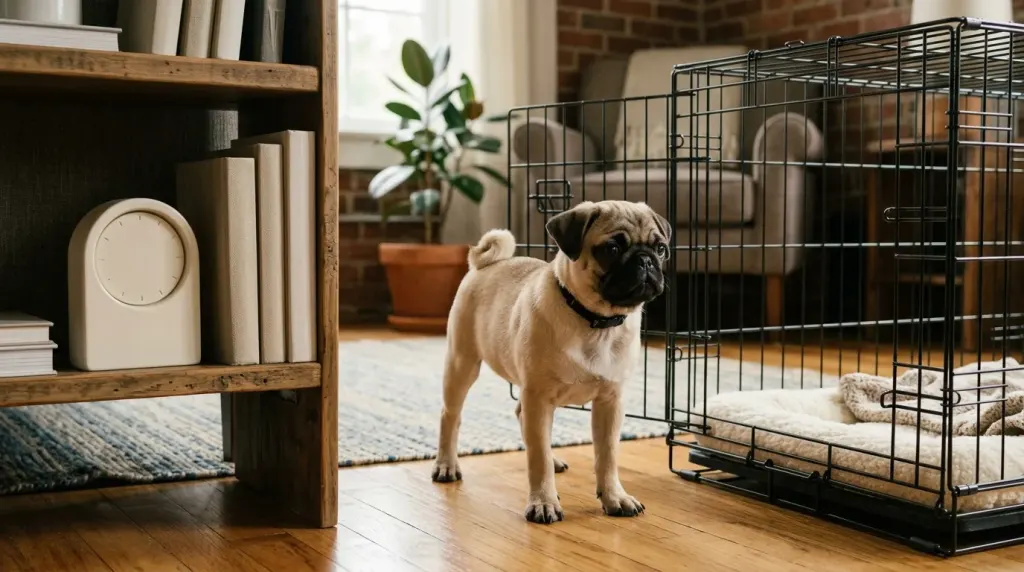
A crate acts as a secure indoor den that relies on a dog’s natural instinct to keep their sleeping area clean. Introduce the crate gradually by tossing treats inside and leaving the door open. Before settling in for the night, a Pug dog digs in blankets as a normal nesting habit to arrange comfortable bedding.
| Puppy Age | Maximum Daytime Crate Duration | Outdoor Potty Frequency |
|---|---|---|
| 8 to 10 weeks | 1 to 2 hours | Every 30 to 60 minutes while awake |
| 11 to 14 weeks | 2 to 3 hours | Every 2 hours |
| 15 to 18 weeks | 3 to 4 hours | Every 3 hours |
| 5 months and older | 4 to 5 hours | 4 to 5 times daily |
Handling Accidents
When an accident happens indoors, clean the surface thoroughly with an enzymatic cleaner to remove microscopic urine proteins. Avoid scolding, rubbing the dog’s nose in the spot, or yelling. Punishing past accidents only teaches the puppy to hide when eliminating, making future house training significantly harder.
Note: If a house-trained adult Pug suddenly begins urinating indoors, schedule a veterinary checkup. Urinary tract infections and bladder stones can mimic behavioral regression.
Teaching Basic Obedience Commands
Basic obedience establishes household safety and polite manners. Keeping practice sessions between 5 and 10 minutes ensures you train a Pug dog puppy without causing boredom or fatigue.
Sit and Stay
Teaching the sit cue uses a simple food lure:
- Hold a small treat directly in front of your Pug’s nose.
- Slowly raise your hand upward and slightly back over their head.
- As the dog’s head tilts up, their rear end naturally lowers to the floor.
- Say “Sit” the moment their bottom touches the floor, mark with “Yes!”, and release the treat.
- To teach “Stay”, open your palm toward the dog, wait one second, mark, and reward before releasing them with a cheerful “Free!” cue.
Recall and Leave It
A reliable recall keeps your dog safe in open areas, while a solid “Leave it” cue stops them from eating dropped objects on walks. To build polite social habits when Pugs get along with other dogs, start recall drills in a quiet hallway before testing commands around other pets.
Hold a treat in a closed fist and say “Leave it.” Let your Pug sniff and lick your hand. The moment they pull their nose back even an inch, mark with “Yes!” and reward with a treat from your other hand. This teaches the dog that looking away from an item yields an even better reward.
Loose-Leash Walking
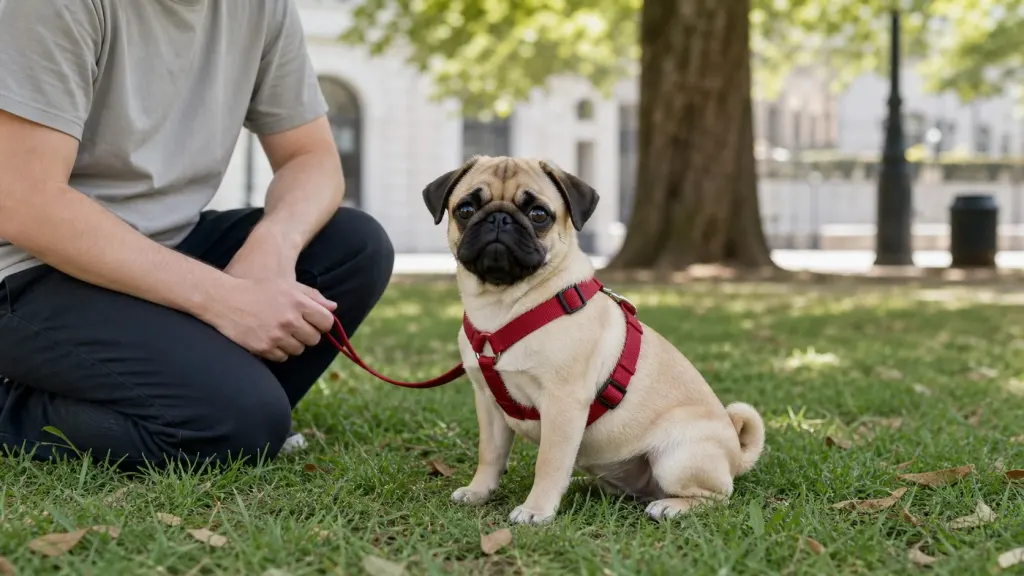
Pugs frequently pull on leashes out of excitement to greet people and explore scents. If your Pug pulls forward, stop walking immediately and become stationary. The moment the leash goes slack and your dog turns back to look at you, mark the behavior, offer a small treat at your hip, and resume walking forward.
With structured practice, Pugs can achieve remarkable obedience and performance milestones, as demonstrated by an AKC-titled Pug winning a major dog show through precise ring presentation.
Addressing Common Pug-Specific Challenges
Brachycephalic anatomy and breed temperament create specific training challenges that require sensible modifications.
Overcoming Distractions During Training
Pugs have an inquisitive nature and can easily become sidetracked by floor crumbs, passing family members, or outdoor sounds. When teaching new skills, practice in a bare hallway or quiet room before moving to the living room or backyard. If your dog loses focus after three minutes, end the session on a known easy trick and try again later in the afternoon.
Managing Snorts and Breathing-Related Fatigue
Flat facial anatomy means Pugs struggle to cool themselves through panting. Recognizing the physical reasons why Pug dogs snort during excitement helps you gauge when breathing effort becomes excessive. If heavy snorting, wheezing, or wide-mouthed panting occurs, stop all activity, offer cool water, and let your dog rest on a cool surface.
Similarly, noting whether Pug dogs snore heavily after brief indoor play helps you assess baseline airway function and prevent overheating during warm weather training.
Training Timeline and Milestones
Following an age-appropriate schedule ensures steady progress without placing unreasonable demands on a developing puppy.
| Age Stage | Key Training Milestones |
|---|---|
| 8 to 16 Weeks | Name focus, crate conditioning, and gentle handling |
| 16 to 24 Weeks | Basic cues (sit, down, stay) and gentle socialization |
| 6 to 12 Months | Loose-leash walking, “place” cue, and distraction proofing |
| 1 Year and Older | Distance recall, trick training, and senior routine adjustments |
According to developmental recommendations from the American Kennel Club Pug puppy training guide, young dogs thrive when owners structure training around predictable developmental windows rather than rigid expectations. While individual progress varies naturally by puppy temperament and learning pace:
- 8 to 16 weeks (Early puppyhood): Focus on name recognition, crate acclimation, and gentle handling of paws, ears, and facial wrinkles.
- 16 to 24 weeks (Basic obedience): Introduce foundation obedience cues (sit, stay, come, leave it) and expose the puppy to varied household surfaces and friendly visitors.
- 6 to 12 months (Adolescence): Build impulse control with the “place” mat command and practice walking on a loose leash outdoors.
- 1 year and older (Adulthood and beyond): Polish distance recall and introduce low-impact trick training. As your companion ages over the years, recognizing when a Pug transitions into a senior dog ensures you adapt physical expectations across the full average lifespan of a Pug dog.
For international owners searching for methods to train a Pug dog in Hindi or other languages, the underlying training mechanics remain identical. Vocal commands in Hindi, English, or Spanish work equally well because dogs respond to vocal tone, consistency, and clear reward markers rather than human grammar.
Frequently Asked Questions About How to Train a Pug Dog
How long does it take to fully train a Pug dog?
Training duration depends on consistency, age, and individual temperament. With daily 5-minute reward sessions, many Pugs pick up introductory cues like sit and come within a few weeks, while reliable house training typically takes several months of structured crate and outdoor routines.
What should I do if my Pug is stubborn during training?
Take a short break. Switch to a higher-value reward like boiled chicken, shorten the session to 3 minutes, and ensure the room is cool and quiet. Always finish with an easy command your dog knows well so practice ends on a positive note.
Can you train a Pug using puppy pads?
Yes, indoor pee pads or synthetic grass patches work well for apartment homes or extreme weather. To avoid confusion, choose either outdoor training or indoor pads during the first three months rather than switching back and forth daily.
How do you train a Pug dog at home safely?
Train safely by using a wide chest harness instead of a neck collar, keeping indoor practice areas air-conditioned, providing accessible drinking water, and keeping treat rewards tiny to protect airways and prevent excess weight gain.
Leave a Reply