
Table of Contents
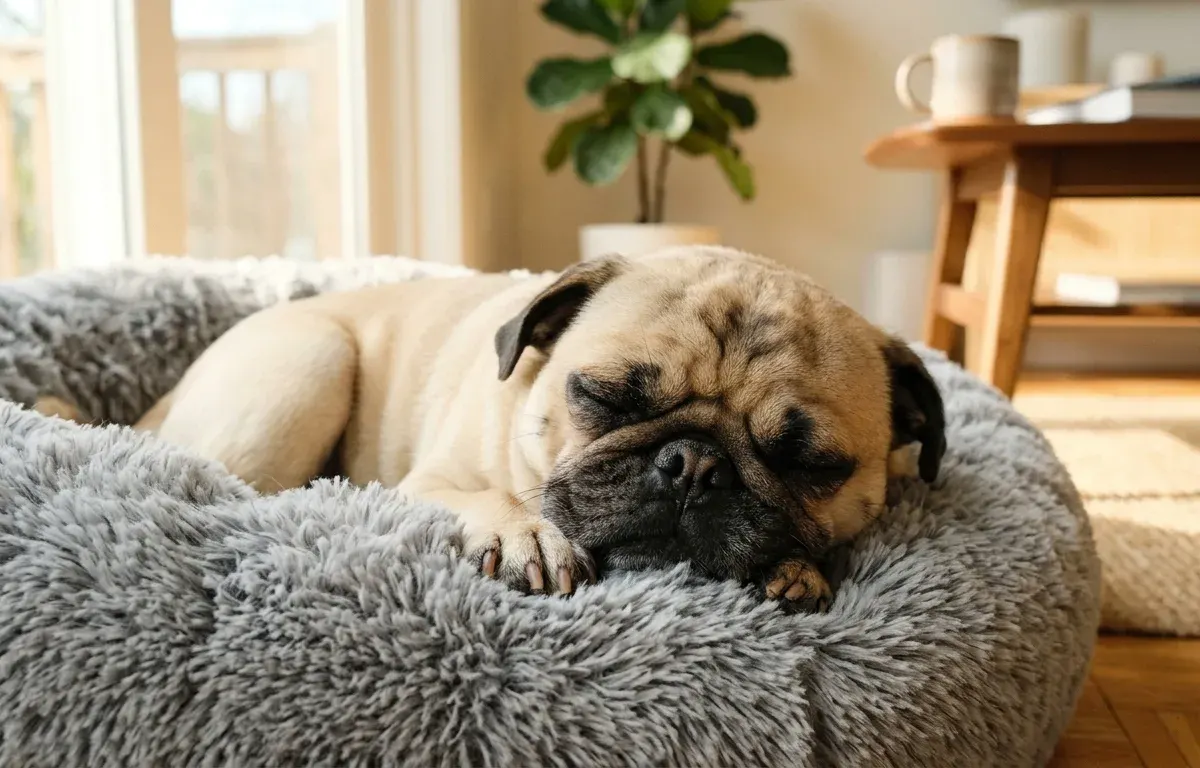
When dog owners ask do pug dogs snore, the short answer is yes, almost all Pugs snore during sleep. Their flat-faced skull structure, known as brachycephaly, compresses upper respiratory passages into a shortened facial frame. This anatomical conformation features an elongated soft palate, narrowed nostril openings, and reduced nasal cavity volume. As air moves through these narrow passages during rest, soft tissues vibrate and create rhythmic snoring. While low-level snoring is typical for the breed, sudden volume increases, gasping, or daytime breathing distress require prompt veterinary evaluation.
- Pugs snore primarily because their shortened skull structure forces normal-sized soft tissue into compressed nasal and throat passages.
- Soft, rhythmic snoring during deep sleep is common for flat-faced breeds, but harsh gasping or blue-tinged gums signal airway obstruction.
- An adult Pug sleeps 12 to 14 hours per day on average, while young puppies and senior dogs often rest for 18 to 20 hours daily.
- Maintaining an ideal body condition score, substituting neck collars with chest harnesses, and keeping sleeping areas cool effectively reduce snoring.
Why Do Pugs Snore? Brachycephalic Anatomy Explained
Snoring occurs when inhaled air meets resistance in the upper respiratory tract, causing surrounding mucosal tissue to vibrate. In Pugs, this phenomenon stems directly from artificial selection for flat facial profiles. The underlying facial skeleton has been significantly shortened through generations of breeding, yet the internal soft tissues, such as the soft palate, tongue, and pharyngeal walls, have not shrunk proportionally.
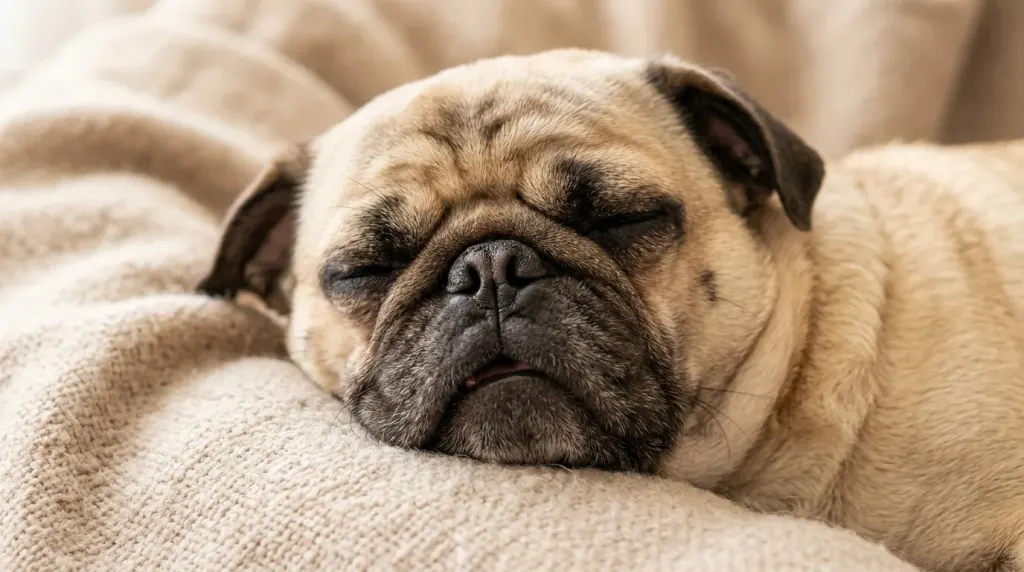
According to UFAW research on brachycephalic airway obstruction, veterinary anatomists classify this structural setup under brachycephalic airway anatomy. Key features include stenotic nares (abnormally narrow nostril openings), mucosal folds crowding the nasal cavity, and an elongated soft palate that extends backward into the opening of the larynx. When a Pug relaxes into sleep, tone in the throat muscles decreases. Air passing through the narrowed nasal passage pulls the overhang of the soft palate against the laryngeal intake, producing low-pitched, vibrating sound waves termed stertor.
Respiratory noises in flat-faced dogs fall into two main auditory patterns:
- Stertor: A low-pitched, snoring or snorting sound generated above the larynx, typically caused by vibrations of the soft palate or nasal membranes.
- Stridor: A high-pitched, harsh or squeaking noise generated at or below the larynx, indicating vocal cord rigidity or laryngeal collapse.
Pugs frequently produce stertorous sounds during sleep. However, owners should also differentiate between sleep snoring and awake respiratory sounds like the distinct pug snorting sounds caused by reverse sneezing or nasal irritation during play.
What Is BOAS and How Does It Affect Snoring?
Brachycephalic Obstructive Airway Syndrome (BOAS) represents a progressive pathological progression of upper airway restriction. While mild snoring reflects baseline anatomical compression, BOAS develops when structural resistance forces the dog to exert excessive inhalation pressure, leading to chronic inflammation and secondary tissue breakdown over time.
To standardize clinical evaluation, the Kennel Club and University of Cambridge Respiratory Function Grading (RFG) Scheme categorizes dogs into four distinct functional tiers based on physical examination and respiratory auditory checks before and after a standard 3-minute exercise test:
- Grade 0: Free of respiratory signs; no audible noise before or after exercise.
- Grade 1: Mild respiratory noise; no functional impairment or exercise limitation.
- Grade 2: Moderate respiratory noise; visible respiratory effort or exercise intolerance.
- Grade 3: Severe respiratory noise; marked dyspnea, blue-tinged mucous membranes, or collapse.
Dogs classified as Grade 2 or Grade 3 experience severe airway obstruction during rest and activity. In these individuals, snoring is not merely an endearing breed trait but a symptom of sleep-disordered breathing that warrants medical management.
Normal Snoring vs. Warning Signs: How to Tell the Difference
Because snoring is widespread among Pugs, identifying the boundary between harmless physiological noise and clinical distress is crucial for dog owners. Baseline snoring occurs predictably when the dog enters deep rest, remains consistent in pitch, and stops promptly when the dog shifts position or wakes up.
Pathological snoring, by contrast, interferes with oxygen exchange, disrupts restful sleep, and progresses in severity over time.
| Observation Parameter | Normal Physiological Snoring | Warning Sign (Requires Veterinary Care) |
|---|---|---|
| Sound Character | Rhythmic, soft to moderate low-pitched stertor | Harsh, high-pitched stridor or choking sounds |
| Breathing Effort | Smooth chest movement without abdominal straining | Heavy chest heaving, neck extension, or flare of nostrils |
| Gum and Tongue Color | Healthy pink mucous membranes | Pale, grey, or bluish (cyanotic) gums |
| Sleep Quality | Peaceful rest with normal waking alertness | Frequent sudden awakenings, restlessness, or standing to sleep |
| Daytime Energy | Normal playfulness and exercise tolerance | Chronic lethargy, daytime sleepiness, or exercise collapse |
Veterinary clinical studies confirm that while mild upper airway noise is common in short-muzzled dogs, snoring should never prevent restful sleep or cause daytime lethargy.
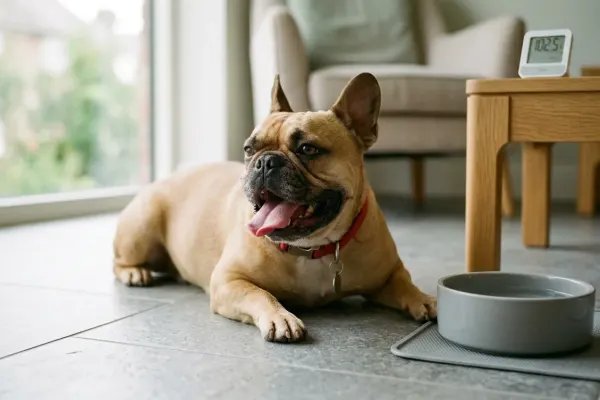
Note: High environmental heat and elevated humidity increase mucosal swelling in the airways, intensifying snoring volume and risk of respiratory distress.
What Does Research Say About Flat-Faced Dogs and Sleep?
Scientific investigation into canine sleep architecture shows a strong correlation between facial skull shape and altered sleep cycles. Canine sleep studies utilizing non-invasive polysomnography reveal that brachycephalic dogs experience more frequent sleep disruptions than mesocephalic (moderate-muzzled) breeds.
Research conducted by the Royal Veterinary College and European veterinary universities demonstrates that high cephalic index values (flat faces) associate with increased proportions of light sleep and higher rates of rapid eye movement (REM) sleep fragmentation. This pattern mirrors human obstructive sleep apnea. Because upper airway resistance prevents deep, restorative rest, affected Pugs frequently exhibit compensatory daytime sleepiness, taking frequent naps throughout the day to recover from fragmented night sleep.
How Many Hours a Day Does a Pug Dog Sleep?
Understanding standard sleep duration helps owners distinguish normal rest patterns from lethargy caused by poor nighttime oxygenation. Sleep requirements shift across a dog’s lifespan based on developmental stage, health status, and daily activity.
Healthy adult Pugs typically sleep between 12 and 14 hours per day. This total includes a continuous 8-to-9-hour stretch at night combined with several short daytime naps. Younger puppies require significantly more rest for neural development, routinely sleeping 18 to 20 hours daily.
As pugs reach senior age, usually around 8 to 9 years old, their overall metabolic rate slows, and joint wear or reduced stamina causes their daily sleep duration to increase back toward 16 to 18 hours.
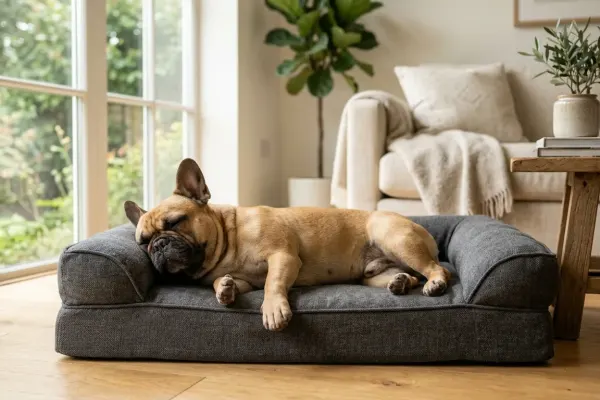
While long sleep duration is natural for the breed, owners should monitor sleeping posture. A Pug that sleeps comfortably on its side with an extended neck experiences open airway alignment. Conversely, a dog that insists on sleeping with its chin elevated on a pillow or toy is actively trying to keep its soft palate from collapsing over its windpipe.
How to Reduce Pug Snoring at Home
While home care cannot alter skeletal anatomy, targeted management practices significantly reduce tissue inflammation and upper airway airflow resistance.
- Maintain an Ideal Weight: Excess body fat accumulates along the throat walls and pharyngeal passages, narrowing the airway further. Keeping your Pug at a lean body condition score (4 or 5 out of 9) is the single most effective way to lessen snoring. Coordinate a balanced pug diet with measured portion sizes to avoid weight gain.
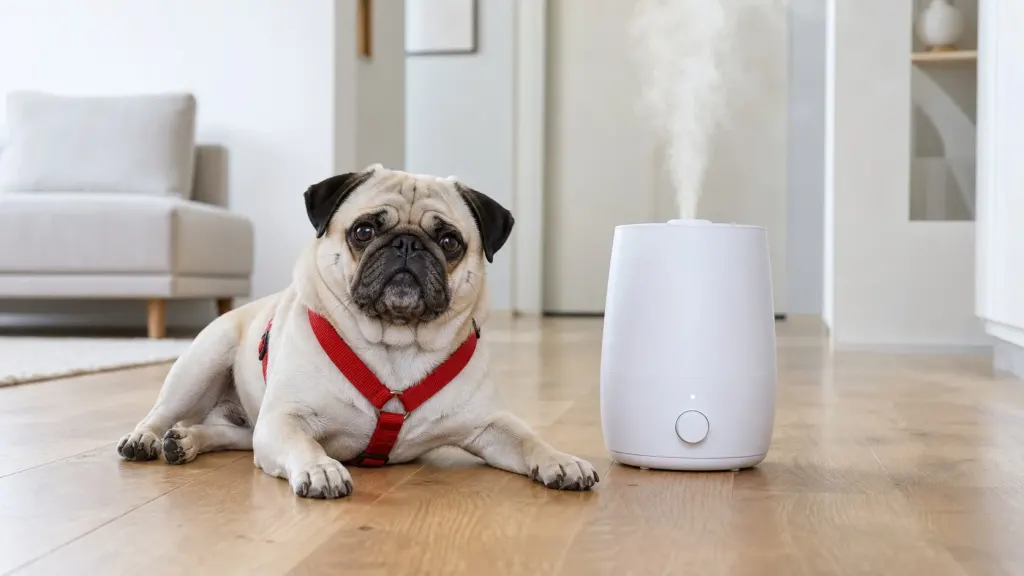
- Switch from Collar to Harness: Standard neck collars apply direct pressure to the trachea and larynx during walks, promoting chronic tissue inflammation. Always secure your dog with a Y-shaped chest harness during outdoor exercise.
- Use a Cool-Mist Humidifier: Dry indoor air irritates sensitive nasal membranes, increasing mucus production and airway friction. Running a cool-mist humidifier near your dog’s bed keeps mucous membranes hydrated.
- Provide an Elevated Dog Bed: Beds with raised bolster edges allow Pugs to rest their heads at a slight upward angle. This elevation leverages gravity to pull the soft palate forward, reducing airway blockage during sleep.
- Keep the Environment Dust-Free: Vacuum sleeping zones frequently and avoid smoking, incense, or strong synthetic fragrances near your pet. Respiratory irritants cause mucosal swelling that worsens snoring.
Integrating these adjustments into your daily pug care routine supports long-term respiratory health and improves nighttime oxygen exchange.
When Should You Take Your Pug to the Vet for Snoring?
While occasional quiet snoring is common, immediate veterinary intervention is required under specific clinical conditions:
- Sudden onset of loud snoring in a dog that previously slept silently.
- Snoring accompanied by choking, coughing, or gasping for air during rest.
- Visible change in gum color to pale or bluish during sleep episodes.
- High-pitched whistling or stridor sounds while the dog is awake.
- Persistent refusal to lie down flat due to breathing difficulty.
Veterinary evaluation may involve airway endoscopy, surgical widening of stenotic nares, or trimming an elongated soft palate to restore unhindered airflow.
Frequently Asked Questions About Pug Snoring
Can a Pug die from snoring?
Snoring itself is an auditory sound, but the underlying airway obstruction that causes it can be life-threatening if it leads to acute BOAS crisis, severe overheating, or respiratory collapse. If snoring is accompanied by gasping or blue gums, seek emergency veterinary care immediately.
Why did my Pug suddenly start snoring loudly?
A sudden increase in snoring volume often stems from acute airway irritation, seasonal allergies, respiratory infection, or rapid weight gain. Environmental changes such as dry indoor air or high humidity can also trigger mucosal swelling.
Should I wake up my Pug if they are snoring heavily?
If your Pug is snoring softly and breathing comfortably, let them sleep. However, if they are gasping for breath, struggling to inhale, or exhibiting distress, gently awaken them and help them shift into a side-lying posture with an extended neck.
In summary, low-level snoring is a widespread characteristic of the Pug breed due to brachycephalic facial structure. By keeping your dog lean, utilizing a supportive harness, and monitoring rest patterns, you can ensure your pet enjoys safe, restorative sleep. For more information on flat-faced breed health, explore our guide on drooling habits in pugs and related care topics.
Leave a Reply